




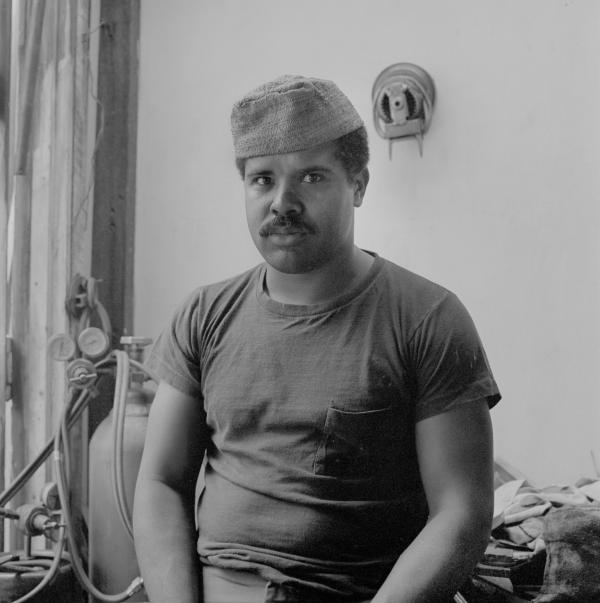
On March 30, 2026, the world lost a formidable artist. Melvin Edwards was a sculptor whose welded steel forms bridged a modernist, formal aesthetic and a deep engagement with Black history and identity. Edwards forged a career in Southern California right as the Black Art Movement was emerging, and it was in Los Angeles that he began his lifelong engagement with steel. His charged sculptures—alluding in form and content to the improvisation of jazz, the fight for civil rights, and the traditions of his ancestors—seem to capture explosive movement and contain it within a moment of stillness.
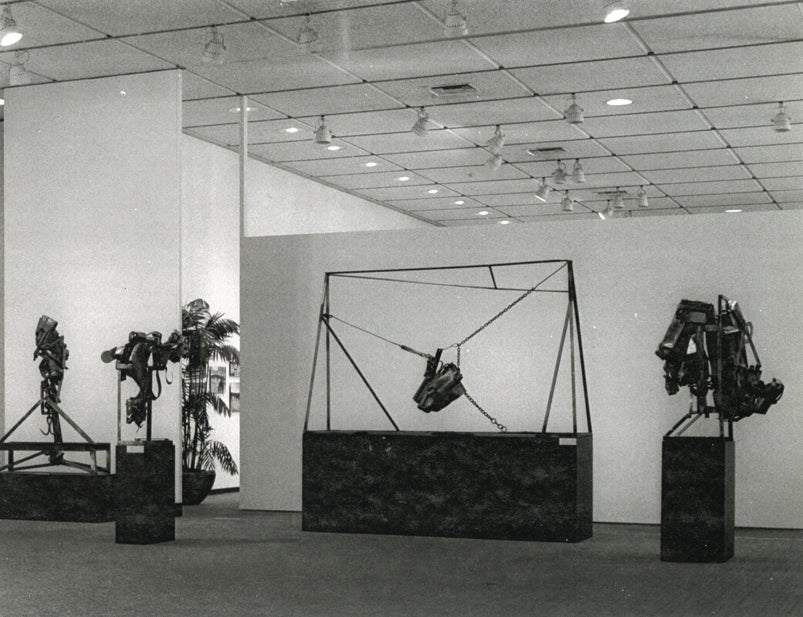
Born in Houston in 1937, Edwards moved to Los Angeles in 1955 and studied art at Los Angeles City College, Otis Art Institute, and USC, where he also played football. Although trained as a painter, he began creating sculpture around 1960. As he shared with former LACMA curator of modern art Maurice Tuchman, “I didn’t really care for sculpture until I saw some welded things. What really turned me on specifically was a show of contemporary sculpture at the County Museum”—referring to Recent Sculpture U.S.A. (1960) at the Los Angeles Museum of History, Science, and Art, LACMA’s predecessor. Edwards gravitated toward metalwork, steel in particular, for its versatility and alchemy. He embraced how one form could shift to the next, its transitions inviting both aesthetic and socio-political associations.
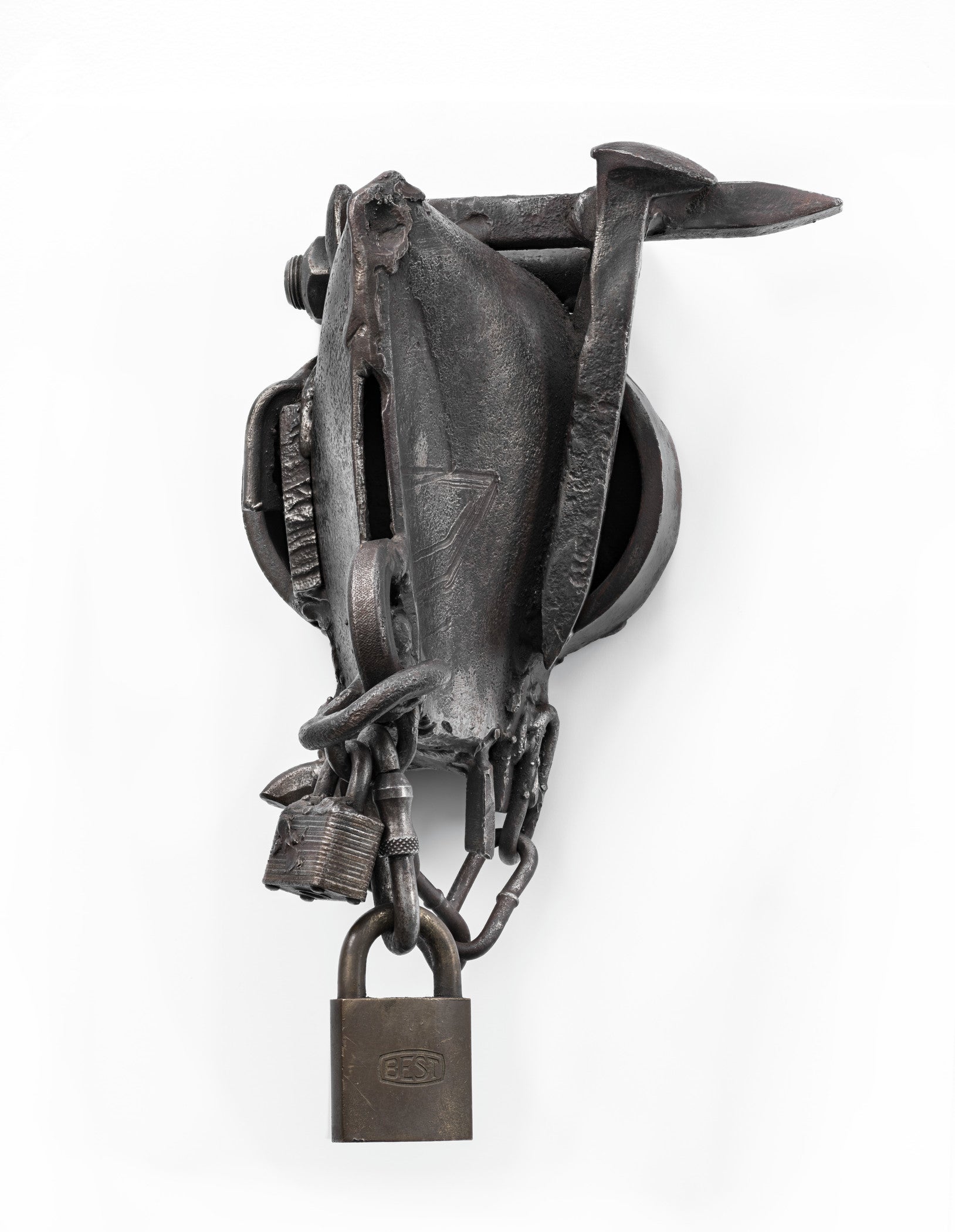
In 1963, he began his now celebrated Lynch Fragments series: compact, abstract metal assemblages made of found objects—chains, meathooks, barbed wire, padlocks—and scrap metal (which he carefully distinguished from junk). Some Bright Morning (1963) was the first Lynch Fragment: its sharp edges and protruding forms evoke shackles, hammers, and daggers, creating an unequivocal sense of violence and danger. Over his lifetime, Edwards made over 300 Lynch Fragments, including LACMA’s Go (1980), each deliberately mounted against the wall, hung at the artist’s eye level. These compact assemblages evoke the dynamics of hanging and suspension in both a physical and historical sense. Returning to this series throughout his career, in 1993 Edwards reflected, “The Lynch Fragments have changed my life. They made this life of 30 years as a sculptor. They are the core to all the work. If anybody ever knows I lived, this is going to be why.”
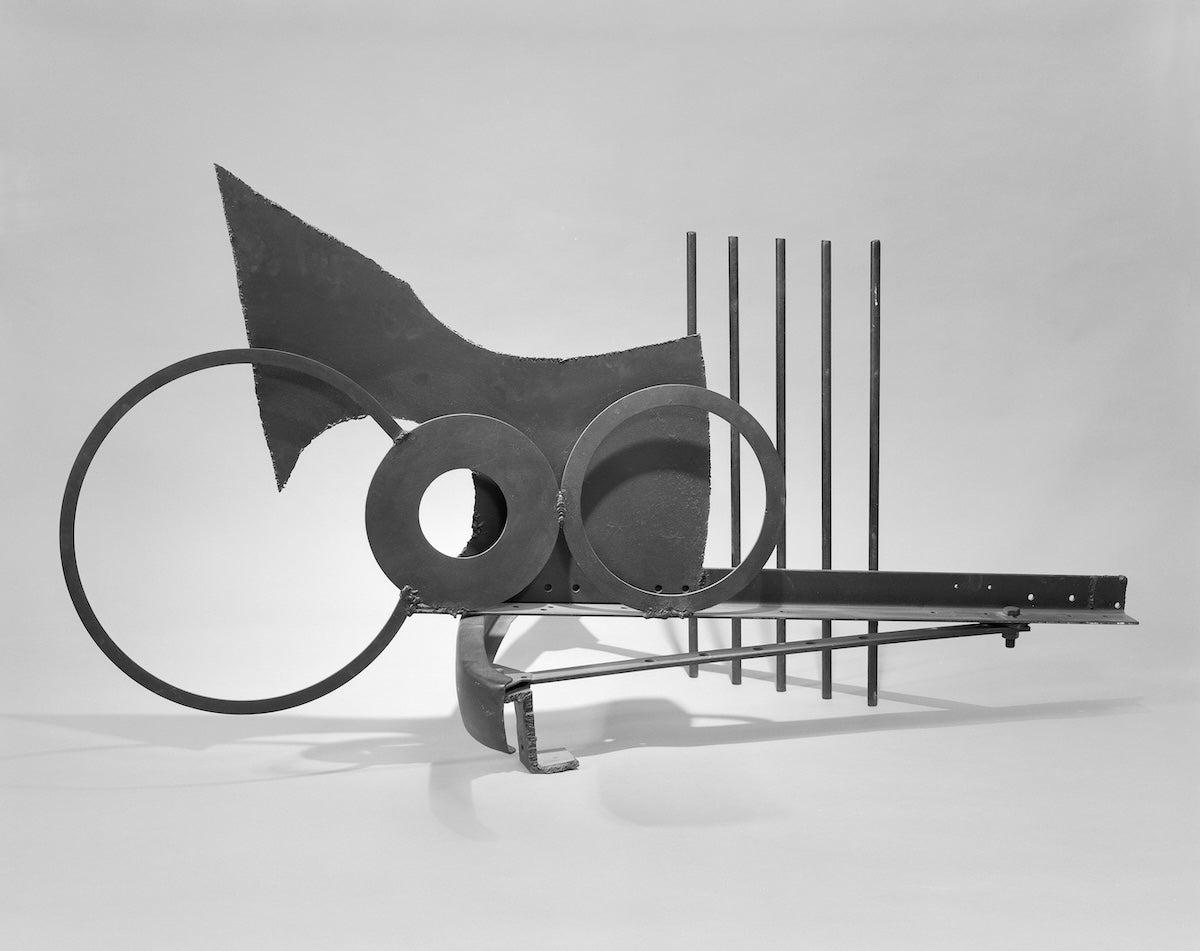
Edwards rose to acclaim early in his career. At 28 he, along with Lloyd Hamrol and Phil Rich, received LACMA’s New Purchase Talent Award in 1965, which led to the museum’s acquisition of The Fourth Circle, a freestanding abstract sculpture made of scrap metal. Sprayed with black lacquer, the form becomes a unified whole, such that the welded parts transform into a single, monochromatic form.
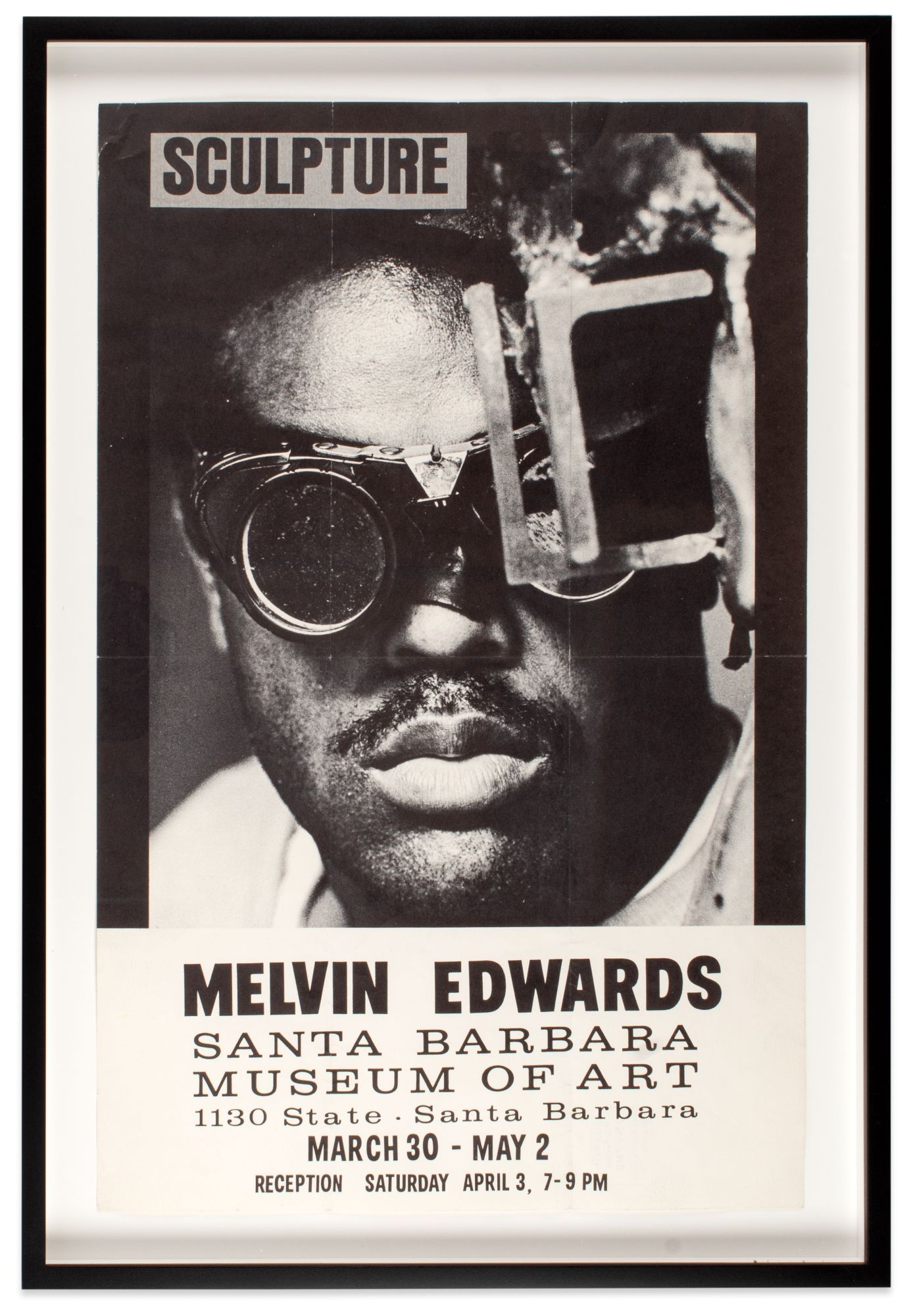
In 1965, Edwards also had his first solo museum exhibition at the Santa Barbara Museum of Art, and in 1967 relocated to New York. There, he had a solo show at the Whitney in 1970 and embarked on the made his first of many trips to West Africa, where he sought out village blacksmiths and bronze casters to learn traditional practices, incorporate them into his own, and share his processes with local practitioners: “African art is like a deep conversation with family.”
Despite his early acclaim, during the 1980s Edwards did not have a single solo exhibition at a New York gallery. During this period he devoted himself to teaching to sustain his studio practice. A skilled orator, he delivered 19 lectures for the University of Connecticut’s “Black Experience in the Arts,” a course that encouraged an expansive awareness of racial, social, and artistic dynamics in American culture, the digitized recordings of which are available online.
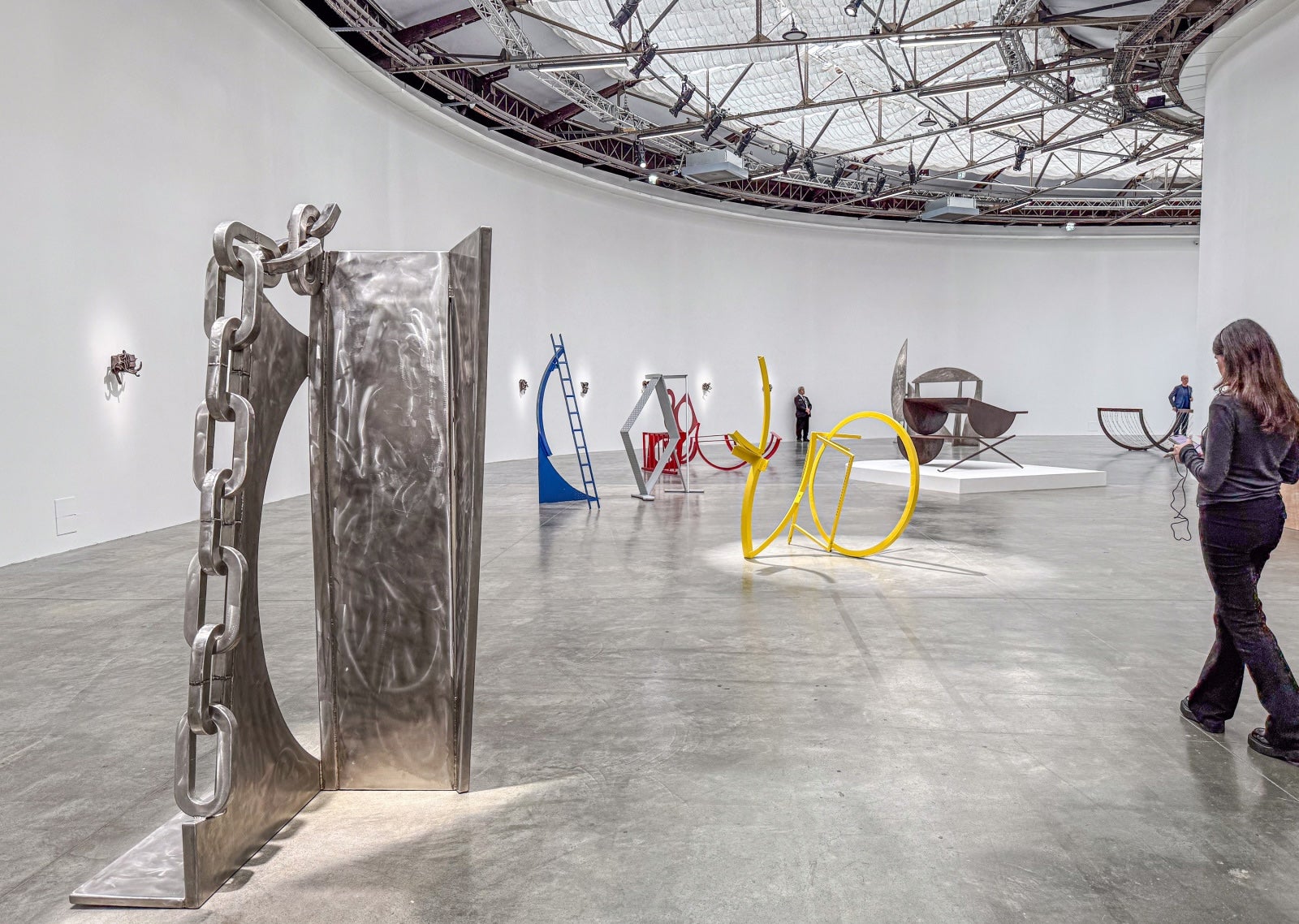
Recent interest in his work, including a 2024–26 three-venue European retrospective, affirms Edwards’s own conviction that the Lynch Fragments would cement his place in American sculpture. But this and other recent exhibitions make clear that six decades of object-making leave behind a legacy that no single series, however defining, can contain.