




As LACMA prepares for the 2026 public opening of the new David Geffen Galleries, the future home of the museum’s permanent collection spanning a breadth of eras and cultures, we’re sharing 50 iconic artworks that will be on view in the building over the next 50 weeks in the series 50 Works 50 Weeks.
View this post on Instagram
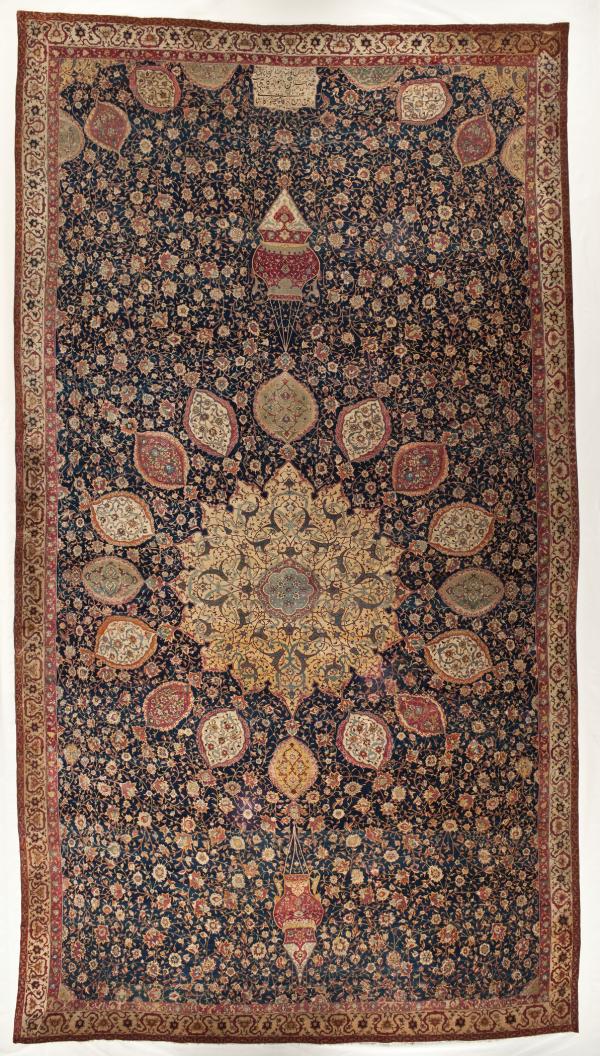
xCarpets are perhaps the best-known artworks from historical Islamic lands, with the most celebrated examples originating in Iran. Due to their fragile nature, Persian carpets have only survived from the 16th century onward, although woven carpets have a longer history. The most renowned of all is a matched pair known as the Ardabil carpets—this one at LACMA and its counterpart in the Victoria and Albert Museum, London. Brought to England in the late 19th century, they were reported to have come from the ancestral shrine of the Safavid dynasty at Ardabil, in northwestern Iran. They are exceptional works of art not only for their design—which uniquely features lamps hanging from the top and bottom of their central medallions—but also because each is signed and dated.
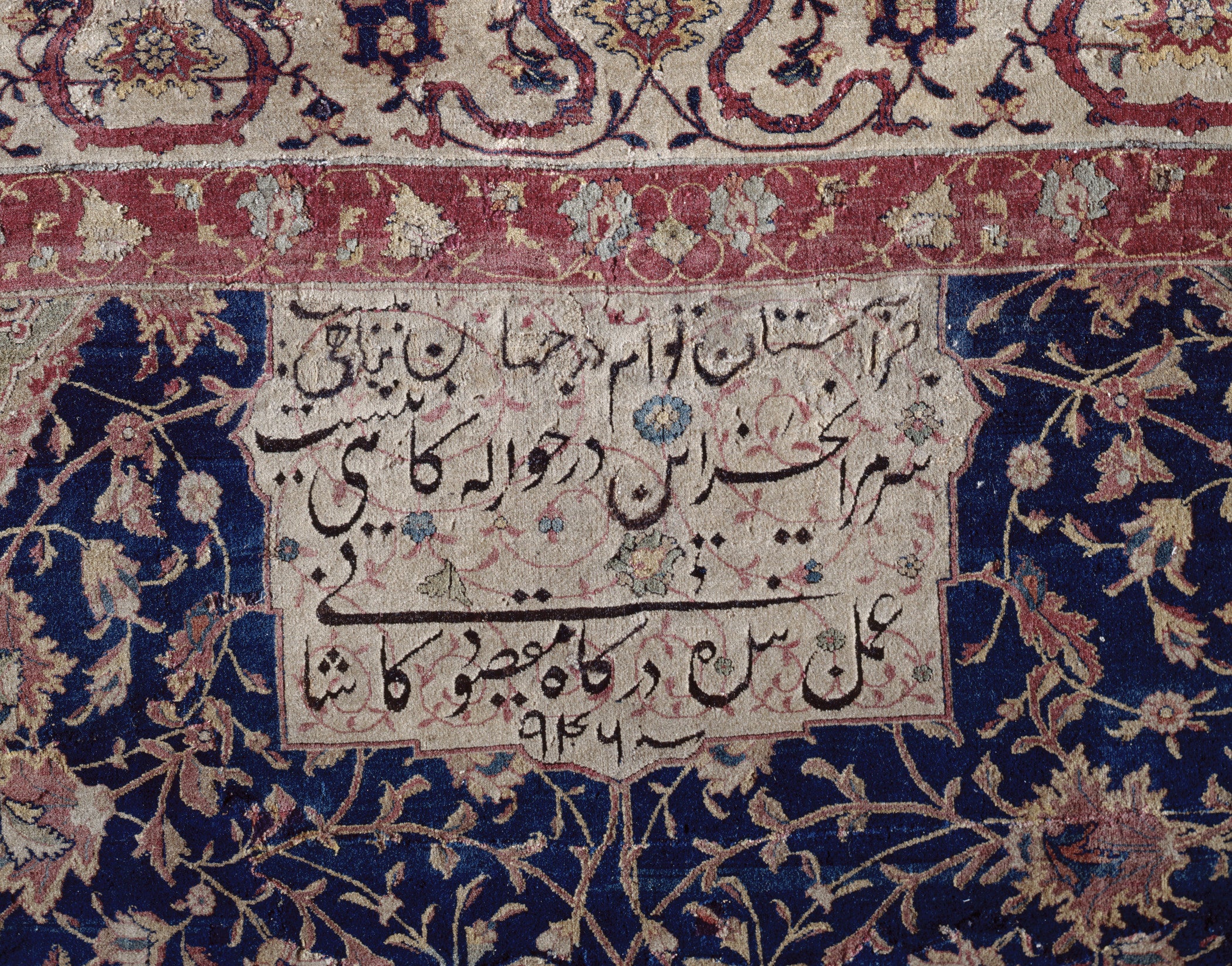
Predominantly blue, red, and yellow, the overall composition of the carpets—based on a central medallion with radiating pendants and quarter medallions repeated in the corners (only partially preserved on the LACMA example)—is ultimately derived from contemporary and earlier bookbinding and manuscript illumination. According to their dated inscriptions, the pair were made in 1539−40 by Maqsud of Kashan, a self-styled servant of the court, probably the designer who prepared the patterns and oversaw the project. He would also likely have been the one to select the Persian couplet inscribed just above the signature and date, which is from a ghazal (ode) by the preeminent 14th-century lyrical poet Hafiz. In the context of the carpets and their location at the shrine, his words take on added meaning:
I have no refuge in this world other than thy threshold
My head has no resting place other than this doorway