




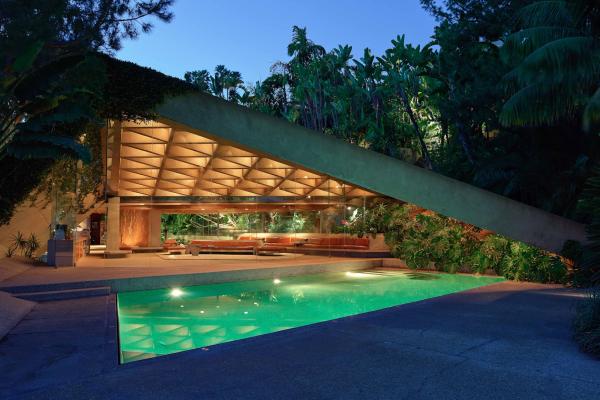
Did you know tomorrow is John Lautner Day? Yes, July 16 was officially declared so by the City of Los Angeles in 2011, for the centenary of the iconic architect’s birthday. A disciple of Frank Lloyd Wright, Lautner (1911–1994) helped redefine modernist architecture in Southern California, emphasing the connection between nature and the built environment with structures that seem both organic and futuristic.
While Lautner designed numerous Los Angeles landmarks, perhaps none is more recognizable than the Sheats-Goldstein Residence, a concrete and glass gem perched on the hills above the city that has become an architectural icon, a Hollywood star, and, since 2016, a part of LACMA's permanent collection. Here are eight things to know about one of Los Angeles’s most extraordinary homes.
Every Angle Matters
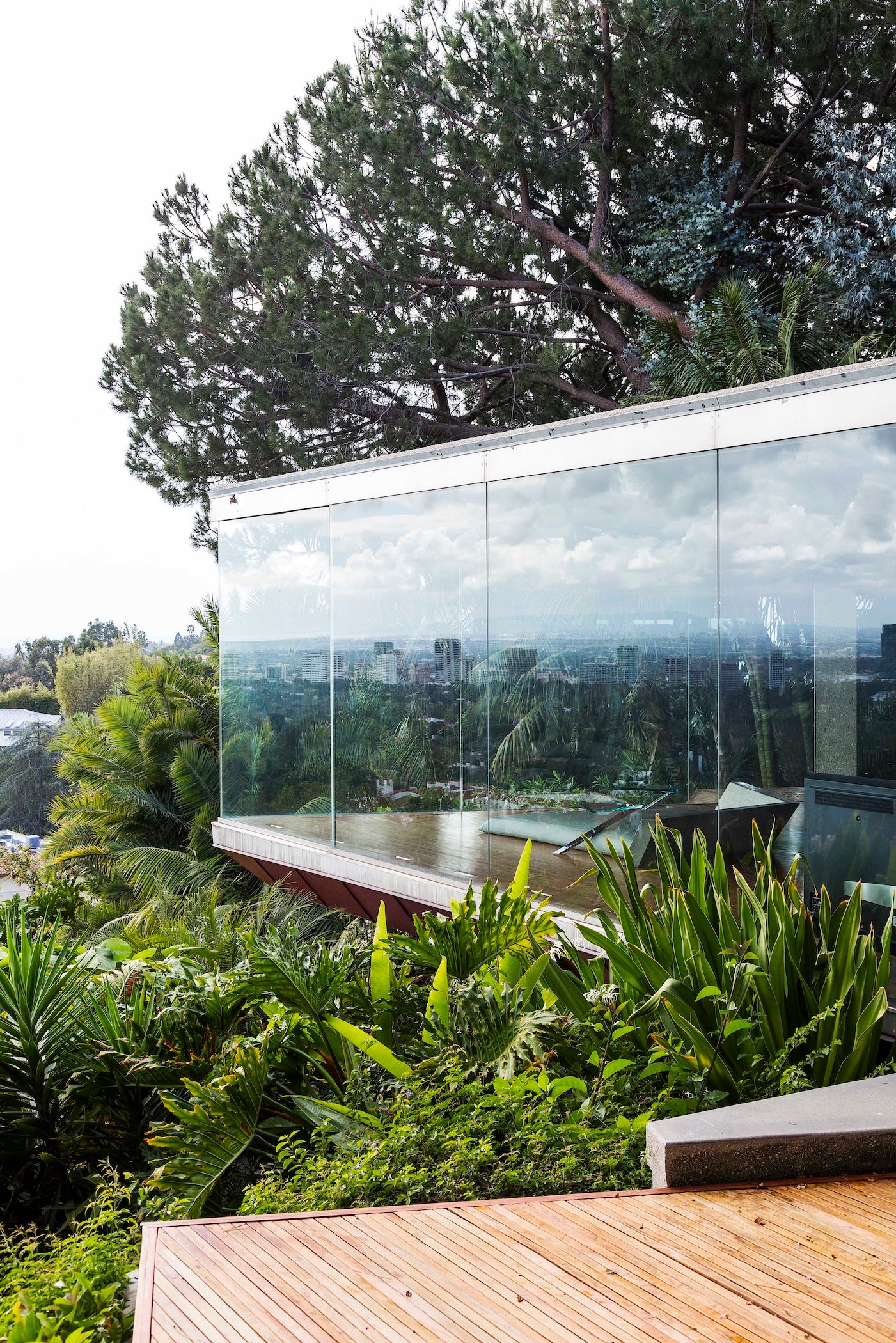
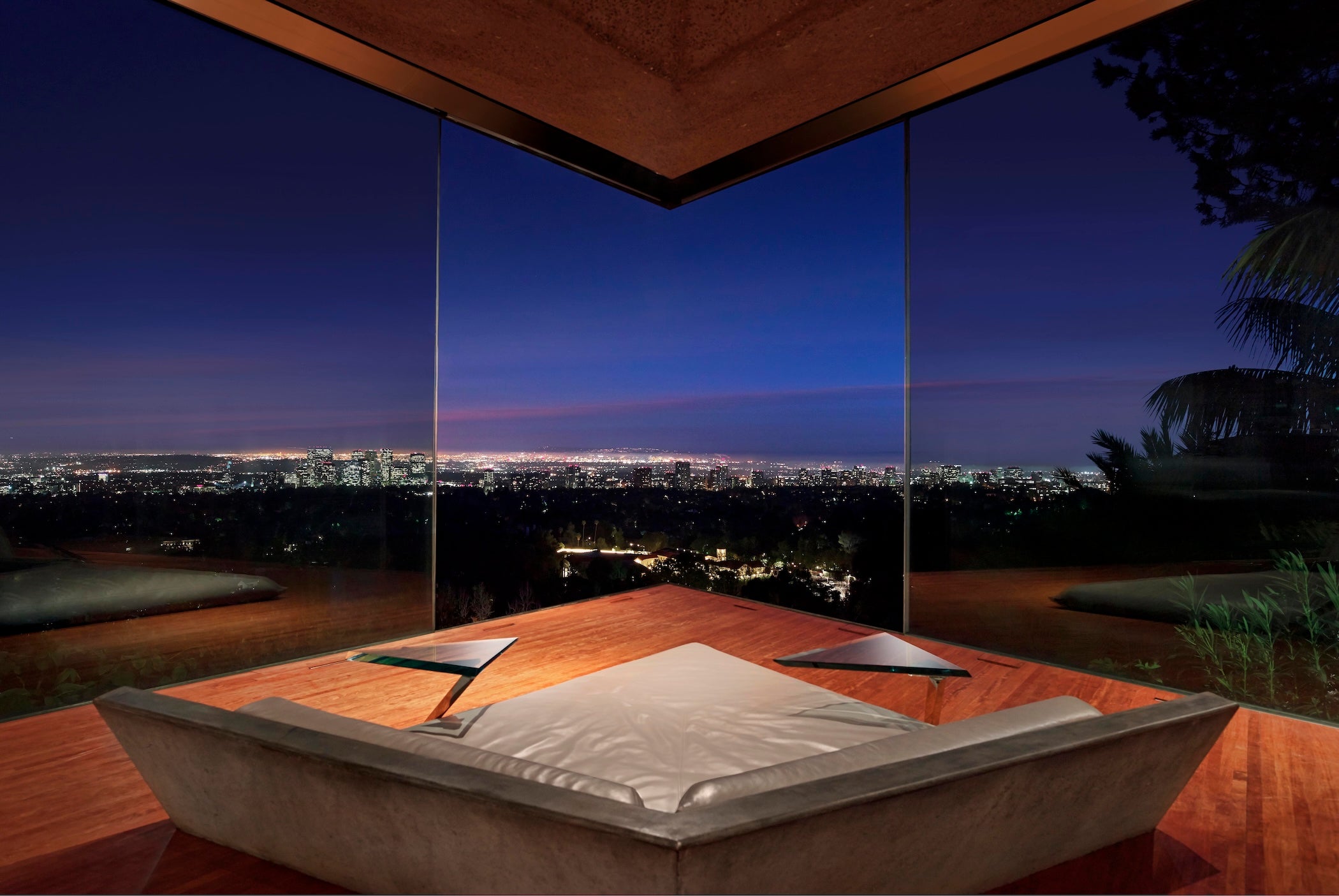
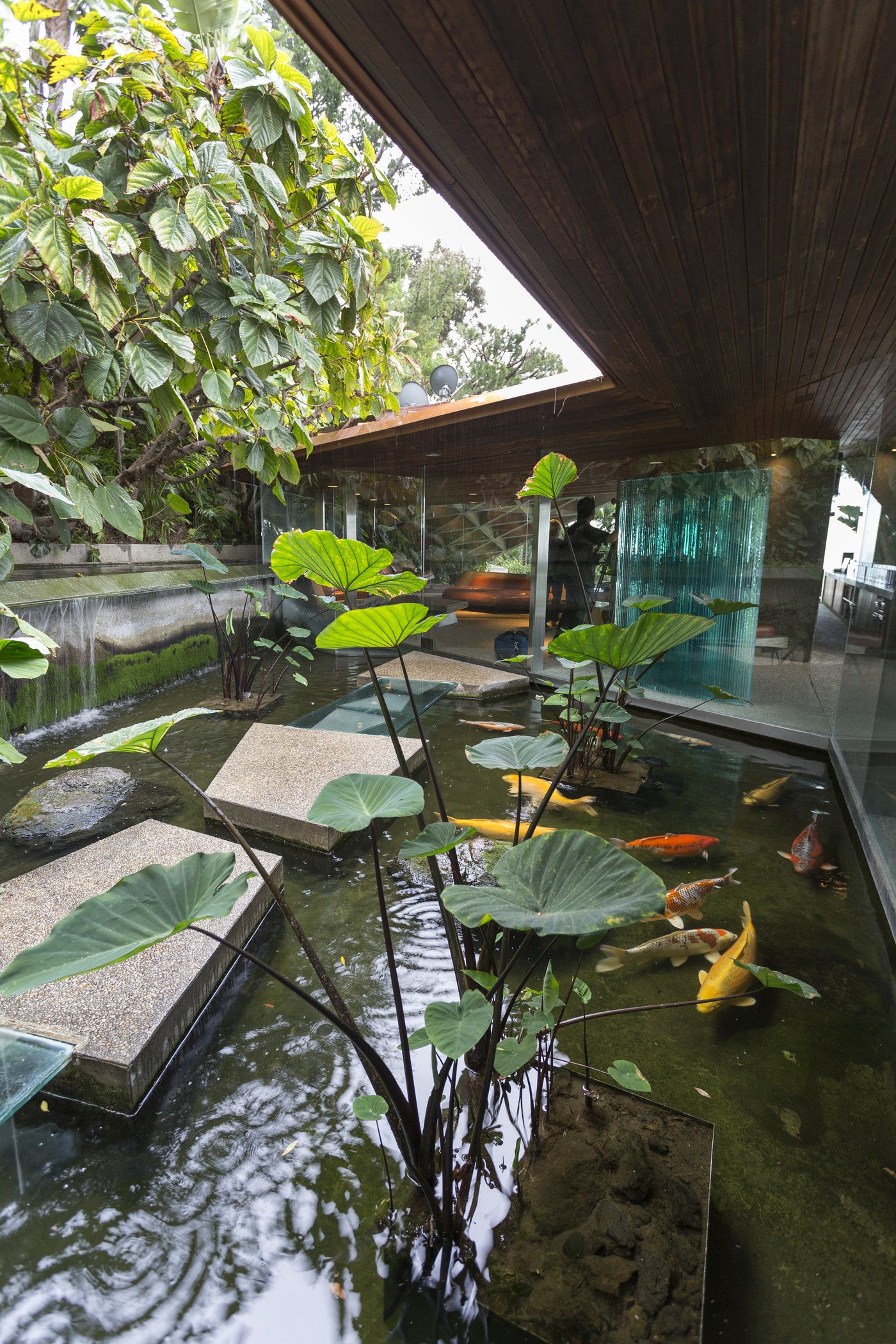
Built in 1963 for Helen and Paul Sheats, the modernist oasis appears to grow directly out of its Beverly Crest hillside. Floor-to-ceiling glass frames its panoramic views across Los Angeles to the Pacific, while a sharp gravity-defying roof swoops over the living room and shelters a pool and concrete deck. Every space in the house mirrors this distinctive angular geometry, from walls and outdoor walkways to door handles, light fixtures, and even the stepping stones in the koi pond. Visitors are hard pressed to find a standard right angle in sight.
It’s Part House, Part Art Museum
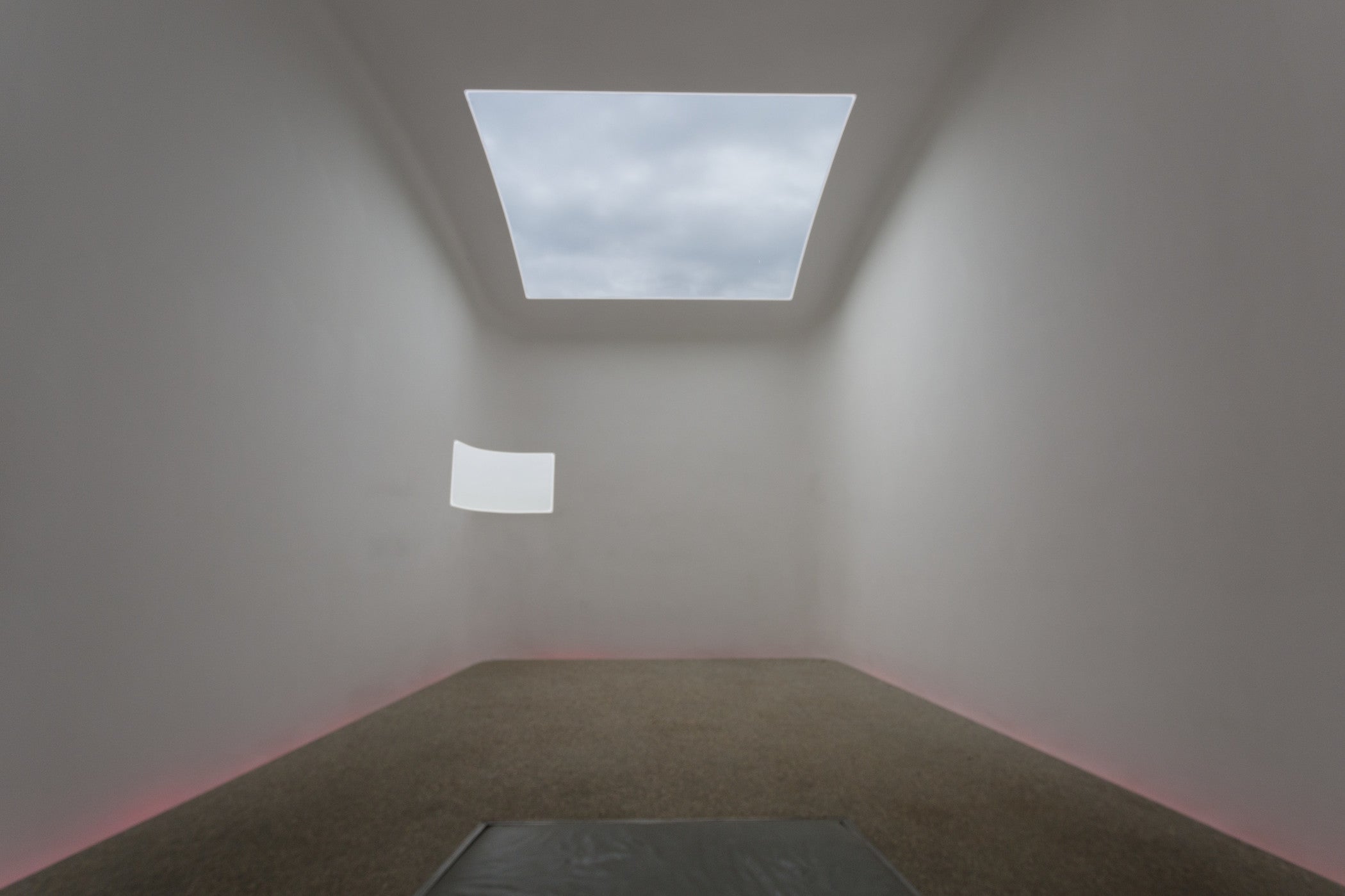
The four-acre property is as much a domestic space as a shrine to art. It shares its lush tropical grounds with a James Turrell Skyspace, Above Horizon (2004), while other works by artists like Ed Ruscha, DeWain Valentine, and Xavier Veilhan are found throughout the estate.
An Afghan Hound Inspired Its Purchase
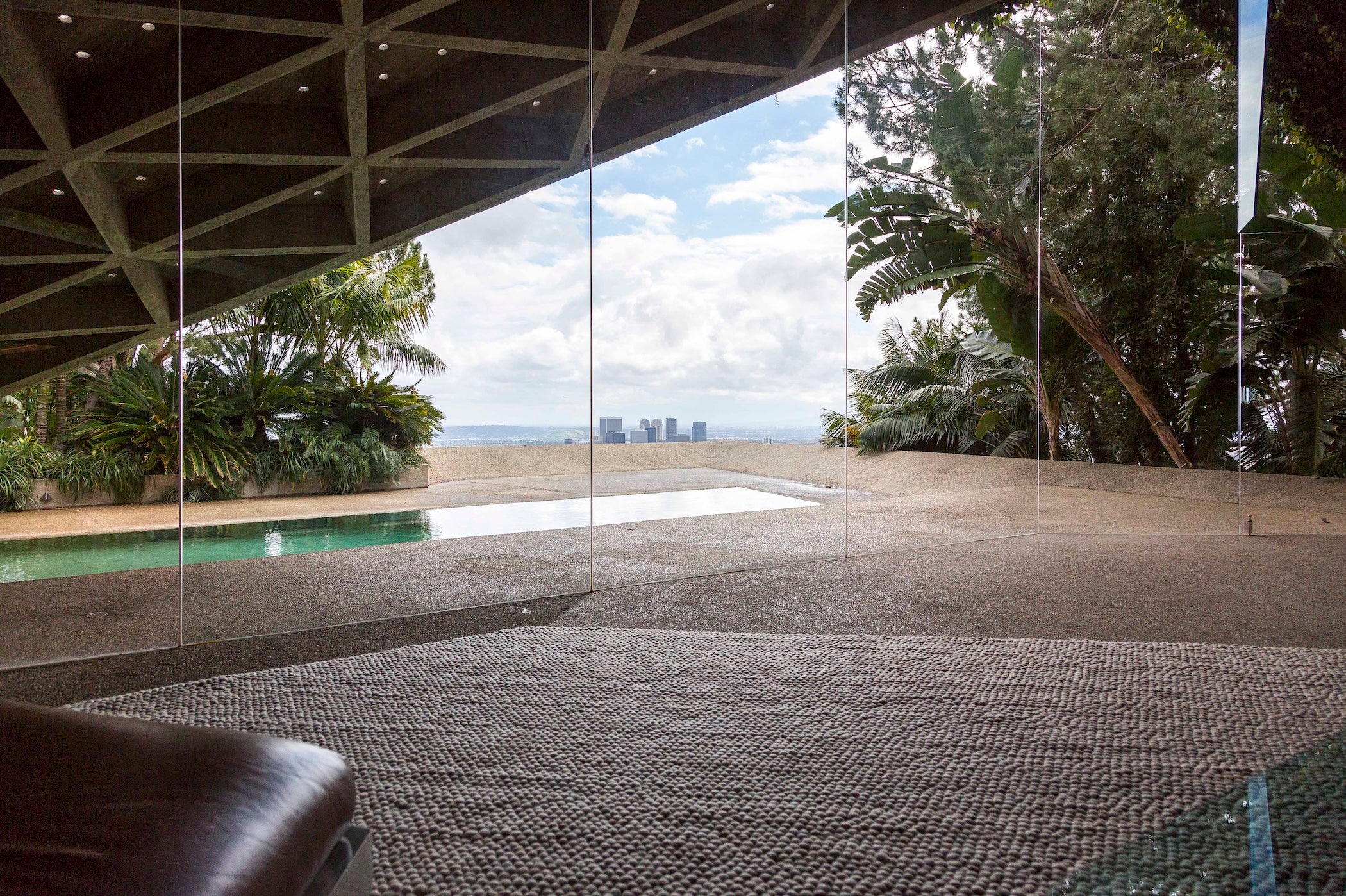
When the home’s current owner, businessman James Goldstein, first stumbled upon the house in the early 1970s, he wasn't on the hunt for an architectural landmark; he was looking for a roomier home that would suit his Afghan hound, Natasha. He first visited in 1972, and would end up buying the property soon after. As for Natasha, Goldstein has recounted: “She enjoyed this house. She really did. She used to sit up on that corner for hours, just looking out over Los Angeles.”
The House Is Constantly Evolving
Unlike many historic homes, the Sheats-Goldstein Residence has been updated continually. Goldstein has been revising and perfecting the property for decades, originally working directly with Lautner for over 30 years to refine and adapt the house to realize their shared vision, which included installing frameless glass vistas and custom furnishings, then with Lautner’s protégé Duncan Nicholson, and most recently with architects Conner + Perry.
It Has Its Own Nightclub
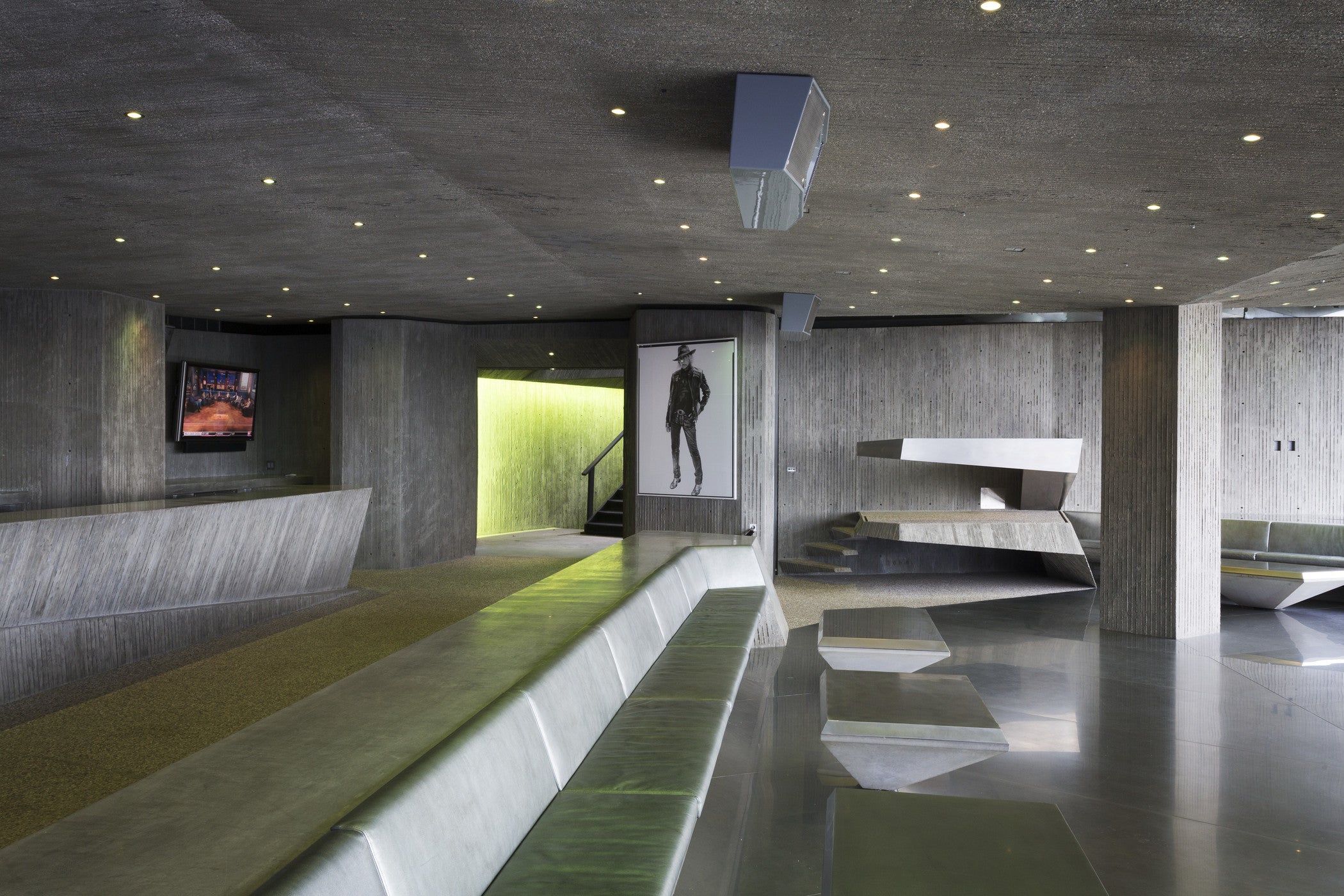
One of the most recent additions to the property is “Club James,” a dynamic entertainment complex topped by an infinity tennis court. The nightclub and tennis court, as well as other notable elements like the koi pond with a concrete and glass stepping bridge, reflect the sculptural language of the original house, proving that even new additions can feel true to Lautner’s architectural vision.
The Furniture Was Custom Designed
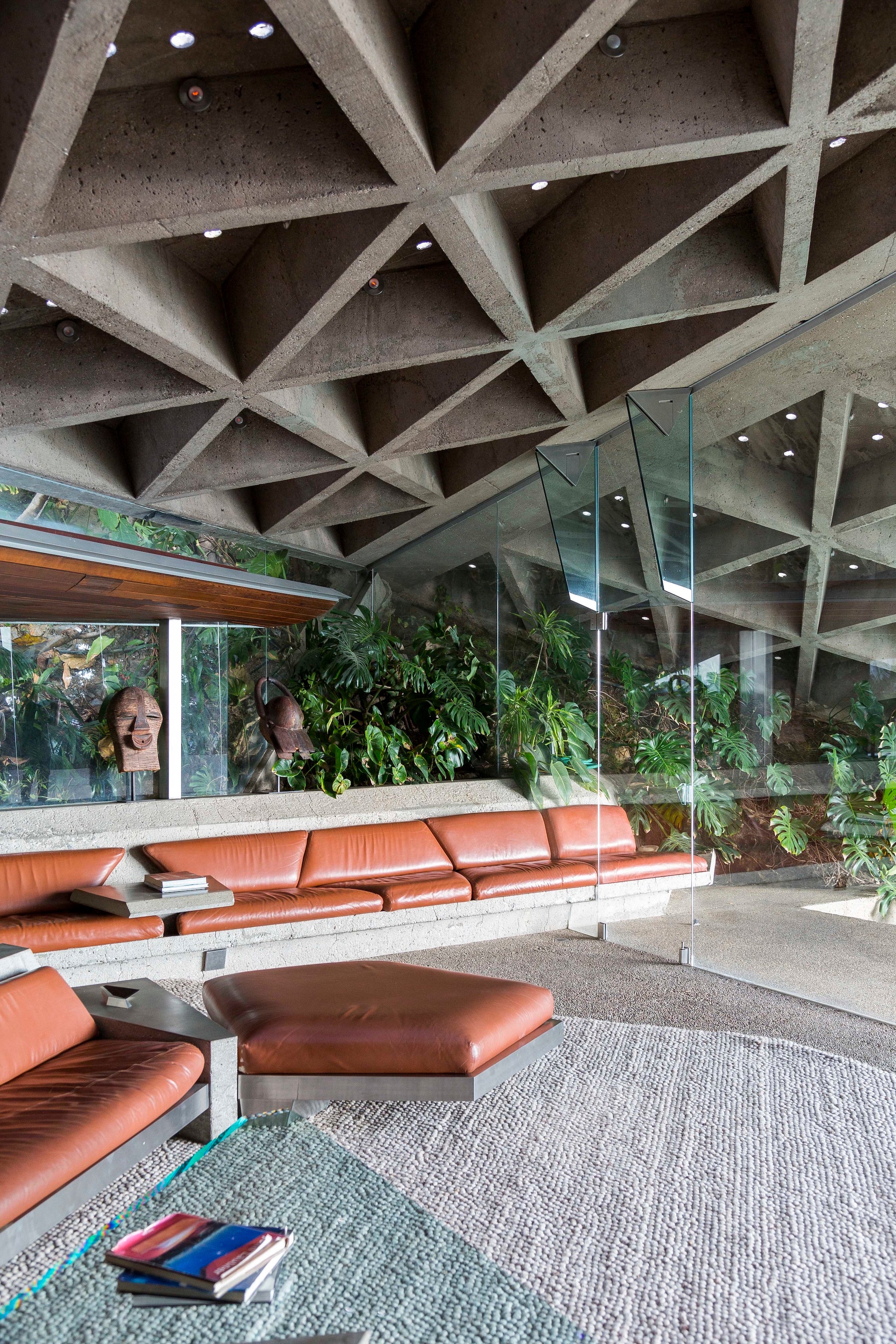
Visiting the house, it becomes apparent that virtually nothing inside is ordinary. Lautner and Goldstein even designed custom-built concrete, glass, and wood furniture made specifically for the residence, a first for the architect. Angular concrete and leather couches, an all-glass sink with no faucets, a “floating plane” dining table, and motorized skylights reinforce the idea that every object belongs to the house.
Hollywood Loves It
Even if you've never visited, you've probably seen this house. Countless creatives have been drawn to the inherent drama of its angular silhouette, which has appeared in fashion shoots, music videos, and films, perhaps most famously as Jackie Treehorn's home in The Big Lebowski (1998). Photographers including Helmut Newton, Herb Ritts, Mario Testino, and Ellen von Unwerth have used the residence as a backdrop, cementing its place in pop and visual culture as much as architectural history.
It’s in LACMA’s Collection
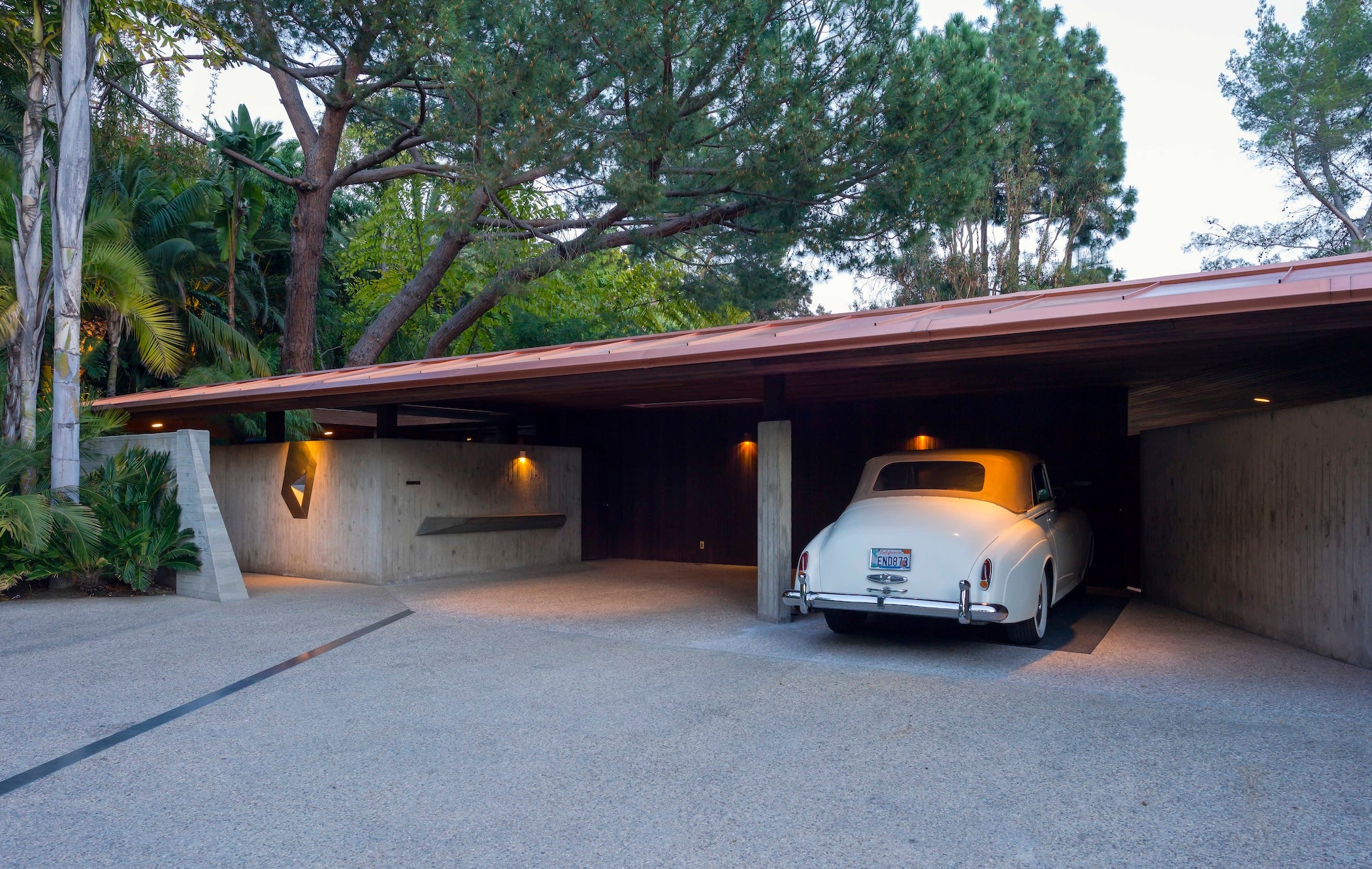
In 2016, James Goldstein pledged the entire estate to LACMA, making the Sheats-Goldstein Residence the first piece of architecture given to the museum. The promised gift includes not only the house, but its gardens, the entertainment complex, Goldstein’s extensive fashion collection, artworks including the James Turrell Skyspace, architectural models of the property, and an iconic Rolls Royce Silver Cloud from 1961. This means that, more than a remarkable home, the residence can now officially be called a work of art in its own right.