




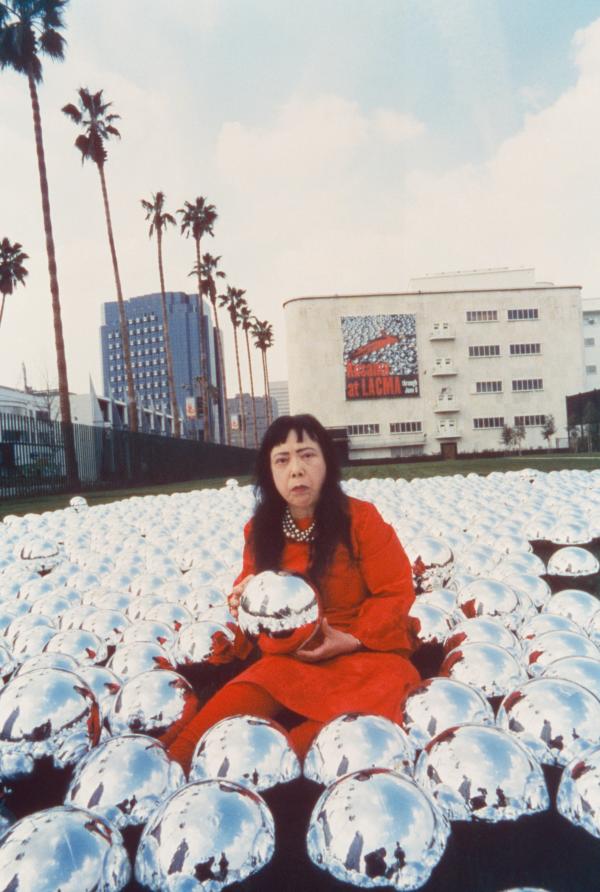
In the mid-1990s, when I was assisting on a reinstallation of the permanent collection at New York’s Museum of Modern Art, I came across a 1962 collage made of file folder labels that reflected the formal values of Minimalism—repetition, geometric form, and the grid—made as that highly influential art tendency was emerging. It was composed of vertical lines of file folder labels that undulated gently as they marched in lines down the sheet of paper that supported the composition. I found the work original and beautiful. The MoMA reinstallation was to include pieces that weren’t often on display, and it was clear from the way it was framed that the collage, pushed against the glass of its old and tattered black frame, had never been shown at the museum. We reframed it and hung it in the galleries. It was by Yayoi Kusama.
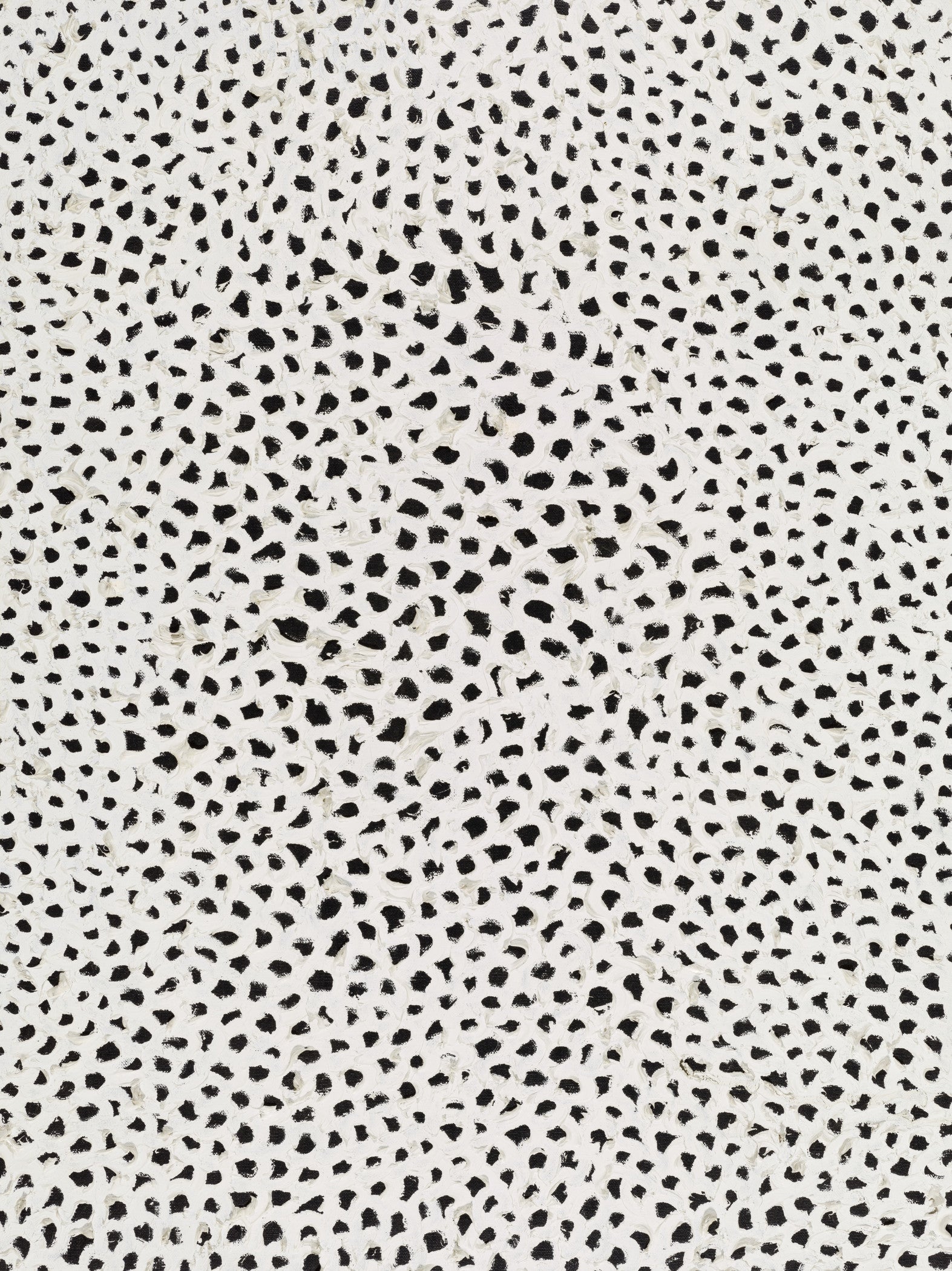
Kusama arrived in New York in 1958, and by 1959 she had a solo exhibition at Brata Gallery on the city’s Lower East Side that consisted of five white-on-white paintings the size of the gallery walls. In them, a single element created a net-like pattern that seemed to continue beyond the frame. The reviews of the show, by the many of the most important critics of the time, were glowing. Donald Judd, better known then as a critic than an artist, praised the show, and he and Kusama became close friends. Although I was familiar with the New York art scene of the 1950s and ’60s, I had never heard of Kusama because, when she returned to Japan in 1975, she was largely forgotten in the United States. The “infinity net” paintings confirmed my sense, inspired by MoMA’s collage, that she was a visionary artist whose work needed greater exposure.
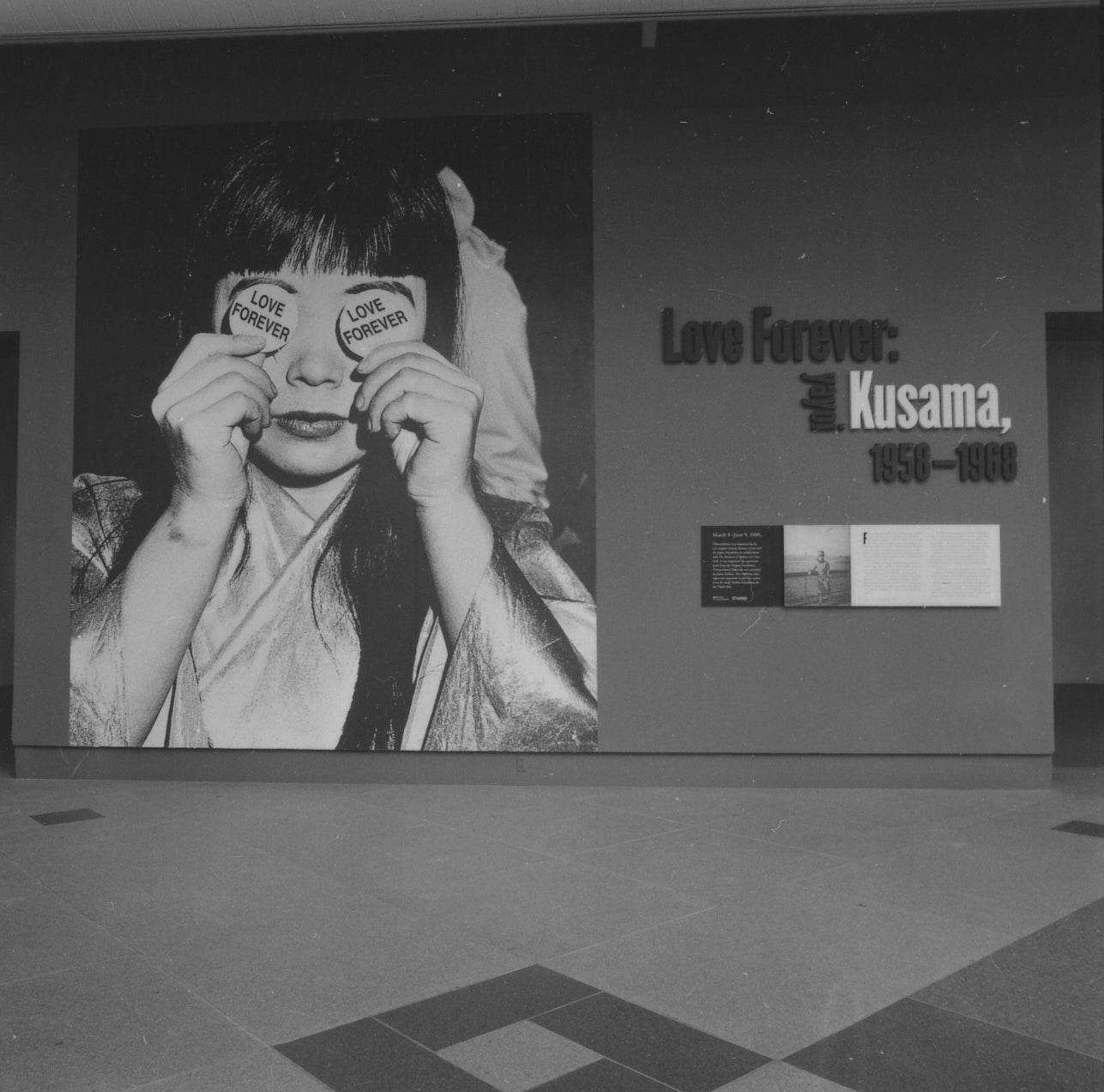
In 1995, I moved to the Los Angeles County Museum of Art and began work on Kusama’s first solo exhibition at a major U.S. museum. In Los Angeles, only a few people knew who she was: artist Mike Kelley, who had a particular interest in overlooked artists of the 1960s; Karen Higa, a curator at the Japanese American National Museum; and Tim Blum, of L.A.’s Blum and Poe Gallery, who had lived in Japan for three years and spoke fluent Japanese. As far as I could tell, that was about the extent of her renown in L.A. in 1995. I chose to focus LACMA’s exhibition, Love Forever: Yayoi Kusama, 1958–1968 (1998), on her New York years because of my familiarity with the city’s art world and its history.
In childhood, Kusama suffered from frightening hallucinations, and while she had more control over them in adulthood, when she returned to Japan in 1975, she began having them again. At the hospital where she was treated, a renowned doctor was exploring the psychology of expression and art therapy. She moved into the hospital permanently in 1977 and lived there for the rest of her life, moving around the city at will. Her studio was a few blocks from there, and she also held court at a nearby coffee shop. I visited her twice a year for three years and, each time, her assistants would pick me up at my hotel in the morning, then we would stop by the hospital to pick up Kusama and drive together to the studio, which was small in comparison to the ones she had later. Speaking English was never easy for her, even less so after a hiatus of 20 years, so she had a translator with her for important interviews. When looking at her art and other kinds of work, we spoke a simple, if broken, English.
I wanted the show to travel to other museums so that Kusama’s work would become better known, but initially there was little interest in the exhibition. Fortunately, about a year and a half into its planning, my good friend Laura Hoptman, then a curator at MoMA, wanted to work on the exhibition with me. There was some justice in Kusama’s show travelling to MoMA since, in 1969, she was escorted out of the museum by guards. During the late 1960s, she became increasingly involved in performance art with “happenings” that were positioned against the Vietnam War and forefronted nudity and sexuality. The one at MoMA was titled Grand Orgy to Awaken the Dead (an amusing title that suggests everyone at MoMA was dead, or at least asleep), in which a group of naked hippies performed uninvited in the pools in the museum’s sculpture garden. The guards kicked them out but, by chance, a photojournalist was there, and she and her entourage appeared in a large photograph on the cover of the next day’s New York Daily News. Having been forcibly removed from MoMA, it seemed only right for her to return by invitation. The Walker Art Gallery in Minneapolis also displayed the exhibition, and by the time it was ready to open, I was getting calls from museums all over the US and Europe who also wanted to take the show. Sometimes a curator can feel a wave forming under her feet as she works on an exhibition, as I did in this case. This was Kusama’s wave, and it would be big.
The artist wanted the show to travel to Tokyo, and I went there for the opening, arriving in time for the last days of the installation. From the demands she made on the curators, I could see why people said she was difficult, but she wasn’t that way with Laura and me. Kusama was ambitious and savvy. She believed that she needed our show to help bring her back to notoriety in the West, and she was right.
The last time that I saw her was around 2008. I was working in Korea and stopped in Tokyo to see her on my way home. I visited her in a studio that was considerably larger than the one I knew from the ’90s, and she was excited to see me, which was gratifying, as was the evidence of her success. She told me about the foundation she was planning, which exists today, along with the Yayoi Kusama Museum. Internationally celebrated during her lifetime, she insisted that her work and reputation continue past her death, and she built two of the mechanisms to support that goal. Her strength, focus, and unending ambition will never cease to amaze me.