




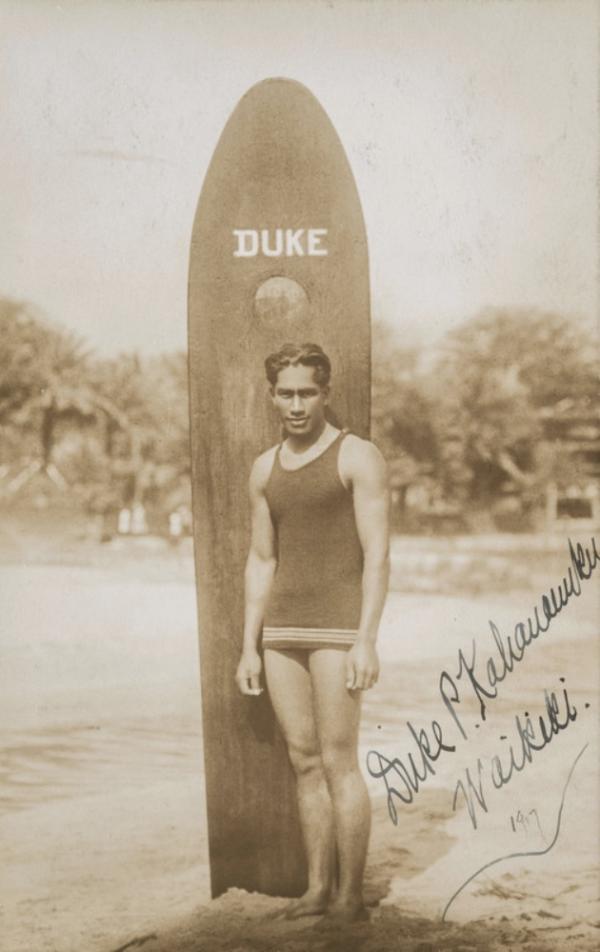
LACMA’s Mark and Carolyn Blackburn Collection of Photography encompasses rare objects and photographs made between 1840 and 2016 across 10 Pacific Island nations. Among its over 9,700 objects are surf icon Duke Kahananmoku’s wooden surfboard, a 1914 book by A. R. Gurrey that is widely regarded as the first about surfing, ephemera, postcards, lantern slides, and cabinet cards, as well as thousands of photographs of Oceanic nations, offering a rich record of beach life, tourism, land ownership, and European conquest in the Pacific.
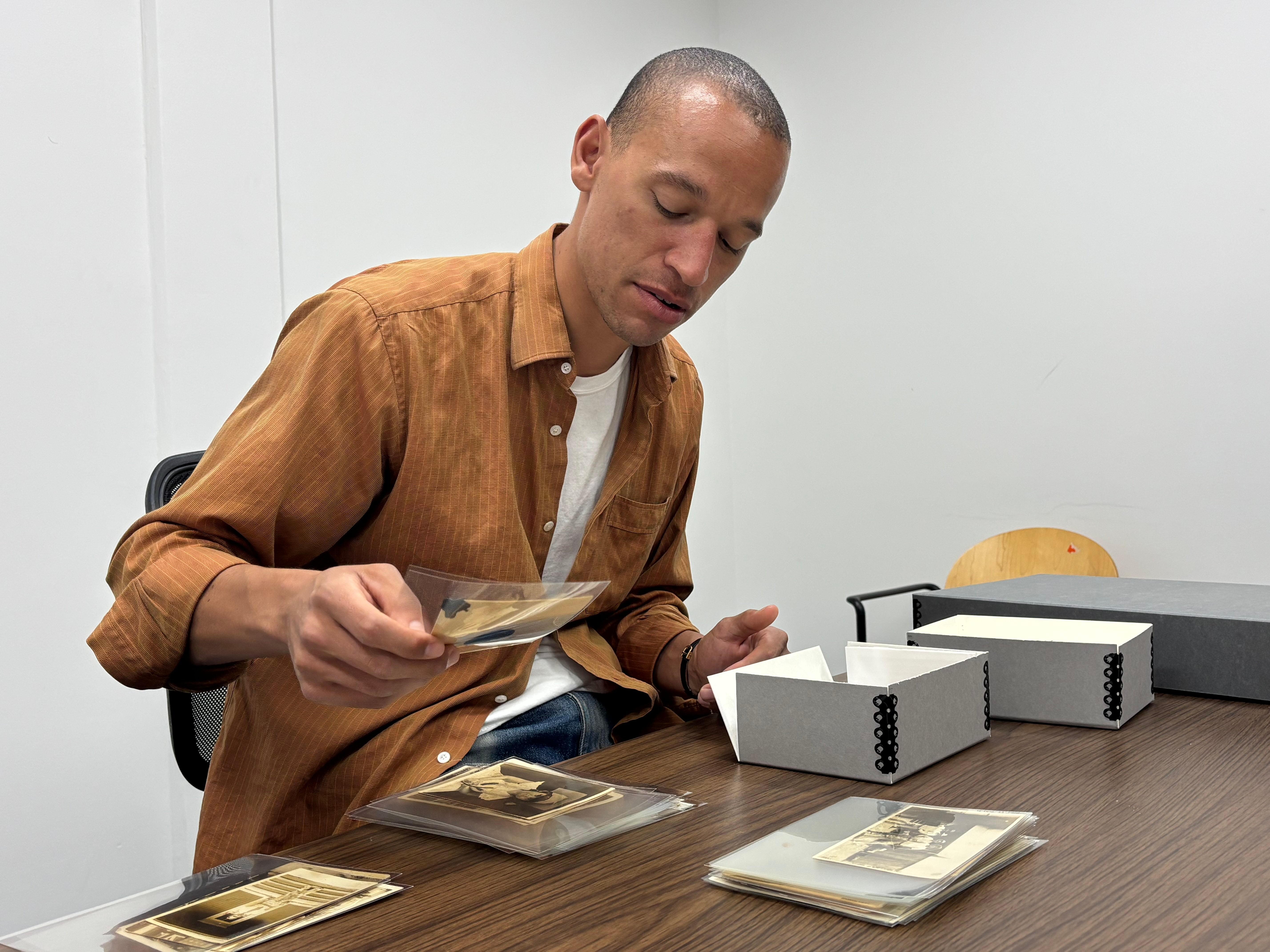
“There’s thousands of images, and we’ve been able to pull out moments of architecture, portraiture, cinema,” said artist Chase Hall, who for the past two years has been exploring the collection as part of a residency at LACMA. “It just kind of places you in this sort of portal, or time travel.”
As an artist, avid surfer, and collector of American vernacular photography, Hall was uniquely situated to explore the Blackburn Collection. Hall often explores his collection of vernacular images to find inspiration for his own work. By examining group portraits, or pictures of people relaxing, or working in the landscape, he evaluates and overturns viewers' habits of perceiving race.
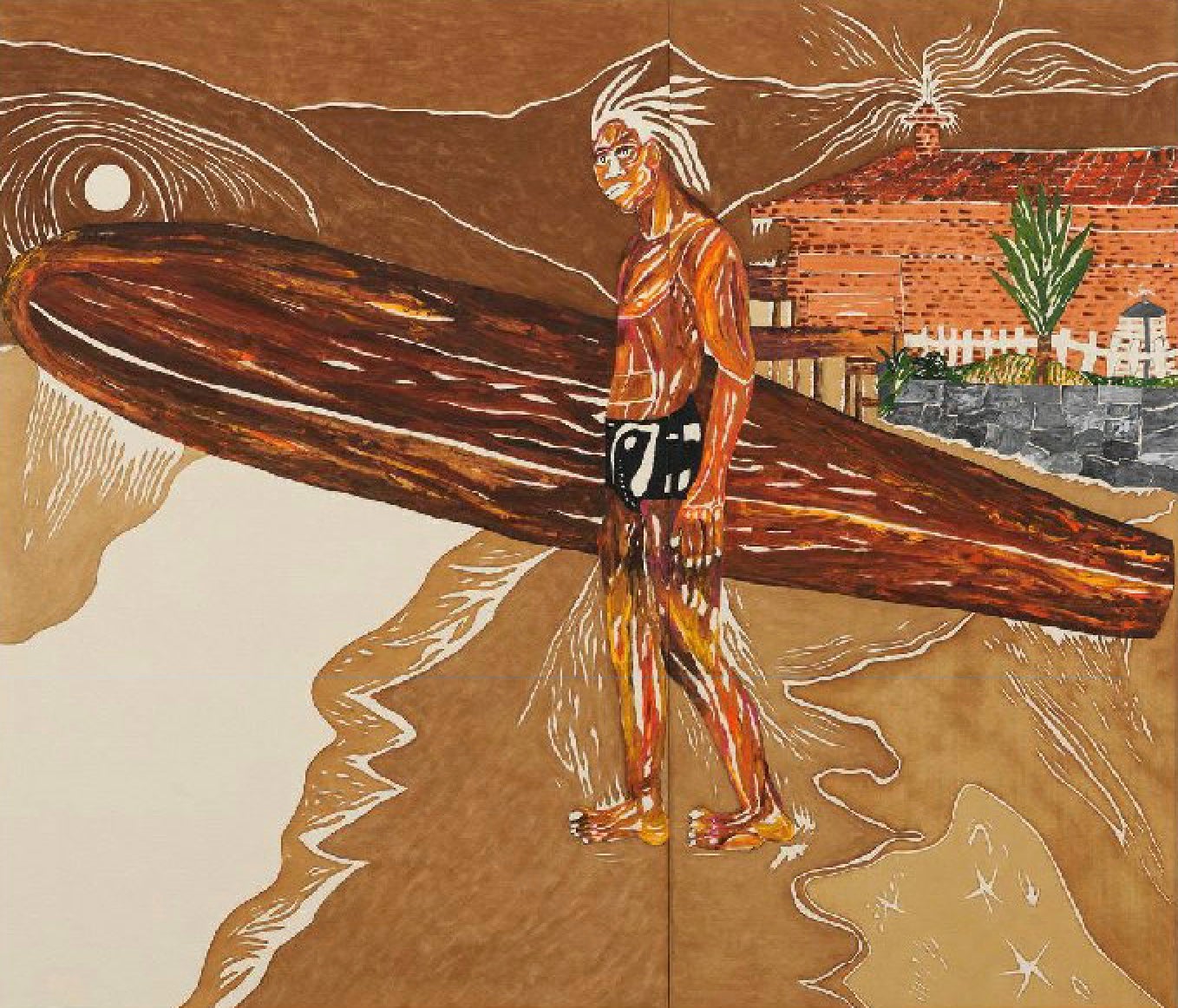
In works like Winter in America (2023), a painting by Hall in LACMA’s collection that features a solitary figure carrying a surfboard on the beach, Hall examines access, identity, and leisure within the context of American history. The artist’s pioneering drip-brew method, utilizing coffee beans and acrylic pigments, carries a symbolic significance, alluding to historical geopolitical systems linked to the commodification of a plant originating from Africa. With LACMA, Hall focused his research on the archive’s images of surfing, oceans, and landscapes, leading him to make unexpected connections across different histories and cultures.
“There’s this timelessness that’s so omnipresent as we look through the archive,” he said, prompting him to consider “ways to triangulate history, the past but also the future, and how we can activate an archive.”
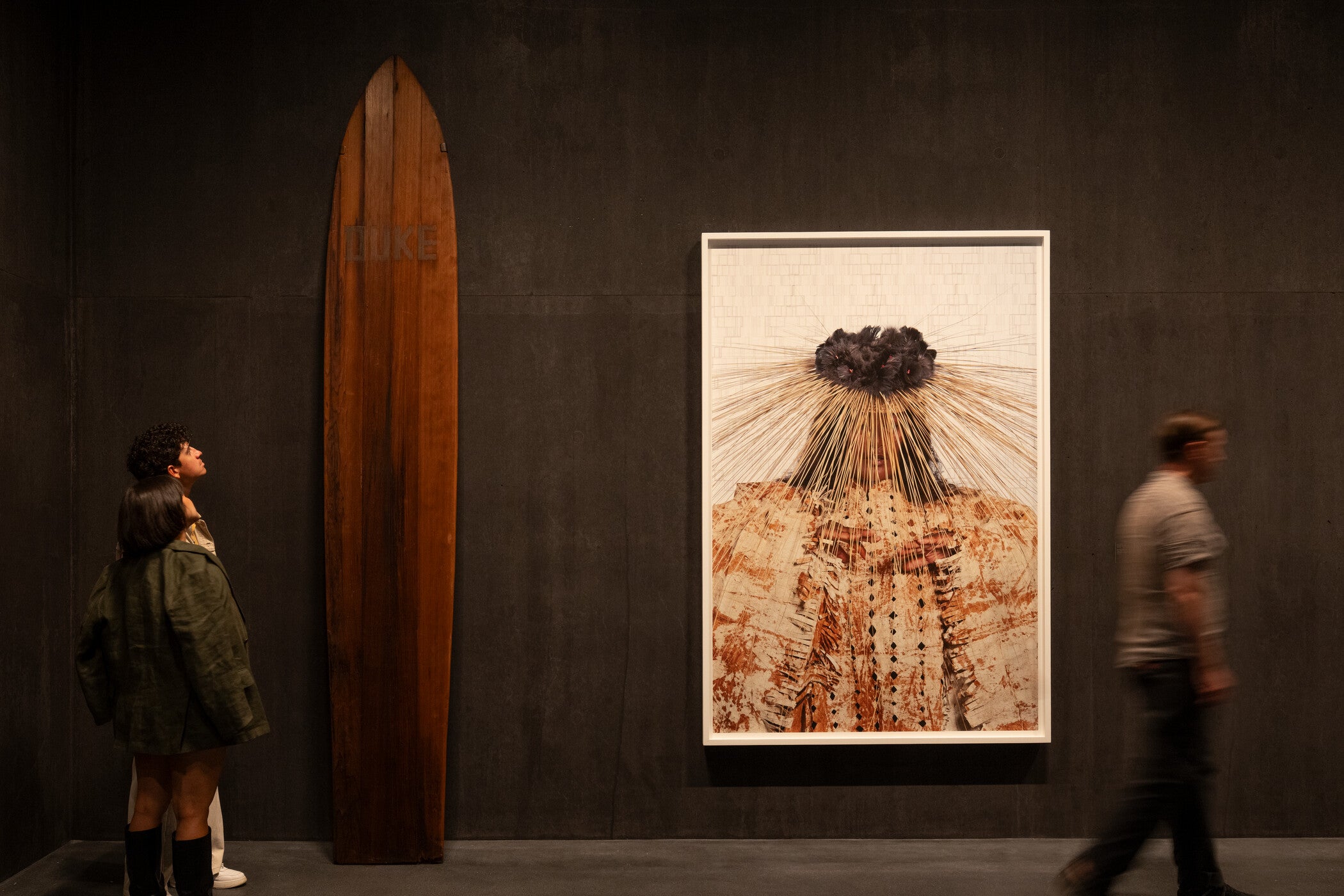
Drawing on his artistic practice and his time engaging with the archive, Hall will be leading two upcoming programs at LACMA on Sunday, October 18, beginning with a tour exploring works from the collection on view in the David Geffen Galleries. Afterwards, Hall will also be in conversation with associate curator Dhyandra Lawson and LACMA director Michael Govan, using surfing as a point of departure for exploring African American and Indigenous American histories and to reflect on how vernacular photographs can expand interpretations and perspectives about the past.
Visitors can RSVP to both the tour and the talk to hear from the artist and trace currents between surfing, photography, and cultural memory, explore how archives like the Blackburn Collection can serve as spaces for discovery, and learn how, in the words of the artist, “through looking at images we get a better understanding of the world around us and ourselves.”