




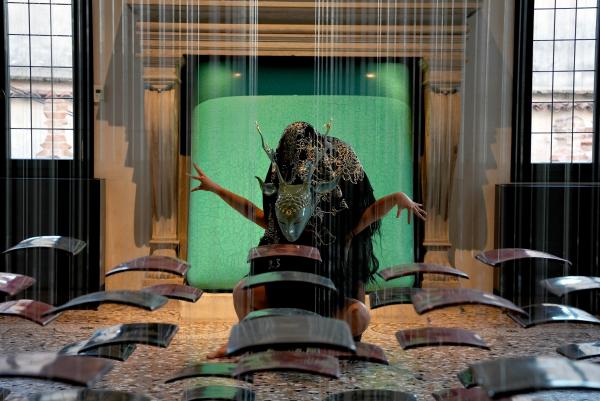
Through the glitz of the 2026 Venice Film Festival, we wandered along quiet canals to the 15th-century Palazzo Soranzo Van Axel, where we experienced queer Buddhist sci-fi film, experimental performance, and lyrical contemplations within the profoundly peaceful surroundings of Su Xiaobai’s Alchemical Universe, which was presented by the Su Xiaobai Foundation, in collaboration with LACMA, as a Collateral Event of the Venice Art Biennial. “Voice-over, Magic Mirror” marked the finale of Orchid Pavillion Gatherings, an event series I curated in conjunction with the exhibition. Su Xiaobai’s Alchemical Universe, curated by LACMA’s Stephen Little and designed by Kulapat Yantrasast, animates the surrounding Venetian architecture with dazzling artworks by Su Xiaobai. A Chinese-born painter based between Düsseldorf and Shanghai, Su utilizes traditional lacquer methods to create vibrant multilayered abstract paintings that many of us lucky ones who have gazed upon them call magical.
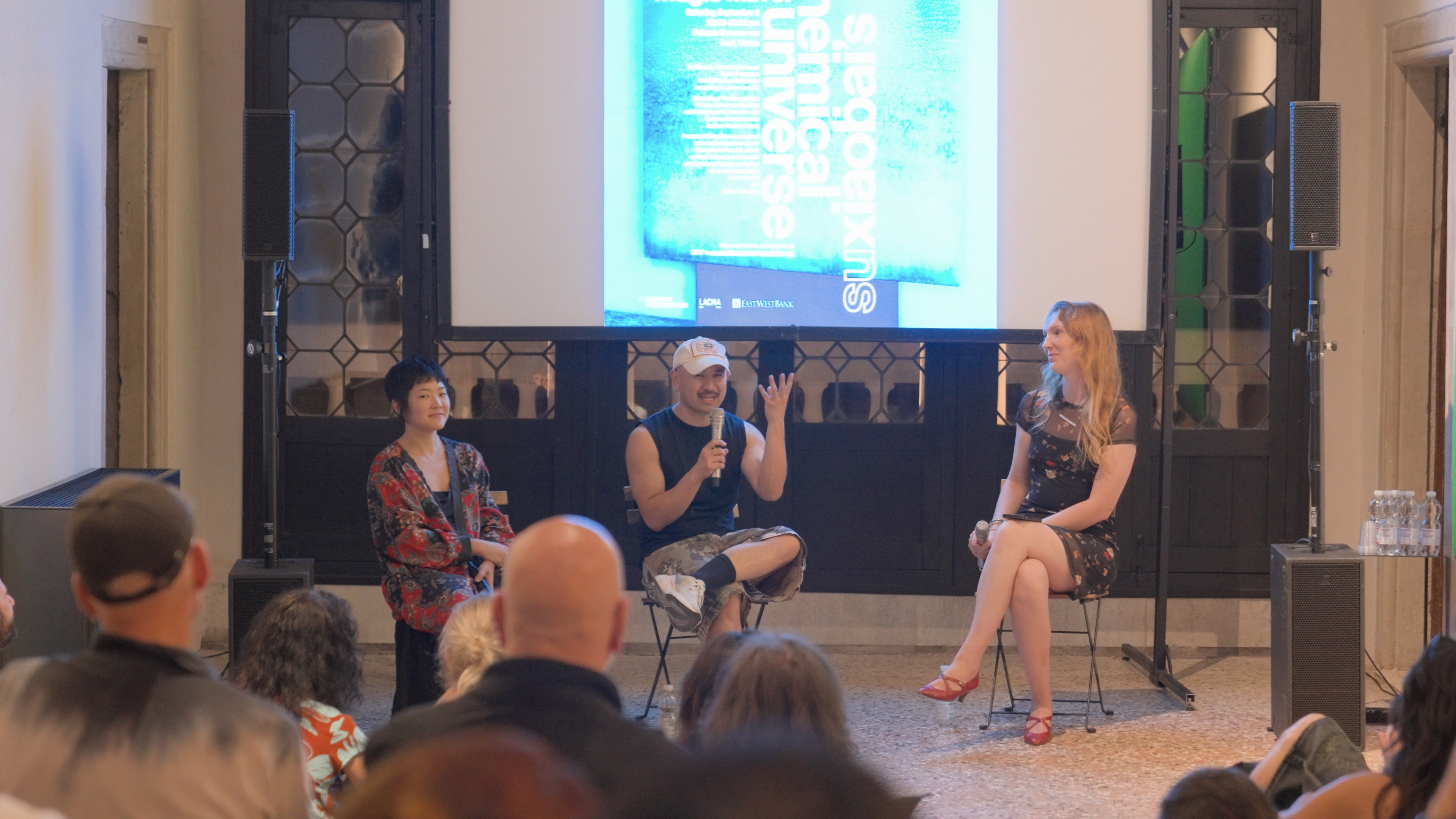
In conceptualizing the public programs for Su Xiaobai’s Alchemical Universe, I drew inspiration from historic Chinese literary soirees (like the famed 4th-century Gathering at the Orchid Pavilion), in which friends composed poems and enjoyed wine together under moonlight, and the artist’s deeply poetic intercultural practice. I named each program by combining two titles of Su’s paintings. “Voice-over, Magic Mirror,” the final event, brought together artist and Grammy-nominated video director Andrew Thomas Huang, media artist and scholar Vivian Wenli Lin, Butoh-trained artist Kyoko Takenaka, researcher and artist Leone Contini, and LACMA curator Susie Ferrell. The program showcased Contini’s enlightening talk on cultural hybridity, creative experiments orchestrated by Lin, Huang’s stunning film, The Deer of Nine Colors, commissioned by the 2025 Thailand Biennial and presented at LACMA last spring and London’s Southbank Centre this autumn, live performance by Huang and Takenaka, and cross-cultural conversations sparked by Ferrell.
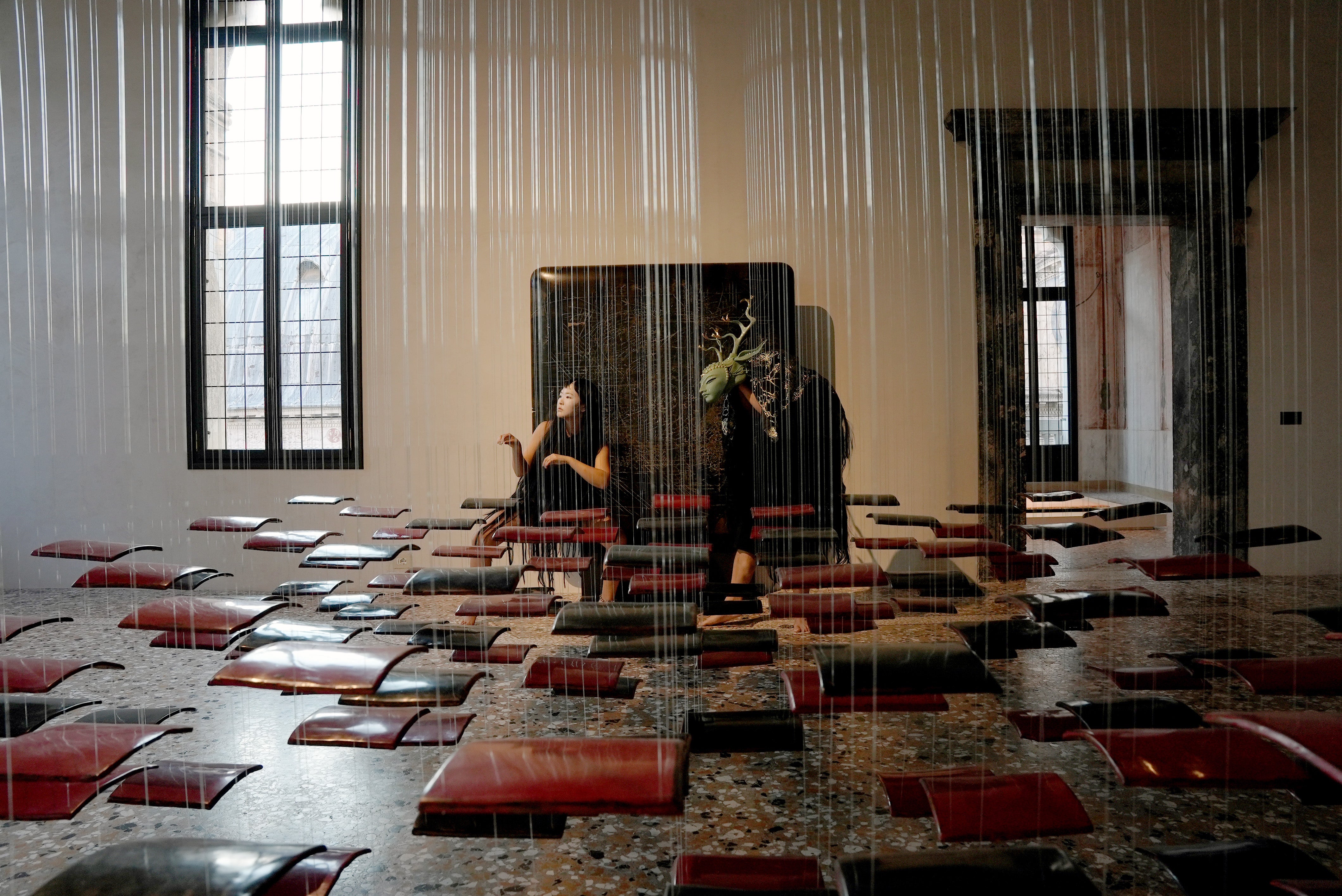
“Voice-over, Magic Mirror” manifested the exhibition’s expansive, compassionate and wild spirit, which reverberated in lines from Huang’s film (“My real name is love. Keep me untamable”) and in poetry shared in dozens of languages by people from all over the world who visited Su Xiaobai’s Alchemical Universe. Lin’s photograph of Takenaka and Huang, clad in deer mask and immersed in “300 poems,” Su’s kinetic installation made of red and black lacquered roof tiles salvaged from demolished Qing Dynasty buildings in Fujian Province, crystallizes the energy generated in our Orchid Pavilion Gatherings. As the suspended tiles of “300 poems” harmoniously sway when activated by passersby and gentle breezes, “Voice-over, Magic Mirror” illuminated our shared humanity and connectivity across space and time.