




As LACMA prepares for the 2026 public opening of the new David Geffen Galleries, the future home of the museum’s permanent collection spanning a breadth of eras and cultures, we’re sharing 50 iconic artworks that will be on view in the building over the next 50 weeks in the series 50 Works 50 Weeks.
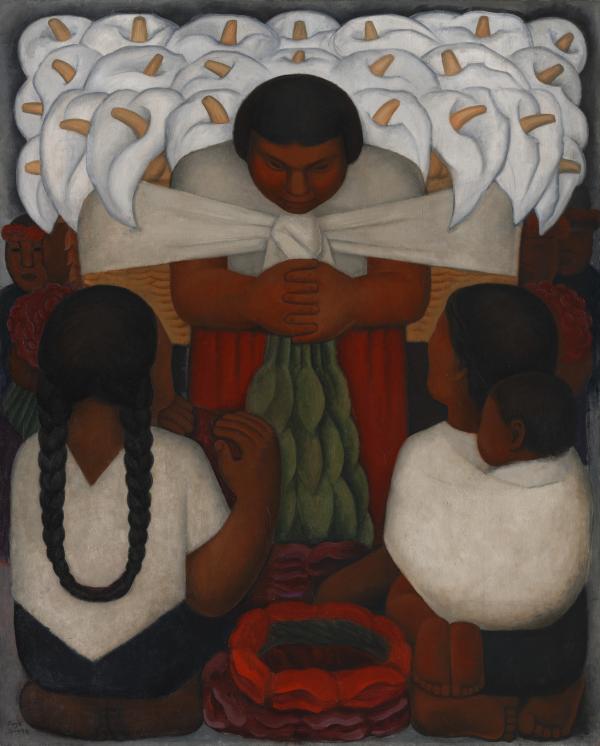
Throughout his career, Diego Rivera created numerous easel paintings and watercolors representing the Indigenous peoples of Mexico. Flower Day (Día de flores) is one of his earliest and most accomplished depictions of a seller of calla lilies. The unusual perspective of the flowers, which are seen from above, and the blocklike forms of the figures are stylistic devices derived from Rivera’s earlier Cubist paintings as well as his interest in Mesoamerican art.
View this post on Instagram
Flower Day was Rivera’s first major painting to enter a public collection in the United States. It was acquired by LACMA’s predecessor, the Los Angeles Museum of History, Science, and Art, after winning first prize in the First Pan-American Exhibition of Oil Paintings in 1925. This remarkable piece of the museum’s history will now have a prominent place in the David Geffen Galleries, where it will be displayed near other works representing Indigenismo, a political and cultural movement in Latin America, as well as examples of Mesoamerican art.