




Composed of a single, non-hierarchical exhibition level inspired by the flow of oceans, the David Geffen Galleries were conceived from the very beginning as a space that breaks away from traditional ideas of what a museum looks like. From its sculptural concrete form to its glass façade, architect Peter Zumthor’s vision for the building has also always been one that celebrates its materials. Although most of the Geffen Galleries’ raw architectural concrete is left unadorned, the walls of its varied rectangular interior galleries have been tinted with custom glazes that reflect the building’s curatorial and conceptual innovation while showcasing the materiality of this “concrete sculpture.”
The idea for painting the Geffen Galleries didn’t begin with color, but with light and shadow. Zumthor conceived of the building as a space animated by the brightness and darkness of its surroundings. Galleries along the perimeter, flooded with sunlight, lead into relatively darker rooms inside, all shifting visually as morning turns to dusk. “The architecture becomes a living thing because it changes through the day, through the different seasons,” said Diana Magaloni, Senior Deputy Director for Conservation, Curatorial and Exhibitions, who led the process of conceptualizing, developing, and applying the glazes. To fit Zumthor’s vision, “we needed color emerging from darkness,” she explained, which meant finding a new way of tinting that would enhance the visual dynamism of the building without obscuring its surfaces, and which was tied conceptually to its environment.
“Just like the building, these colors needed to represent the location, the site,” said Magaloni. “It’s all here in Los Angeles, coming out of this ground.” As she, Zumthor, and the team at LACMA were considering an array of hues, the perfect inspiration appeared in one of LACMA’s exhibitions. For We Live in Painting: The Nature of Color in Mesoamerican Art (2024–25), which explored the artistry and science behind colors in the Indigenous Americas, Indigenous Zapotec American artist Porfirio Gutiérrez came to the museum and prepared pigments using ancient Indigenous processes. He ground indigo and cochineal, vivid blue and blood red, using basalt metates, tools made of black volcanic stones so dark they appear to swallow light.
“We had always wanted the colors to be rooted in the Americas,” said Magaloni. “After seeing these pigments, Peter said, that is what I want.”
The final palette—dusky red, vibrant blue, and nuanced black—draws on ancient traditions, but realizing them in the Geffen Galleries required an entirely new kind of paint. “To respect all of the texture, form, and life of the concrete, we needed to find a paint that would be completely transparent, while at the same time giving color,” said Magaloni. The solution was a state-of-the-art formula that would tint, rather than cover, the walls of the building, developed by Zumthor and Swiss craftsman Marius Fontana. Their innovative glaze, manufactured by the German company Keim, is composed of mineral pigments ground down to a nano scale, suspended not in a typical petrochemical binder but one made from silica, a mineral that is also the main component of concrete. With particles so small they become transparent, the colors are indistinguishable from the walls themselves.
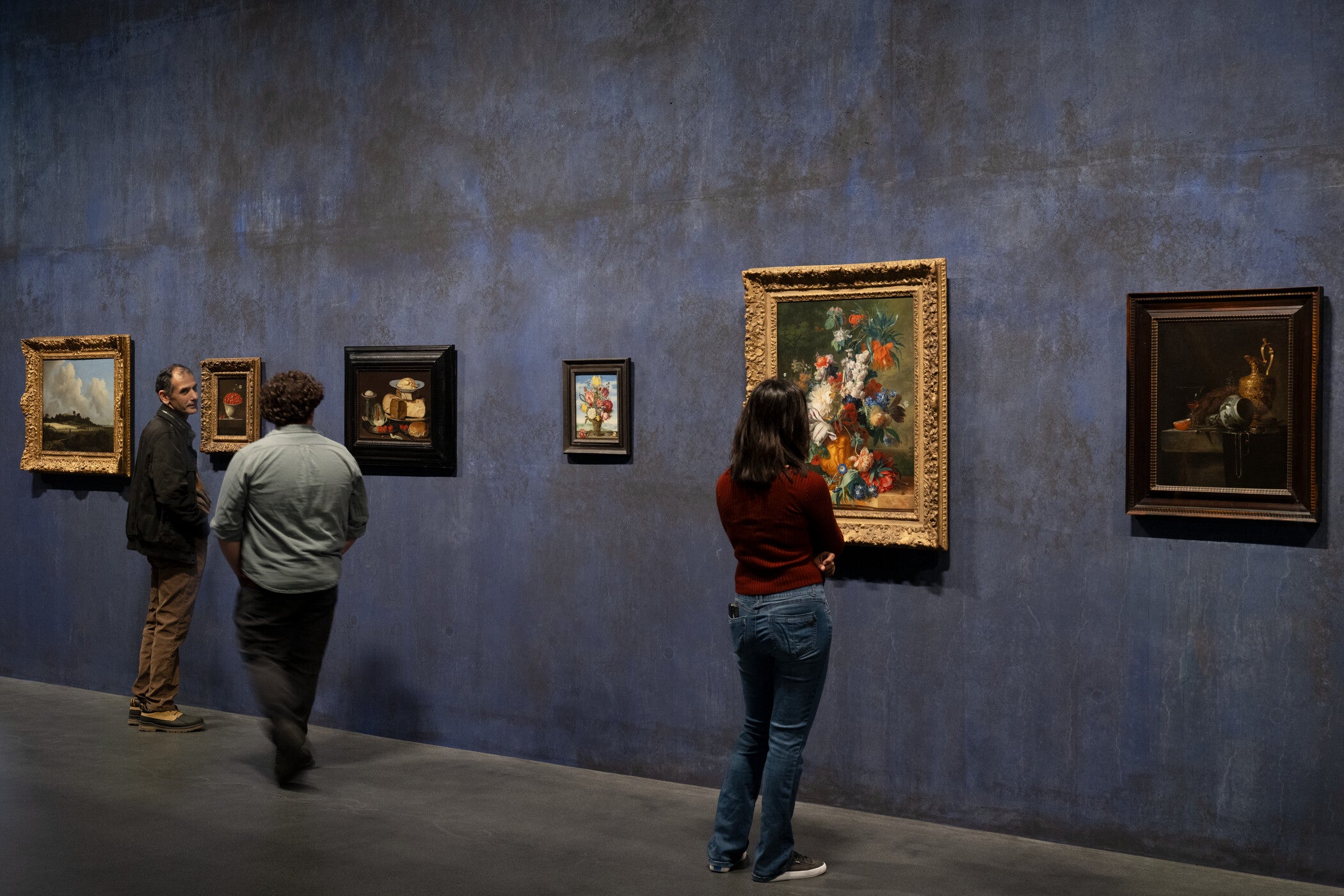
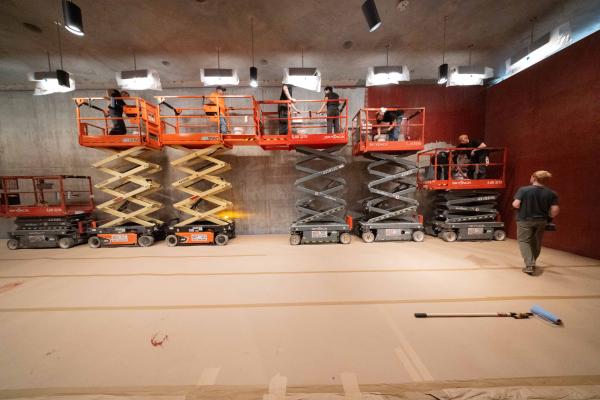
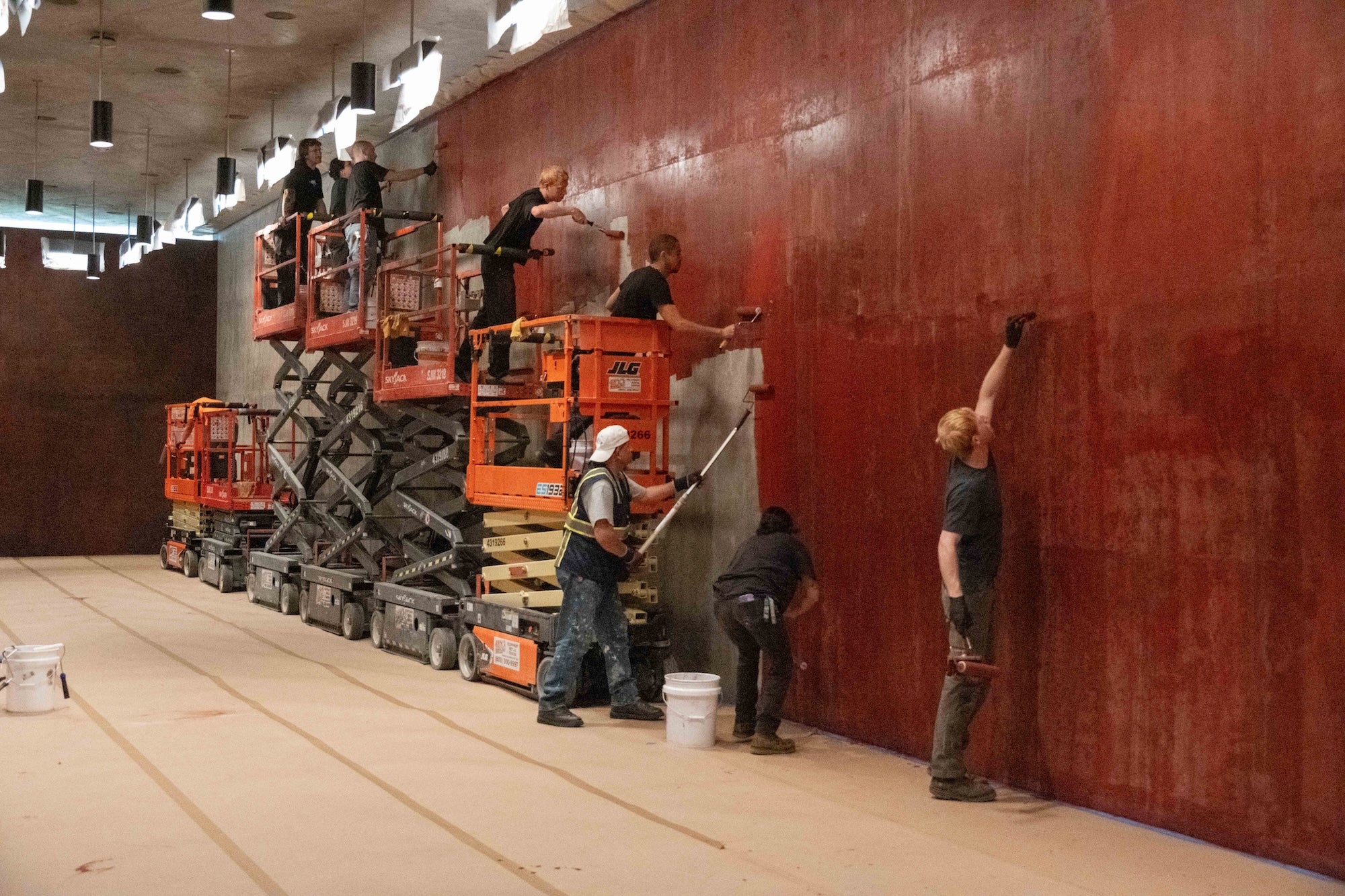
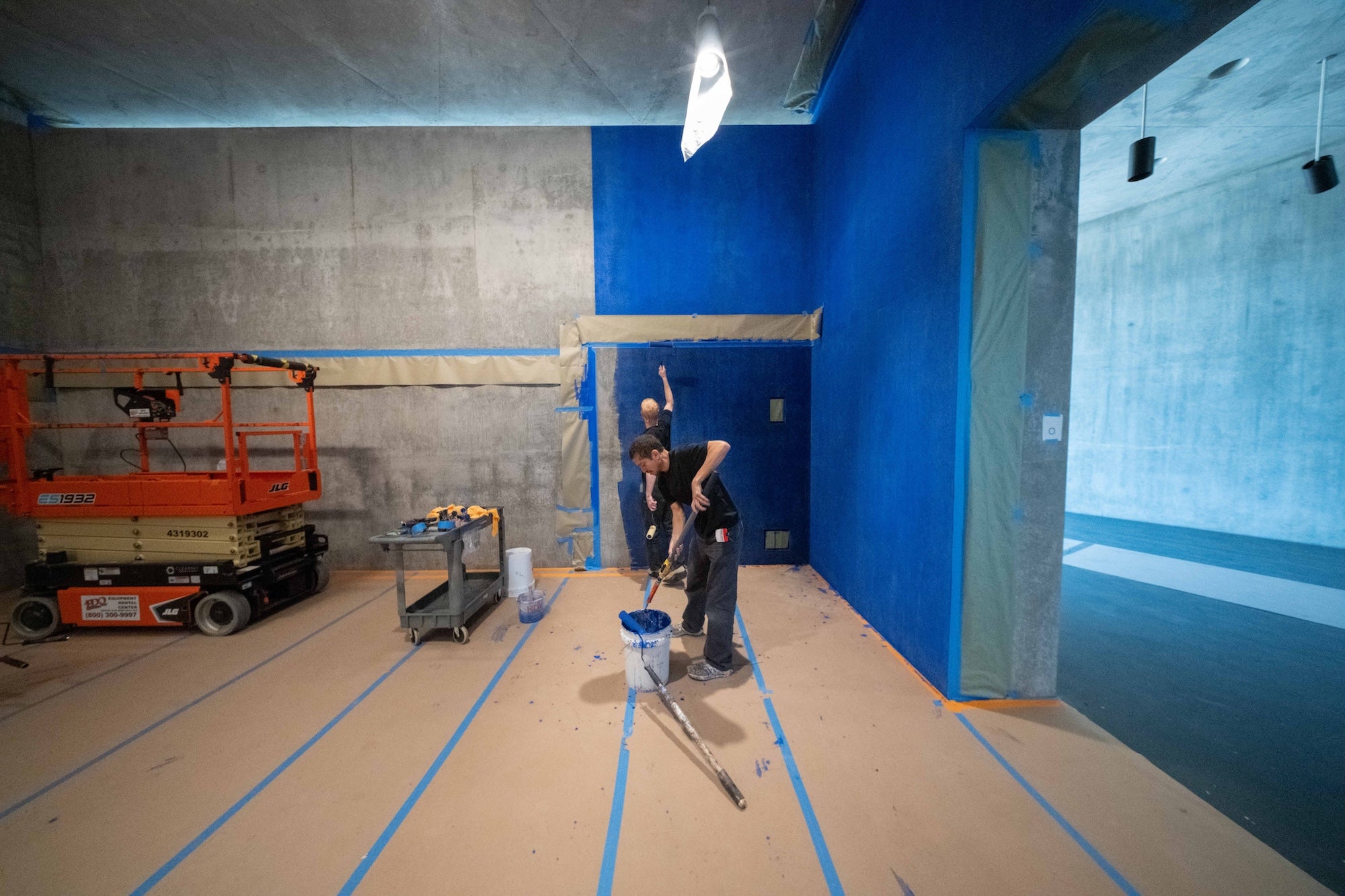
Allowing the natural visual nuances in the concrete to remain visible also meant developing an application process that was as transparent as the pigment itself. A small, rotating team of four painters at a time, most of them fine artists, experimented and gradually fine-tuned their technique room by room. “Each of the pigments have different properties, so how we applied them was different,” said Henry Kramer, one of the painters. “It even depended on the temperature of the gallery, the weather that day, and even the speed at which the paint dries, because it goes on so quickly.” While layers of red glaze were brushed onto the walls, blue was applied with a roller, followed by a second dry roller to erase marks; both colors were also layered with black. The cave-like “black” galleries, meanwhile, were actually tinted with five different variations of black, including a deep burgundy. “That black was the most difficult," said Magaloni. “I think we spent a whole week just in one gallery trying to refine that color.”
From start to finish, the actual painting took about four months of meticulous effort. The team developed a rhythm, passing rollers between those on the ground and up in scissor lifts. “The whole process is almost this whole choreographed ballet,” said Phillip Byrne, another painter on the team. “Even the concrete is kind of like a non-human collaborator.” The glaze itself also had to be mixed on the spot to prevent drying. Even now, only Magaloni and painter Maia Layton know the precise “recipes” that were crafted in the moment based on the size of each gallery. The final result of the layered transparent washes is concrete that seems to emanate color, each wall its own work of art.
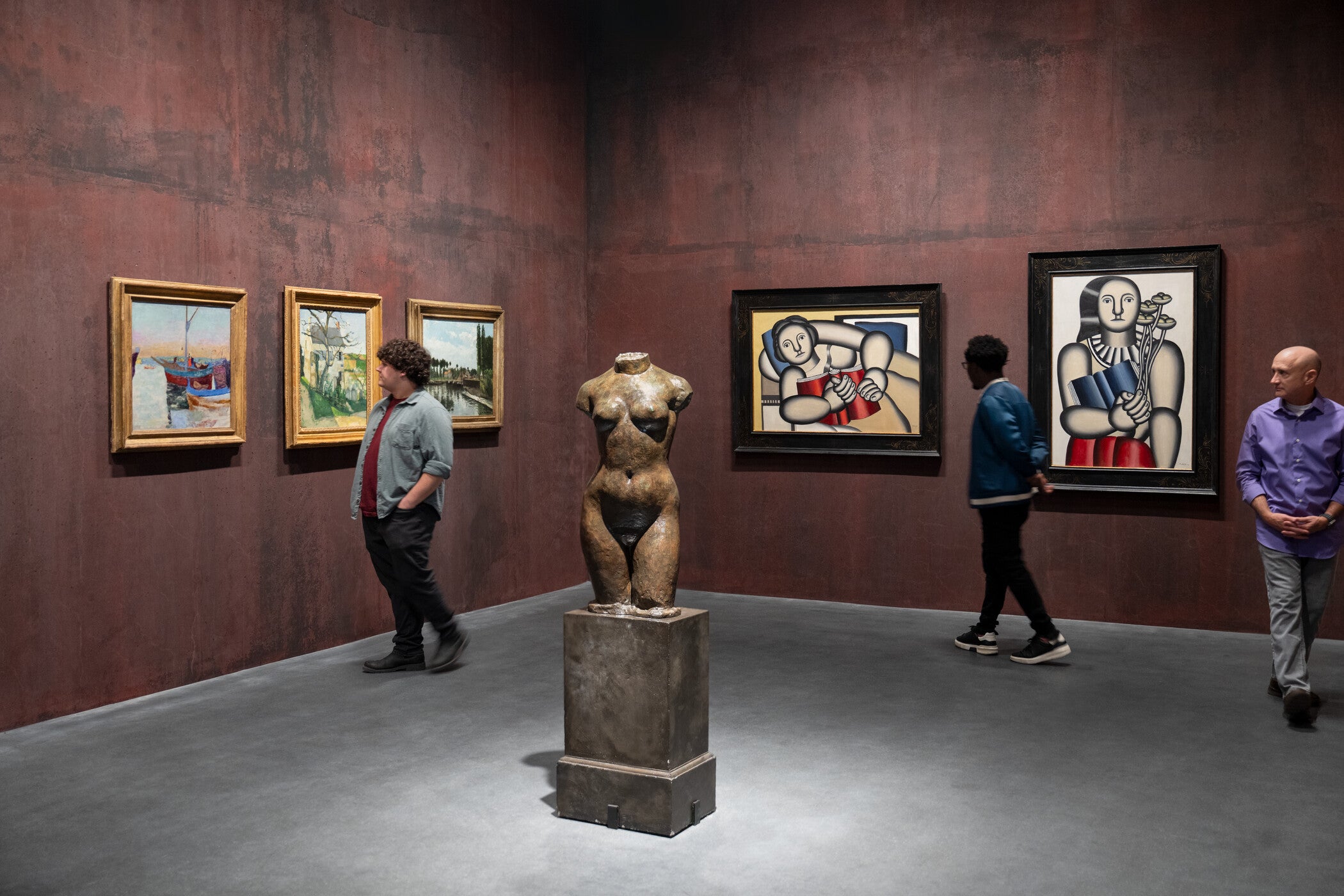
“There was no difference between painting these walls and making a painting on canvas because each one is distinct,” said painter Gio Black Peter. “We made 108 individual paintings on concrete.”
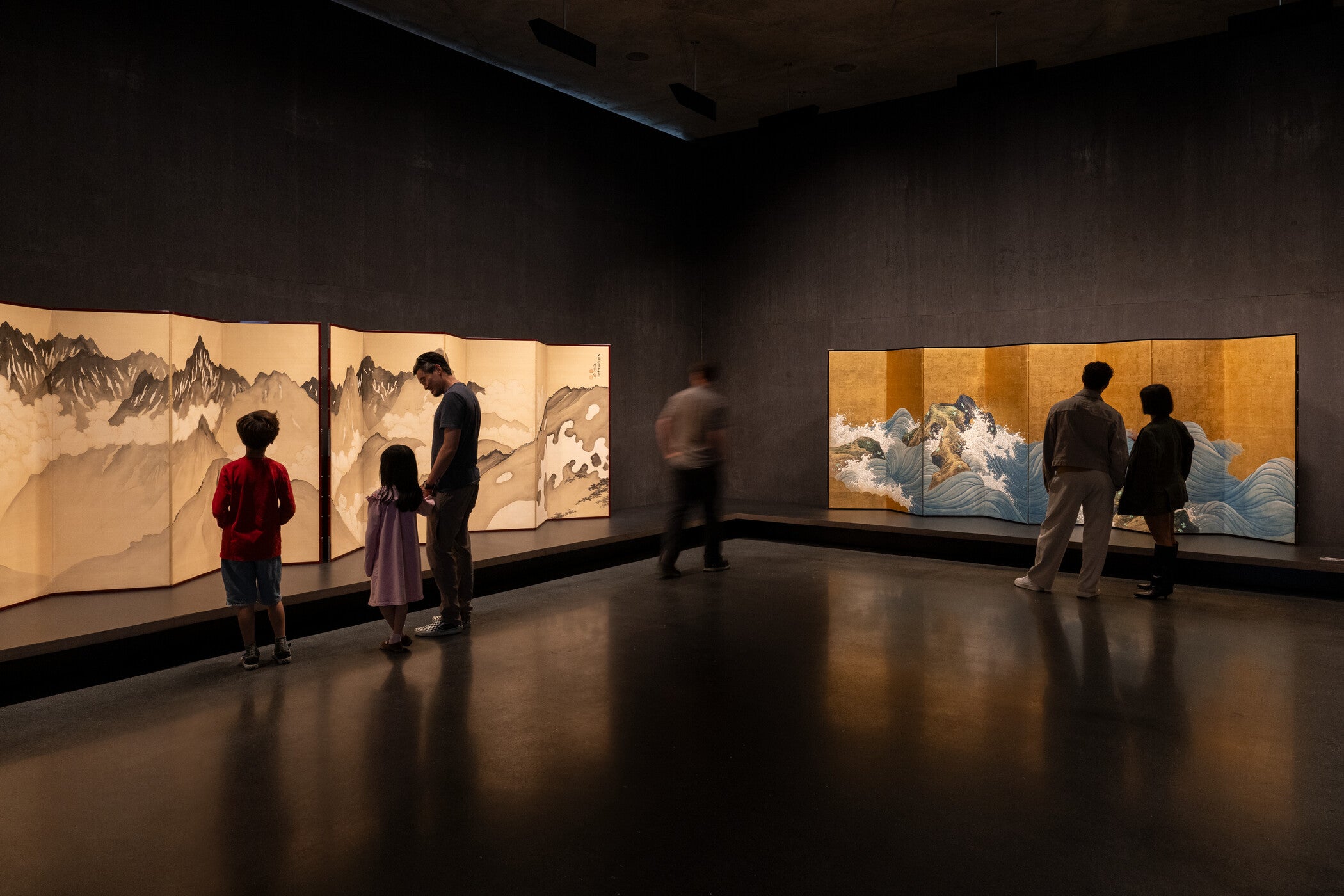
The placement of these “paintings” also follows a conceptual logic inspired as much by Zumthor’s vision of light and shadow as the Mesoamerican cosmology presented in We Live in Painting, with red galleries in the southern portion of the building, blue in its central zones, and black in the north. “It represents a day,” Magaloni explained. “It's the sun's journey into the underworld. And these concepts of the underworld in Mesoamerica are our place of origin, where our ancestors are. All the ideas originate from there.” Even more crucial to the galleries than this cosmic inspiration, however, is their interaction with the artwork they display. Since the Geffen Galleries holds objects from across time and place, their colors could never be tied to any single culture or exhibition. They now instead belong to the building itself, allowing both its materials and its art to shine.
A version of this article was first published in the spring 2026 issue of LACMA's Insider magazine.