


I met David Hockney on Sunday May 9, 1976, at the afternoon opening of his show Works in the Eye at Nick Wilder’s gallery on Santa Monica Boulevard. Newly arrived in L.A., I was excited to meet this British artist whose images were even then so associated with the public perception of his adopted home—a landscape of sunshine, pools, palm trees, and portraits of his close friends—so many of them notable in their own right. It was a heady gathering for a young curator—Billy Wilder, Christopher Isherwood, Vincent Price, all close friends of David’s, were there among the crowd. I remember people were wearing T-shirts with “Tea at Nick’s” printed on them and David was going around drawing on the backs of the shirts. I wish I still had mine.
For over 50 years I have had the pleasure and privilege of knowing David, visiting his studios in Los Angeles, Malibu, Normandy, and London, watching his designs for operas evolve, organizing exhibitions of his work, bringing his art into the museum’s collection, sitting for him for several portraits, and enjoying many lunches and dinners over decades of close friendship. It has been one of the greatest experiences of my life. With his passing on June 11 in London, just a month shy of his 89th birthday, I am reflecting on the enormous body of work he has left—and on the extraordinary impact he had on so many.
With David’s passing we have lost one of the most remarkable artists of the 20th and 21st centuries. David felt the world around him deeply and was able to share the beauty he saw with us through his art.
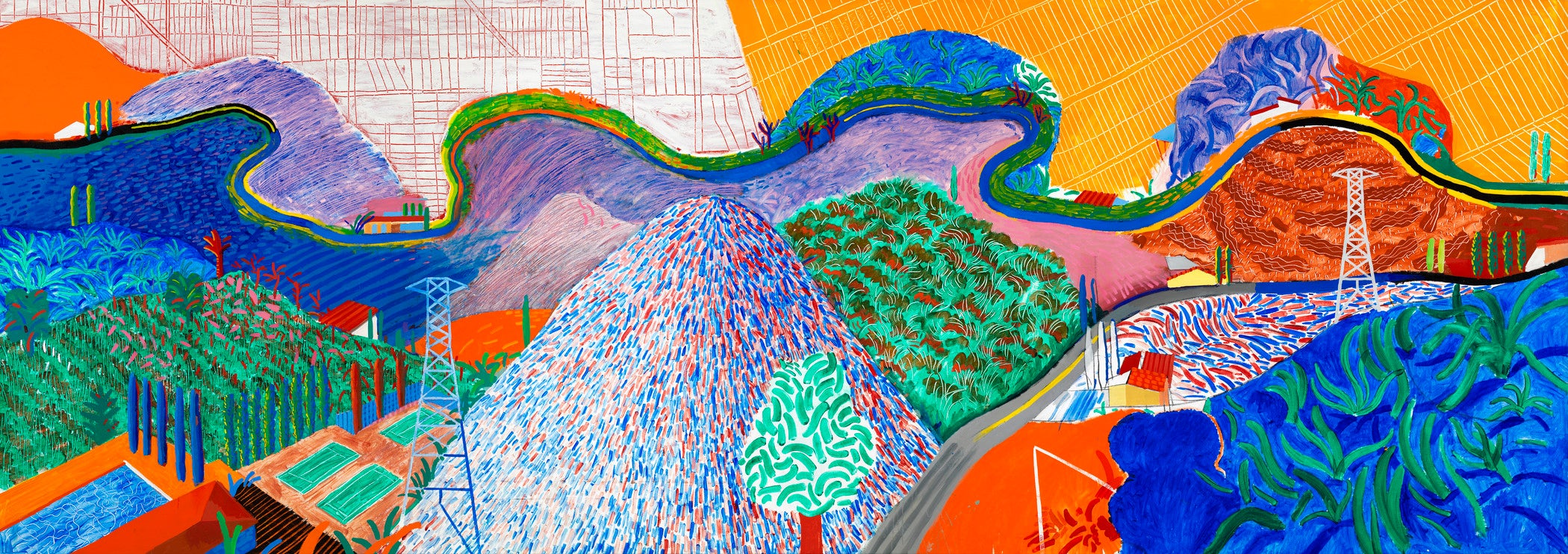
David had moved to Los Angeles in the early 1960s, and established his home and studio in the Hollywood Hills in 1978. He was tremendously prolific, and his images of L.A. in paintings, prints, and photographs defined an image of L.A. that remains to this day.
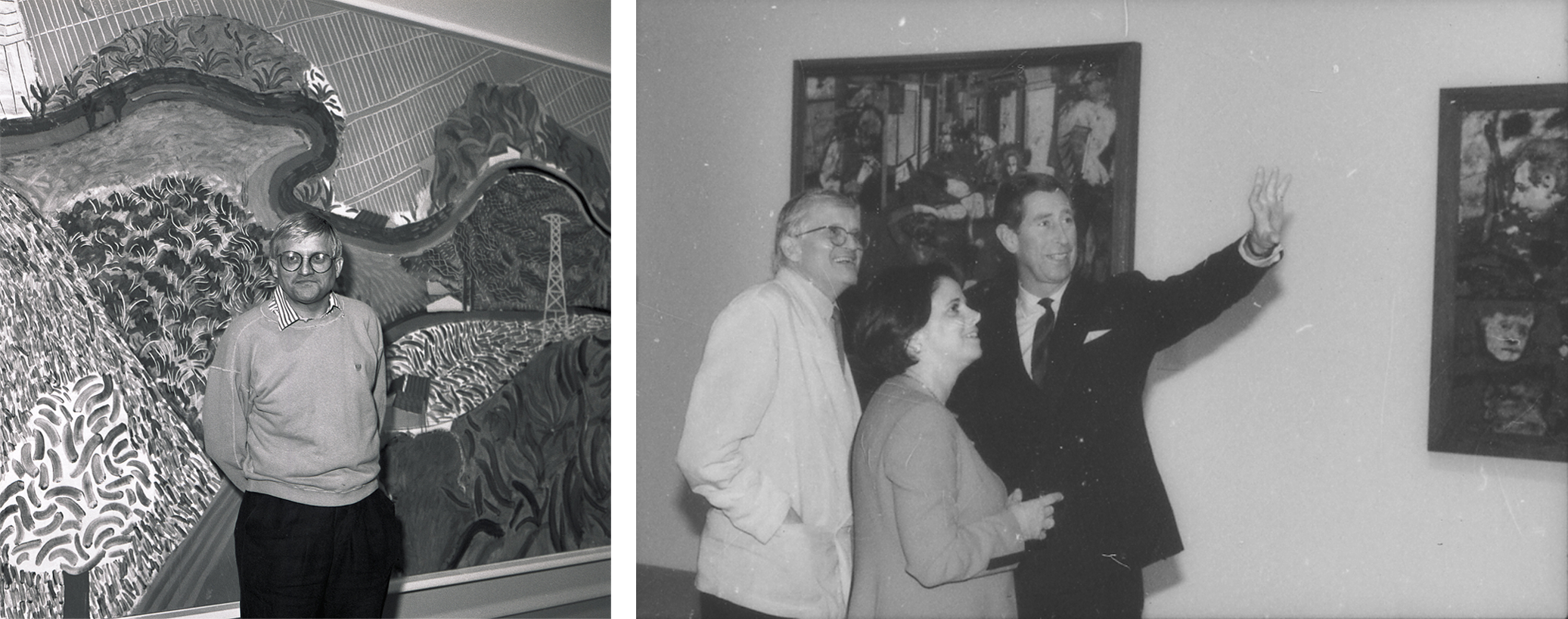
David and LACMA enjoyed a close relationship for decades; he would often refer to the Tate and LACMA as “his” museums. I co-organized with Maurice Tuchman his first retrospective in 1988 at LACMA, which eventually traveled to the Metropolitan Museum in New York and the Tate Gallery in London.
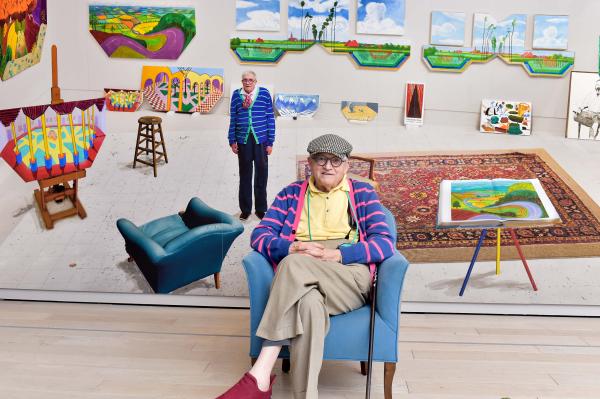
I always marveled at David’s enormous curiosity: his intense engagement with how artists like Piero della Francesca and Paolo Uccello achieved perspective, or with van Eyck, Vermeer, and Ingres’s realism and their speculated use of mirrors and lenses. Studio visits with him were also exhilarating, not only because of seeing what he was working on but also learning about what new books he was reading on science or history. David’s hearing continued to diminish over the years, so he relished conversations in the studio or in quiet surroundings once crowds became challenging. In 2013, after many years of painting and drawing the Yorkshire landscape, David returned to L.A. and embarked on a project that became 82 Portraits and 1 Still-life—a group of similarly sized and formatted portraits of his close friends and associates that he worked on for over three years. I was fortunate to be one of his sitters. The experience was profound.
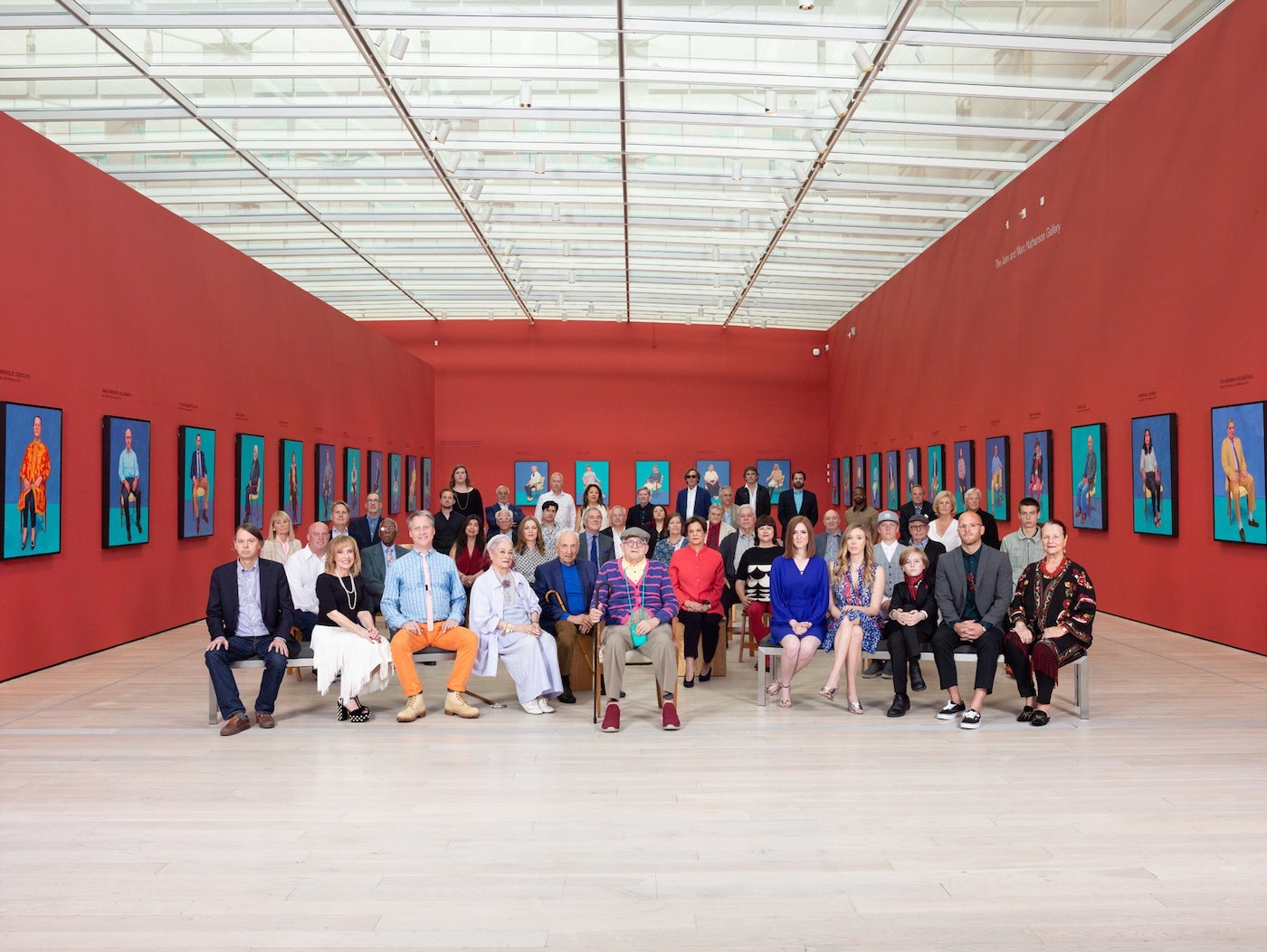
When David asked me if I would like to come up to his studio and sit for him, he asked for a commitment of three consecutive days, to give him what he called a “20-hour exposure.” I was asked to appear at 10 am and stay until the early afternoon, which would include lunch with the Hockney team.
It was up to each sitter to determine what to wear for the session. I noticed from other portraits that strong colors stood out, and I decided to wear something red. Upon arriving at the airy Hollywood Hills studio on the morning of January 7, 2014, I noticed a freshly primed canvas resting on the easel, clean brushes, tubes of paint, and palettes arranged on a table to its right.
David greeted me warmly, taking note of my outfit—which he liked—and invited me to take my place on the low riser, just left of the easel, and to find a comfortable position in the armchair. Realizing that I would be committed to this pose for the next few days, I experimented and tried to assume one I could manage without squirming or changing position. David observed the position and suggested moving the chair slightly for a better composition, and then we were ready to begin. The studio was silent, and beautiful sunlight streamed in through its numerous skylights. It was exciting, the air charged with the anticipation of beginning a new work.
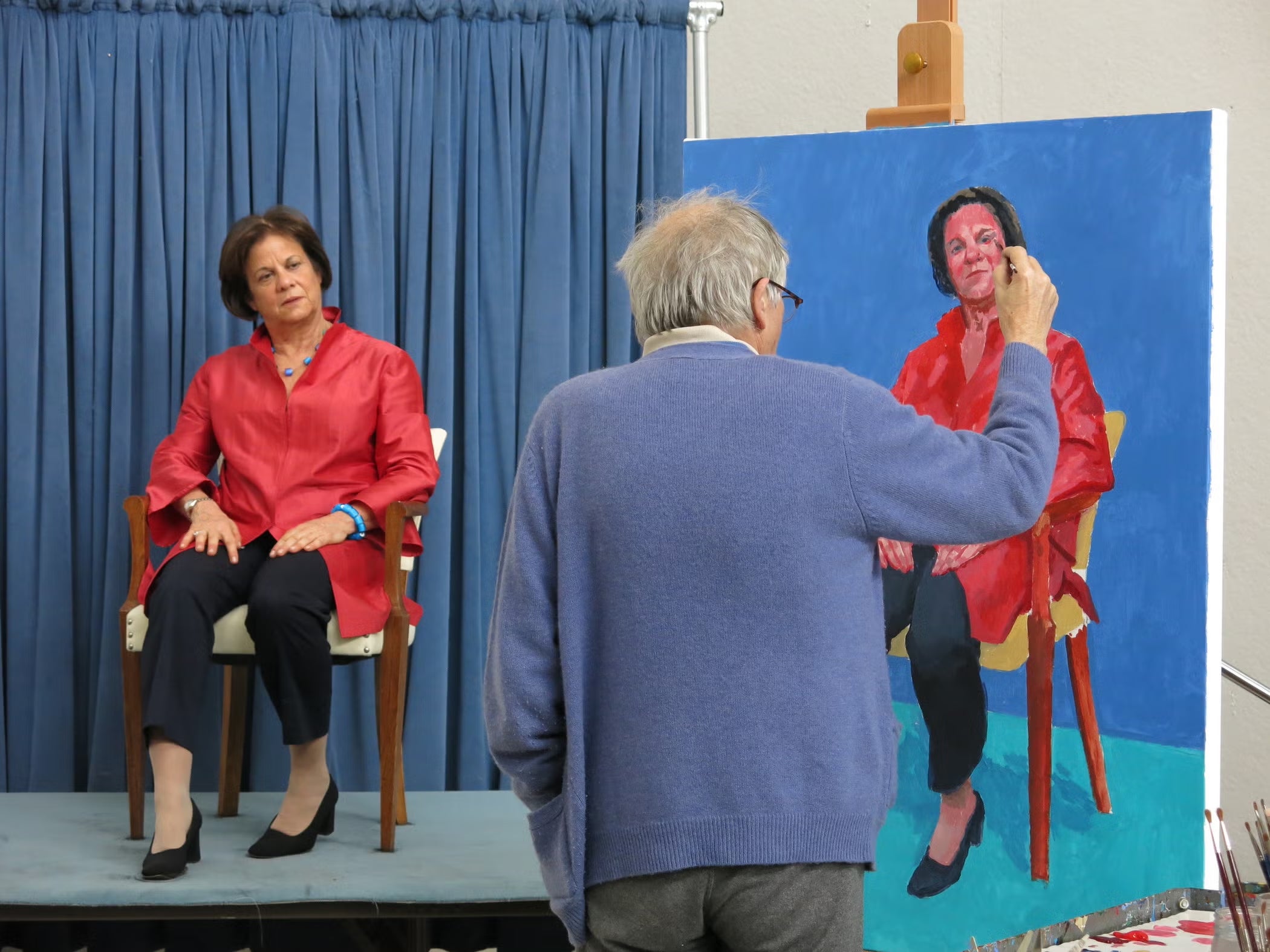
The first hour or so was incredibly intense; working quickly with charcoal, David sketched directly onto the canvas, fixing the outline of my head, body, and chair in order to capture my pose. His intense gaze and careful scrutiny were a bit daunting at first, but after a while I eased into a state of thoughtful observation. David worked intently and moved his hand quickly across the canvas; by the time we took our first break, after about 90 minutes, the pose was locked in, and he had made a first pass at painting my face, hair, and some of my red tunic.
Before I got up to stretch my legs, a studio assistant placed blue tape on the floor where my feet were, so that I would know exactly where to position my shoes when we resumed. I couldn’t see the canvas while I posed, so only during our short breaks—when we would chat and drink coffee while David smoked—did I have a chance to observe my portrait taking shape.
By the time we broke for lunch, he had painted the background. The meal was convivial, served family style around the table in David’s home. Afterward, we returned to the studio for another session, during which he added in my dark blue trousers and made some adjustments to my red tunic and my face. We said goodbye and set a time to meet up the following day.
It wasn't easy being subjected to such intense scrutiny; it made me wonder how my thoughts were being transmitted to David, and how he was capturing this on the canvas. His observation is unrelenting: his portraits are never meant to flatter, but he does “get” his subjects. As a curator, it was an absolute privilege to observe David’s process so intimately. I found the process absorbing; it taught me a lot about portraiture and how artists do what they do. Seeing how quickly he worked—how he could capture my pose, expression, clothing, and details within the first 90 minutes—was a revelation. I noticed how he returned several times to my face, hands, and feet during the three days, which I found fascinating. When it was finished, my portrait took its place amid the others on the studio wall; we talked about it and the process. I was enthralled, exhausted from the concentration, and immensely honored by the whole experience.
It did occur to me that doing these portraits allowed David the opportunity to have serious, good, one-on-one conversations with his friends over the course of three days, in the intimacy of his studio. His joy at the exchange and the work was contagious.
During the pandemic, sequestered in his home in rural Normandy, he greeted every day by walking around his gardens, noticing the changes in nature, iPad and stylus in hand. Each day, he created something new, quickly crafting a tree about to bloom or a branch or a flower, observing how his subjects changed each day with the passage of the seasons. And he would share these images with his friends; each morning I would awake in L.A. and be greeted by an emailed iPad drawing from David, reminding me of all the beauty in the world. “Don’t worry,” he’d say with his characteristic sly wit, “they can’t cancel the spring.” He helped many of his friends get through those dark and lonely days. He saw the world like no one else.
Being together last spring going through his marvelous retrospective at the Fondation Louis Vuitton in Paris was an opportunity to reflect on the enormity of his career and the breadth of his accomplishments. I am deeply saddened by his passing, and grateful for all my time with him. He has left us his greatest legacy in his art.