




Erewhon at LACMA is here to stay, cementing the Los Angeles icon’s presence on the museum’s campus. To commemorate the partnership, we’ve introduced the Erewhon at LACMA apparel collection, as well as an artful new LACMA Smoothie available exclusively at the museum, featuring a vibrant blend featuring organic pineapple, mango, strawberry, mandarin, and lion’s mane, all displaying matching of tones pink, blue, yellow, white, and warm gray. A portion of proceeds from every Erewhon at LACMA Collection purchase will directly support the museum’s dynamic education and exhibition programs.
Did you know that the hoodie, tote, hat, and smoothie were inspired by Alexander Calder’s striking fountain Three Quintains (Hello Girls) (1964) located in front of the café? Read on to learn more about the iconic artwork that lent the drink its vibrant color palette, and discover other artworks in LACMA’s collection that pair perfectly with the full menu of Erewhon smoothies currently available at Erewhon at LACMA. On your next visit, head to the galleries after visiting the café to find them on view!
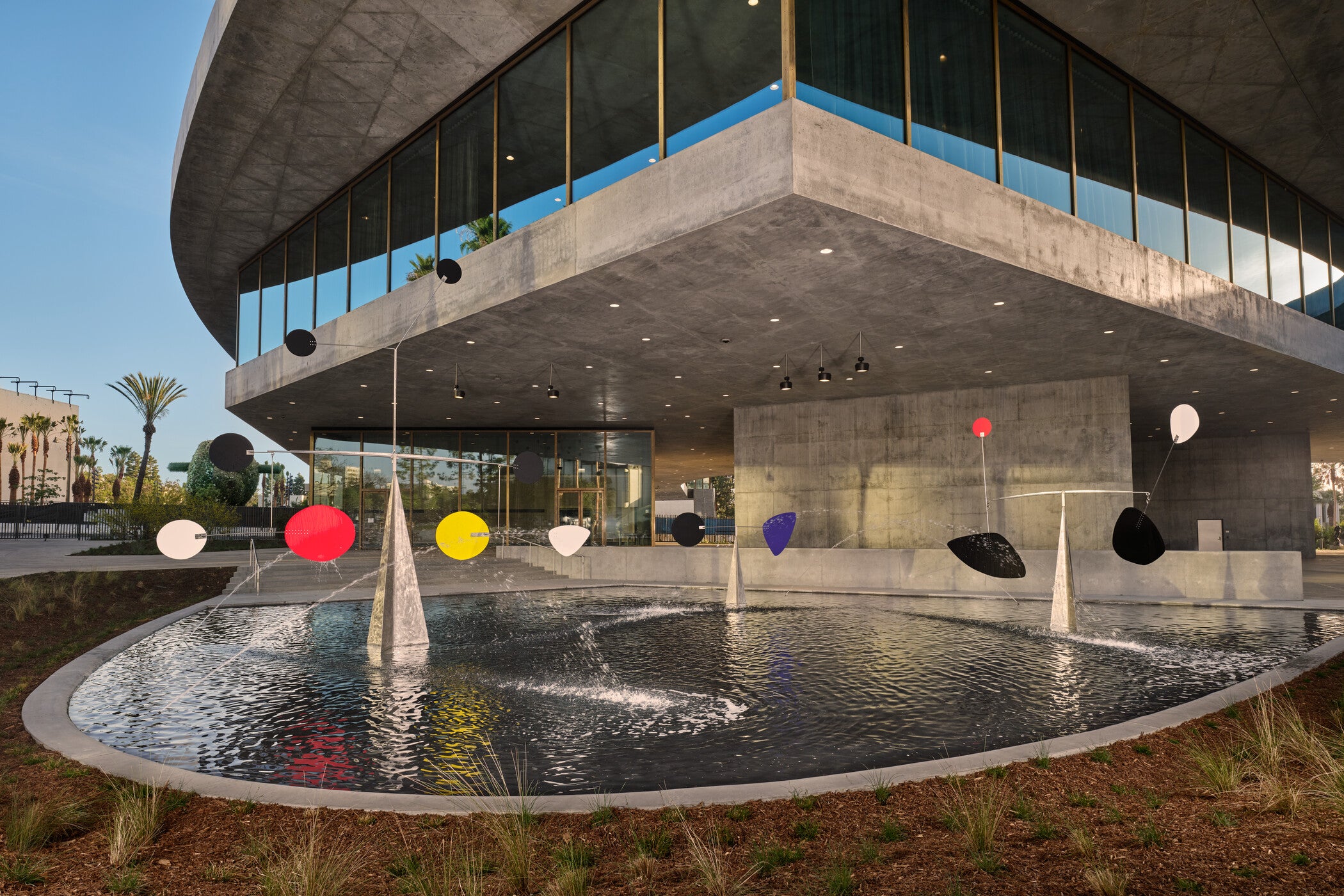
Alexander Calder, Three Quintains (Hello Girls), 1964
Paired with: the LACMA Smoothie
For Three Quintains (Hello Girls), Calder’s three mobiles were designed to rest on pylons placed in a reflecting pool—meant to move with both the wind and the spray of water from four strategically placed jets. Now beautifully restored, the dynamic sculpture where the polychrome paddles—in a palette of white, black, red, blue, and yellow—rotate, propelled by the wind and water, where chance meets design. In its new home outside the David Geffen Galleries, Three Quintains (Hello Girls) moves energetically and unexpectedly with the wind and water, and is a wonder to behold.
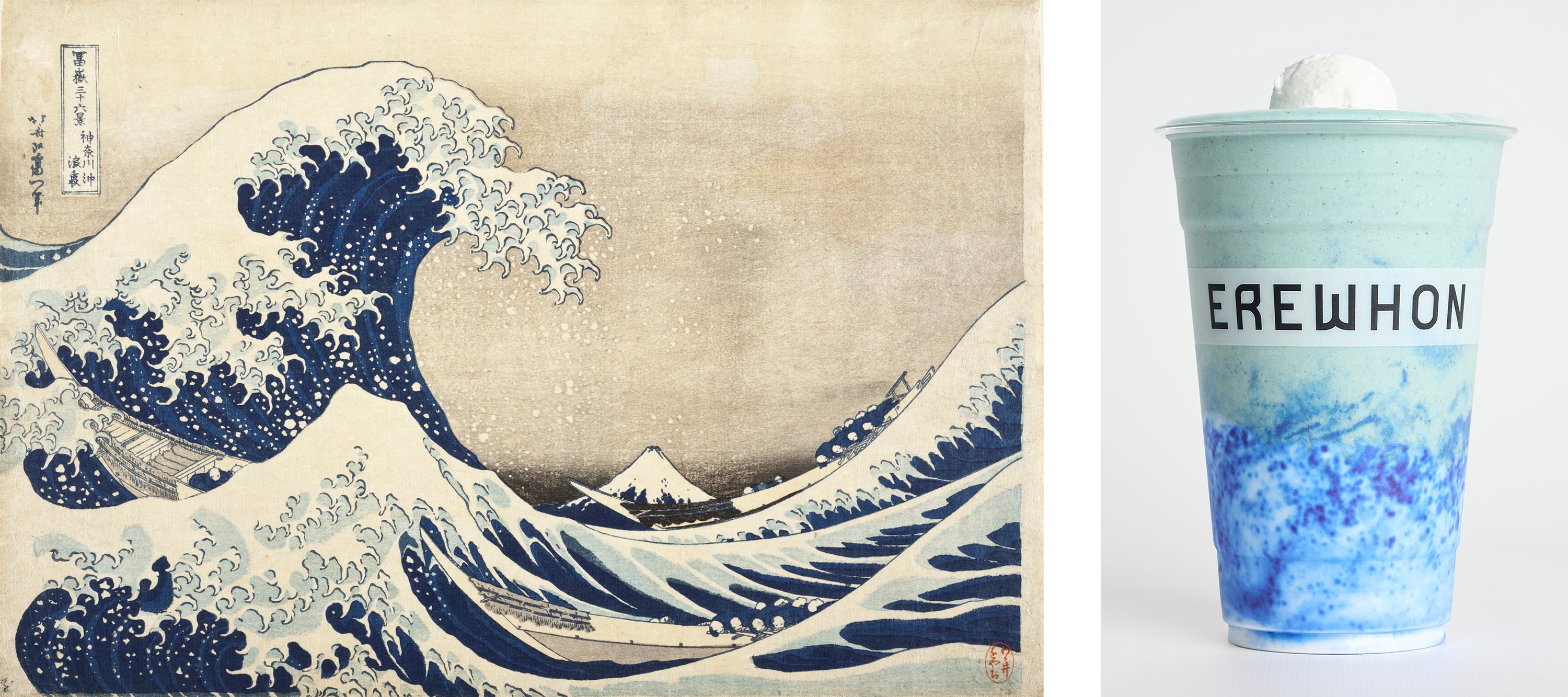
Katsushika Hokusai, The Great Wave off Kanagawa, c. 1830–31
Paired with: Cloud Smoothie (with almond milk, pineapple, banana, avocado, almond butter, grass-fed vanilla collagen, blue spirulina, and coconut cream)
The domestic and international admiration for Katsushika Hokusai’s series Thirty-six Views of Mount Fuji, of which this print is a part, can be credited to the artist’s abundant use of bright Prussian blue, a new artificial pigment introduced to Japan from the Netherlands. But it is also due to Hokusai’s geometric composition—the multiple circles formed by curling waves, the triangles created by the mountain and a smaller wave—which deftly echoes the subject matter. Mount Fuji, seen in the distance through the wave’s curve, represents a stable locus of permanency in this otherwise unpredictable and ever-changing world.
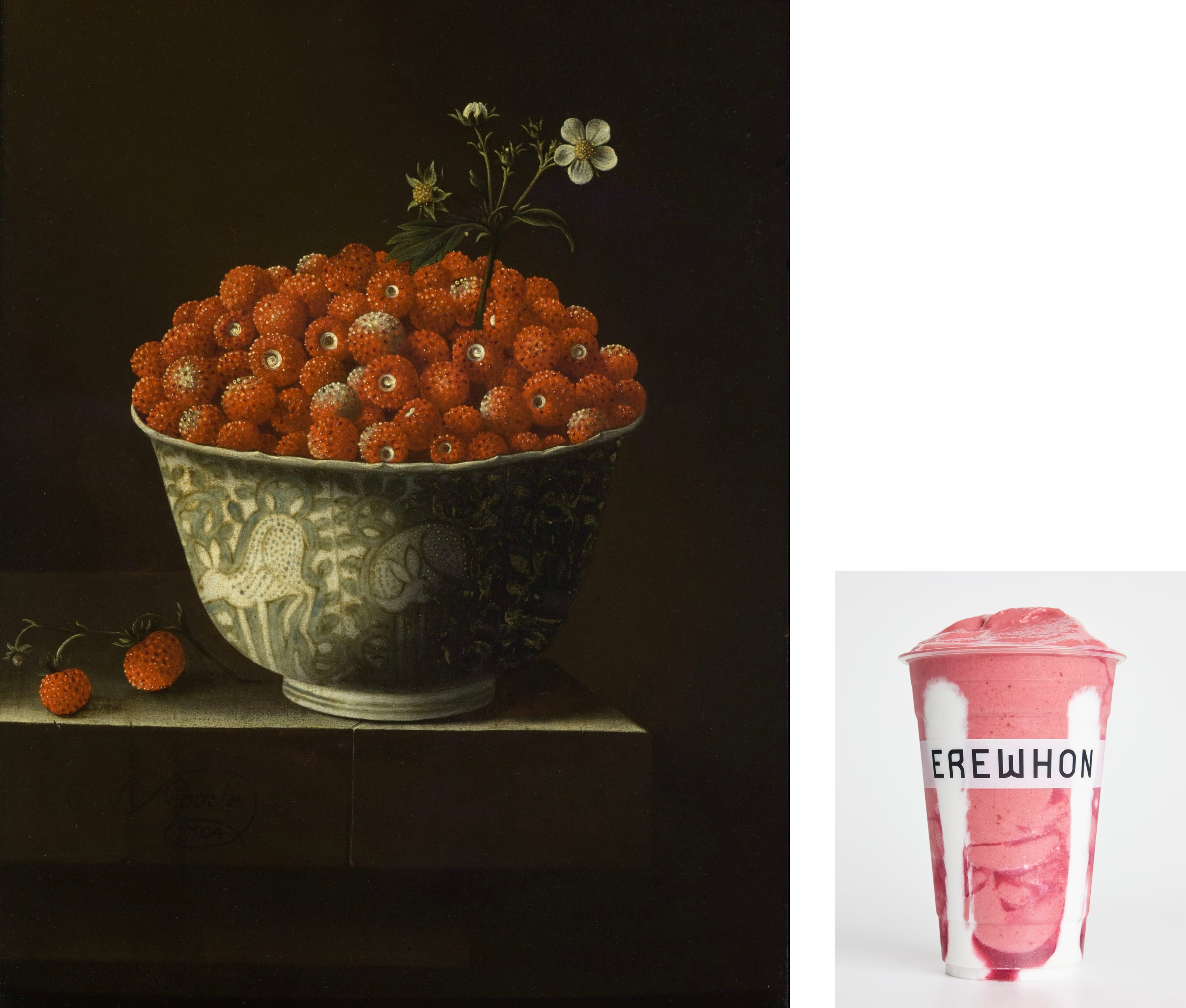
Adriaen Coorte, Strawberries in a Chinese Porcelain Bowl, 1704
Paired with: Strawberry Glaze Skin Smoothie (with almond milk, banana, strawberries, avocado, dates, vanilla collagen, sea moss, maple syrup, coconut cream, and strawberry glaze)
In this painting, a blue-and-white porcelain bowl holds a mound of red strawberries and a single stem of blossoming flowers. Two additional berries rest on the receding stone surface, which itself blends into the muted backdrop. Coorte’s treatment of the bowl—both as a dynamic form and as a surface for painting—showcases his attentiveness as an artist. The undulating texture of the berries echoes the dotted rendering of the prancing deer; the outlines of the fruit also follow the rim of the bowl, imitating its scalloped form.
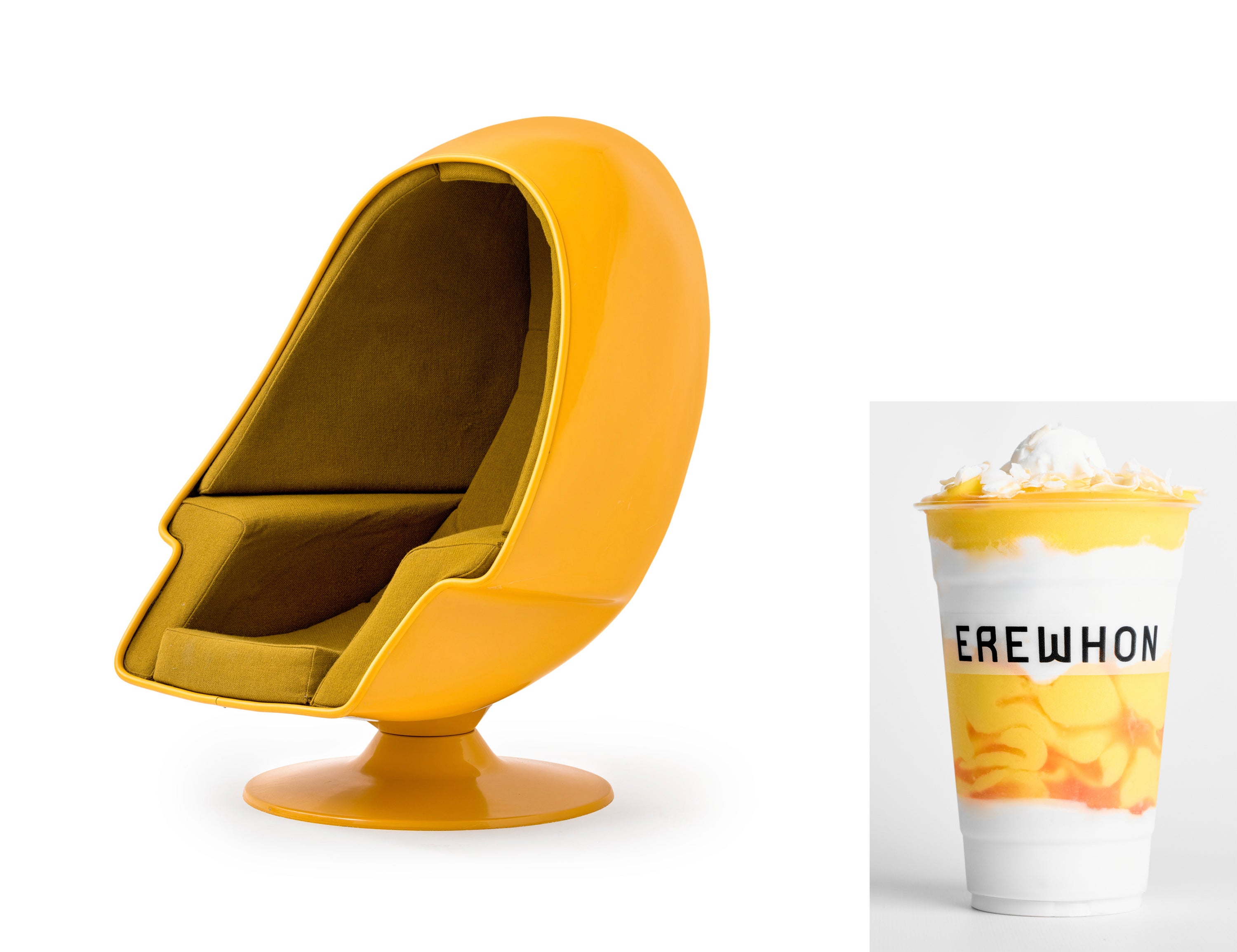
Anthony J. Carsello, L.E.E. Music Chamber, introduced 1969; this example 1970
Paired with: Malibu Mango Smoothie (with coconut water, mango, pineapple, banana, orange juice, vanilla collagen, Agent Nateur marine collagen, lion’s mane, maple syrup, coconut flakes, coconut cream, and mango glaze)
This bright yellow, biomorphic “chamber” was designed for loungers to sit back and connect their preferred audio device—a record player, 8-track, radio, or the like—protected from household noise by its fiberglass shell while they tuned into their music. The shell and baffling also blocked sound from entering the surrounding room, helping maintain calm for everyone else in the space, while its sunny hue lent an optimistic sense of design.