




As LACMA prepares for the 2026 public opening of the new David Geffen Galleries, the future home of the museum’s permanent collection spanning a breadth of eras and cultures, we’re sharing 50 iconic artworks that will be on view in the building over the next 50 weeks in the series 50 Works 50 Weeks.
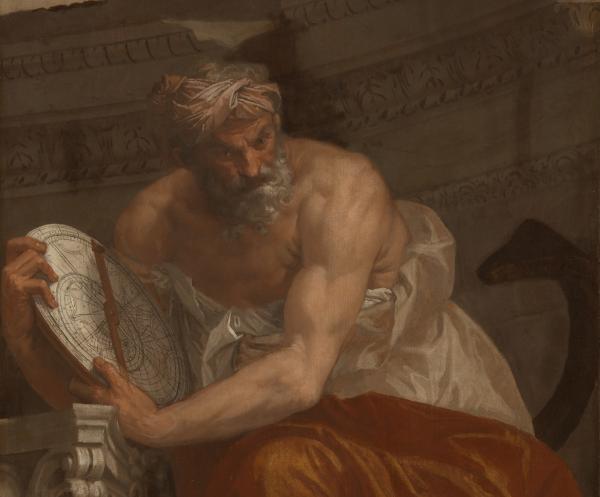
These two paintings, prime examples of the extraordinary monumental works that Paolo Veronese produced in 16th-century Venice, feature allegories of navigation, a subject of particular importance in the city, which was a hub of merchants and traders who depended on precise technology to traverse the Mediterranean.
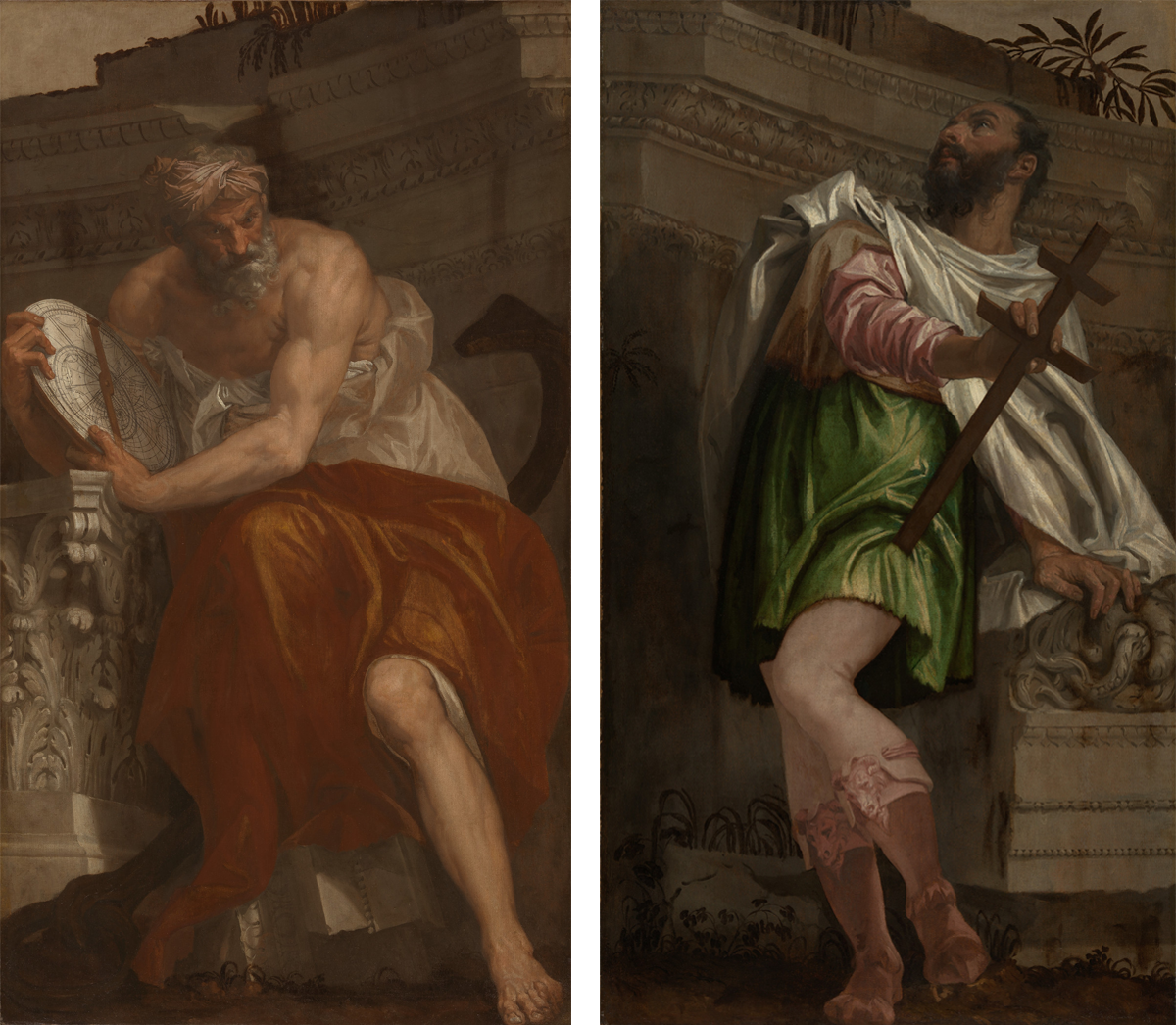
The large single figures in both paintings are set against architectural ruins and rest on large antique fragments a Corinthian capital in one case, an elaborate frieze in the other. The compositions’ notable features, however, also include the objects the two are holding: the younger-looking figure has a cross-staff, an instrument commonly used in 15th-century navigation to measure latitude, while the older figure holds an astrolabe, which was essential in establishing the position of the stars before the invention of the sextant.
The creation of these paintings coincided with a period of heightened activity on Veronese’s part in the decoration of public monuments in Venice. They once belonged to a larger group of at least four paintings probably intended for a public library, including additional pictures of a male figure holding an armillary sphere and a female figure representing the art of Sculpture. The grouping of these paintings reflect the rich and complex culture of Veronese’s time, when art, science, literature, mathematics, architecture, and painting all went hand in hand.