




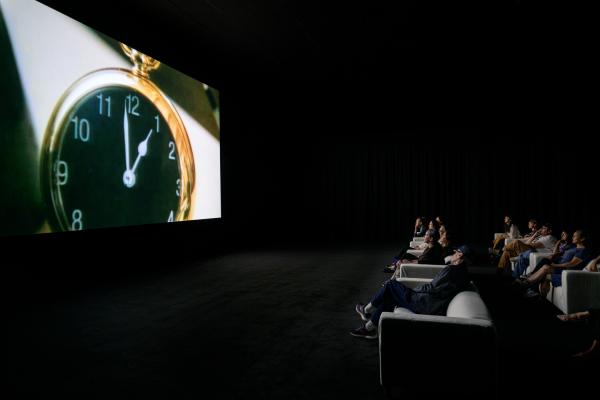
It’s no surprise that Christian Marclay considers The Clock to be “an experience” more than a video. This vast cinematic collage, constructed from thousands of moments of cinema and television history, takes 24 hours to unfold. Synced perfectly to local time wherever it is shown, it is both a literal, functional clock as well as a meditation on media, memory, and the passage of time itself. Even though the day-long artwork invites visitors to drop in for a few minutes, it often keeps them captivated for hours.
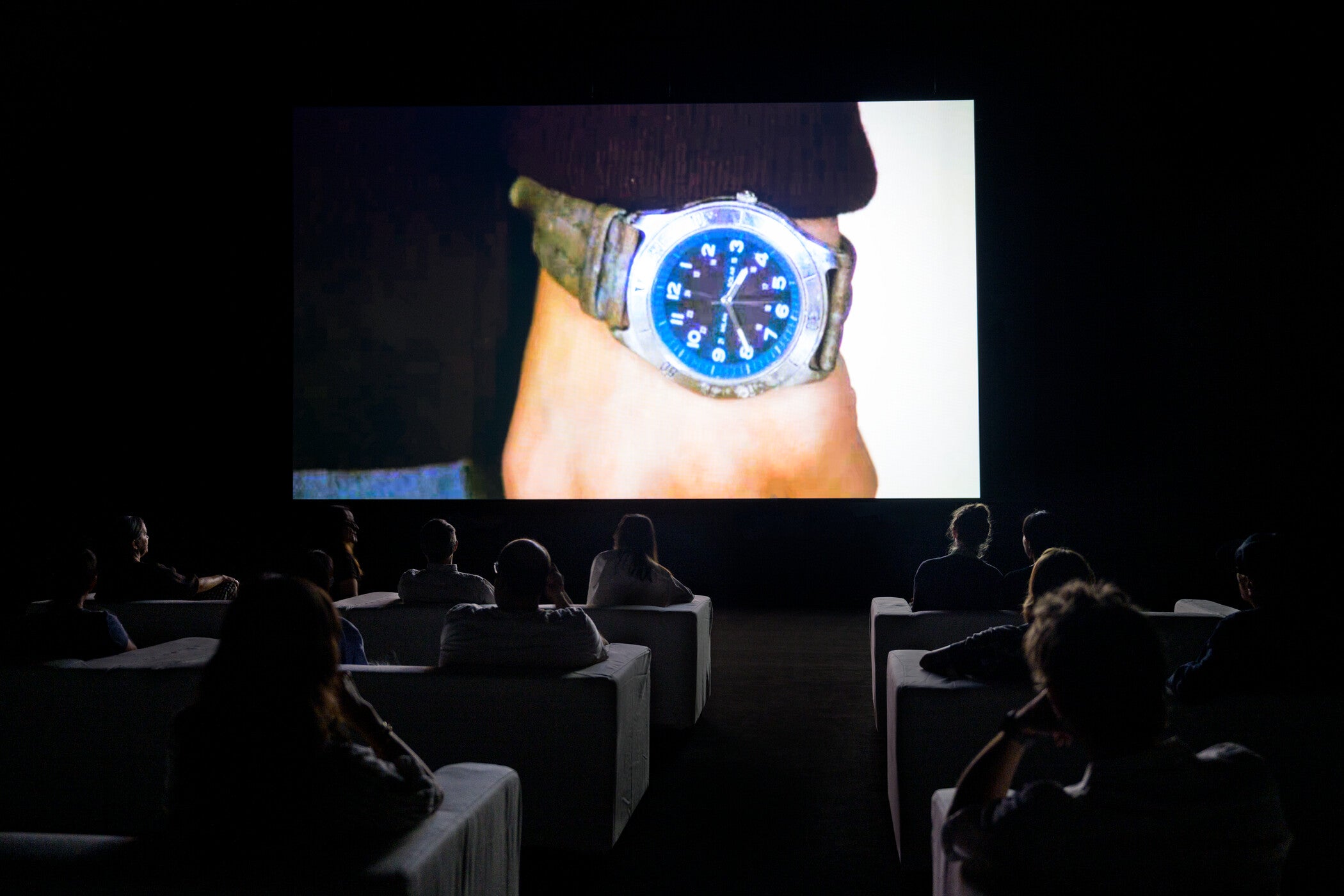
Now on view at LACMA, The Clock is back in Los Angeles for the first time since 2015. We recently had the chance to speak with Marclay about the work, its return to a city uniquely attuned to its countless on-screen references, and why it continues to enrapture audiences more than a decade after its debut.
Why do you think The Clock resonates with so many? Why is it so hard for people to pull themselves away once they start watching?
Christian Marclay: We’re all obsessed with time. There’s never enough of it. And this video gives you a chance to think about it. We all have different lives, the same way The Clock uses thousands of narratives, but what keeps them together is the fact that we’re all synchronized to the same local time.
What’s it like seeing The Clock back in Los Angeles?
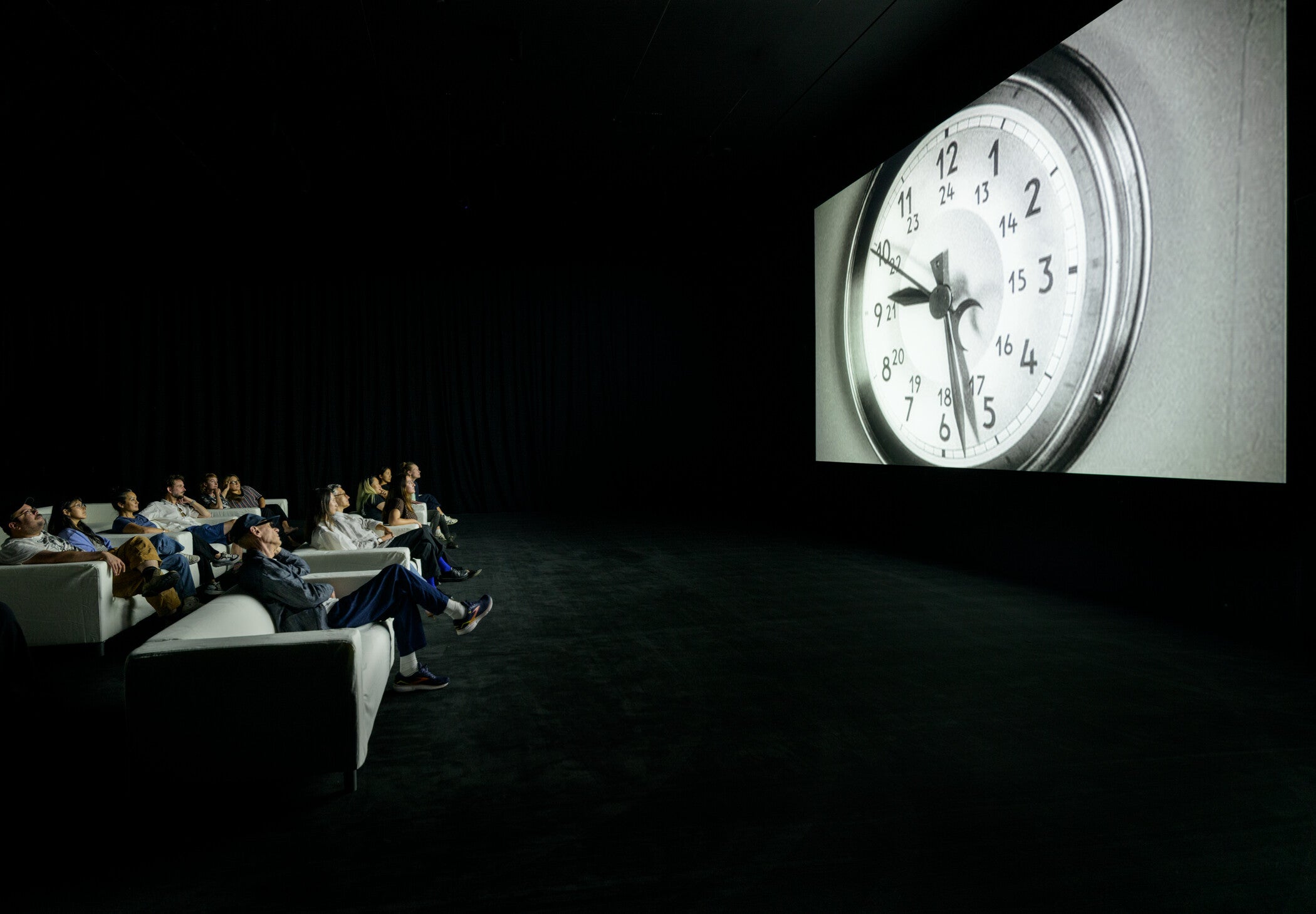
CM: It’s a giant collage about time using lots of films and TV shows so it’s always great to bring it to L.A. This is a place where everyone is knowledgeable about cinema. They know the people on screen. They might have even worked on the productions. The last time I showed it in L.A., what surprised me was the way people were reacting to it. Talking, laughing—it was a very lively audience. To me The Clock is not a film. It’s an experience. It’s closer to performance art. The viewers are implicated.
How did you decide which clips to include and which ones not to?
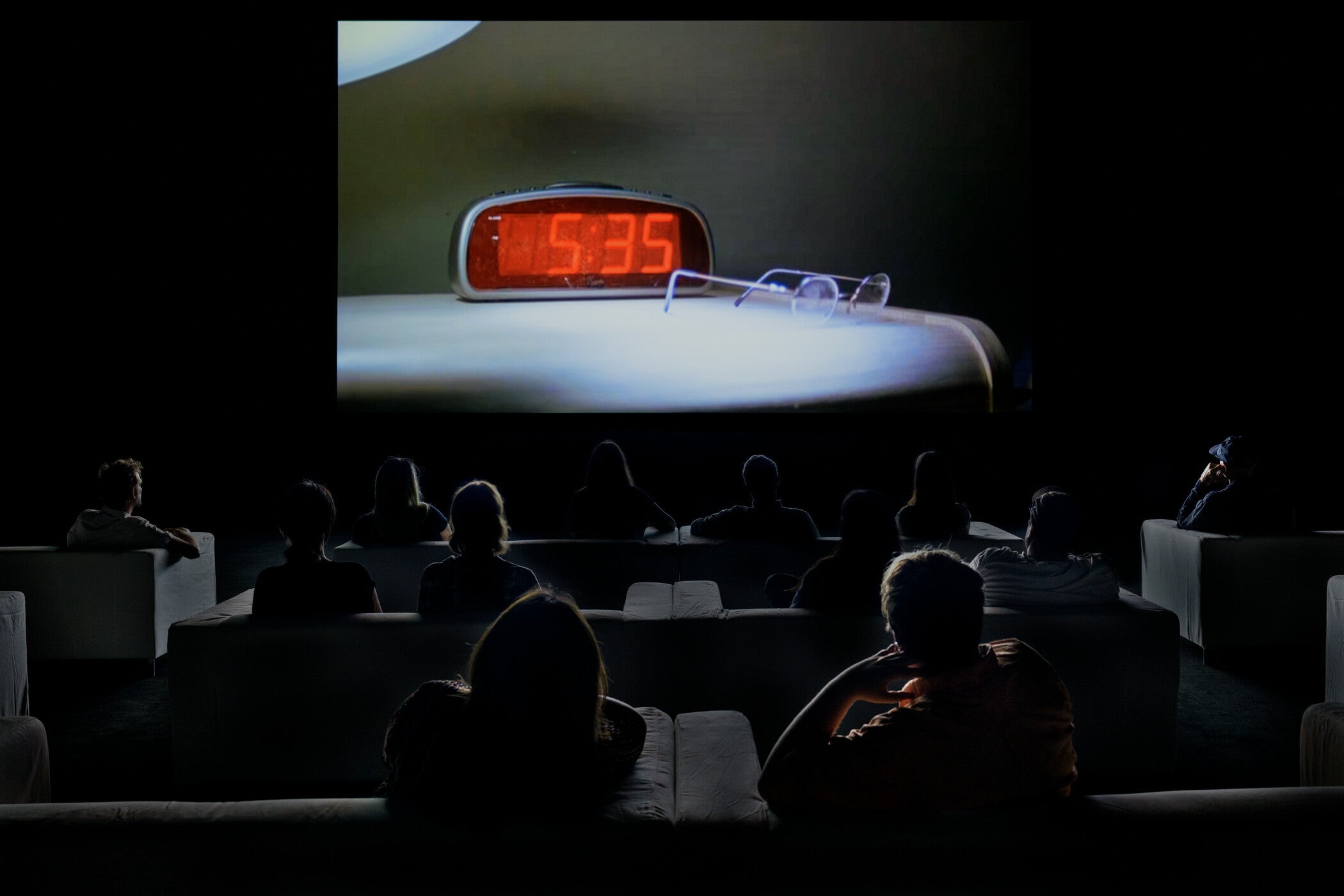
CM: Finding the right material was very difficult but fun. The first year, I didn’t know if it was possible, but I realized that once I established the time in a scene, I can use about a minute of footage that relates to that moment. It took three years to edit the whole thing, but the beginning was very hesitant, because I didn’t know if I would find the 24 hours of material. I was also trying to use everything that my research assistants would find, and find ways to integrate all of it. What determines the use of a clip is really what comes before and after. There’s always a narrative that gets interrupted, and I tried to make the transitions flow to keep the audience engaged.
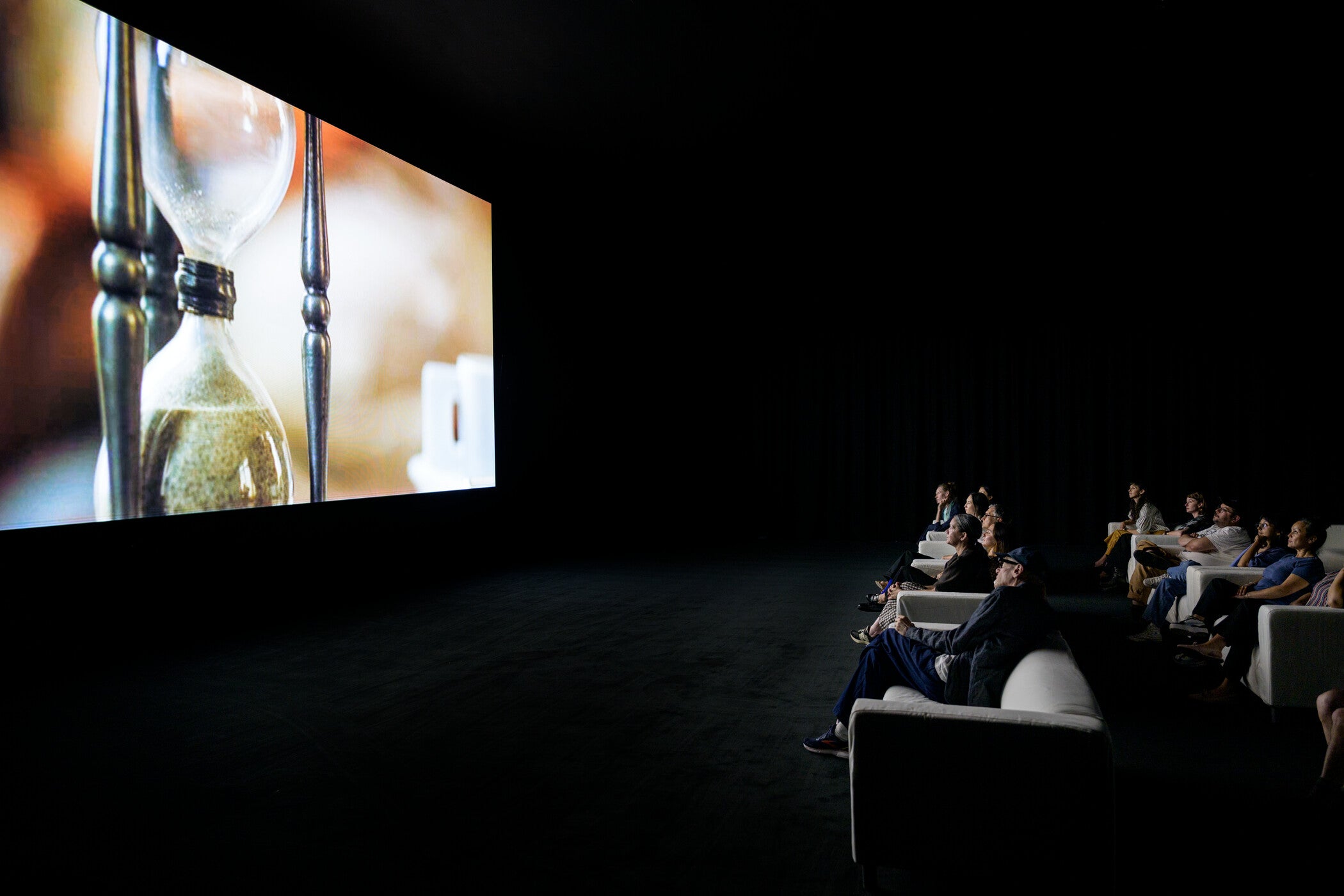
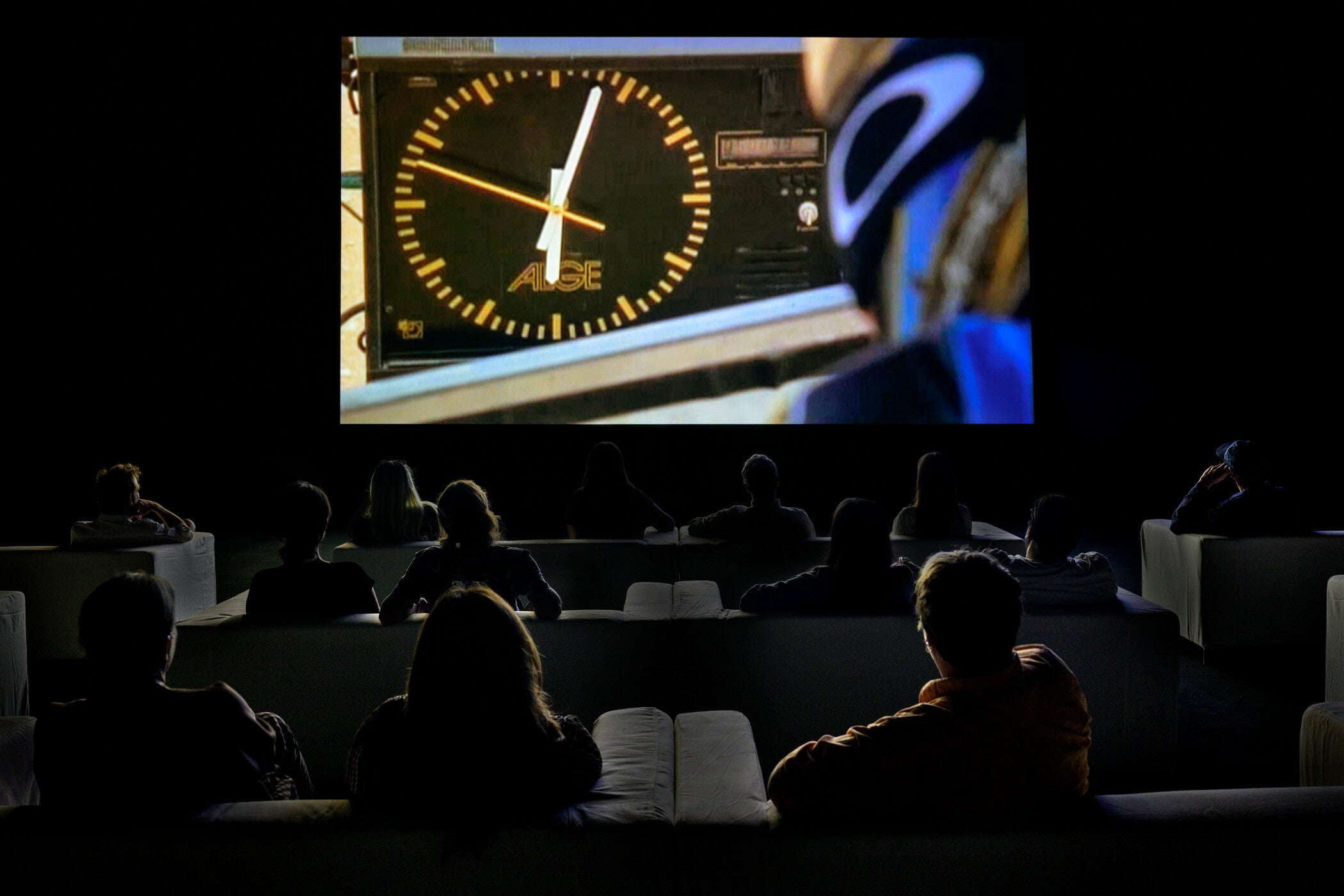
I’m always surprised that people spend so much time in it. I don’t think of it as a marathon or endurance piece. I don’t want people to think they have to sit there for 24 hours. It’s not natural—you have to eat, you have to go to the bathroom, you have to take care of real life. But it’s that tension between your life and what’s happening on screen that’s interesting because your life is synched with what’s happening on screen, yet you have a life to live. I encourage people to come and go, hence the set-up with couches. It’s comfortable and you can also leave without interrupting other viewers. It’s not about how long you spend in it. There’s no beginning, there’s no end, so when you enter, that’s when it starts, and it ends when you leave.
What’s the longest amount of time that you have ever sat and watched it?
CM: I usually watch segments during the install process to EQ the sound, usually during working hours. But with the new software we have, we can jump around and watch The Clock out of sync, for the purpose of working on the sound, which is a very important aspect of work. For instance I use midnight as a reference for the sound level, because it is loud. I just watched a lot of late-night hours between two and three in the morning, which I hadn’t seen in a long time.
Does The Clock change for you as you watch it at different points in your life?
CM: The Clock changes—it’s getting older like I am. A lot of these actors have passed away in the last 15 years. It is really a memento mori. We see certain actors when they’re old, when they’re young, not necessarily in the right chronological order, and we have this empathy for these people we don’t really know but we know them as characters. It’s interesting to see the same people at different stages in their lives. Aging is a biological clock.
Christian Marclay: The Clock is on view during museum hours in BCAM, Level 1, through August 23, 2026. It will close with a special 24-hour screening beginning Saturday, August 22, at 7 pm.