




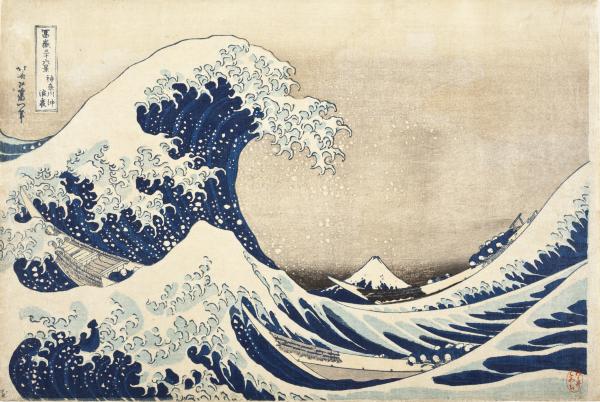
Perhaps you’ve seen this iconic image before: Katsushika Hokusai’s The Great Wave off Kanagawa (circa 1830–31) from his series Thirty-six Views of Mount Fuji. Have you looked at it closely? Hokusai depicts a dramatic wave that threatens to submerge three small boats and their crews, while in the distance we see the stable, unmoving Mount Fuji. Its strong graphic composition has ensured its lasting power for nearly 200 years—and now you can see one of the original prints in Japan: Living Landscapes, Flowing Waters on view in the David Geffen Galleries.
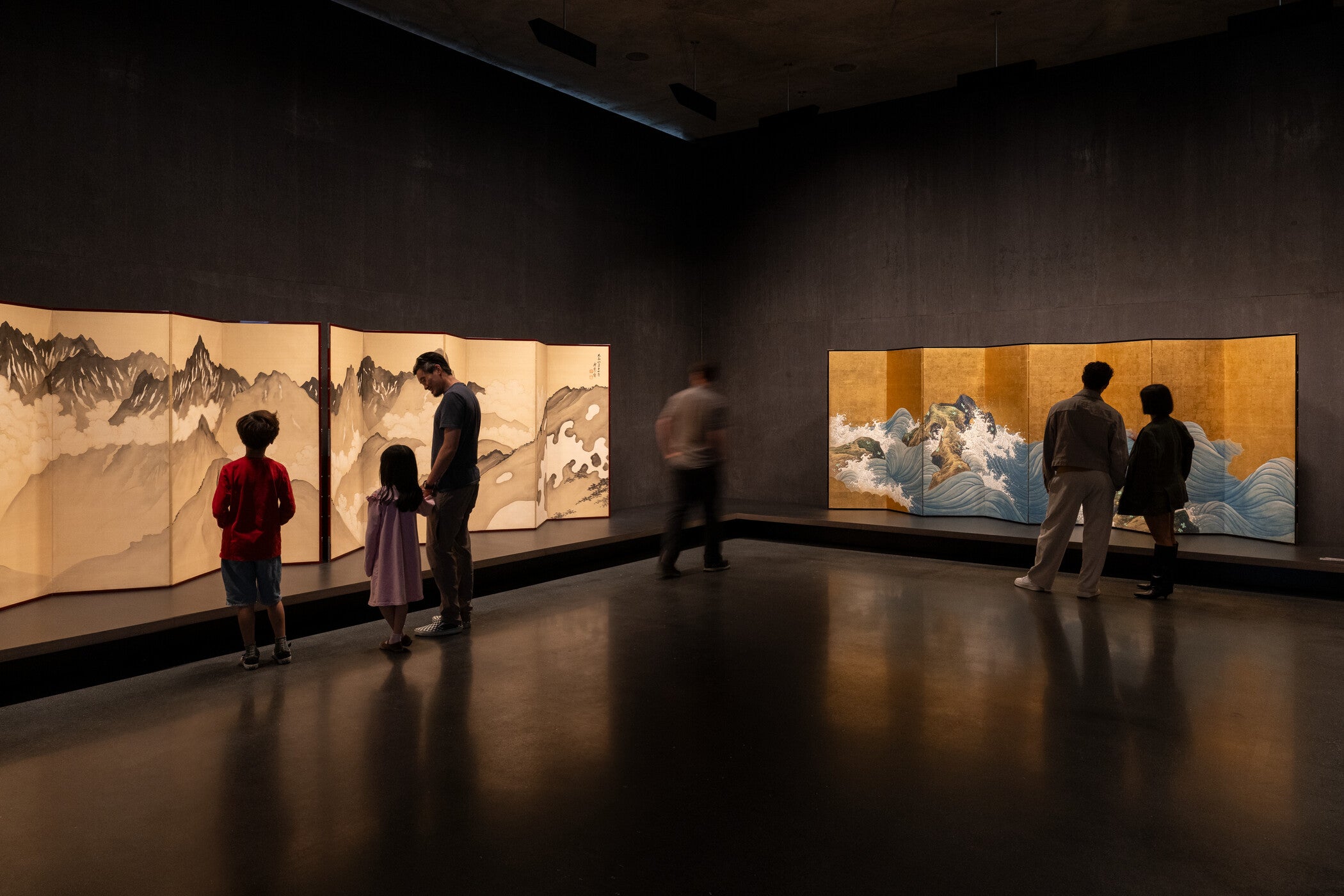
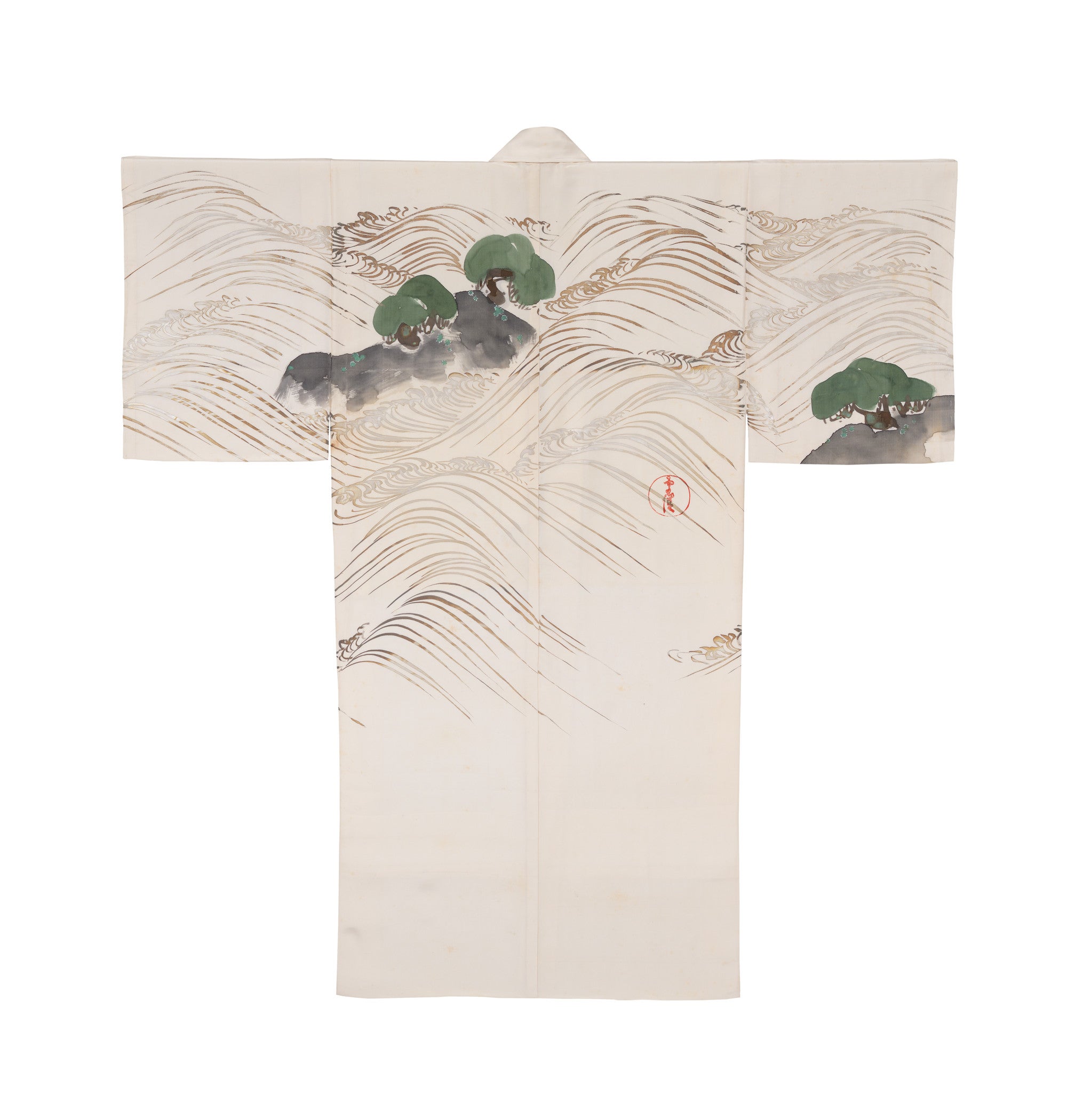
You might also have seen red seals in the corner of Japanese and East Asian artworks, which often function as the artist’s signature. You can find these on other artworks in the same gallery. The painted screen pair Mountains in Early Spring features an artist’s seal that reads “Terasaki Kōgyō” (“寺崎廣業”). Two examples from the artist Kamisaka Sekka feature different seals: the red seal on Man's Under-Kimono (Juban) with Matsushima (Pine Islands) reads “Sekka” (“雪佳”) whereas it’s Sekka’s birth name, “Yoshitaka” (“吉隆”), stamped on the scroll painting Waterfall in Summer that’s displayed beside the under-kimono.
But you might not know that seals can belong to other groups related to the artwork. This is especially true of printed works, in which a seal could belong to a publisher, carver, printer, censor, or collector. These marks can help determine a work’s authenticity or narrow down the date of its creation.
Translating and recording inscriptions and seals is part of my role as the Japan Foundation Assistant Collections Manager, with the goal of capturing more robust information about artwork in LACMA’s Japanese art collection. This work assists staff, researchers, and visitors to understand an artwork and to make further discoveries and connections, now and in the future.
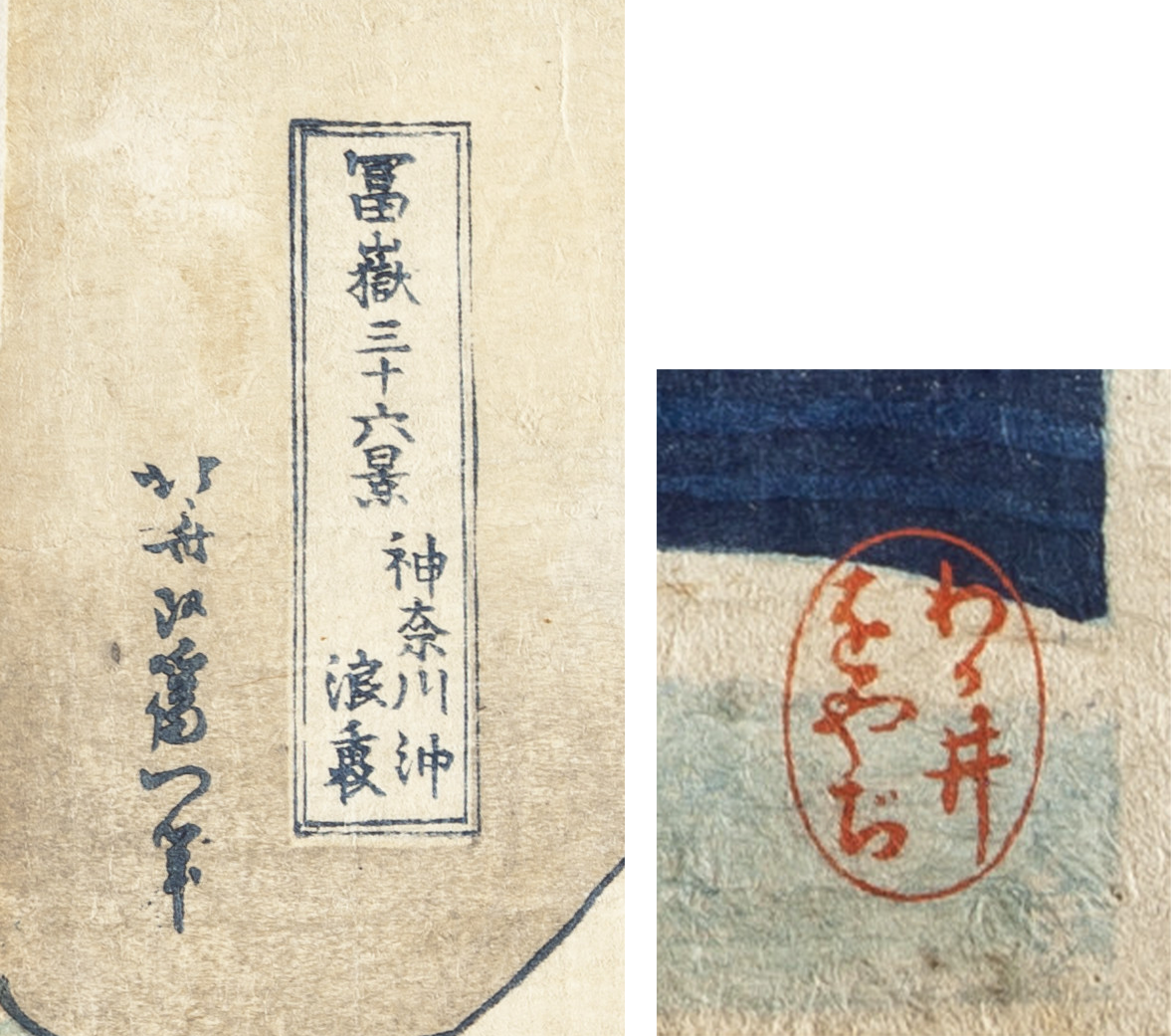
If you visit The Great Wave at LACMA, you’ll spot a red seal in the lower right corner—and it’s a special sight. The seal reads “Wakai Oyaji” (“わか井をやぢ”), a playful name translating to “Youthful Old Man.” So who is this “youthful” old man, and what does the presence of his seal tell us about this particular print?
This turns out to be Wakai Kenzaburō (若井兼三郎), a collector and dealer who drew wakai from his surname to create the pun and moniker in his personal seal. That seal tells us that this print once belonged to Wakai. Born in Tokyo, Wakai spent several decades as an active participant in the explosion of overseas interest in Japanese art, bringing artworks, expertise, and connections to European and American audiences for several decades starting in the 1870s, including acting as mentor to Hayashi Tadamasa, an important dealer who introduced Japanese art to European clients.
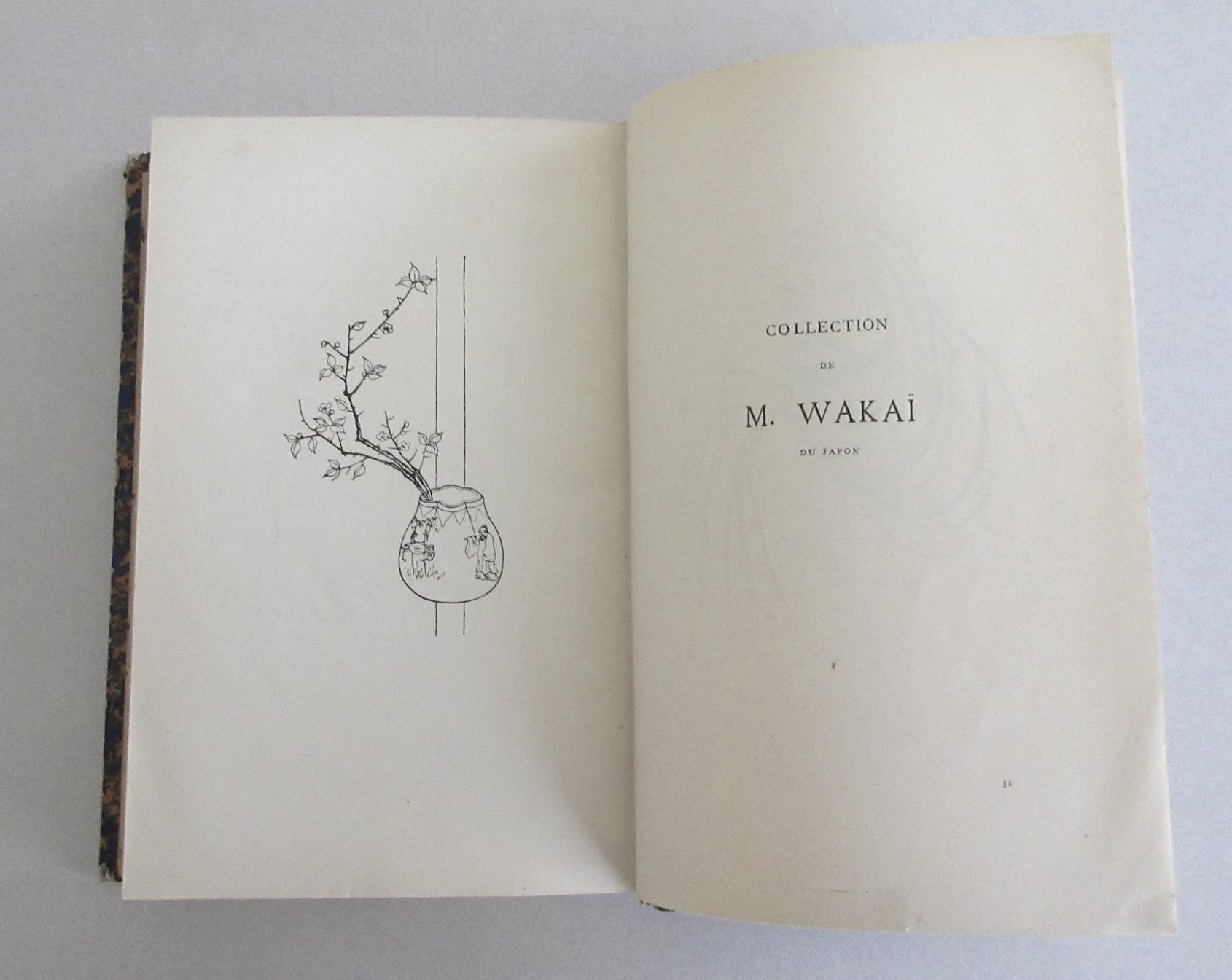
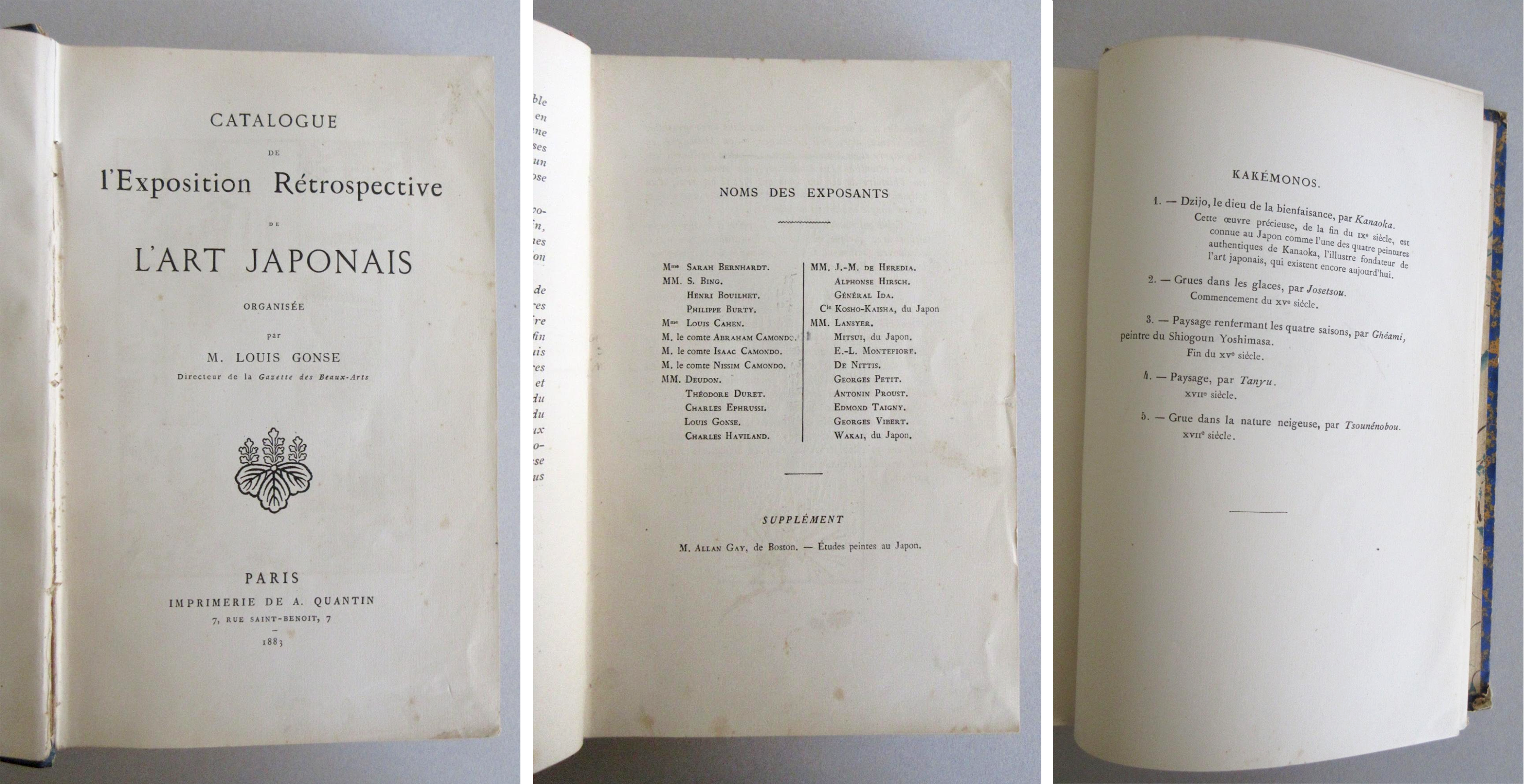
I made a happy discovery in LACMA’s research library: the original catalogue to one such exhibition, 1883’s L’Exposition Retrospective de l’Art Japonais in Paris organized by the art historian Louis Gonse, which takes us back to this moment in time. The list of exhibitors is bookended by none other than the celebrated French actress Sarah Bernhardt and Wakai himself. Further, a ninth-century painting by Kose no Kanaoka sits atop the list of artworks furnished by Wakai, which would have been incredibly rare in 1883 or today.
Gonse’s two-volume L’Art Japonais was published that same year and offers more than an overview of Japanese art: we get glimpses into the exploits of Wakai and other dealers and collectors. Gonse testifies to the degree to which he held Wakai and the dealer’s holdings in high esteem, describing the man as “one of the most expert connoisseurs” and stating “some of the most beautiful among [several thousand scrolls and decorative albums that have passed under my notice] have been shown me by Mr. Wakai.”
As for Hokusai’s presence in these pages, Gonse dedicates significant space in both volumes to the artist and describes him as “an artist of the people.” Of Thirty-six Views of Mount Fuji, the only complete set of it in Europe, Gonse notes, is in his own collection. It is tempting to think that this might have been furnished by Wakai.
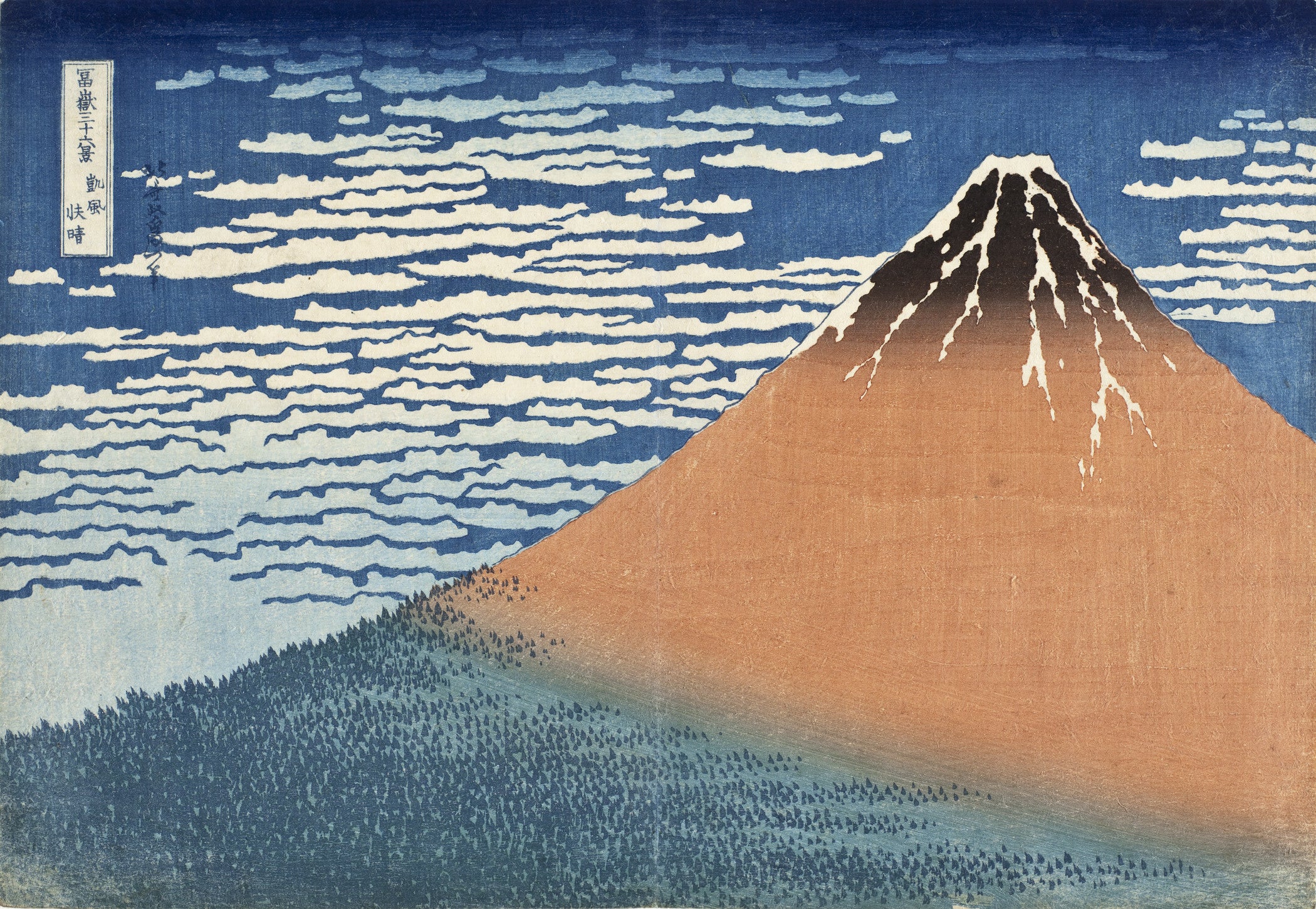
The spectacular wave is one frame through which Hokusai shows us Mount Fuji. The series of prints also features views of the mountain across rivers and lakes, beyond city scenes and rural vistas, and amidst wind, snow, and rain. Which feature of our Los Angeles landscape would you choose, in the vein of Mount Fuji, to capture from multiple vantage points, times of day and year, and weather conditions as the backdrop to street scenes playing out in this city? Ponder this as you check out this splendid masterwork, currently on view at the David Geffen Galleries’ inaugural exhibition. And when you do, you might think about the spirit of Wakai Oyaji, too.