




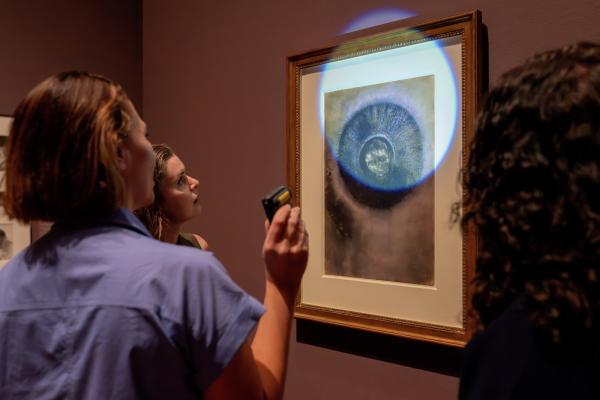
Odilon Redon (French, 1840–1916) famously pronounced, “Black is the most essential color.” The artist’s noirs—drawings dating to the 1870s to 1890s made using an array of black charcoals, chalks, and crayons—are certainly a testament to this sentiment. Later in his career, Redon took what might appear to be an abrupt turn toward bright, colorful media with his vibrant pastel drawings. A closer look at the papers he selected for his noirs, however, shows us that color played an important role even in these dark, seemingly hueless drawings.
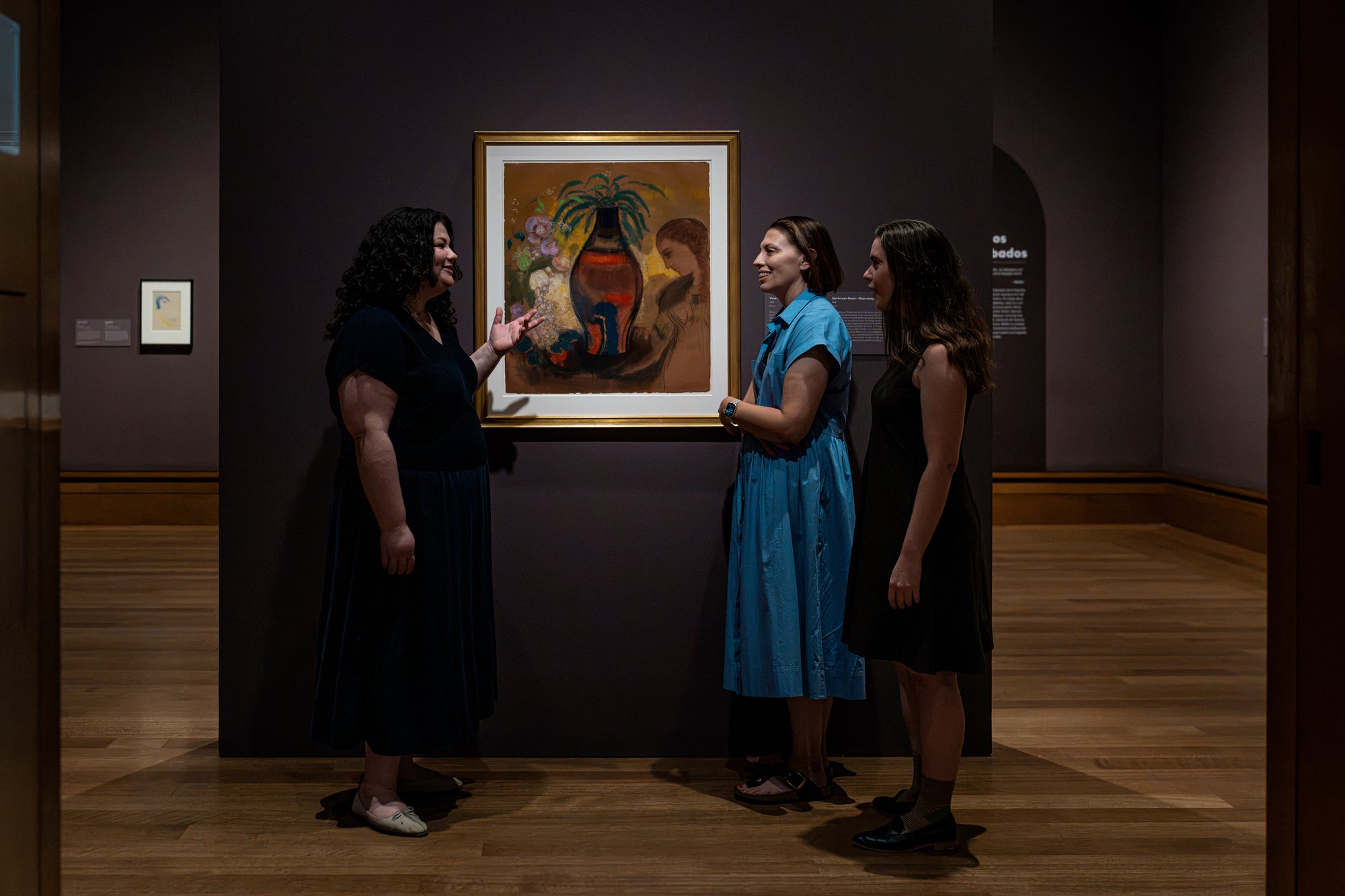
Getty’s exhibition Odilon Redon: Otherworldly Visions brings together Redon works from across California. It also brought together colleagues at two Los Angeles institutions—the Getty Museum and the Los Angeles County Museum of Art (LACMA)—to try to better understand Redon’s use of color in his drawing papers. Paper conservators Michelle Sullivan (Getty) and Lucia Elledge (LACMA) and curator Danielle Canter (Getty) discuss how their cross-city and cross-institutional collaboration helped them see the hidden world of color in Redon’s paper supports more clearly.
Digging Into Color
Michelle Sullivan: We’ve been studying drawings and pastels by Odilon Redon for nearly a decade at Getty, starting really with the 2016 exhibition Noir: The Romance of Black in 19th-Century French Drawings and Prints. Conservators, curators, and scientists have closely examined and scientifically analyzed all drawings by Redon in our collection. But our focus has mainly been on the range of drawing materials he used and how he achieved different visual effects by manipulating charcoal, fabricated chalks, and pastels. We didn’t dig very deeply into the papers he used.
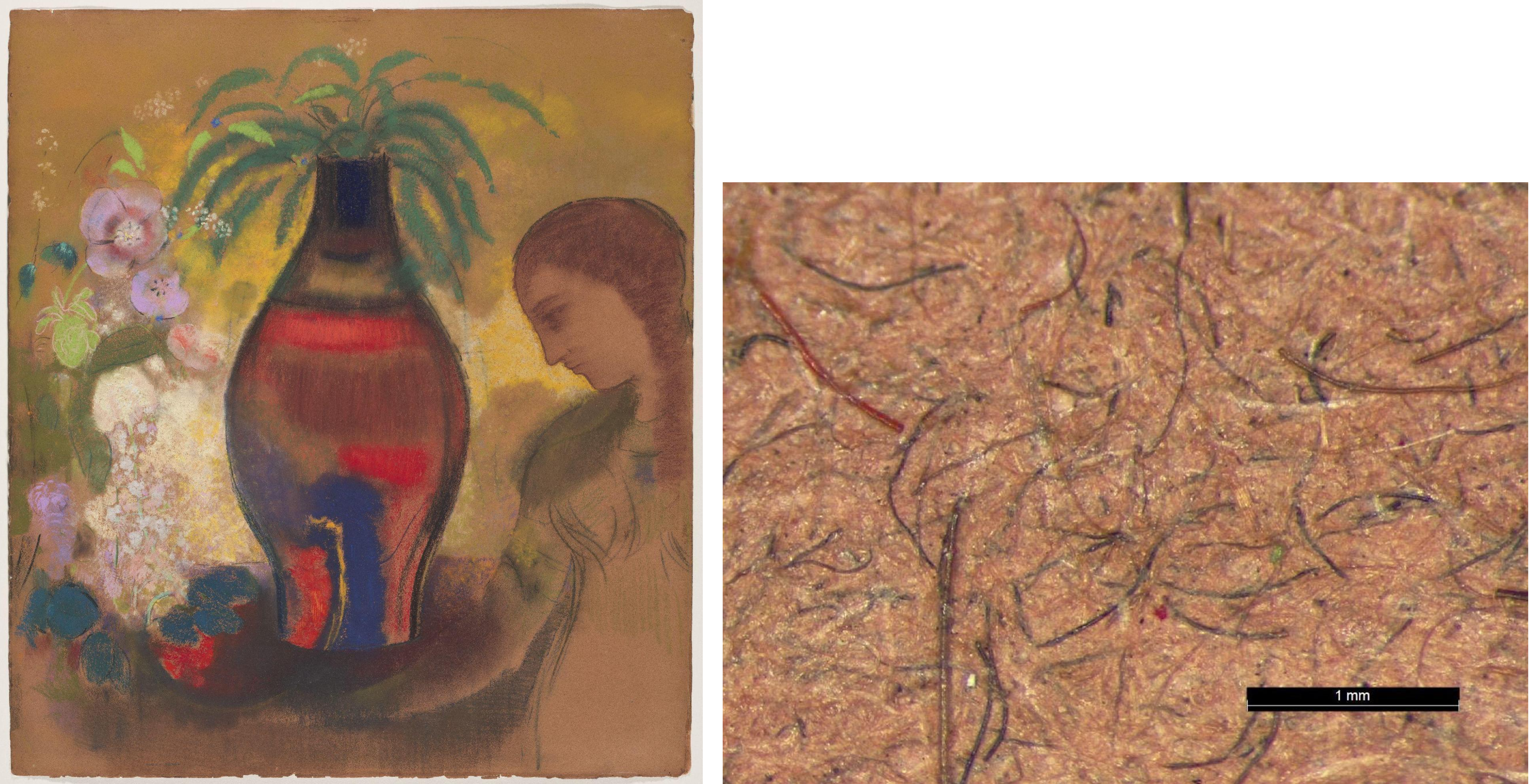
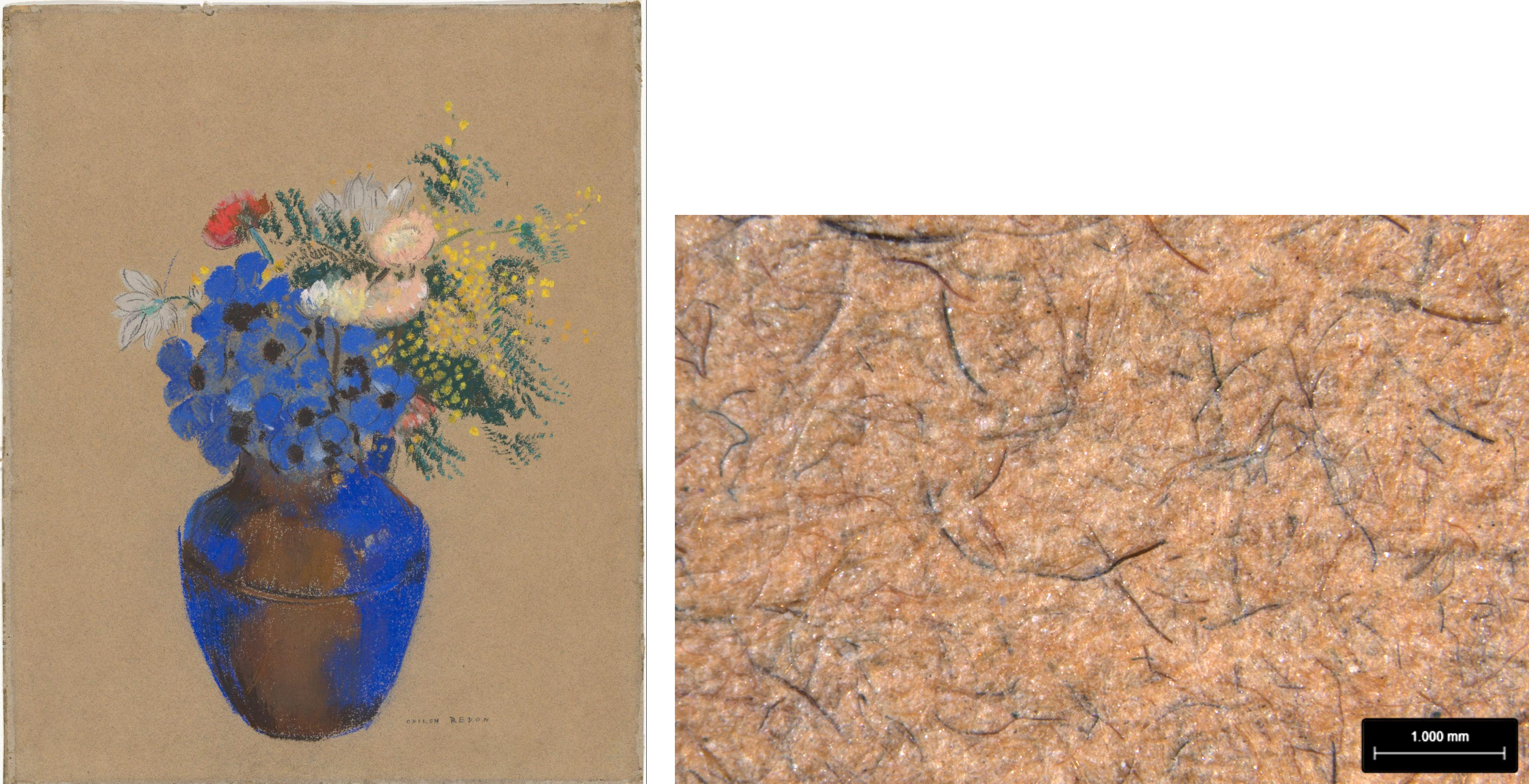
Lucia Elledge: We first began discussing Redon’s drawing papers when Michelle and Danielle visited LACMA’s paper conservation lab to look at Redon’s Vase of Flowers-Large Composition, which LACMA has loaned to Getty for this exhibition.
Danielle Canter: One of the first things we noticed about the LACMA pastel was how well preserved its colored paper was—it was still very pink! Most people familiar with Redon’s work think first of his prolific use of black, but he actually used colored papers for many of his noirs and later pastels. We know this from archival sources as well as close study of the artist’s drawings. In a transcribed catalog of Redon’s noir drawings, his biographer André Mellerio added the note, “All the drawings that we mention have been made on colored papers, usually of yellow, pink, and blue.”
MS: This isn’t always obvious when you see the drawings today, because most of these papers have faded significantly over time. Redon also made extensive use of fixative, a dilute solution of adhesive applied by brush or atomizer to secure pastel and other powdery drawing materials to the paper. The main ingredient of Redon’s fixative of choice was a natural resin that gave his drawings a golden tone that only deepened over time.
A Peek Through the Microscope
LE: To better understand Vase of Flowers-Large Composition’s uniquely vibrant paper, I used a microscope to examine the work under magnification. I found that while the majority of the paper pulp was pink, there were also many red and blue fibers and red- and blue-colored particles. The red and blue fibers had a tubular shape and glossy appearance typical of wool fibers, which were often added to pastel papers to give them the appropriate tooth and surface quality to hold onto loosely bound pastel.
DC: After studying the LACMA pastel with Lucia, we revisited Getty’s drawings, as well as drawings on loan from the Santa Barbara Museum of Art and UCLA’s Hammer Museum, looking at the paper supports with fresh eyes. We were surprised by the range of colored fibers we could see under the microscope.
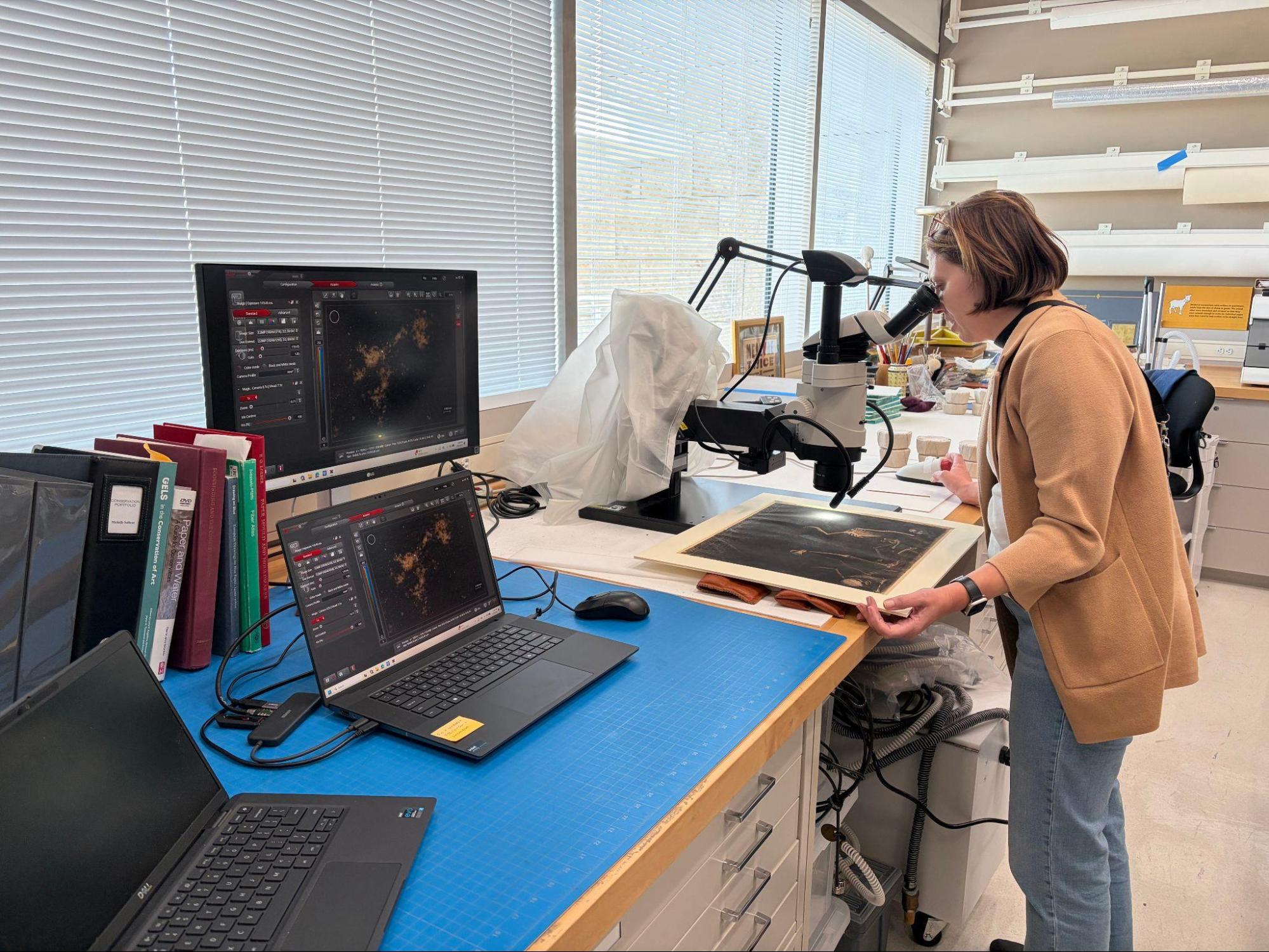
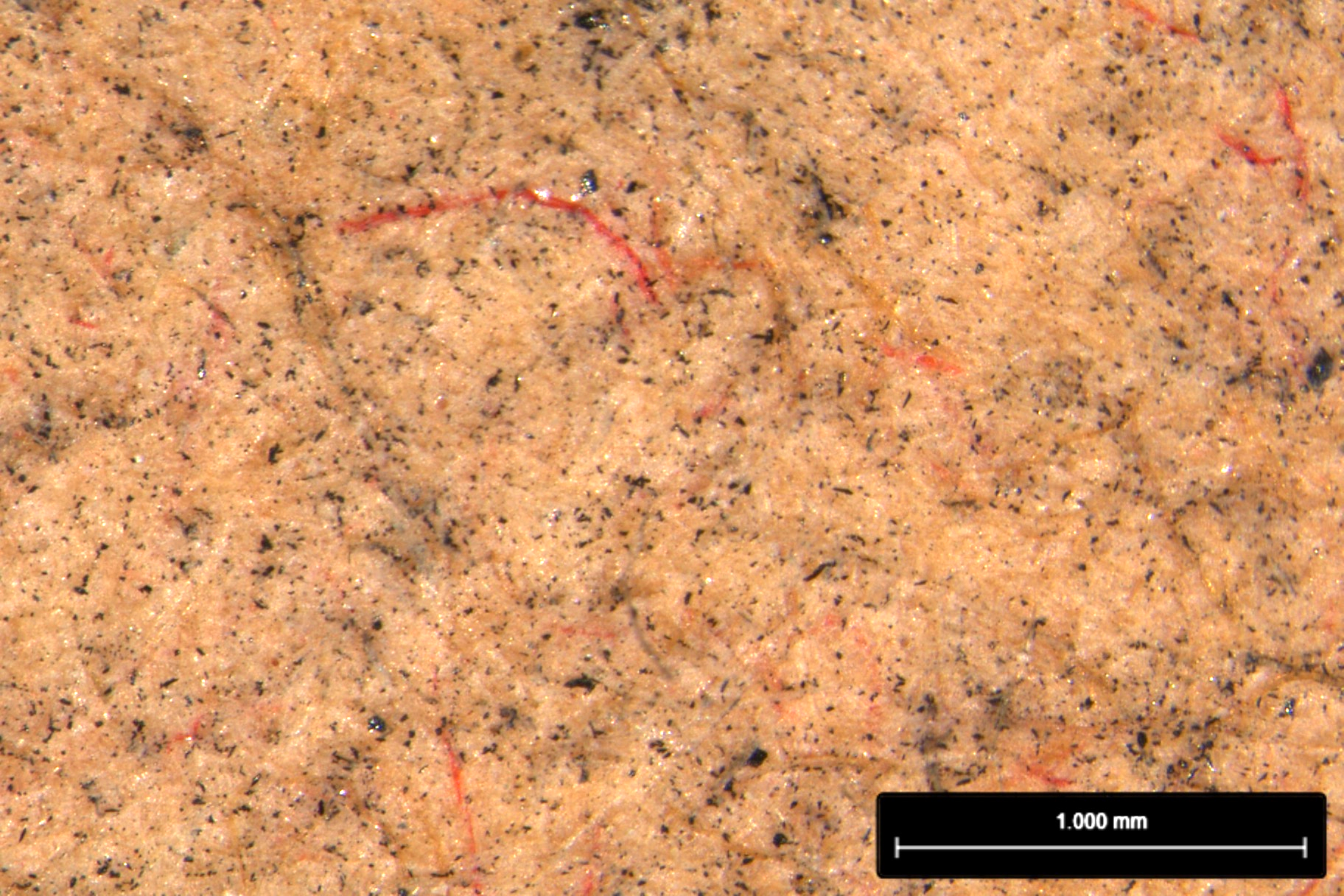
MS: What we found was a mixed bag! Examining the drawings under magnification, it appeared that most had been colored, with a few exceptions. One drawing was even made on prepared paper, which is a support that had been coated with a thick, paint-like layer to create both hue and texture. In some of the papers, a significant amount of colored fibers are readily visible, under magnification and sometimes even to the naked eye. Getty’s Head within an Aureole, for example, contains a high proportion of red fibers that suggest it was made on a pink paper that has since faded. Likewise, the Hammer Museum’s Vase of Flowers has a high blue fiber content, visible especially around the edges and on the verso where the sheet was exposed to less light, suggesting it was created on now-faded blue paper.
Understanding Redon’s Artistic Choices
MS: Because some of these works showed strong evidence of being drawn on colored paper, we wondered: what did these drawings look like when they were first made? To help us probe this question, we enlisted the help of Tarra Wood, senior digital imaging specialist at Getty. She created a series of digital reconstructions for Head within an Aureole to help us understand how the drawing might have looked when first created—without the yellow cast of aged resin fixative and with a more saturated pink paper support.
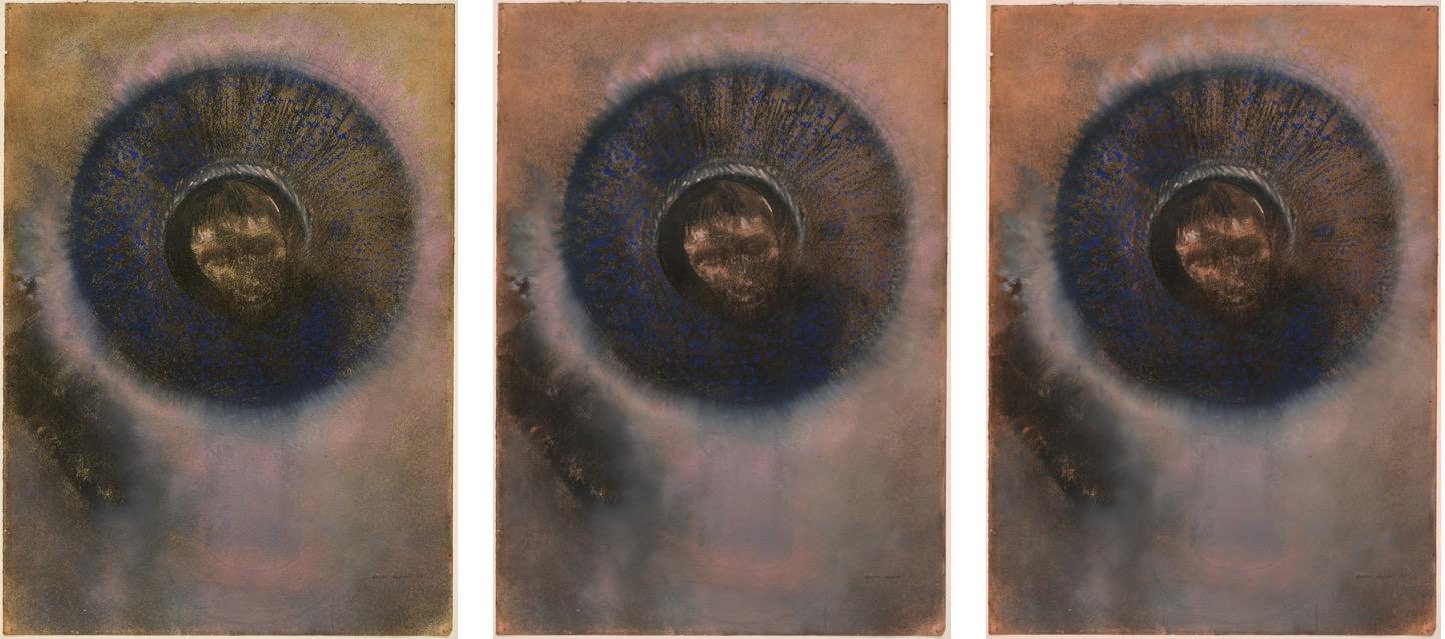
DC: For art historians and conservators, understanding these color shifts is very important to our work, not just a fun anecdote. When we study a drawing, we try to understand why the artist chose a certain paper or specific drawing medium and how they manipulated these materials to achieve unique visual effects. This is particularly critical for Redon, who was very intentional about the materials he chose and the relationship between various colors and textures in his works. When these colors shift in a drawing, we have to consider how that impacts our interpretation of the piece and the fact that it no longer appears as it did when the artist first made it.
While rewinding time and restoring the original color that has faded from Redon’s papers is impossible, it is exciting to work together using some of the noninvasive tools available to us at Getty and LACMA to better understand and visualize the colored papers that Redon favored for his black drawings and full-palette pastels.
Odilon Redon: Otherworldly Visions is on view at the Getty Center through October 18, 2026. A version of this story has also been published by Getty.