




For the opening of the new David Geffen Galleries, the home of the museum’s permanent collection spanning a breadth of eras and cultures, we’re sharing 50 iconic artworks on view in the building in the series 50 Works 50 Weeks.
Last year, Los Angeles–based artist Stephanie Shih spent time in the David Geffen Galleries creating and photographing two still life compositions that incorporate ceramics from LACMA’s permanent collection with decadent floral arrangements for a presentation in the new building entitled The Global Appeal of Blue-and-White Ceramics.
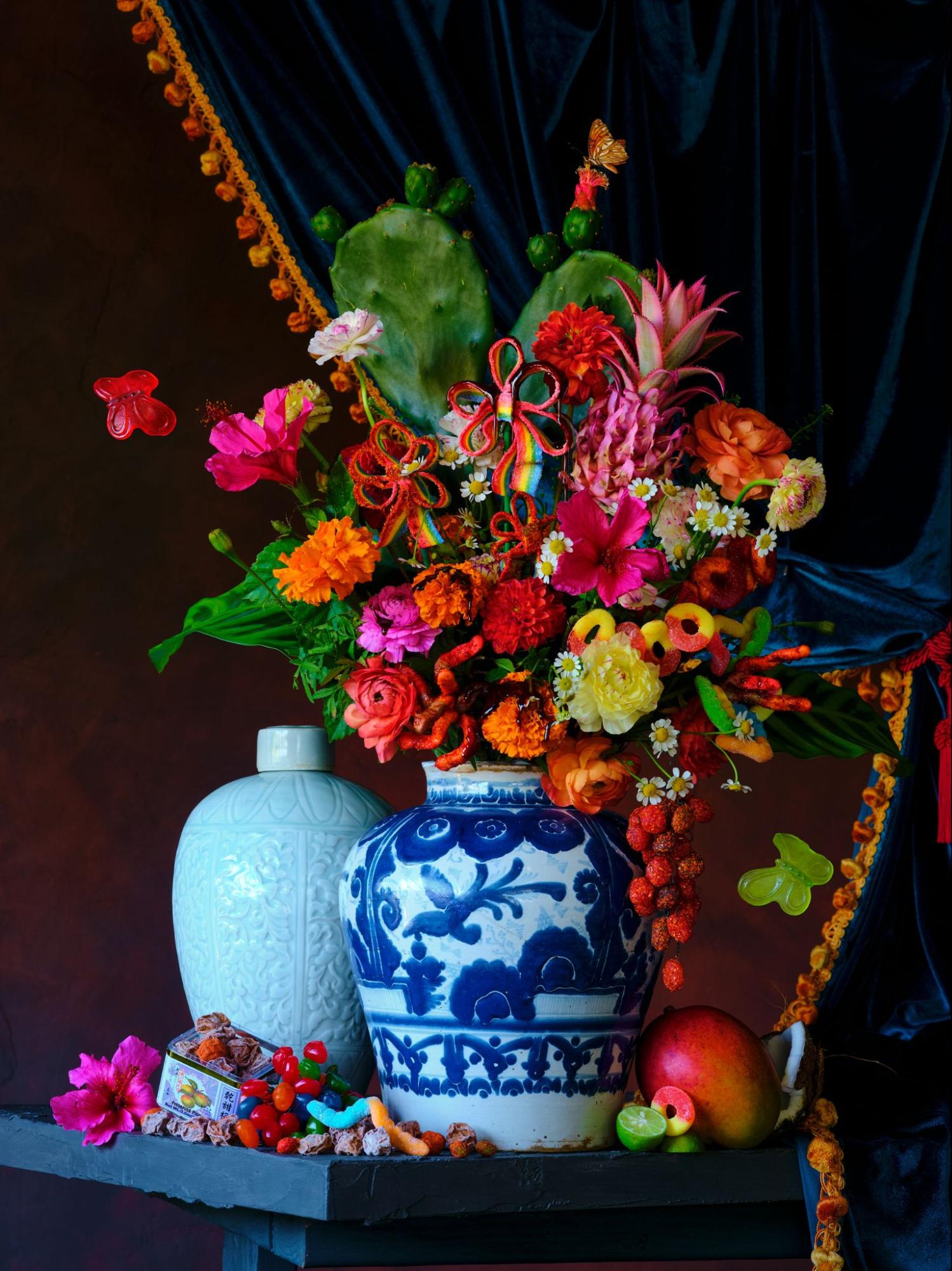
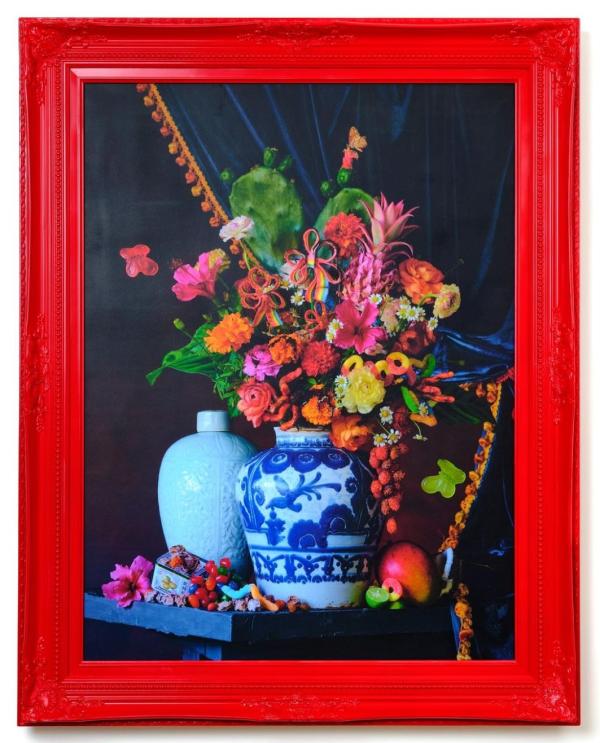
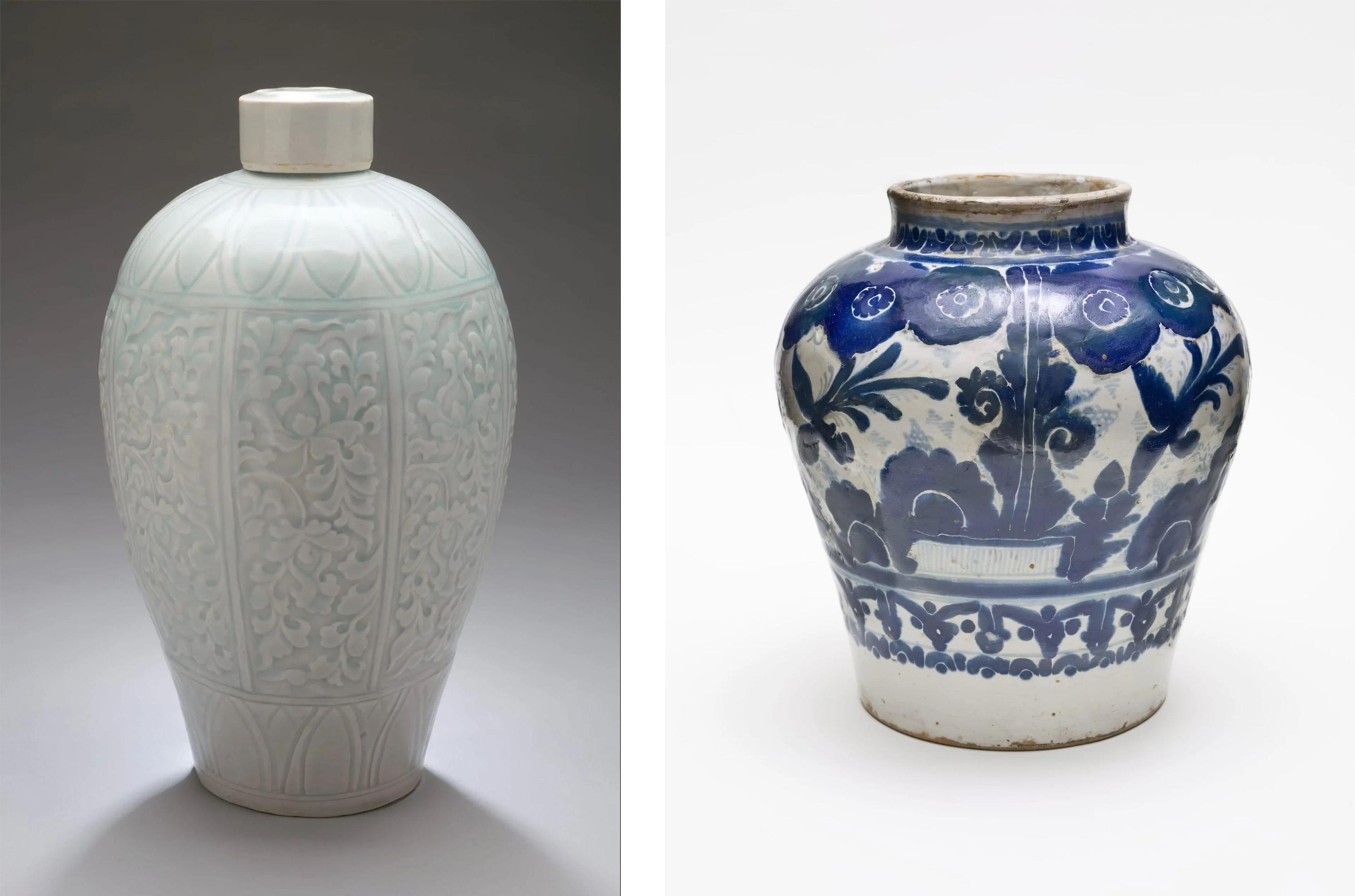
One of these photographs, 梅國 (Still life with chamoy and Dirty T Tamarindo), incorporates two objects from LACMA’s collection, the Mexican Jar (Jarrón) (circa 1700–50) and the Chinese Lidded Prunus Vase (Meiping) with Lotus Sprays (1127–1279). This pairing embodies the transmittal of blue-and-white ceramics from East to West, positioning Chinese porcelains as a predecessor of Mexican talavera pottery.
In the composition, Shih also references the move of Chinese huamei and Hawaiian lee hing mui (salty dried plums), Filipino champóy (a sweet and salty fruit snack), and Japanese umeboshi (pickled plums) to the West, as predecessors and cousins of Mexican chamoy, a sweet, tangy sauce made from pickled fruit and chilies and paired with fruit and candy.
“There is a maker named Alana Solis and she took her aunt’s recipe of chamoy that she grew up with in Mexico and has been combining it with really familiar nostalgic candies,” says Shih. “It was from her actually that I learned that chamoy originally comes from a mix of sour plums from Asia that I grew up eating, and those were brought by immigrants over to Mexico.”
View this post on Instagram
“I really wanted to highlight, especially here in L.A., this connection of Asia and Latin America,” Shih continues. “As a child of immigrants, it really means a lot to be able to take the ceramics out for one more adventure.”
梅國 (Still life with chamoy and Dirty T Tamarindo), in which a display of these confections are pictured among a sumptuous array of flowers and LACMA’s ceramic objects, is currently on view in The Global Appeal of Blue-and-White Ceramics.