




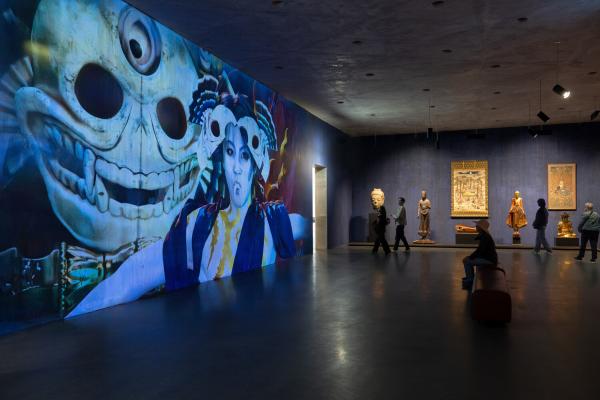
The Cc Foundation and David Chau Fellowship was created to deepen LACMA's engagement with Asian and Asian diasporic art and the communities around it. In May 2025, I was fortunate to join LACMA’s Director’s Office for the fellowship, working alongside chief of staff Deliasofia Zacarias and CEO and Wallis Annenberg Director Michael Govan, and collaborating with the museum’s Chinese and Korean Art Department and the Development Department. When I started a year ago, I didn't fully anticipate how much a single position could stretch across so many corners of an institution as expansive as LACMA. I want to take an opportunity to reflect on what this fellowship has made possible, and why the work is only just beginning.
My fellowship started with studying contemporary art of Asia and its diaspora in LACMA's collection, with a particular focus on Asian diasporic artworks, which are made by artists tied to specific Asian heritage who reside and create elsewhere. Working with these requires another layer of care to account for their intersectionality and complexity, in addition to simply reviewing entries in the collection management system. Rather than solely relying on collection records, which categorize artists mainly by nationality, place of birth, and time period, I went back through acquisition documents and spoke directly with curators across departments. I wanted to learn about each artist's practice to understand who identifies as “diasporic” and how that relates to their work, even as this identity is not the sole lens through which their work is presented. Diasporic artists, like diasporic communities themselves, often occupy an in-between space, one that resists easy categorization but is rich with context and meaning. Over the past year, I've had the chance to speak with many curators, identify areas where the collection might grow, and visit studios and collections in Los Angeles and beyond. These conversations have allowed me to learn about what artists are making right now, what collectors are drawn to, and where institutions like LACMA might participate in those conversations in meaningful ways.
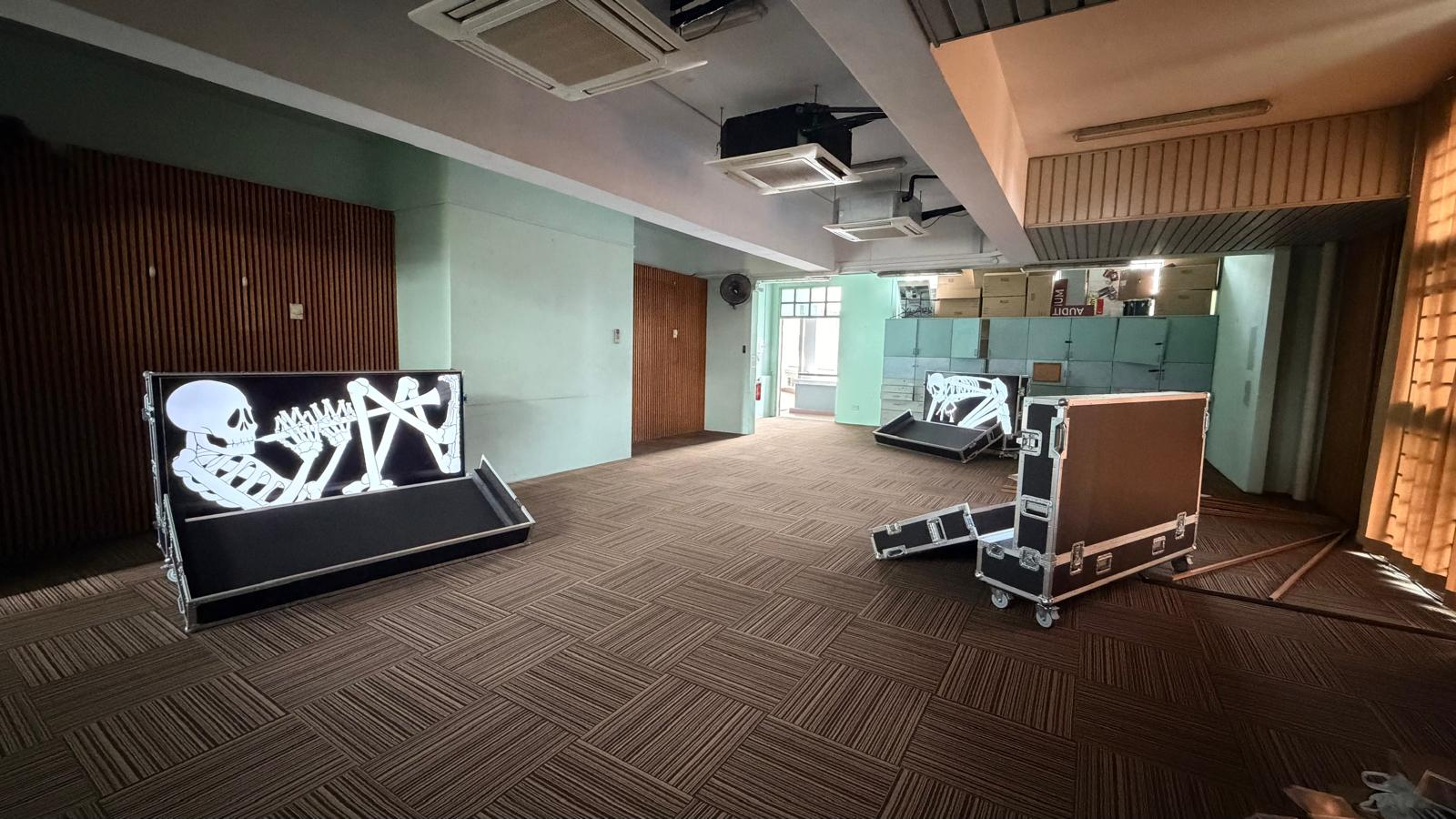
As part of the fellowship, I also had the opportunity to travel with Michael Govan and colleagues from LACMA's Development and Curatorial teams to Shanghai, Beijing, Singapore, Bangkok, and Phuket. Each city offered a different lens on how art ecosystems are built and sustained, from major public institutions to entrepreneurial family foundations to site-specific projects woven into the fabric of local communities. What struck me was how many different models exist for creating meaningful encounters between art and audiences, both abroad and in Los Angeles, which has its own expansive and often undercharted art ecosystem dealing with questions about community, access, and representation.
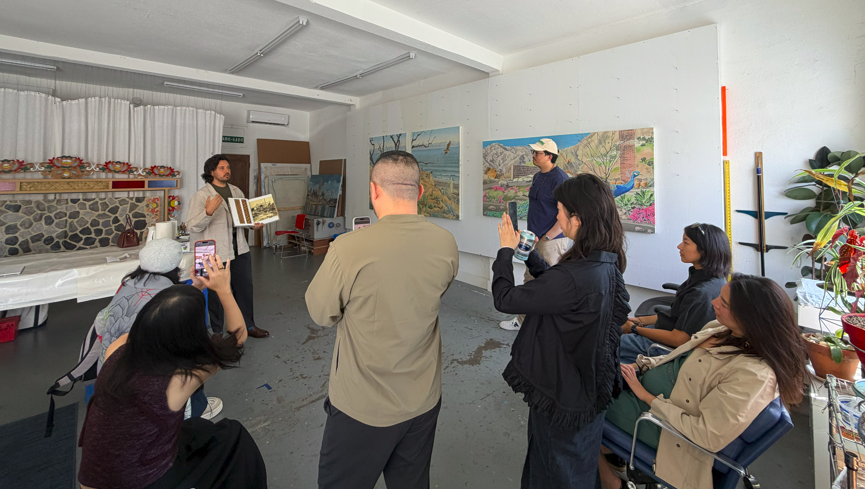
Woven through my interaction with the global and local art scene has been a deepening engagement with LACMA's Asian & Asian Diasporic Initiative (LAADI). Developing programs for LAADI with colleagues across Development and Curatorial departments and working closely with the initiative’s members has been one of the most meaningful commitments of the year. LAADI members come from different backgrounds and industries, but are united by a shared passion for Asian and Asian diasporic art. With the position in Los Angeles, the home of many Asian immigrants, LACMA has been putting effort into growing its collection of Asian art, with increasing attention to South and Southeast Asian art as well as diasporic art. I feel fortunate to have met so many LAADI members and donors who share this same interest and are genuinely willing to support that mission.
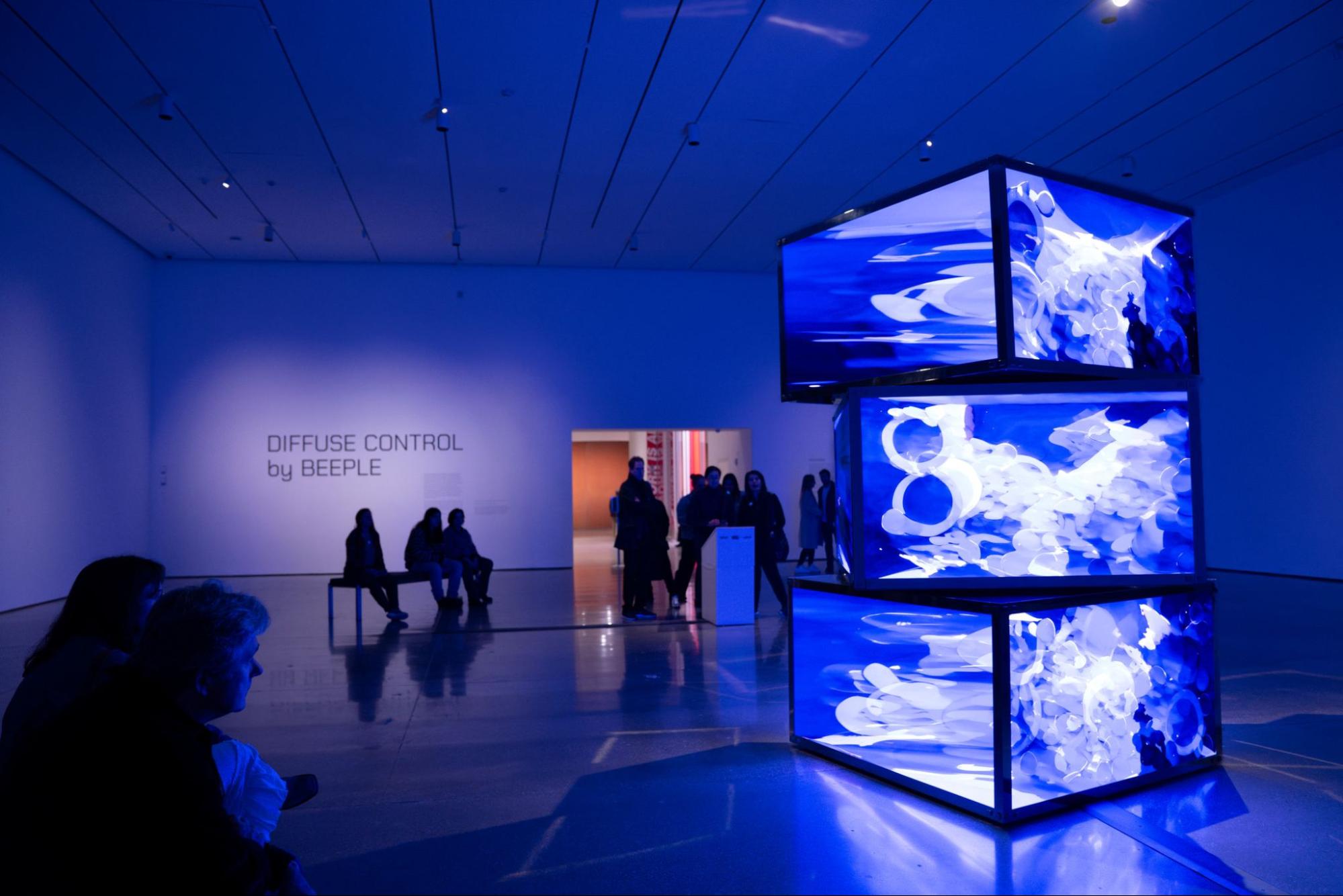
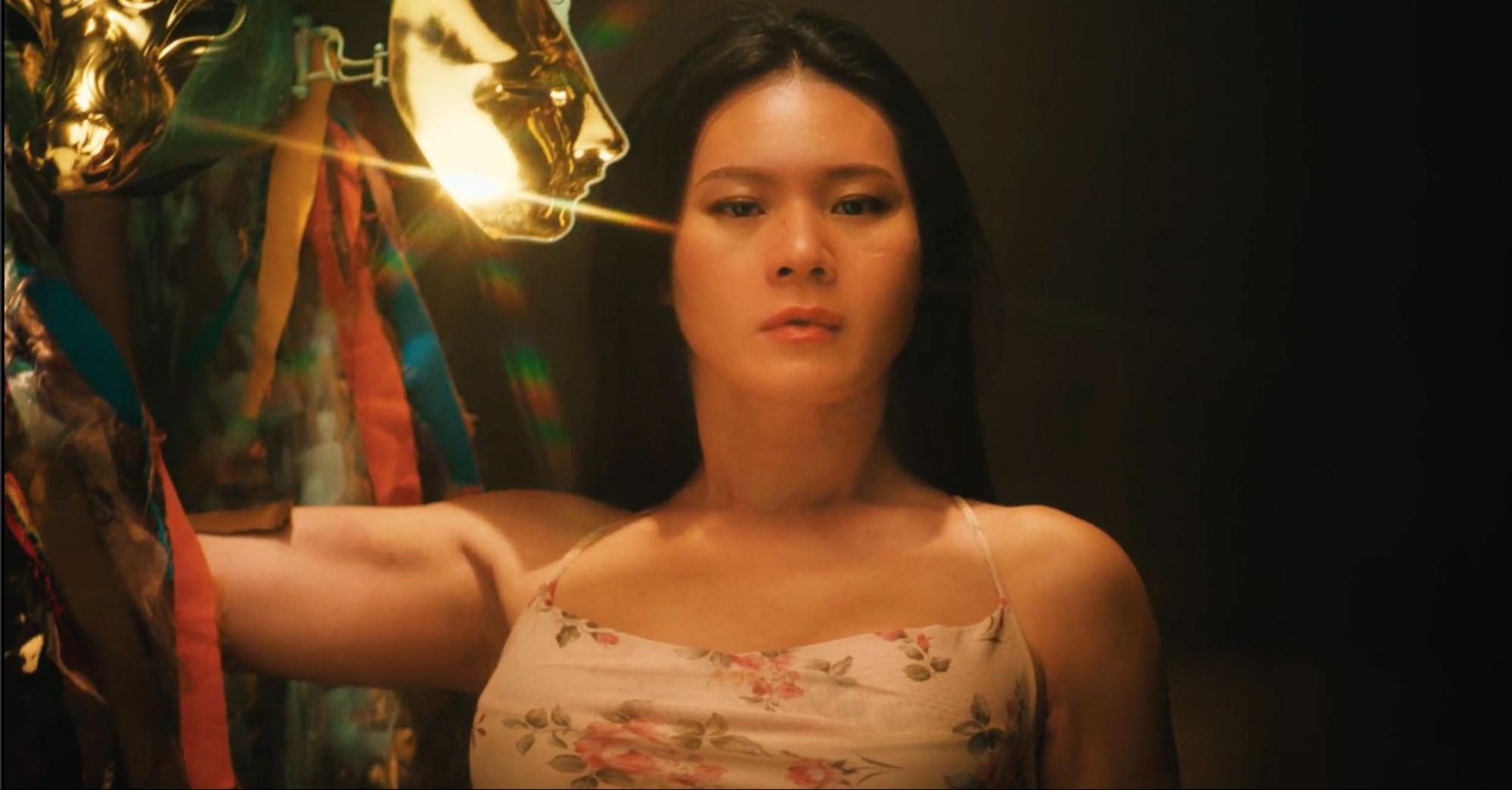
At the same time, this fellowship has given me the opportunity to learn from a much wider range of programs and practices. My first major project at LACMA was curating one of the five iterations of Diffuse Control by Beeple, which I wrote about on Unframed, working closely with fellows across departments in a decentralized curatorial experiment. I also worked on Tino Sehgal's This Entry (2023), which was featured in the inaugural presentation of LACMA’s David Geffen Galleries through interactions among a dancer, a violinist, a freestyle soccer player, an artistic cyclist, and the audience throughout the museum’s opening hours. For this project with no objects, no documentation, and a form that lives entirely in human presence and embodied encounters, I worked on casting, rehearsals, writing related texts, and serving as a liaison for participants. This gave me a crash course in what it means to care for art that resists almost every conventional institutional framework, and it made me increasingly aware of how the same project can require entirely different modes of communication depending on who you're speaking to. I also provided curatorial support for Lu Yang’s game-engine based video work DOKU: Yama Māyā, commissioned for David Geffen Galleries, and Andrew Thomas Huang: Deer of Nine Colors, a project I first encountered at the Thailand Biennale in Phuket. All of this has unfolded against the backdrop of LACMA's preparations and opening of the Geffen Galleries, a historic moment I feel lucky to be part of.
Expanding LACMA’s global reach online, I also launched the museum’s Xiaohongshu (or RedNote) account this year, exploring ways to reach Chinese-speaking audiences with a genuine point of view rather than simply mirroring our English-language presence. That has meant not only selecting and translating content from our existing channels where it makes sense, but also developing original Mandarin-language posts that speak more directly to what resonates with that audience. This project is another form of access-building, extending the museum's reach to communities who might not otherwise encounter it.
Working across many departments on projects focused on Asia and the Asian diaspora from different perspectives, I began to see how specialists in each department do the deep, essential work that makes LACMA what it is, and that one of the most meaningful things someone in this fellowship can do is be a link that helps those parallel conversations find each other. None of this would have been possible without the vision and generosity of the Cc Foundation and David Chau, whose support created this fellowship and made this role possible. The position I hold is genuinely unique, in that it lives at the intersection of curatorial practice, institutional development, and cross-cultural communication. That breadth has allowed me to contribute meaningfully across the institution while developing a perspective that will hopefully benefit LACMA and the communities it serves for years to come. I am incredibly grateful, and the work is only just beginning.