




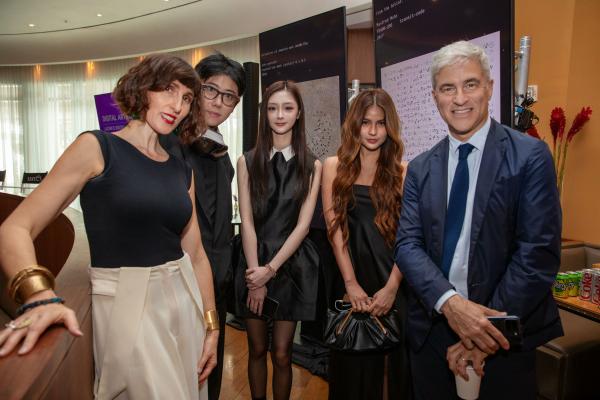
At this year’s Art Basel Miami Beach, LACMA hosted the second annual Digital Art Conversations at the Miami Beach EDITION, bringing together artists, curators, institutional leaders, creators, and collectors for an afternoon of dialogue around the past, present, and future of digital art. Organized by LACMA’s Digital Leaders (LDL)—the first-of-its-kind strategic committee formed to advise and support institutional digital art initiatives—the program highlighted luminary voices who are shaping and have shaped the field of digital art. The panels centered around the rapidly evolving digital art ecosystem and the gathering of friends after the conversations brought both the traditional and digital art community together.
The program began with remarks by Michael Govan, LACMA CEO and Wallis Annenberg Director, and Jehan Chu, LDL co-chair. Their introduction underscored digital art’s growing cultural presence and its importance within LACMA’s broader vision, noting that digital media has become central to how artists work and how audiences engage with contemporary culture.
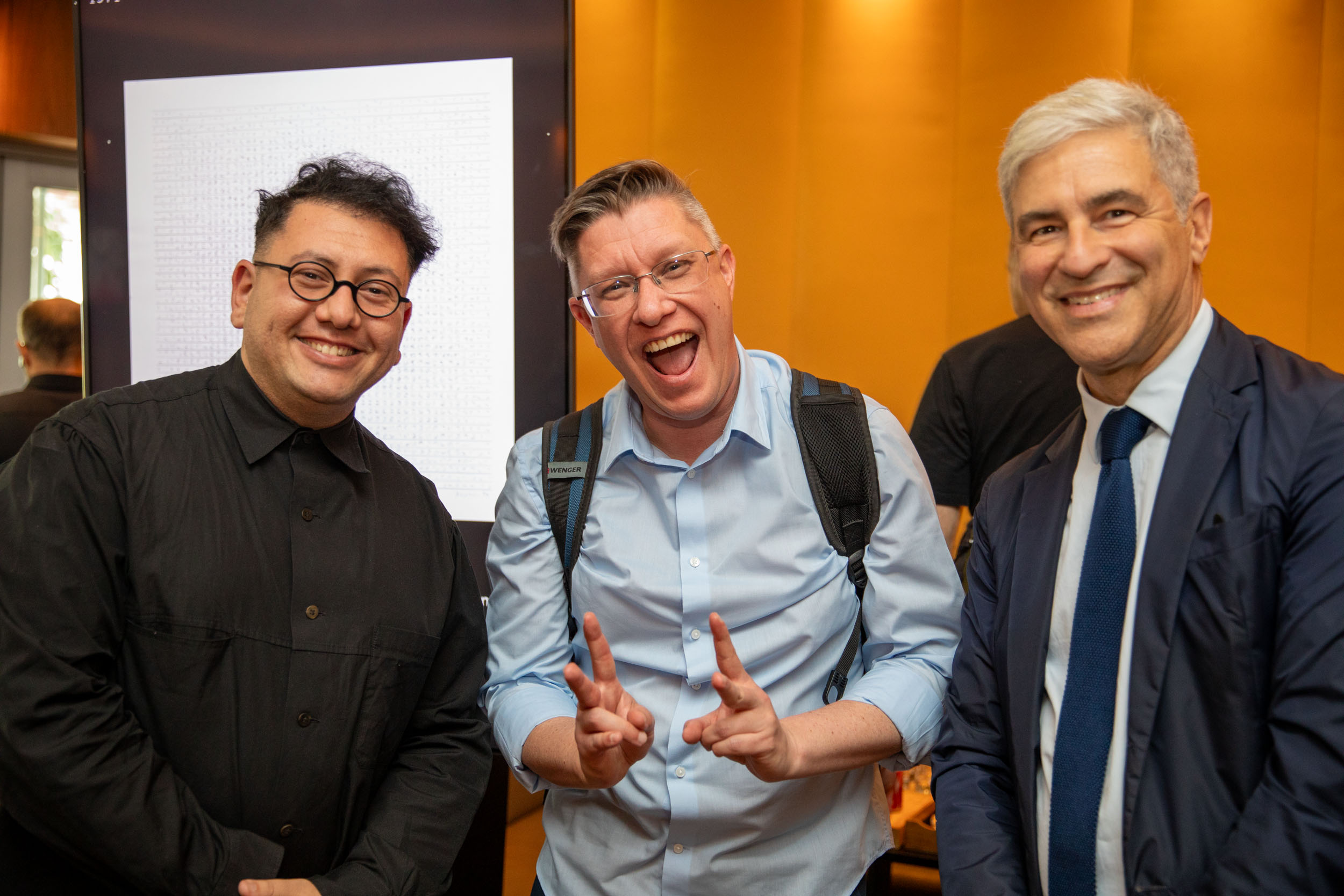
The first conversation paired pioneering algorithmic artist Manfred Mohr with curator Hans Ulrich Obrist. Mohr reflected on the early days of computer art in the late 1960s, including his years of nightly access to meteorological computers, an unconventional studio that allowed him to produce computer-generated drawings for over a decade. His work, featured in LACMA’s Coded: Art Enters the Computer Age 1952–1982, helped establish the conceptual foundations of generative and algorithmic art that continue to influence artists today.
Kicking off a series of artist presentations, Tyler Hobbs discussed how he translates the spontaneity of gestural painting into algorithmic form, using controlled randomness to create thousands of refined iterations. Beeple (whose work is currently on view at LACMA) shared an overview of the community-focused events he hosts at his studio in Charleston, where he brings together traditional and digital art communities through participatory programming. He also previewed upcoming institutional projects involving AI, robotics, and interactivity, highlighting humor, accessibility, and shared rituals as central components of contemporary digital culture.
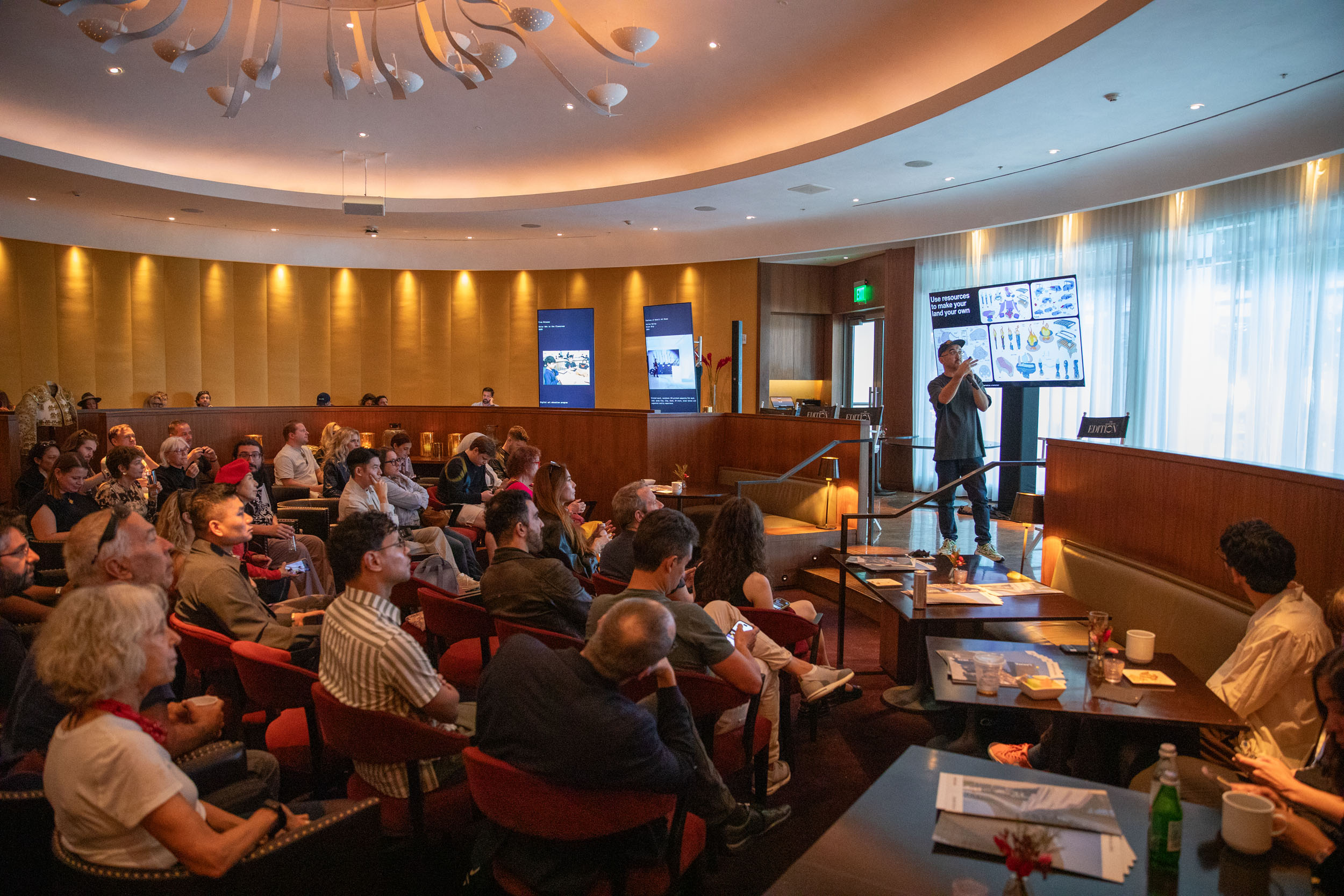
Figge of Yuga Labs offered a look inside the worldbuilding that drives Otherside’s digital environments, emphasizing interoperability and user agency in virtual ecosystems. Michael Connor of Rhizome discussed the organization’s efforts to preserve net art and variable media artworks, noting the challenges of conserving formats that continually evolve. He framed digital art within a longer historical lineage, extending well beyond recent attention to the space. And artist Refik Anadol presented his latest experiments with AI-driven visualization and large-scale data sculptures, focusing on immersive, multisensory installations that expand how audiences encounter digital information.
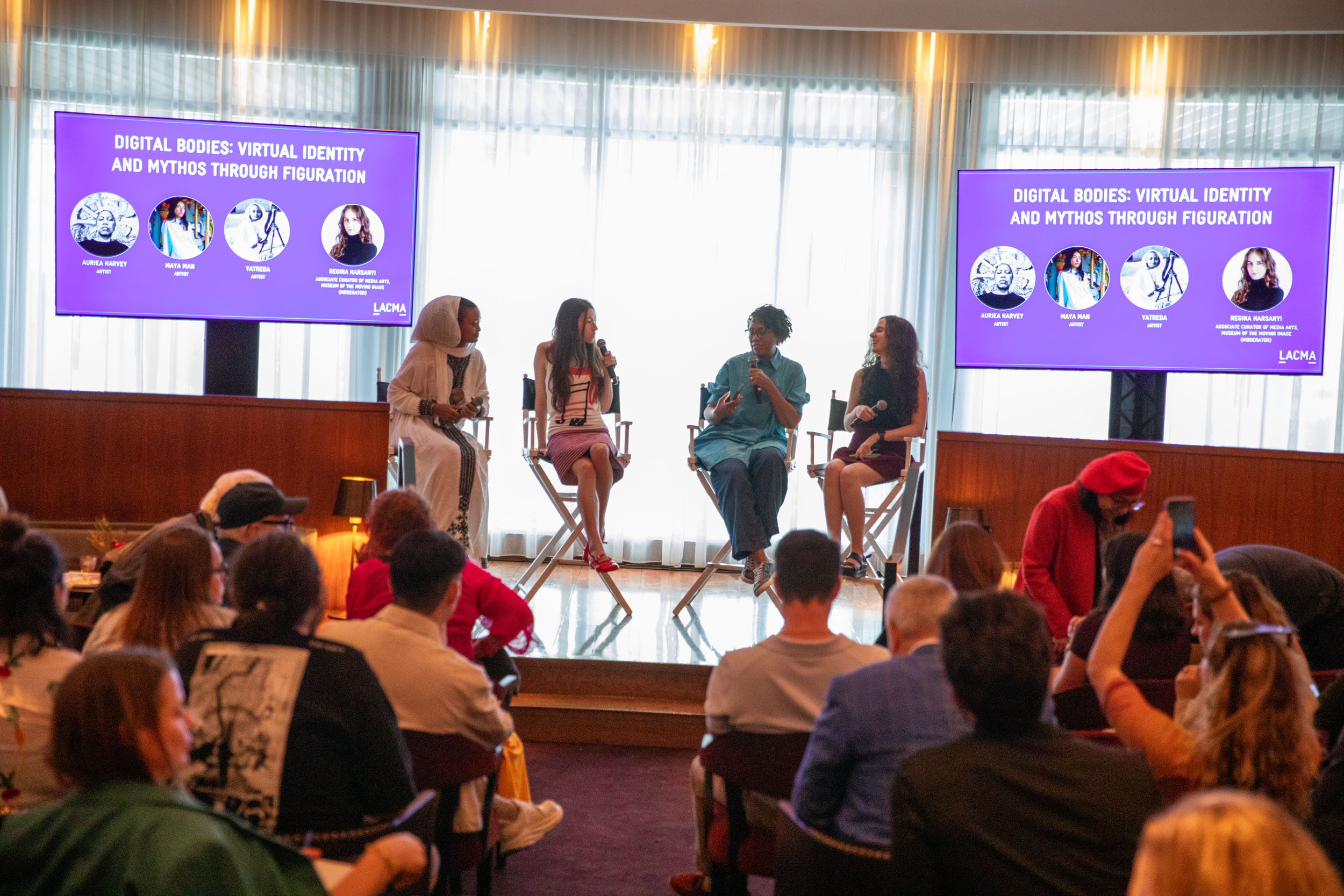
In a panel moderated by curator Regina Harsanyi, artists Auriea Harvey, Maya Man, and Yatreda discussed how identity takes shape across digital environments. They described online identity as fluid and collage-like, influenced by the performative nature of social media and the shifting conditions of visibility. Each artist traced how cultural heritage, embodiment, and mythology inform their digital work.
Finally, collectors Jackie Courtney and Sophia Cohen, in conversation with Jehan Chu, reflected on the shifting landscape of collecting digital and physical art. They emphasized stewardship, access, and storytelling as central to collecting today, as well as the role collectors play in supporting community-building and emerging artists. The discussion also recognized the impact of women collectors in shaping digital art ecosystems.

Across the program, several themes emerged. Digital art now encompasses embodiment, identity, robotics, performance, and net art, extending far beyond generative abstraction. Artists increasingly treat the internet as a lived environment—one that shapes methodology, community, and culture. Institutions are integrating digital media into broader art-historical narratives, acknowledging its significance to contemporary practice. And throughout, one idea remained constant: digital art is a deeply communal field, shaped by participation both online and in person.
This year’s gathering was generously supported by Mastera, whose partnership helped facilitate a space for cross-disciplinary exchange. A platform dedicated to expanding access to creative learning and digital tools for artists, educators, and builders, Mastera shares LACMA’s vision for cultivating open, innovative digital communities. LACMA’s Digital Leaders—together with partners like Mastera—continue to champion the dialogues and innovations propelling this landscape forward, helping to build a more connected and dynamic future for digital art.