




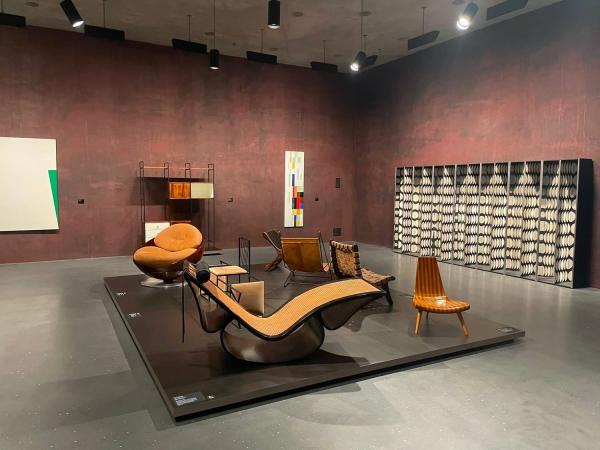
Over the years, I’ve been steadily building our collection of mid-century art and design from Latin America. A number of these works are now shown together in a gallery called “Turmoil and Optimism” in our new David Geffen Galleries, including this vibrant painting by Alejandro Otero. Otero is one of the most influential Latin American artists of the 20th century, and a key figure in the introduction of geometric abstraction in Venezuela. Tablón 32 (Board 32) belongs to a group of works that he designed in the 1970s and completed a decade later.
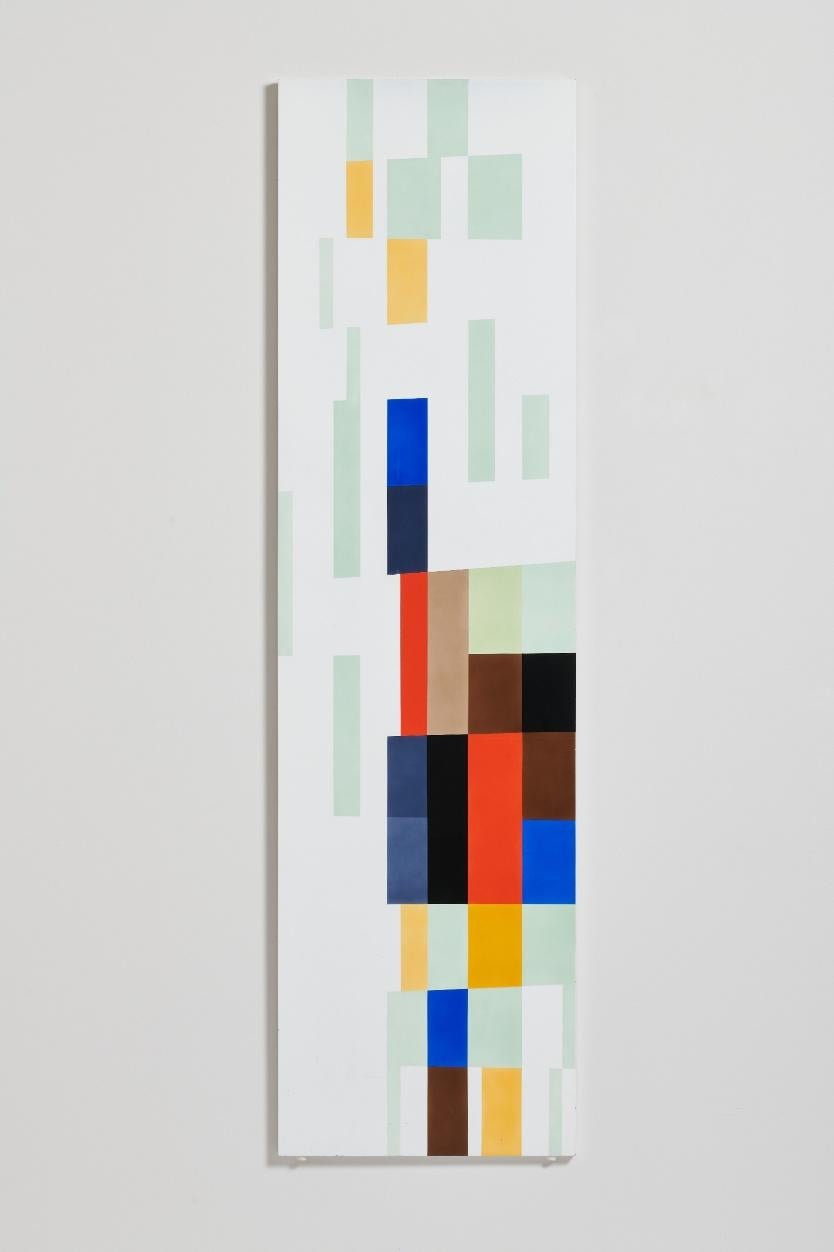
Painted with Duco, a petroleum-based lacquer primarily used for cars, these glossy panels are a nod to the oil that impelled Venezuela’s leap to modernity in the mid-20th century. Tablón 32 is meticulously conceived through the repetition of precise modules of color that produce a visual vibration and elicit an emotional response. For me, the downward movement of forms evokes the mesmerizing sensation of rainfall, indirectly connecting the work with Venezuela’s venerable tradition of modern landscape painting.
Otero studied at the School of Fine and Applied Arts in Caracas in the 1940s, but grew impatient with its outmoded teaching methods and focus on figurative art. In 1945, he relocated to Paris, where his work quickly veered toward abstraction.
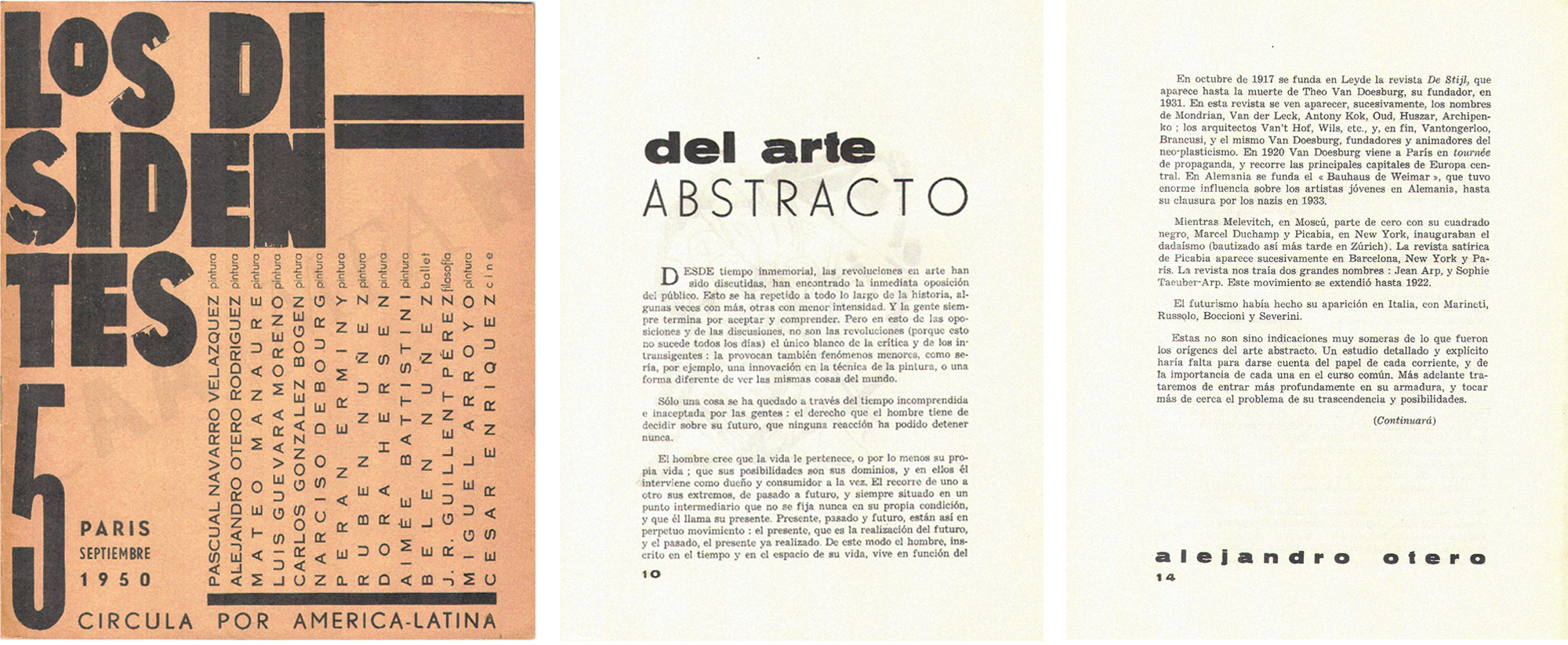
Eager for change, in 1950 Otero cofounded the group Los Disidentes (The Dissidents) alongside fellow Venezuelan expatriate artists and intellectuals. In their exhibitions and eponymous magazine, the group advocated for the introduction of geometric abstraction and international modernism in Venezuela. By the time Otero returned to Caracas in 1952, his country was on the brink of massive transformation, driven by the petroleum boom that turned Venezuela into the richest country of the region.
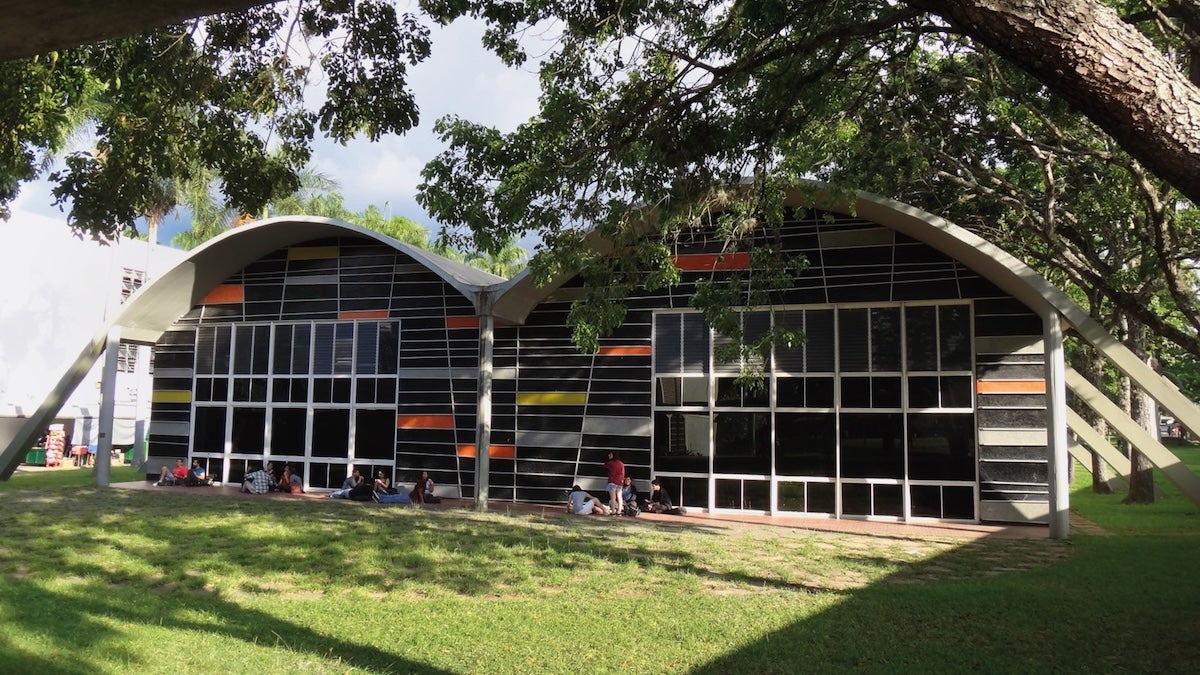
He collaborated on several public projects, including the University City, a revolutionary complex that fostered modern architecture in Venezuela. Designed by the architect Carlos Raúl Villanueva (1900–1975), this “city within a city” integrated works by local and European avant-garde artists, such as Alexander Calder and Jean Arp among others. Otero designed several of the school’s façades, some distinguished by the rhythmic interplay of form and color, which are connected with his earlier experimentations with abstraction.
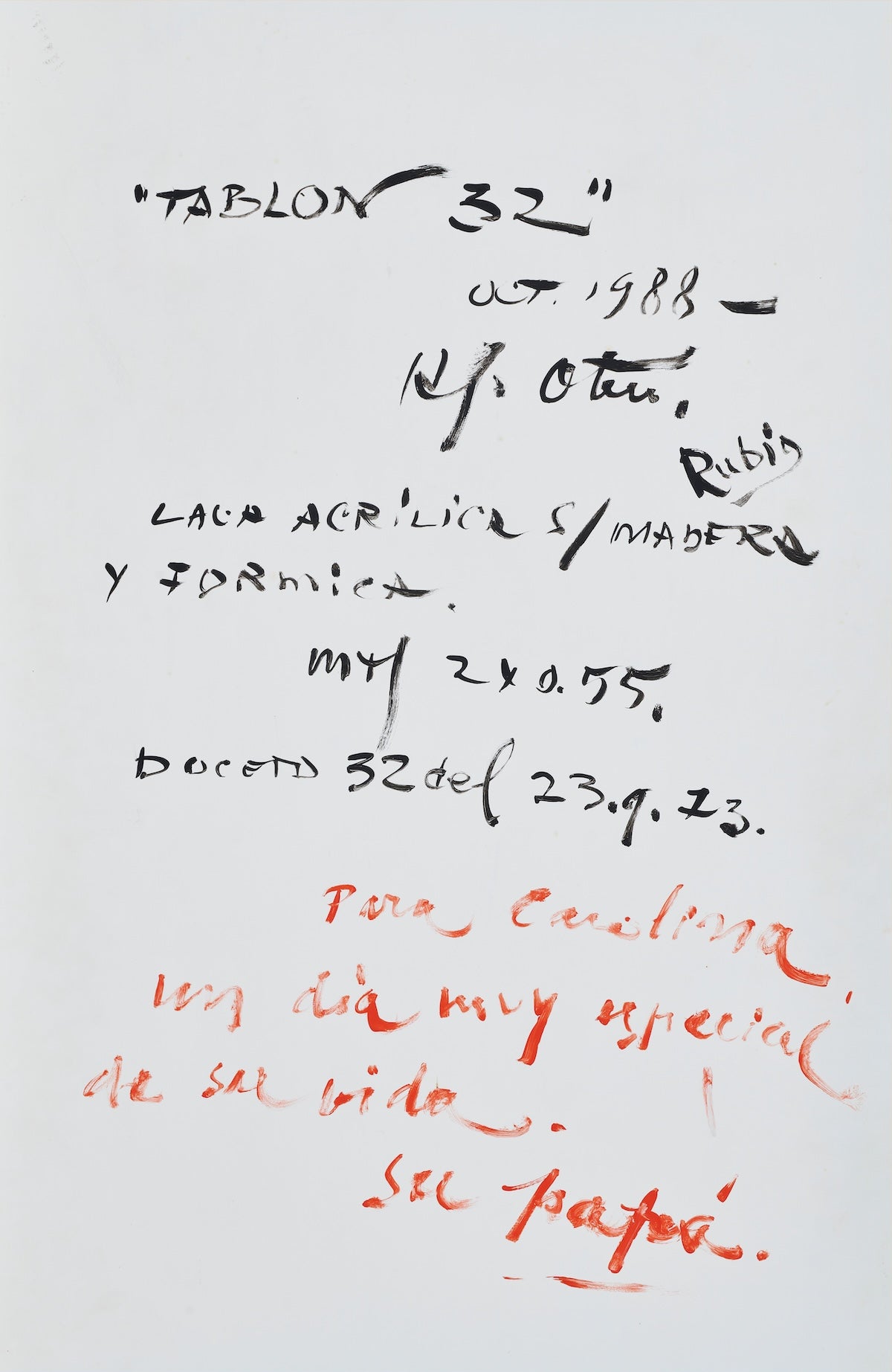
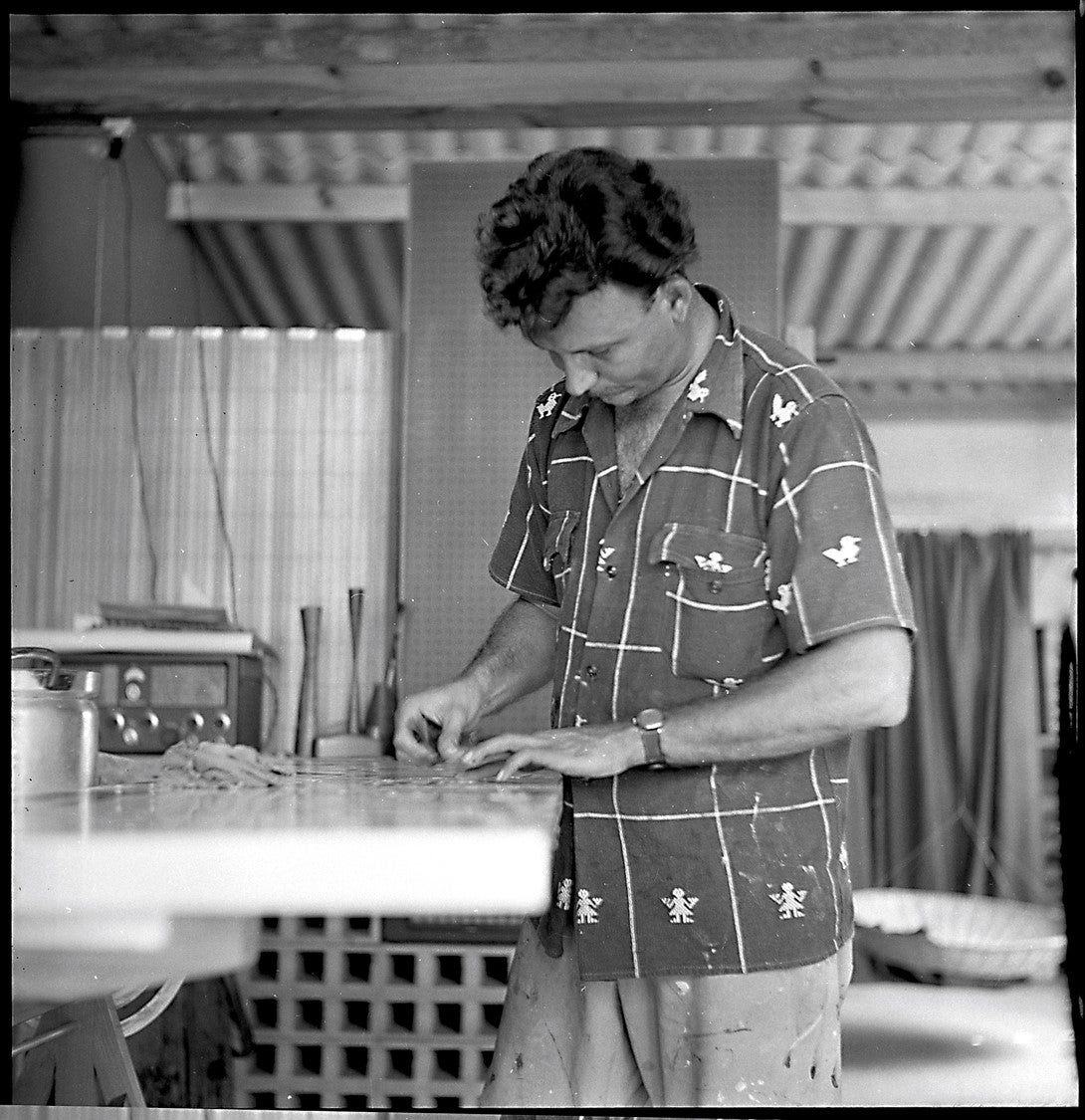
Across his Tablones series, Otero often collaborated with Pedro García Rubio, an experienced automobile painter who had restored some of Otero’s earlier Coloritmos (Colorhythms)—tall, vertical panels also painted with Duco. The back of Tablón 32 is inscribed with Rubio’s name, opening up important questions about the nature of collaborative artistic practices (see, for example, Francis Alÿs’s series of sign or rotulista paintings, where he questions the idea of originality and copies). Tablón 32 also includes a loving dedication from the artist to his daughter Carolina, to whom he gifted the work in 1988 on the occasion of her wedding: “Para Carolina. Un día muy especial de su vida. Su papa” (For Carolina. A very special day of her life. Your dad).
During the recent 40th annual Collectors Committee Weekend, members of LACMA's Collectors Committee and Contemporary@LACMA generously helped the museum acquire three works of art, which included Alejandro Otero’s Tablón 32. Information about these three works will be published here on Unframed.