




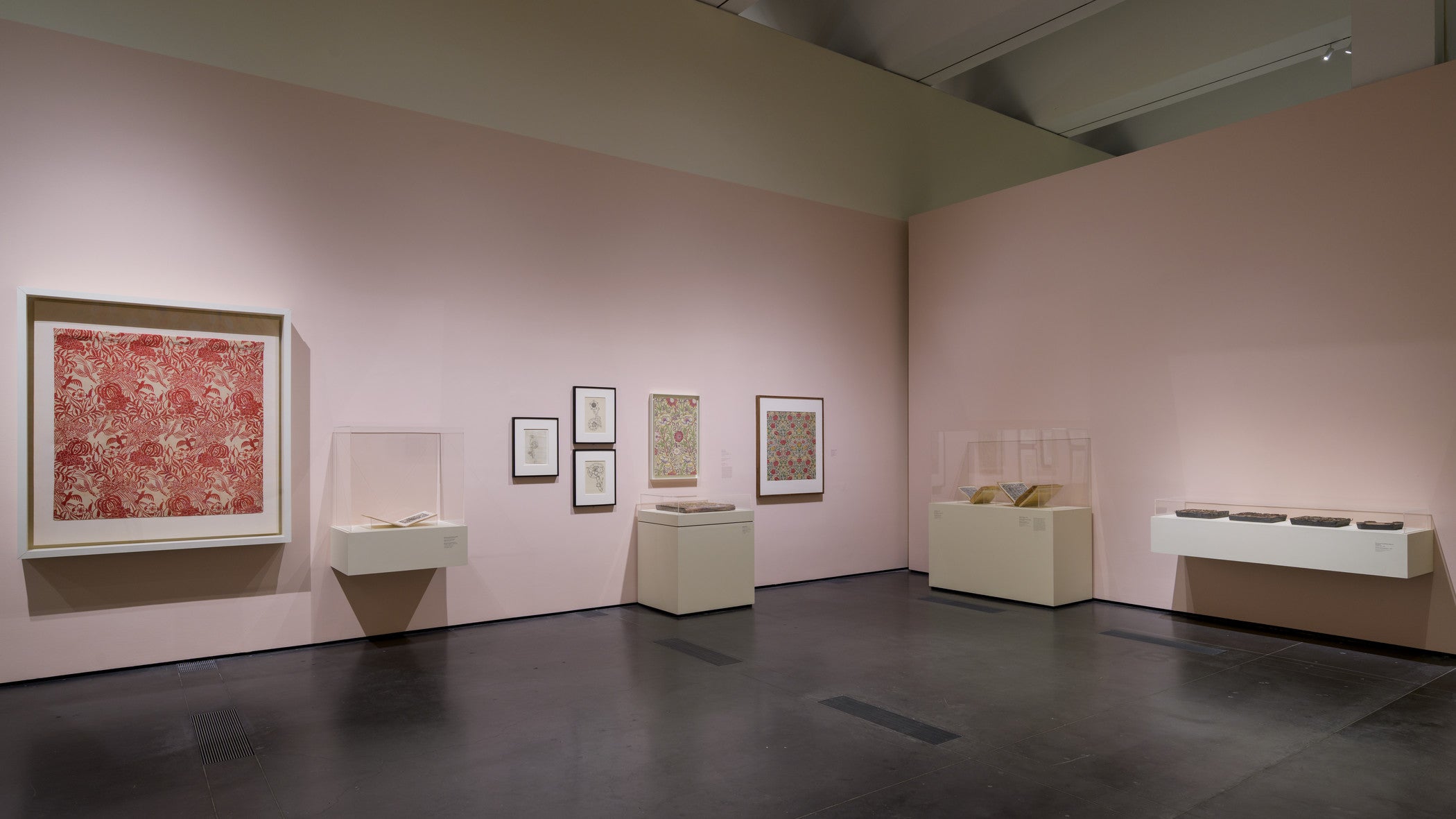
Block printing, the world’s oldest and most versatile method of making multiple images, involves carving an image or text in reverse out of a printing matrix, usually a piece of wood, and then inking and pressing it onto a support, typically paper or cloth. This allows for a design that can be repeated by printing it over and over again. Deep Cuts: Block Printing Across Cultures explores this medium as both a historic vehicle for mass production that enabled images and ideas to circulate widely as well as a means of creative expression that has been used in a wide variety of ways across time and place
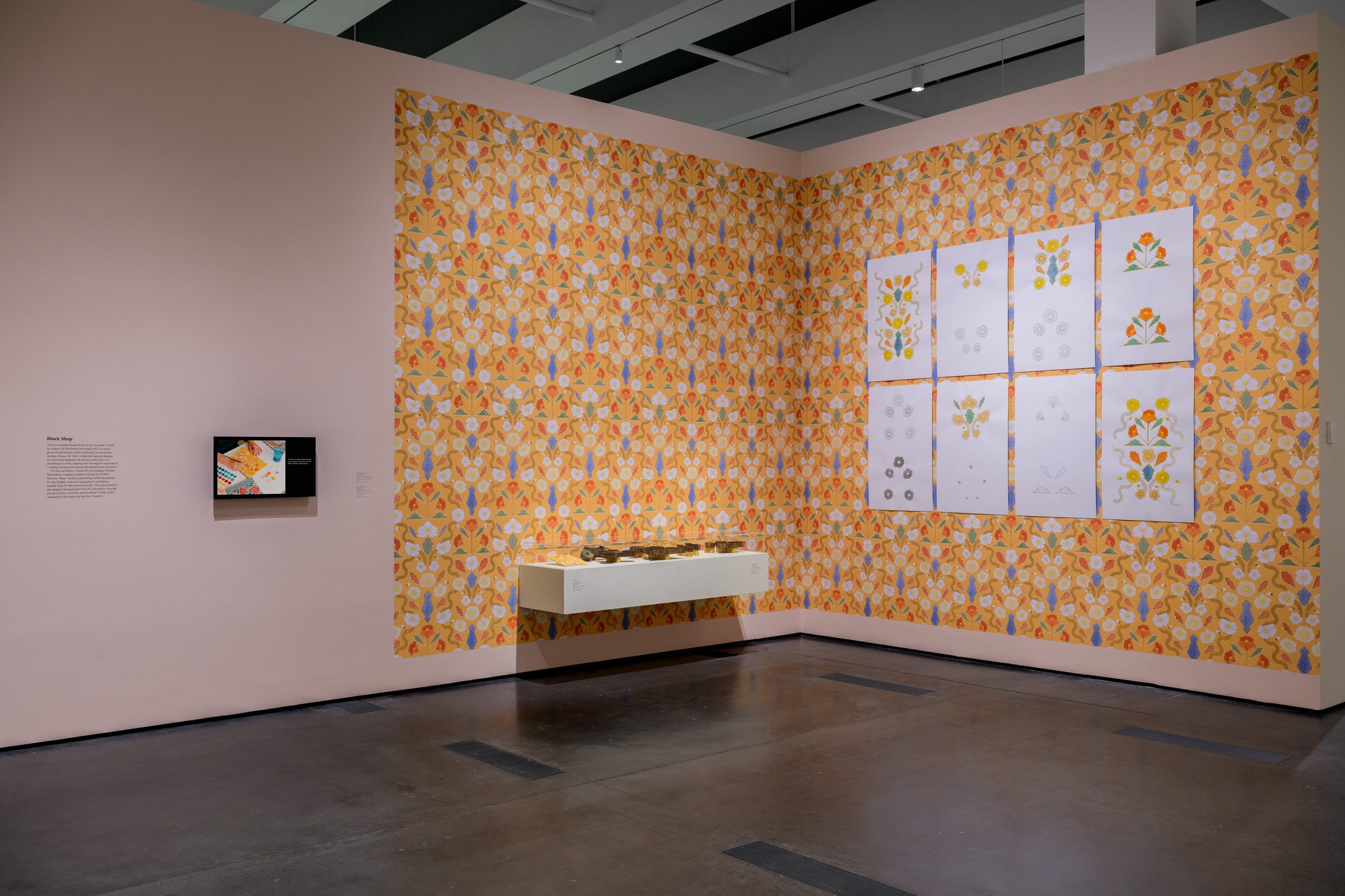
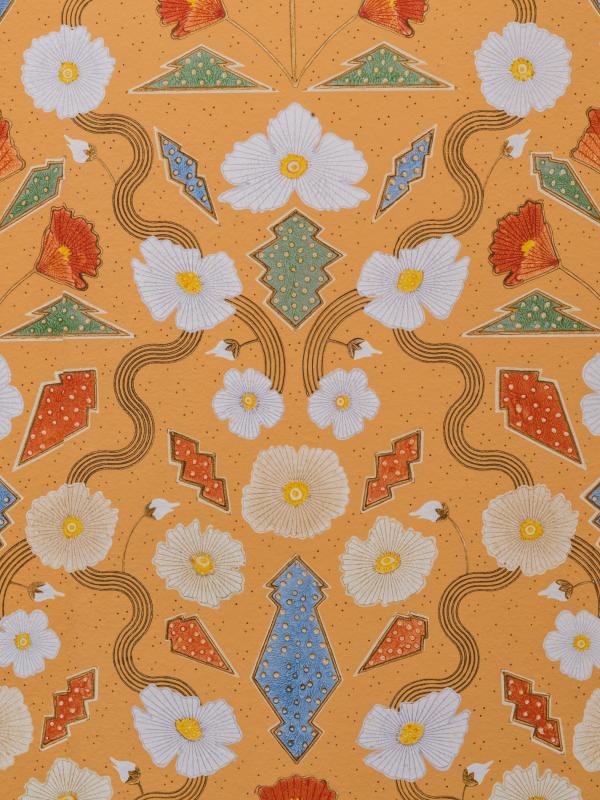
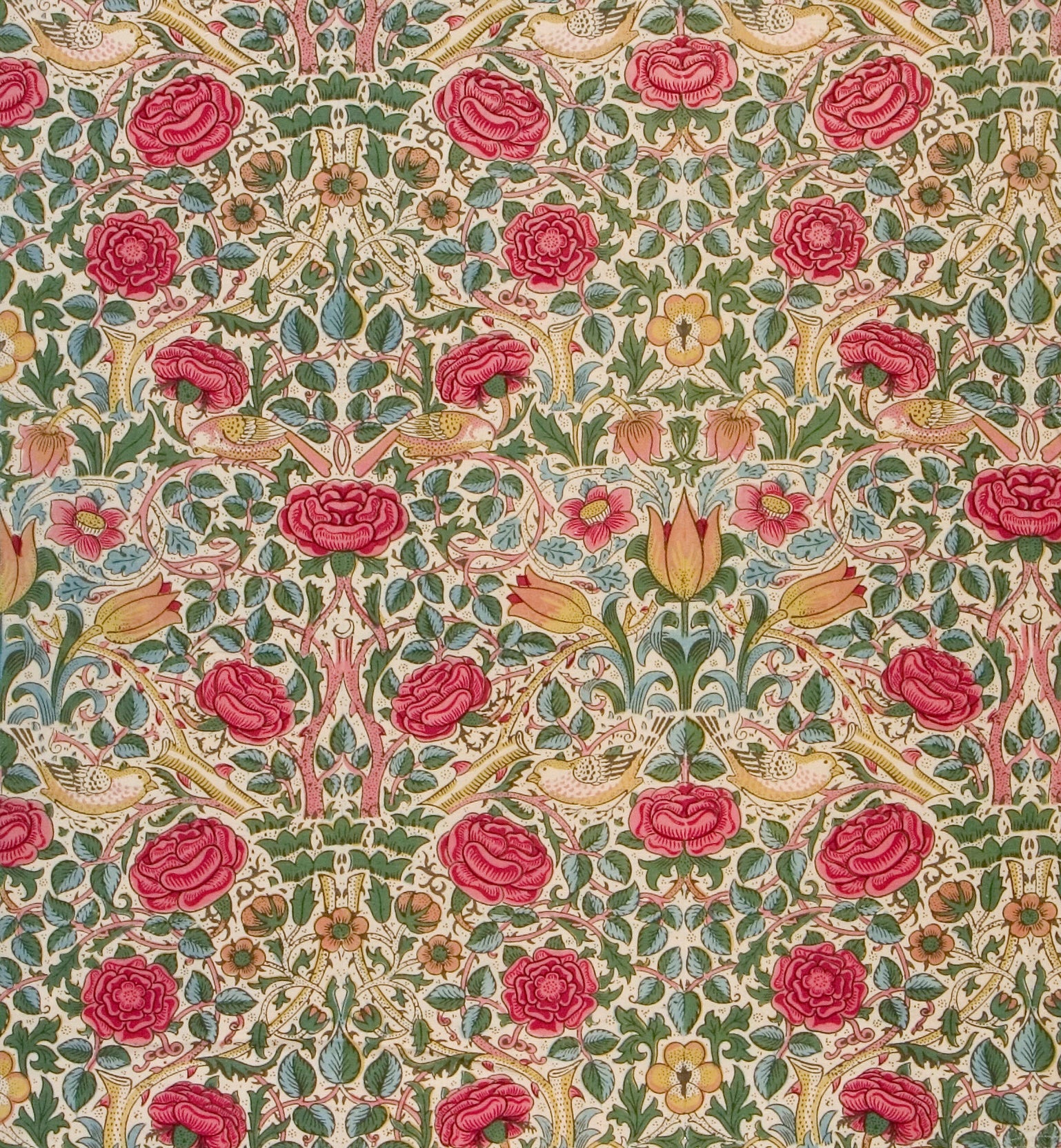
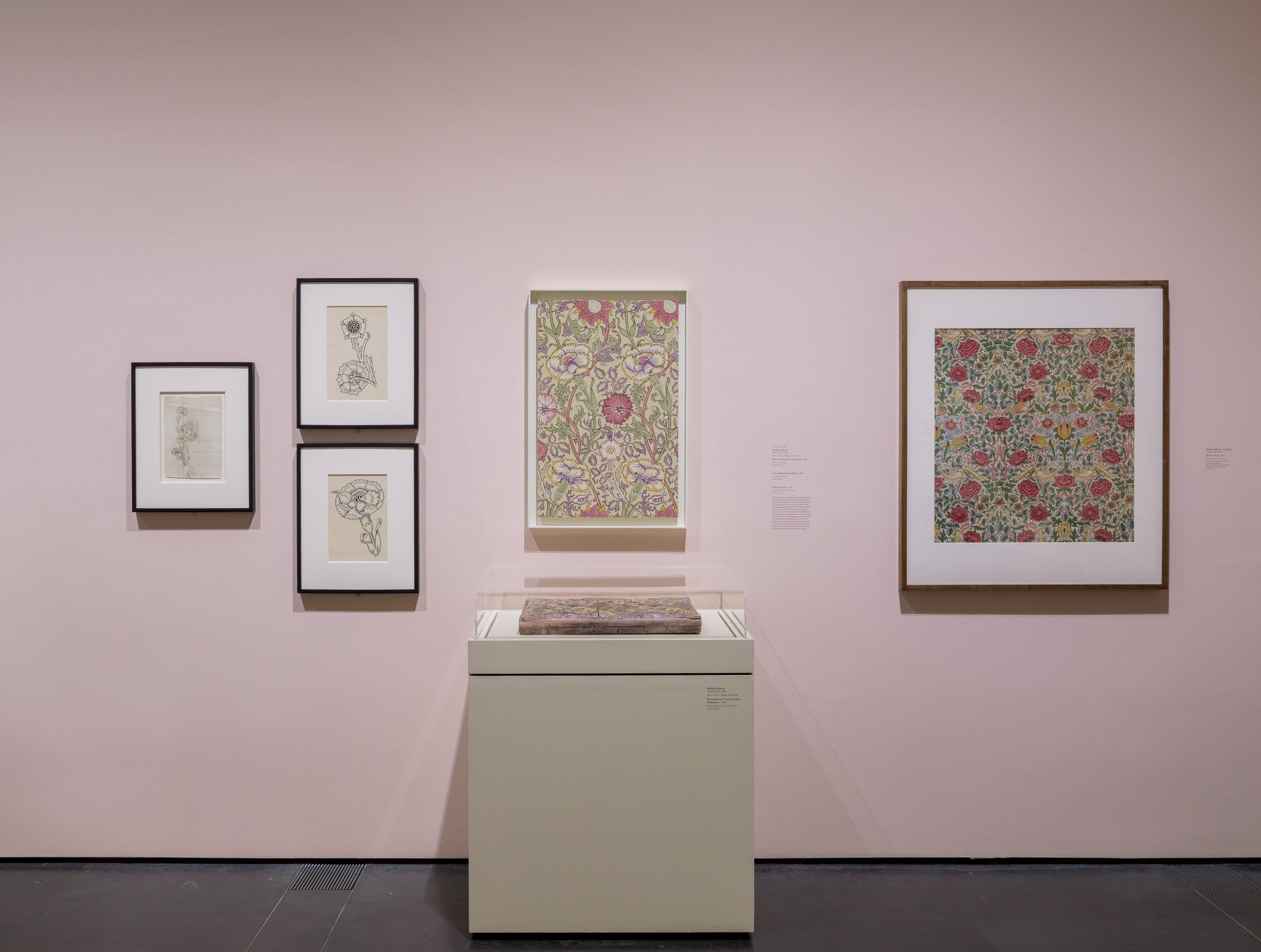
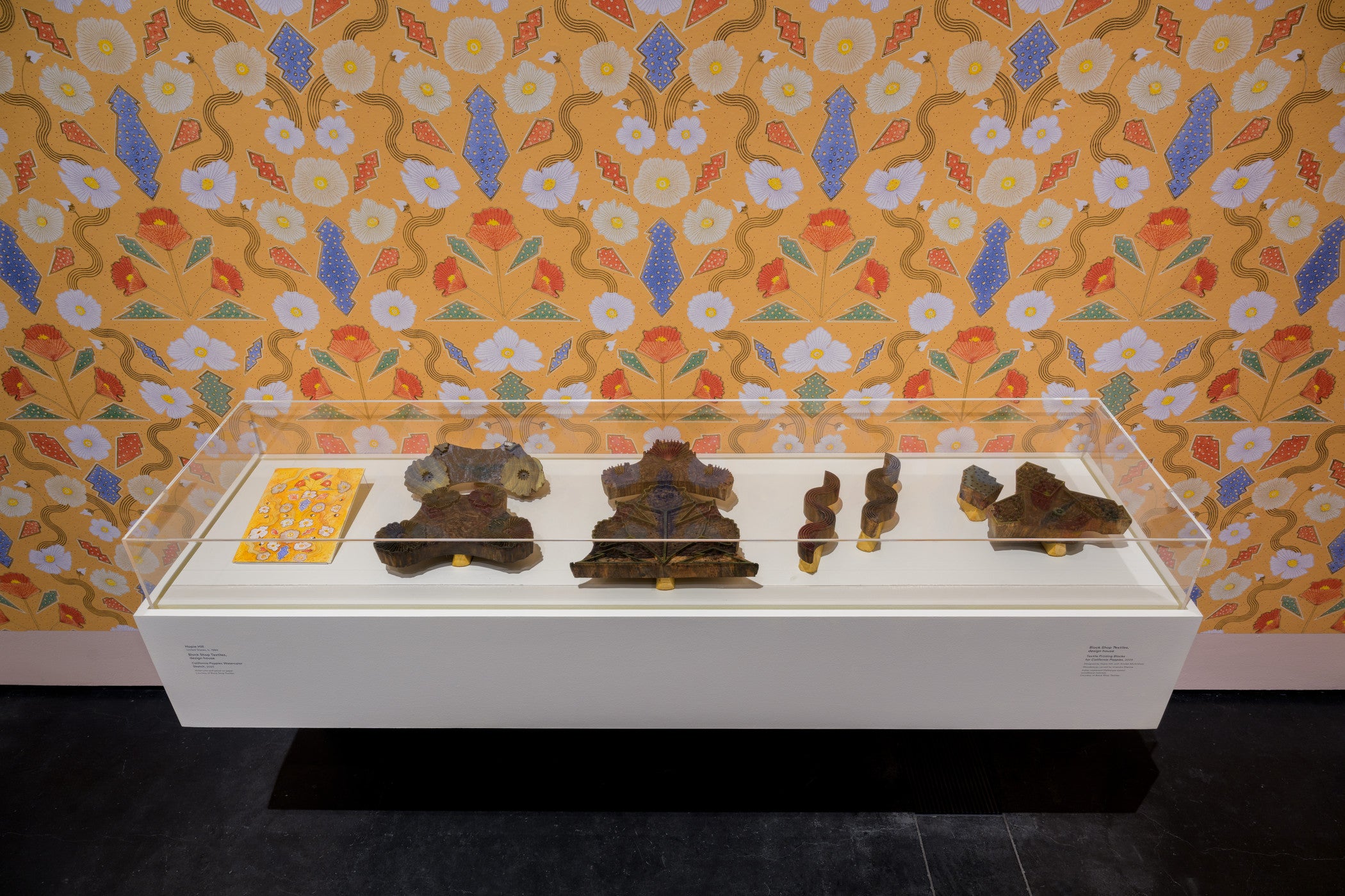
To highlight how contemporary makers continue to reinterpret this enduring art form, the exhibition includes a section developed with Los Angeles–based Block Shop, a multi-generational design studio dedicated to producing handprinted textiles utilizing traditional methods and founded in 2013 by sisters Lily Stockman and Hopie Hill. For the collaboration, Hill and designer Ainslee McAndrew created a pattern inspired by William Morris’s “Rose” textile, on view in Deep Cuts along with documentation of the design’s development from its conception, through the production of blocks and proofing in India, to the fabrication of wallpaper by the firm Twenty2. Block Shop also produced a robe, scarf, and bandana for the LACMA Store featuring their pattern, printed and dyed by hand in small batches.
Below, read our recent conversation with Hill about the process of reimagining this 19th-century English textile for current-day Los Angeles. You can also hear from Hill and artists Monica Majoli, Alison Saar, and Analia Saban at a discussion about the enduring influence of block printing at L.A. Print, Edition 15 on Saturday, July 18.
Could you tell us a bit about your collaboration with LACMA for Deep Cuts?
Hopie Hill: We’re huge art history nerds and this collaboration was a total dream come true. LACMA reached out to us to be part of Deep Cuts and our challenge, which was super thrilling, was to look through the archive and pick the one block print that resonated the most with us.
Why did you choose the piece you did?
HH: It was really hard to land on our favorite piece, but we ended up choosing the William Morris “Rose” pattern because it’s so iconic. William Morris is incredible because the patterns that came out of his workshop continue to be completely relevant today and you see William Morris wallpaper in houses all over L.A. He was an absolute pioneer in the world of wall coverings, particularly in these nature-inspired, scrolling-leaf patterns that have withstood the test of time. We thought it would be really fun to riff on his piece and be in dialogue with this English block print from the 19th century and reimagine in it our Bauhaus-inflected, Art Deco–inspired aesthetic.
What was the process of designing your own version of this pattern like?
HH: It was so much fun for me as a textile designer to study this pattern and break it down because it felt like going inside William Morris’s head. It turns out his patterns are not only so beautifully drawn but the geometric intricacy is mind-boggling. To think that they were doing it without computers is incredible, especially the way that the patterns and motifs fit together with so much perfection and thoughtfulness.
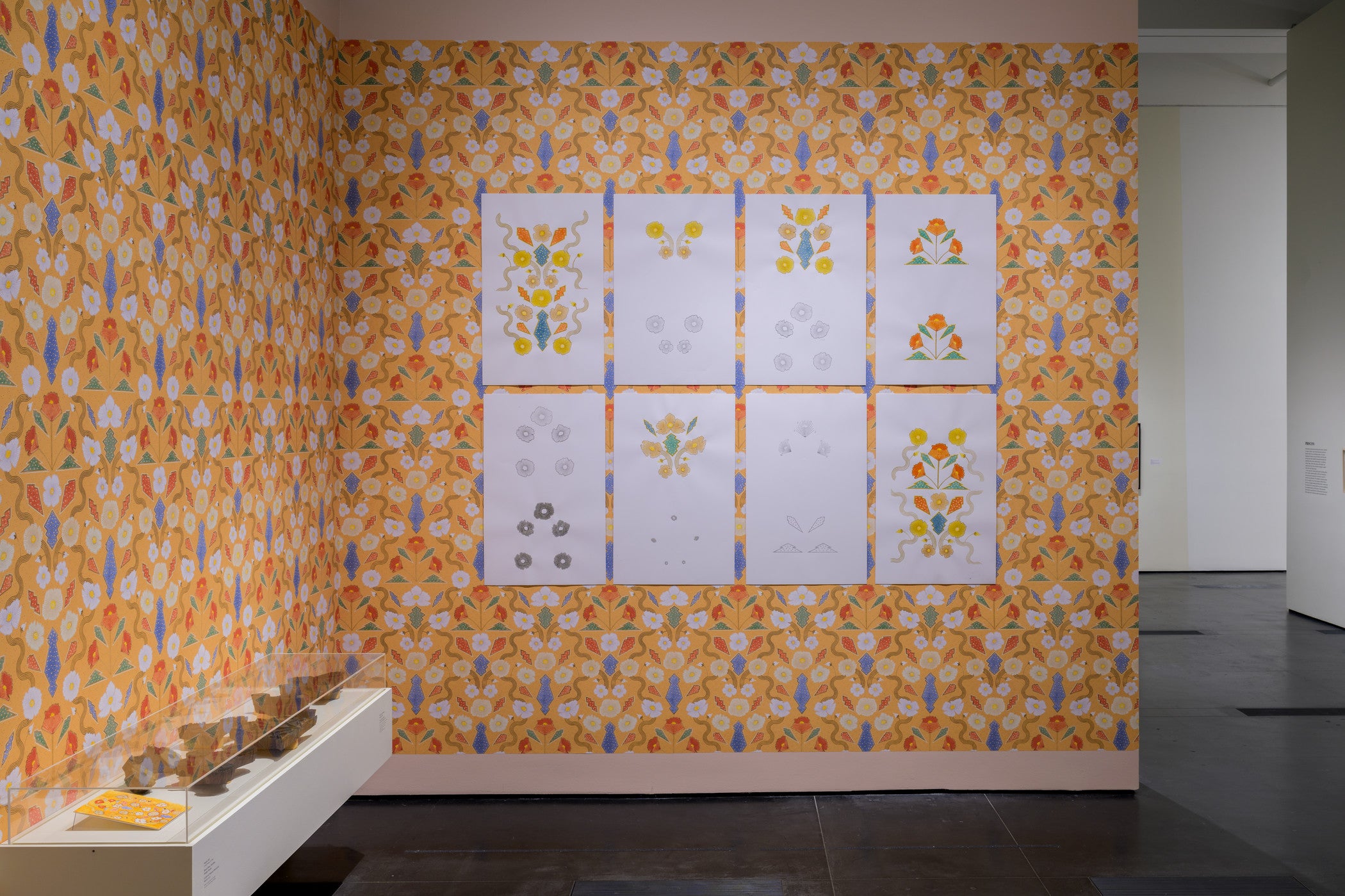
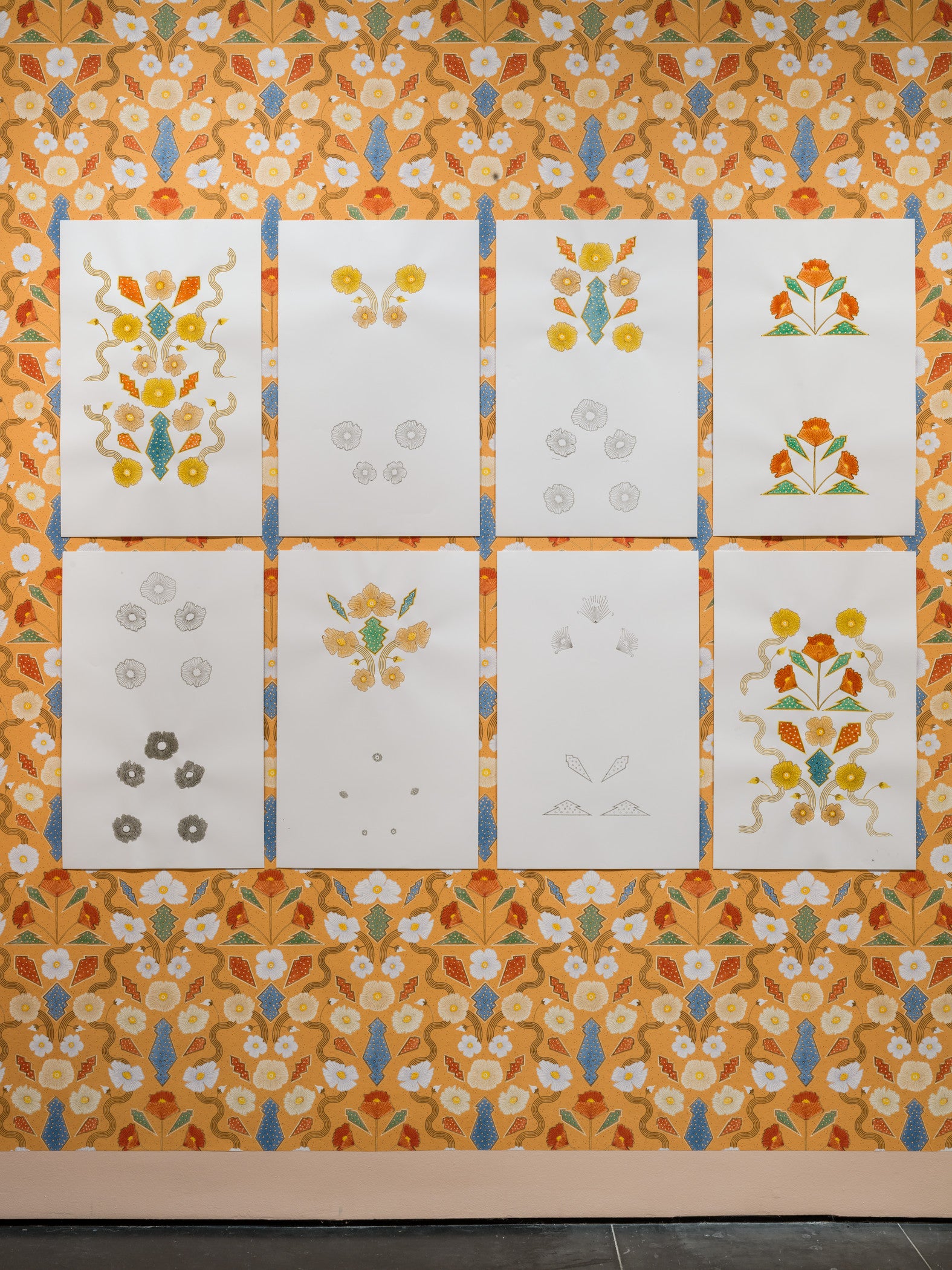
I broke his pattern down into its core elements and found there were three shield shaped clusters of roses, leaves, thorns, and insects. I broke those three shields down to understand how they could be separated and put back together, and then I reimagined them in our own Block Shop design vernacular. Instead of scrolling leaves I used repeated curvilinear stripes, instead of leaf clusters I used these Art Deco geometric shapes with dots in them, and instead of the classic English rose, I looked to my own backyard in L.A. and drew California poppies and matilija poppies.
How did you bring that design to life?
HH: After I created the painting based on his repeat, we then digitized the painting and translated it into distinct elements that each get carved into wooden blocks by the team we work with in India. This design was super complex. Usually a Block Shop pattern has five or six blocks that make the whole pattern. For this design, there were 28 blocks. We hand-printed individual sections of the wallpaper and sent those to our printers in Connecticut who do high-resolution scans of each element, bring them together so that the repeat works perfectly, and then print that pattern on a continuous roll. Their design team does incredible work to bring it to life and retain all of the elements of the original hand-printing.
How do you feel about the results?
HH: The end result feels similar to the William Morris repeat because of the shield-like undulating shapes but at the same time is very Block Shop and very contemporary and just super exuberant and joyful—an homage to the wonderful place where we live and the rich history of block printing.
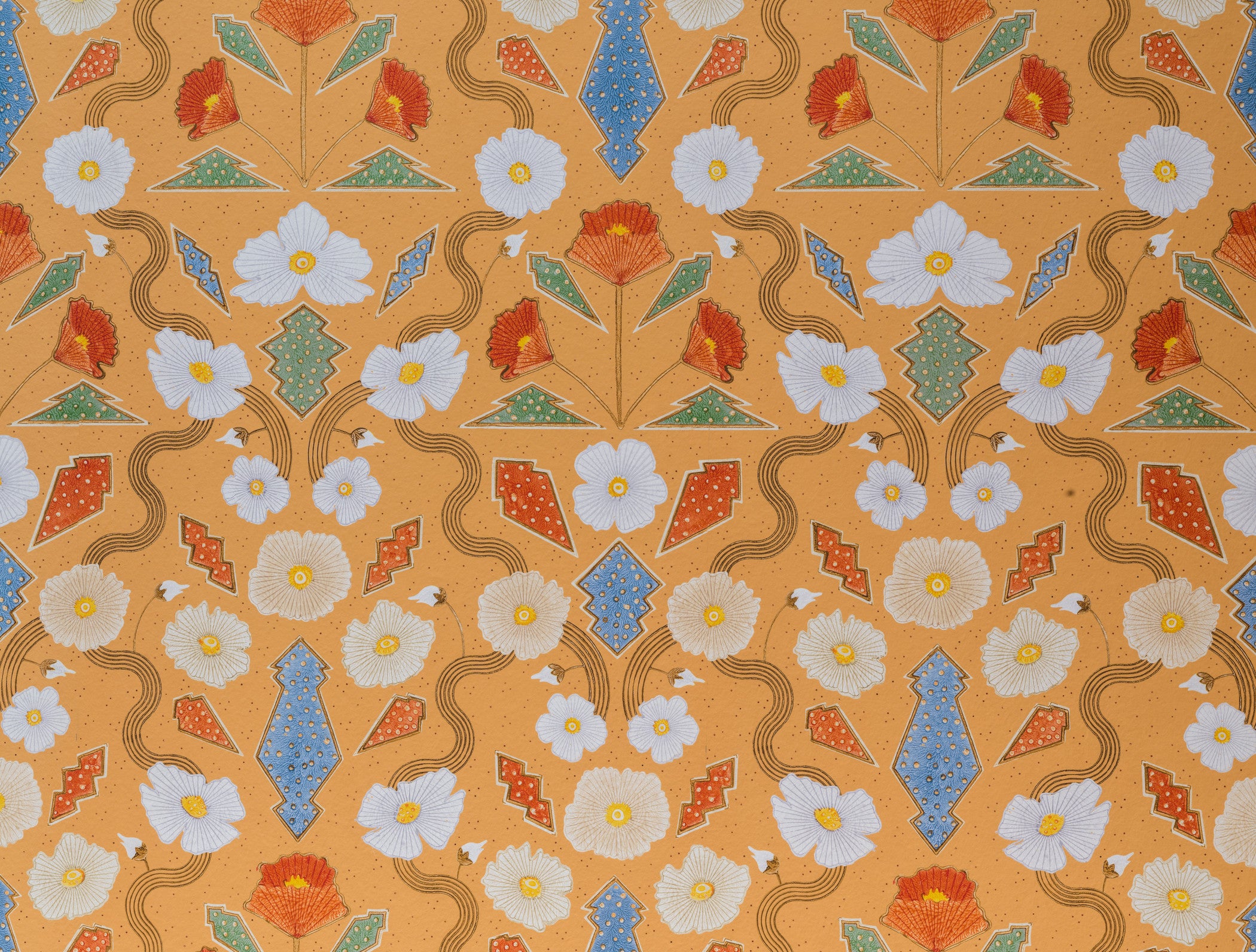
Everything we design starts from a place of joy. If I myself don’t love it, then it doesn’t ever get made. Every piece we make should be able to hang on the wall as its own self-contained artistic composition. For this wallpaper, it’s all about joy. I wanted it to feel light and create a sense of harmony and balance but also energy. It’s a very energizing print with all of the strong lines and floral shapes. My hope is that it can surround whoever puts it in their home with this sense of light, vibrant color, and joy.
Deep Cuts: Block Printing Across Cultures is on view in the Resnick Pavilion through September 13, 2026. L.A. Print, Edition 15: Block Printing Across Cultures takes place on Saturday, July 18, 6 pm, and is free with RSVP.