




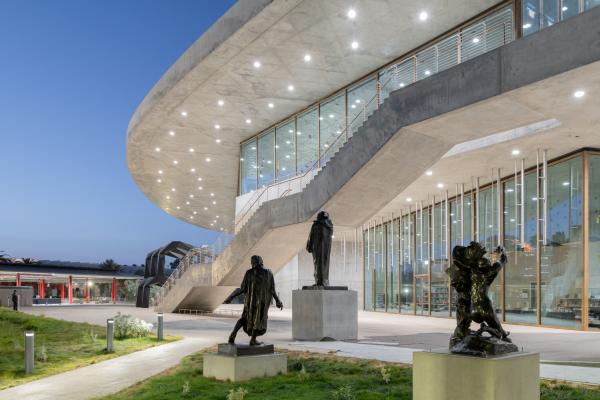
There's plenty to discover at LACMA before you ever step inside the galleries. Although you might already recognize Urban Light as one of Los Angeles’s most iconic landmarks, Chris Burden’s street lamp sculpture is just one stop on our campus filled with monumental public artworks, lesser-known installations, and new commissions. Whether you're in the neighborhood for a quick stroll or spending a day at the museum, you’re invited to wander through a garden of bronzes by Auguste Rodin, stop and smell a sculpture that’s literally alive, and take a rest on some artist-designed benches after walking across one of the largest artworks in the world.
Read on for some of our most remarkable works of art that are free for everyone to enjoy, with no ticket required. Don't forget, tickets to all LACMA galleries are also free for L.A. County residents after 3 pm, Monday through Friday. Entry is always free for LACMA and NexGenLA members.
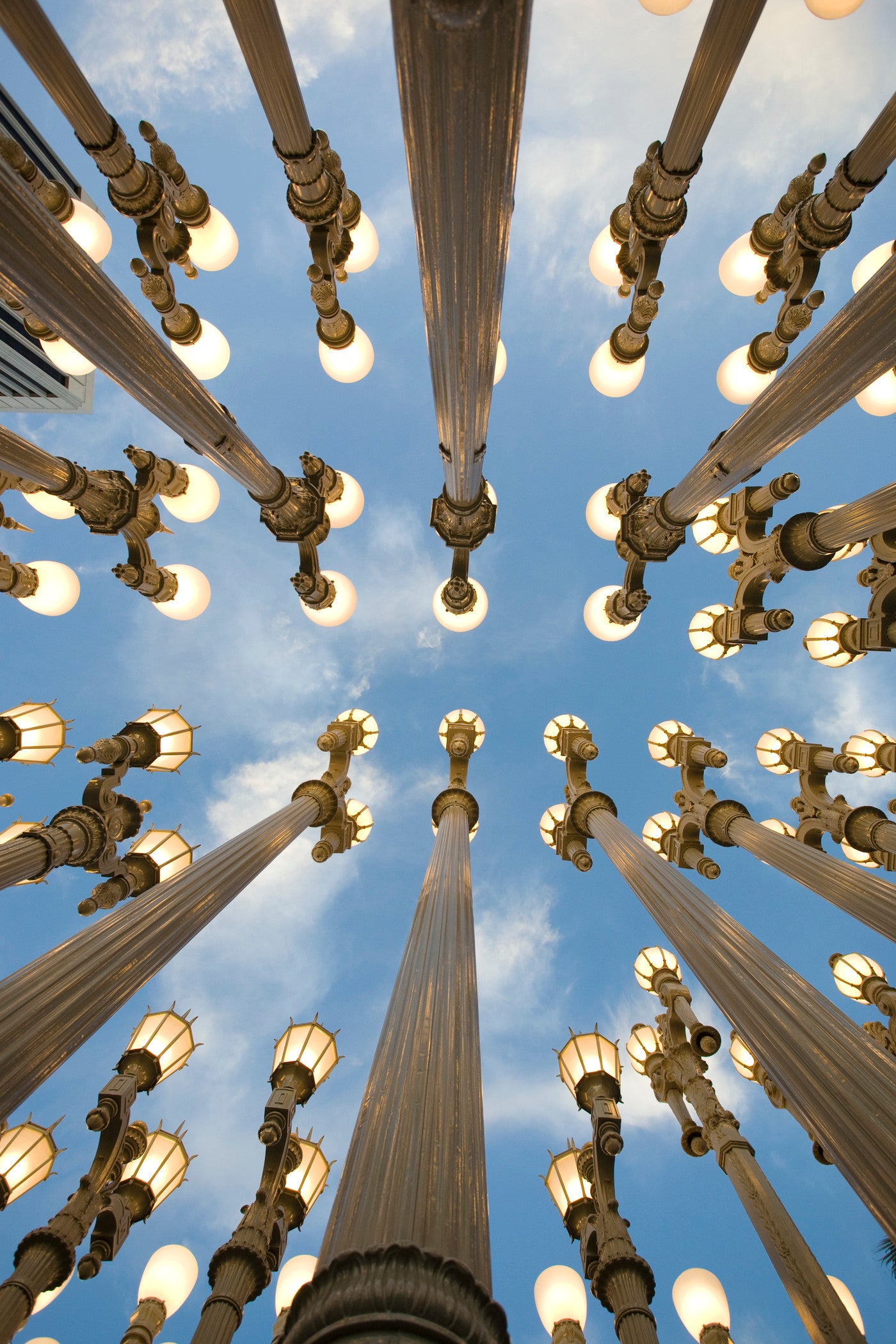
Chris Burden
Urban Light, 2008
When it was installed at LACMA along Wilshire Boulevard in February 2008, Urban Light became an instant landmark. Composed of repeating rows of 202 historic street lamps dating from the 1920s and 1930s, which were originally spread throughout Southern California, the sculpture is accessible on Wilshire Boulevard 24 hours a day, seven days a week. Visitors can interact with the sculpture as they walk among the lamp posts, which illuminate every day after sunset.
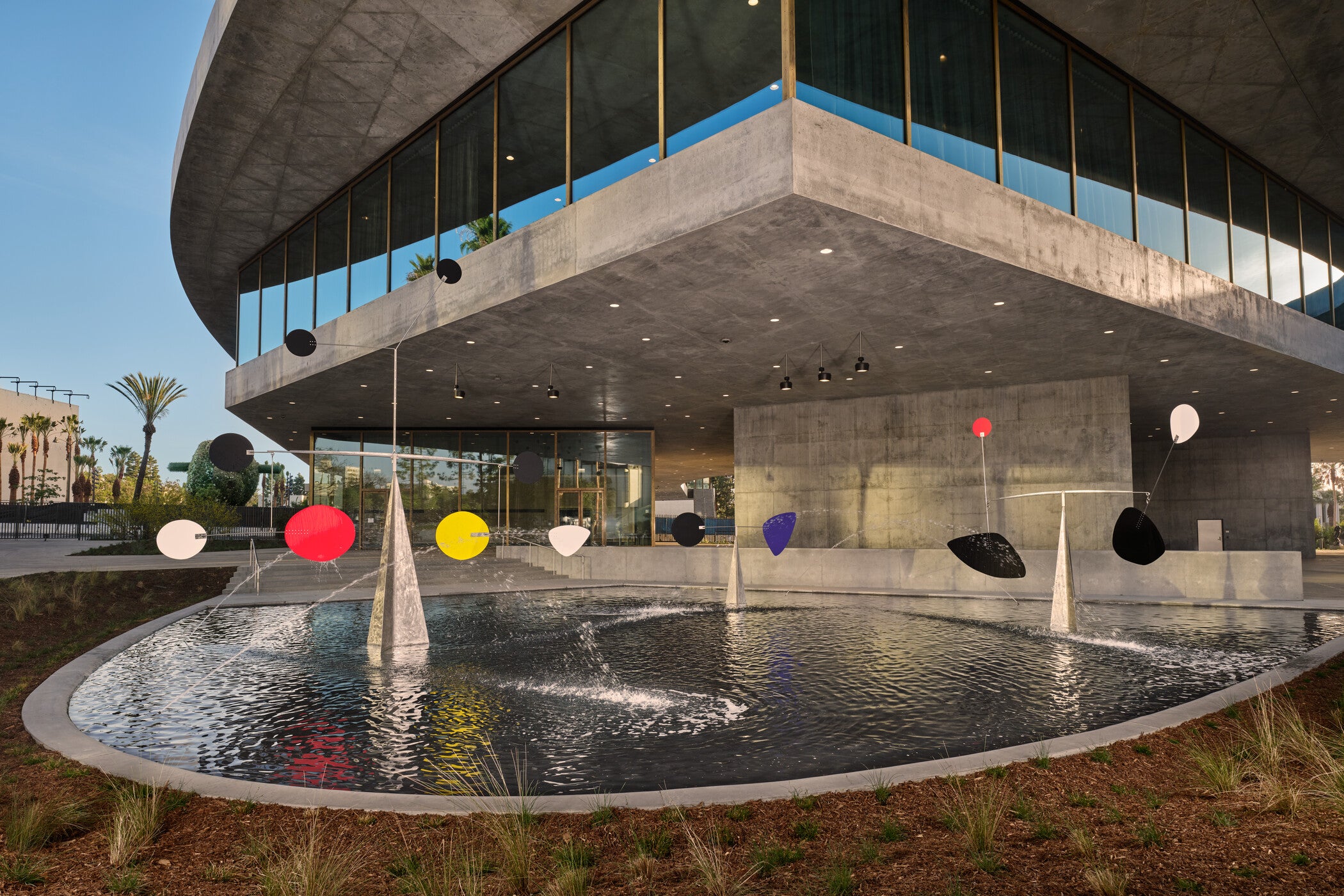
Alexander Calder
Three Quintains (Hello Girls), 1964
Commissioned for LACMA more than 50 years ago, Calder’s recently restored Three Quintains (Hello Girls) now sits in a new reflecting pool on the east side of LACMA's campus. This dynamic sculpture comprises polychrome mobiles that balance on pylons, moving with both the wind and the spray of water from four strategically placed jets.
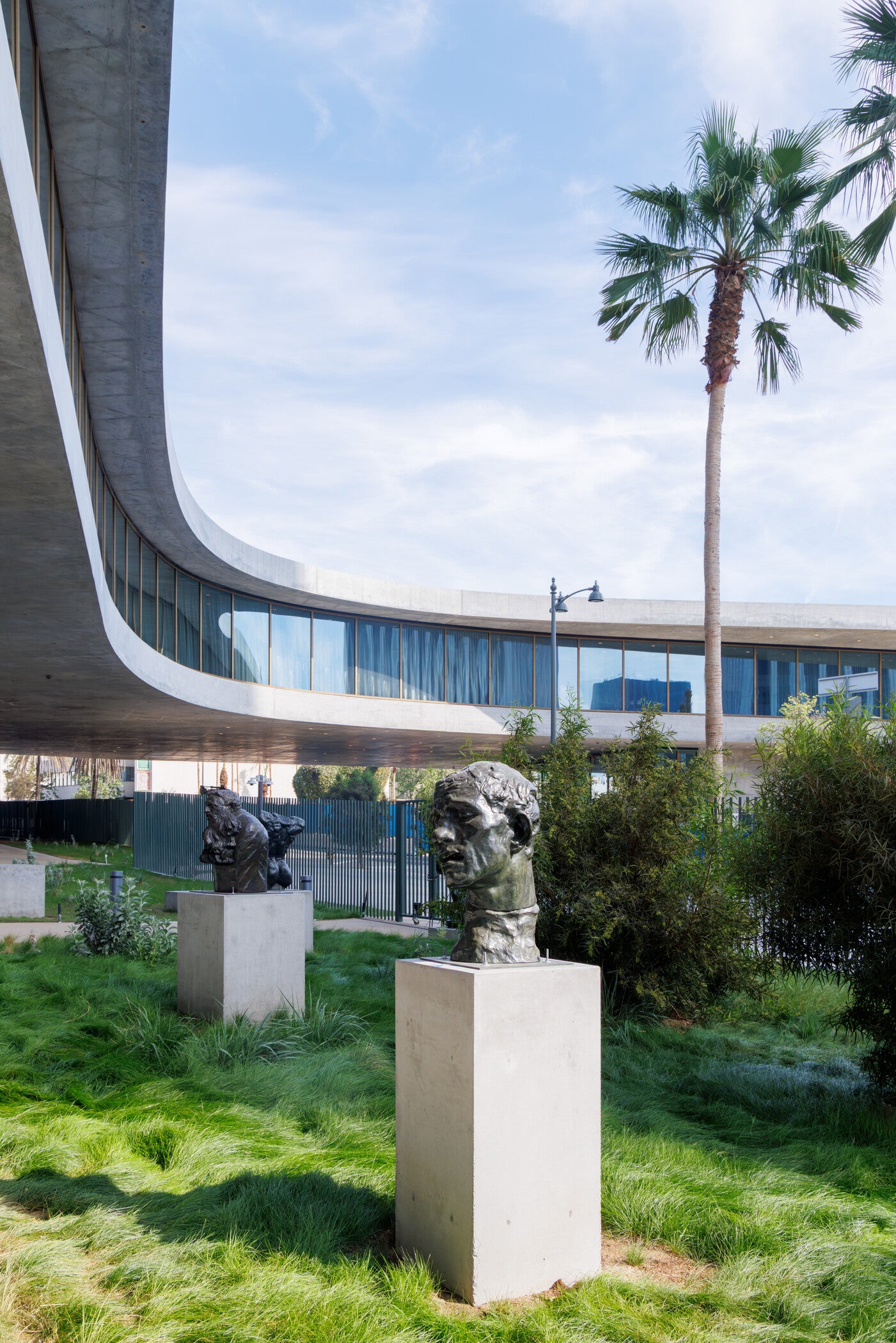
Iris and B. Gerald Cantor Sculpture Garden
On the north side of Wilshire Boulevard beside the David Geffen Galleries, the newly reimagined Iris and B. Gerald Cantor Sculpture Garden offers a peaceful setting to encounter some of Auguste Rodin’s most celebrated sculptures. You'll find large-scale bronzes like Monument to Honoré de Balzac and The Shade alongside smaller works like The Prodigal Son nestled among shaded pathways and greenery, with changing daylight offering new perspectives with every visit.
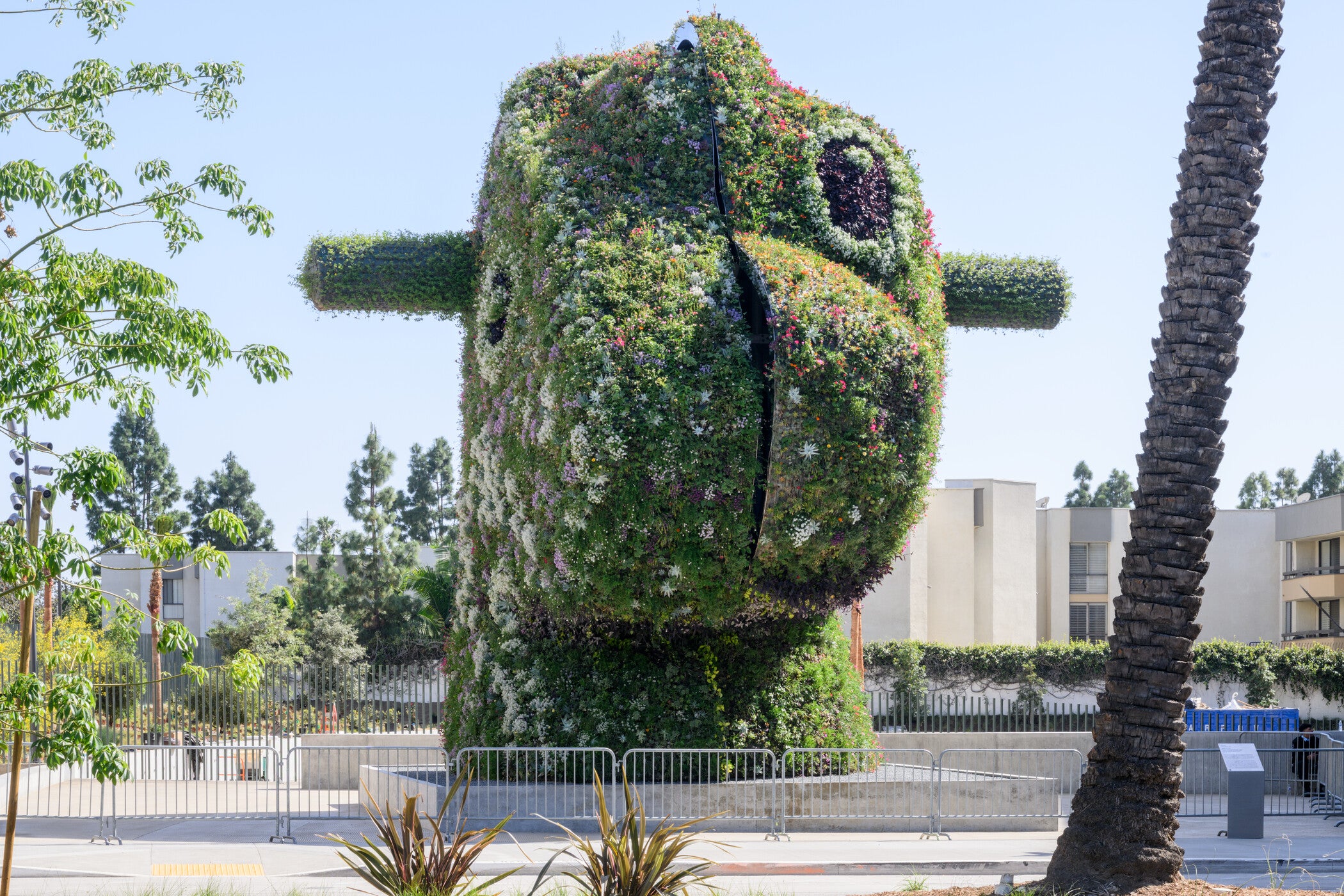
Jeff Koons
Split-Rocker, 2025
Standing 37 feet tall, Split-Rocker merges the heads of two rocking horses—a pony that once belonged to the artist’s son and a dinosaur. “Painted” with the colors of 45,000 drought-tolerant plants and flowers, the playfully mismatched form elevates childhood playthings to monumental art. This blooming sculpture anchors the ground-level public spaces of the Geffen Galleries on the south side of Wilshire Boulevard.
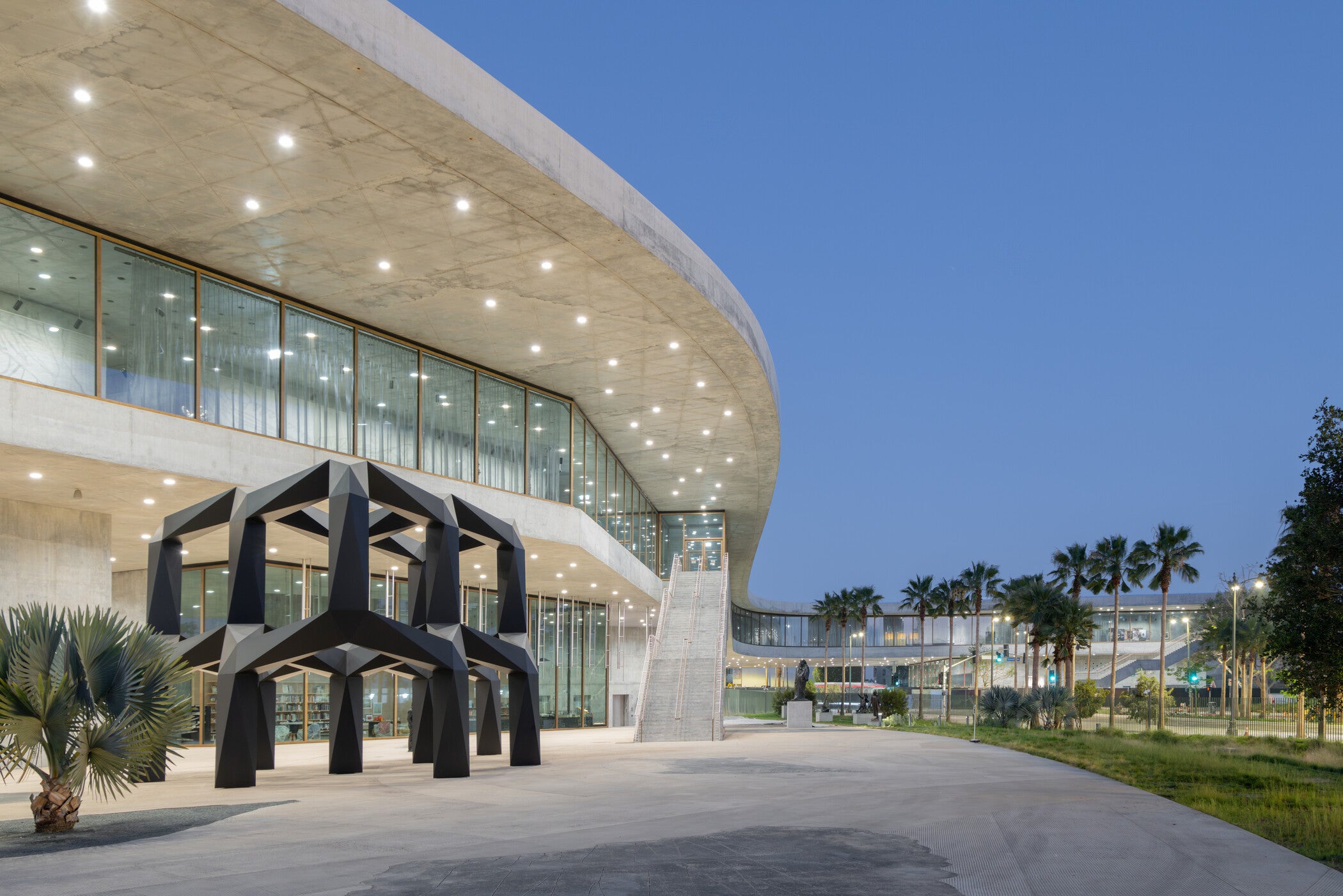
Tony Smith
Smoke, 1967, fabricated 2005
At 24 feet high and 48 feet in length, Smoke is one of the largest sculptures ever conceived by Smith. Despite its monumental scale and rigid geometry, it seems to rise and swell—like a cloud of smoke—as you walk under and around it outside the Geffen Galleries.
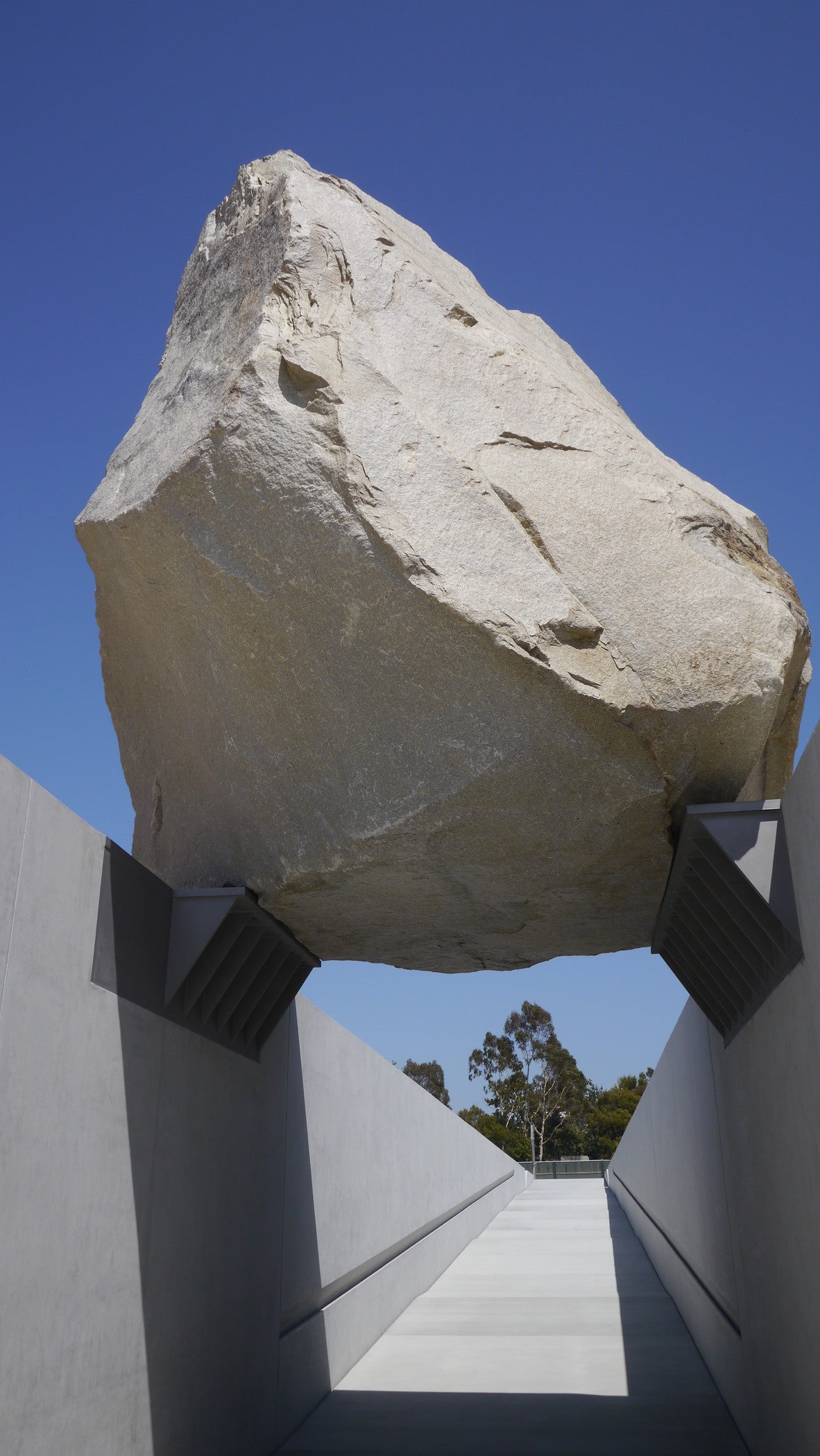
Michael Heizer
Levitated Mass, conceived 1969, realized 2012
One of the largest megaliths to be moved since ancient times, Levitated Mass is a 340-ton, 21-foot-high boulder that Heizer discovered in a quarry in Riverside. Now installed above a 456-foot-long trench that stretches behind the Resnick Pavilion, visitors can walk underneath the boulder before rising back to ground level on the other side, experiencing shifting perspectives that heighten its extraordinary sense of scale and balance.
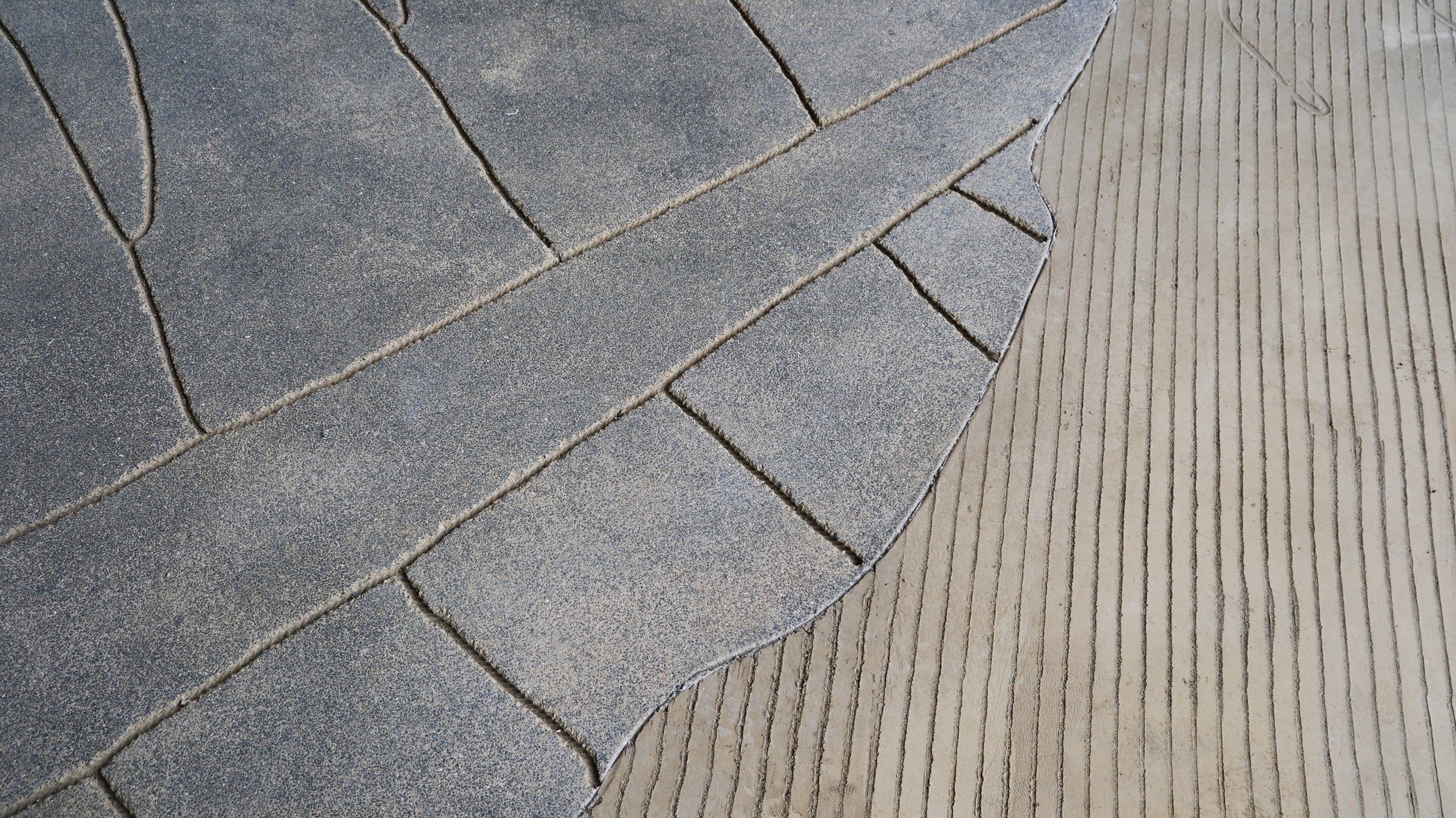
Mariana Castillo Deball
Feathered Changes, 2025
Forming the expansive floor of the plaza level of the Geffen Galleries, Feathered Changes is one of the largest artworks in the world. Visitors who move along the pavement’s undulating paths of concrete will encounter the footprints of local wildlife—coyotes, bears, raccoons, and roadrunners—as well as sections based on ancient murals of the great Feathered Serpent found in Teotihuacan, Mexico.
Pedro Reyes
Tlali, 2026
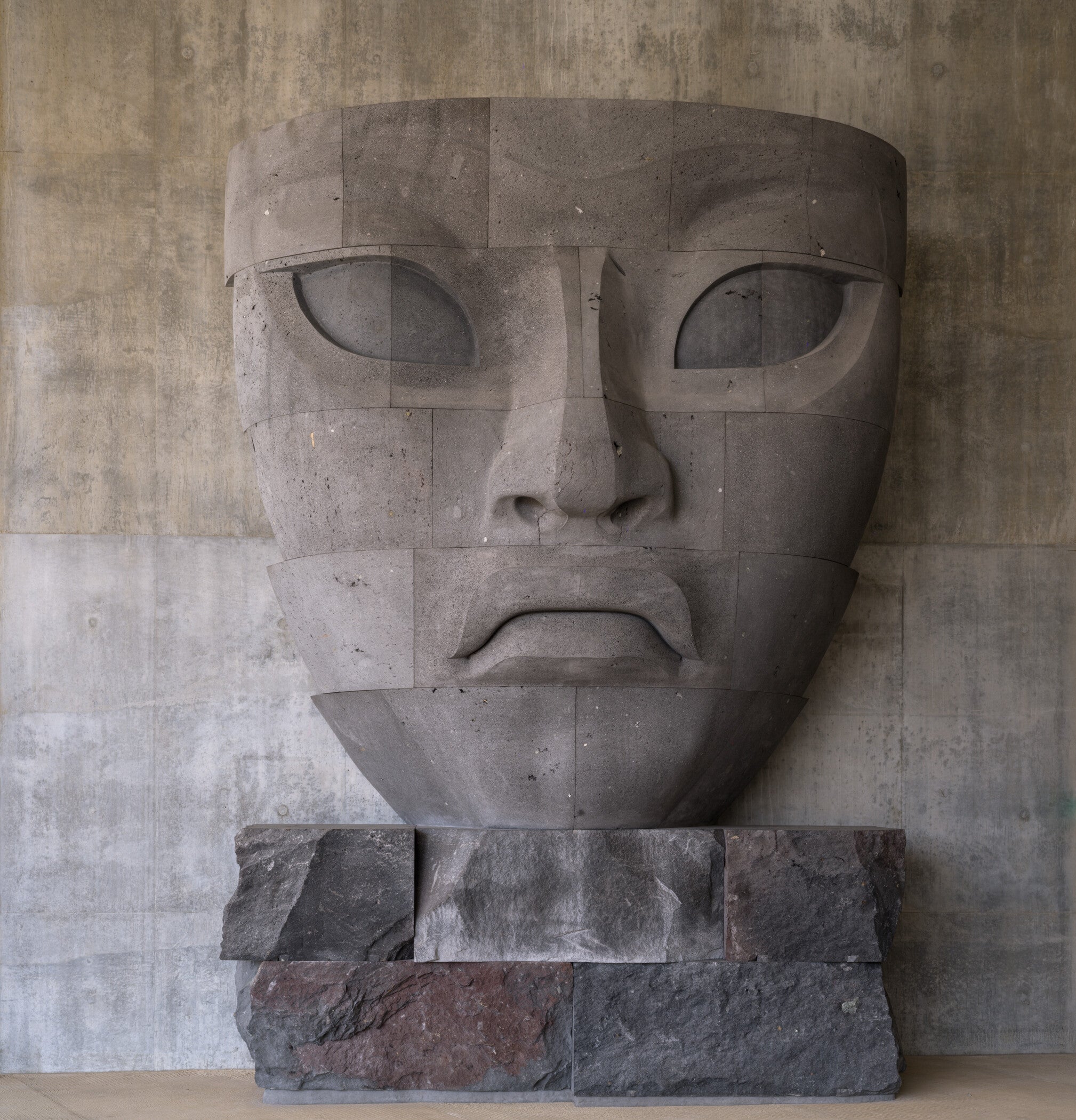
Standing outside the Geffen Galleries on the W.M. Keck Plaza, Tlali, whose title comes from the Nahuatl word tlalli meaning “land” or “earth,” is an 18-foot sculpture assembled of individual blocks of carved volcanic stone inspired by the scale of the colossal Olmec heads found in Veracruz, Mexico. The work is also reminiscent, in both form and iconography, of smaller Olmec masks, exemplifying how contemporary artists like Reyes continue to draw inspiration from ancient artifacts.
Robert Irwin
Primal Palm Garden, 2010
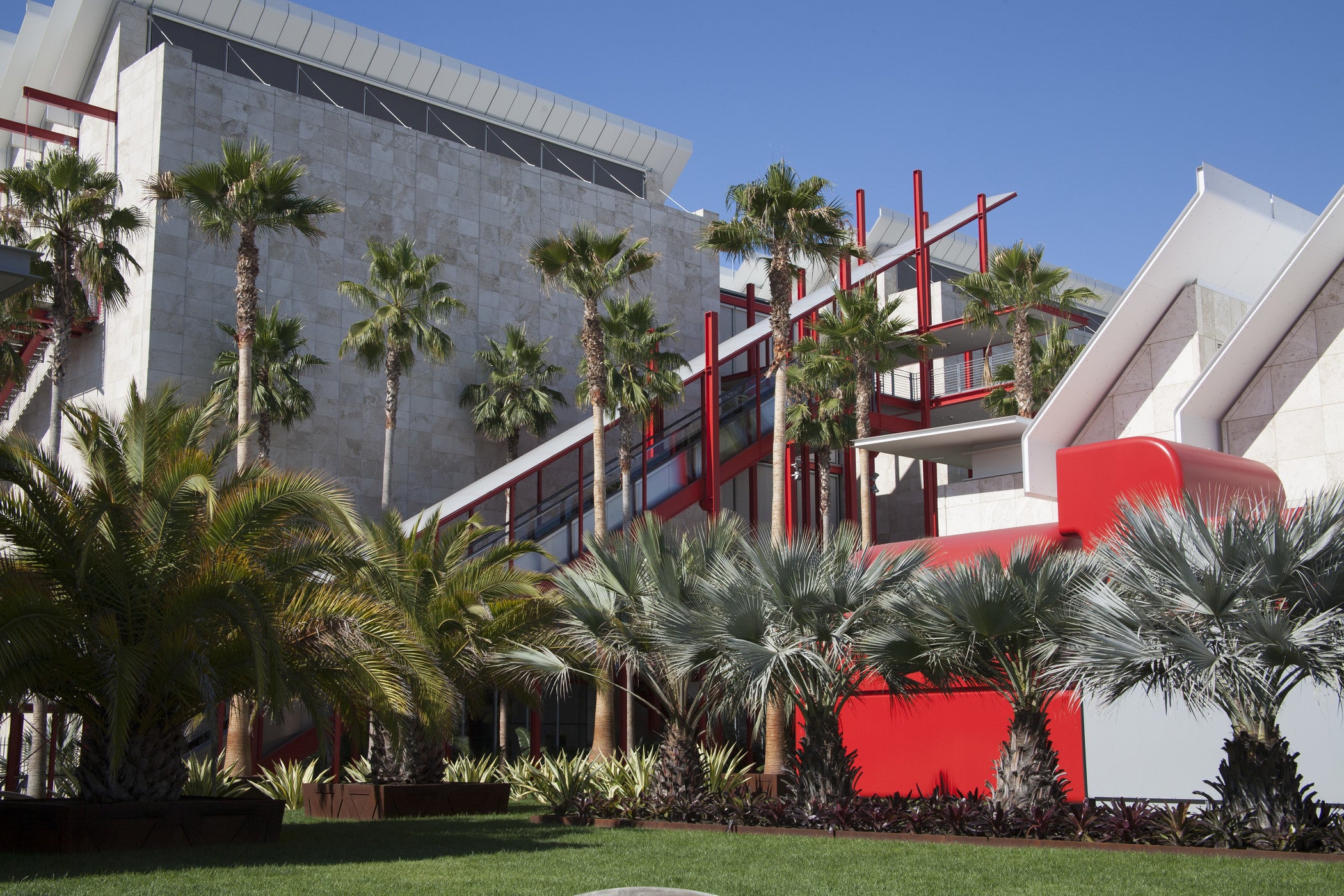
Although you may not have realized you were looking at an artwork, anyone familiar with LACMA’s campus will recognize Primal Palm Garden, begun in 2010 and developed by Irwin with landscape architect Paul Comstock. Comprising over a hundred palms, cycads, and tree ferns, the artist's palm garden, in its use of “primal” varieties, is a nod to the nearby La Brea Tar Pits and its ice age discoveries.
Yoshitomo Nara
Miss Forest, 2020
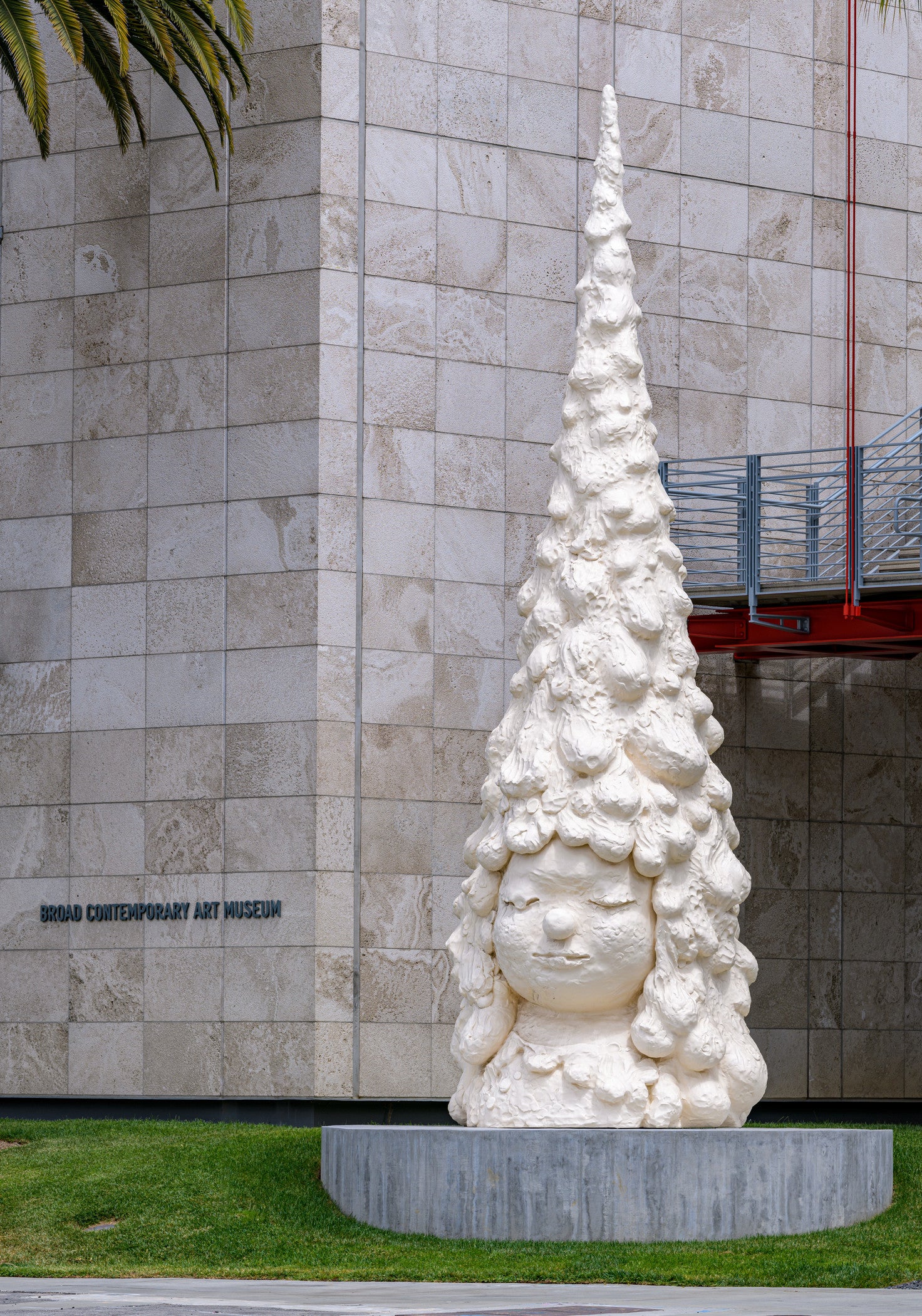
Miss Forest (LACMA Version) is Nara's largest outdoor sculpture to date. Created for LACMA's exhibition Yoshitomo Nara, the sculpture is currently installed at the southeast corner of BCAM along Wilshire Boulevard. In an interview with exhibition curator Mika Yoshitake, Nara described the genesis of Miss Forest: “the image I envisioned was a thing that was connected to the earth, born from the soil of the earth, that grew into the sky…”
Ai Weiwei
Circle of Animals/Zodiac Heads, 2011
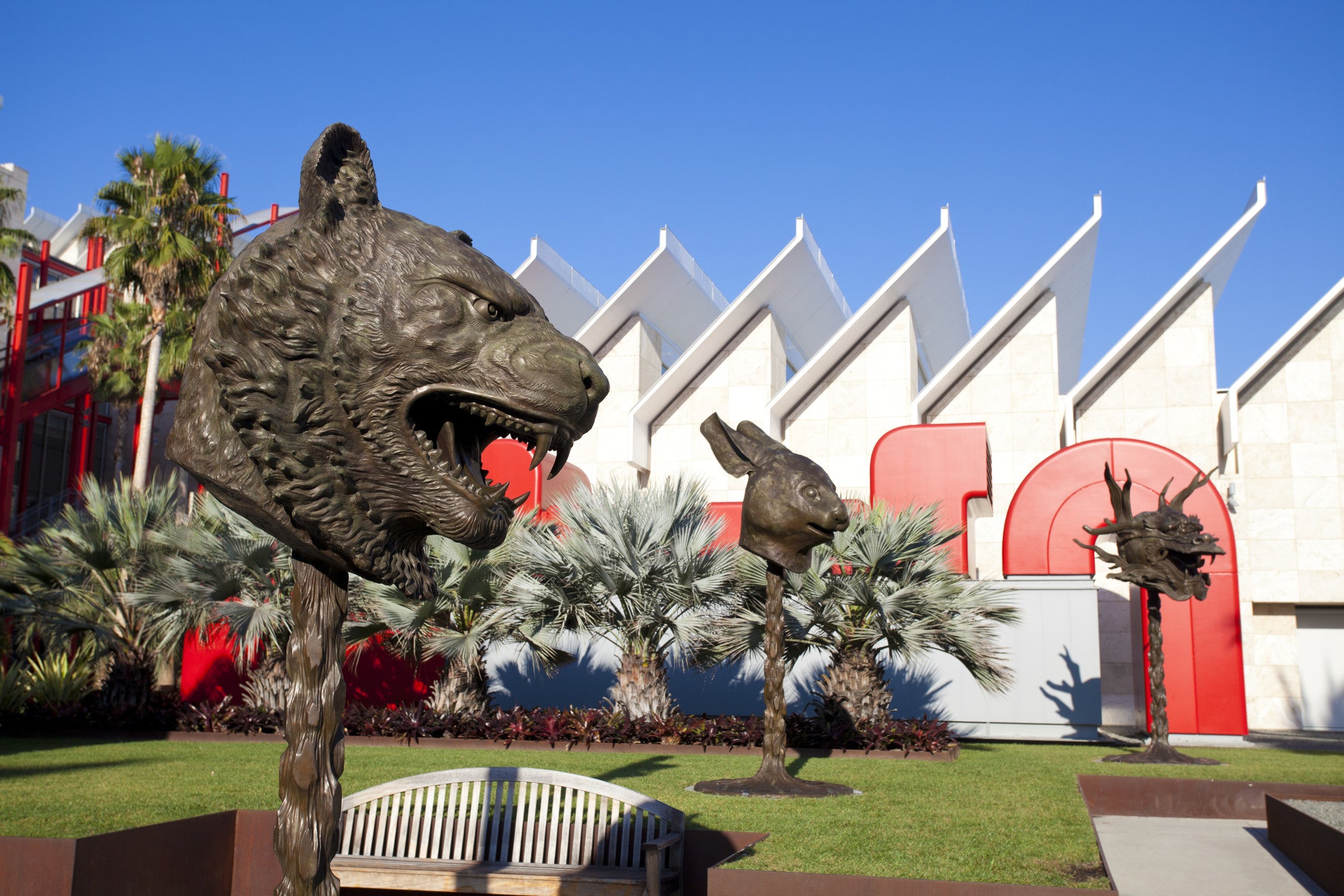
The 12 bronze heads Circle of Animals/Zodiac Heads, which reference a mid-18th century fountain at Yuanmingyuan, the Old Summer Palace in Beijing, currently greet visitors on the Zev Yaroslavsky Plaza when they emerge from the elevators of the Pritzker Parking Garage.
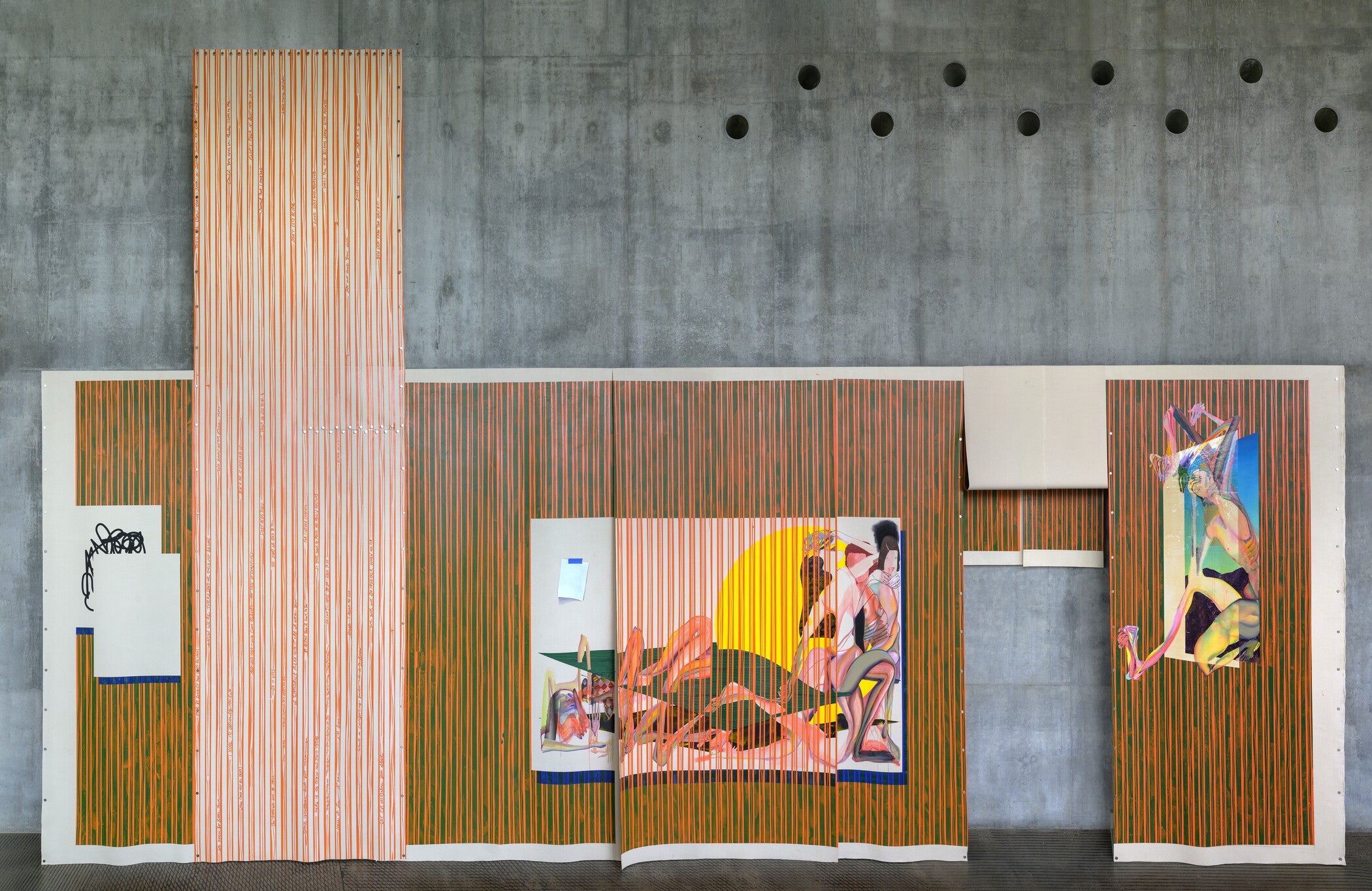
Christina Quarles
Now We’re There (And We’ Only Just Begun), 2023
Quarles’s installation—featuring luminous, shape-shifting figures that invite visitors to consider how we understand ourselves and how we are perceived by others—is the inaugural exhibition in a series devoted to working with contemporary artists in the new W.M. Keck Foundation Gallery at the Geffen Galleries.
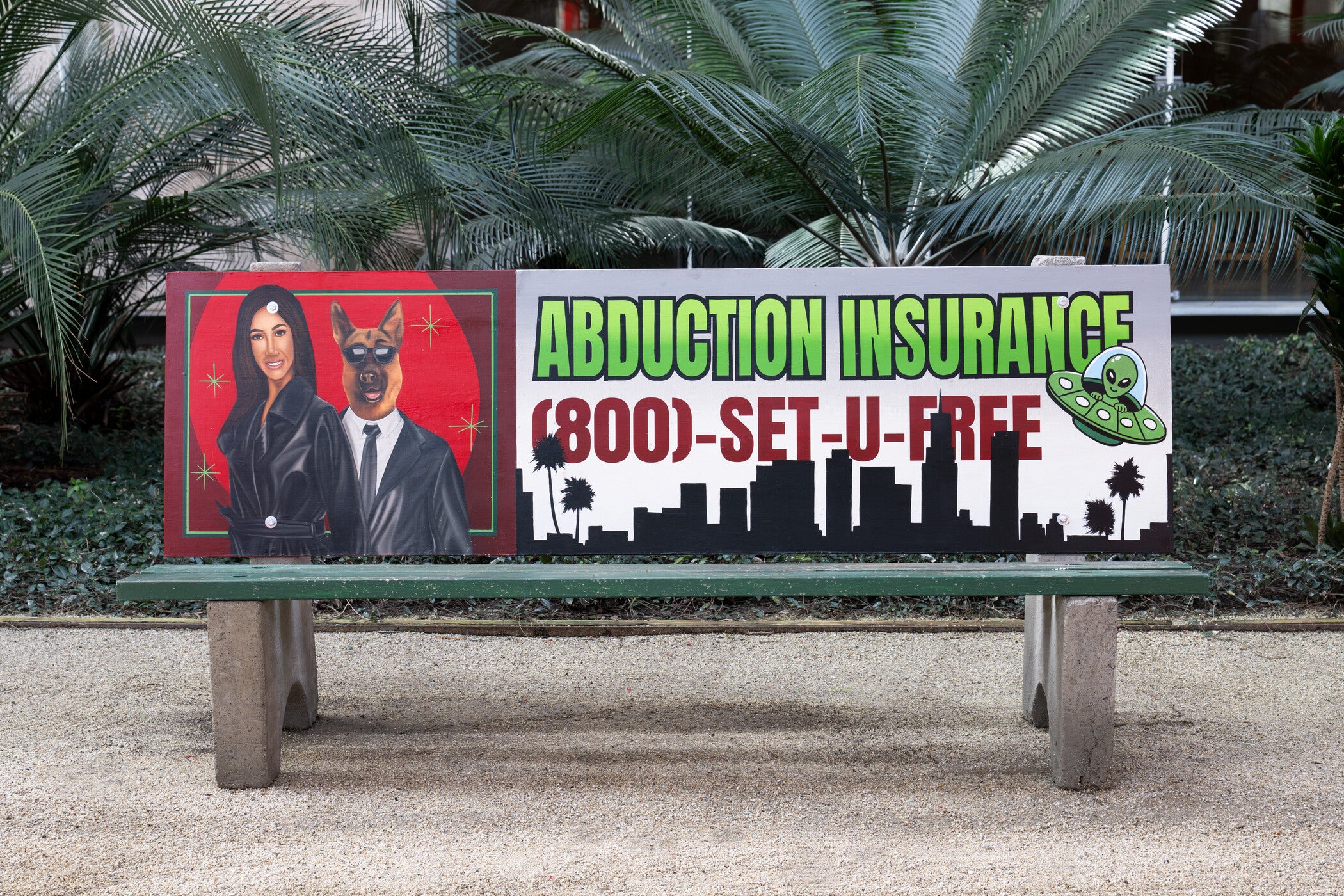
Alfonso Gonzalez Jr.: In Between Stops
Did you know you can sit on these artworks? Alfonso Gonzalez Jr.: In Between Stops features 12 benches designed by the Los Angeles–based artist installed along LACMA’s Kendall Concourse. They feature personal or socially conscious messages in place of typical bus stop advertisements and, at times, incorporate elements from LACMA’s history and collection, generating a dialogue between the museum and the commercialized cityscape.
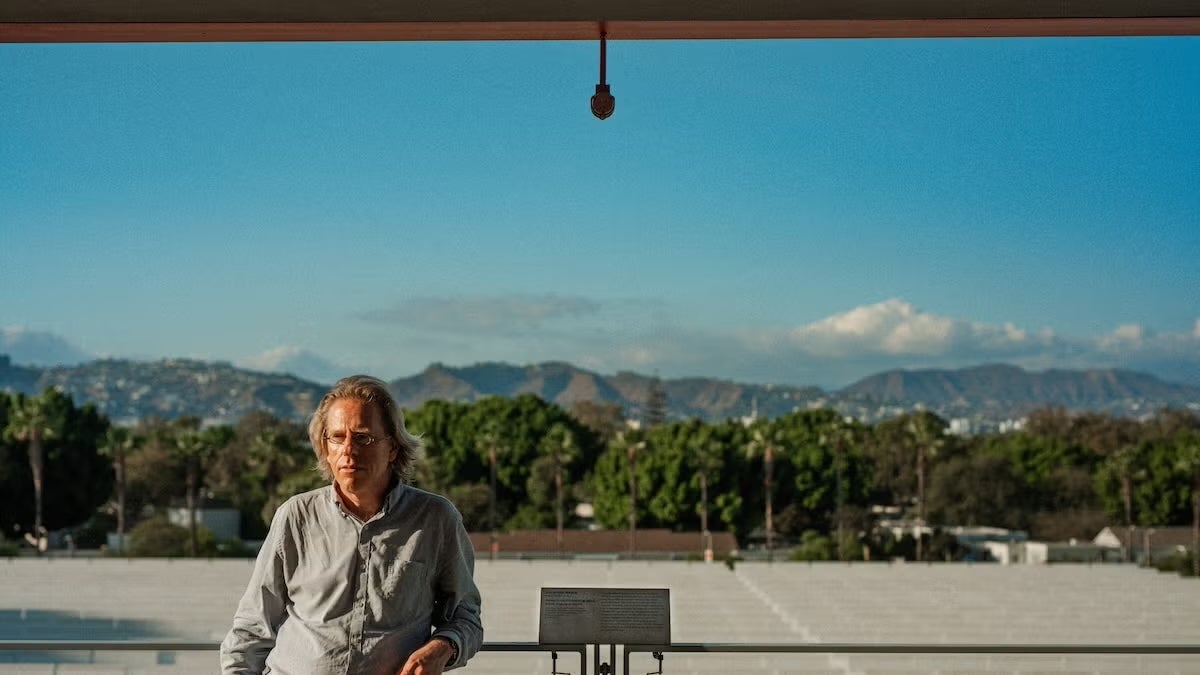
Deep Time Cinematography
You may not notice it when first walking by, but Deep Time Cinematography is a site-specific conceptual artwork by Jonathon Keats that will create a 10-frame zoetrope movie of the Hollywood Hills over the next 10,000 years. His “time machine” is currently installed on the outdoor landing of BCAM, Level 3, which offers a perfect vantage point to look down on LACMA's campus and the surrounding city.