




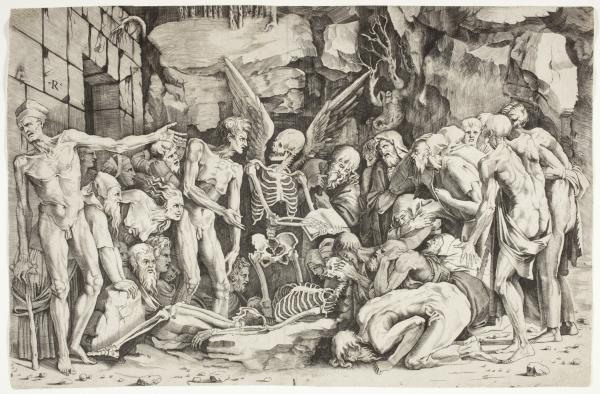
Vita brevis, ars longa: artists have long understood the power of creating that which outlives its mortal makers; printmakers, too, realized the ability of their engravings to communicate from beyond the grave. Death as a universal experience—and subsequently a universal subject—in the printed arts is explored in the exhibition Danse Macabre: Death in Print from Dürer to Dix (on view through December 6).
The inevitability of death appears as a theme in European art as early as the 14th century, reflecting the harsh realities of Medieval and early modern life: plague, war, and famine meant death could come for anyone at any point, whether prince or pauper. The danse macabre, a visual allegory of the inescapability of death depicting lively dancing skeletons, was first popularized in woodcuts by the German printmaker Hans Holbein the Younger (1497/1498–1543). These small-scale illustrations were first printed and published in Lyons as Les simulachres & historiees faces de la mort… (1538) and rapidly spread throughout Europe. Equal parts foreboding and whimsical, this ghoulish imagery was taken up by many artists in the following centuries, while prints including personifications of death by artists like Albrecht Dürer (1471–1528) further emphasized the brevity and struggle of earthly life.
By the First World War, German Expressionist artists like Otto Dix (1891–1969) found new relevance in the subject, using the visual language of the Dance of Death tradition to explore the pressing social, economic, and political realities of the period. Beyond Europe, 20th-century artists deployed similar motifs (skulls, hourglasses) to emphasize with immediacy the grim circumstances of war, revolution, and the industrialized world, as in the calavera broadsheets made by the Taller de Gráfica Popular (People’s Print Workshop) in Mexico. Together, the prints and books in Danse Macabre show how iconography reinforcing the fragile, impermanent nature of earthly life reappears during times of transition or challenge, their transmission facilitated by the transportable nature of the print medium.
Below, discover selections from the exhibition, exploring themes of the dance, figuration, reality, and inevitability of death.
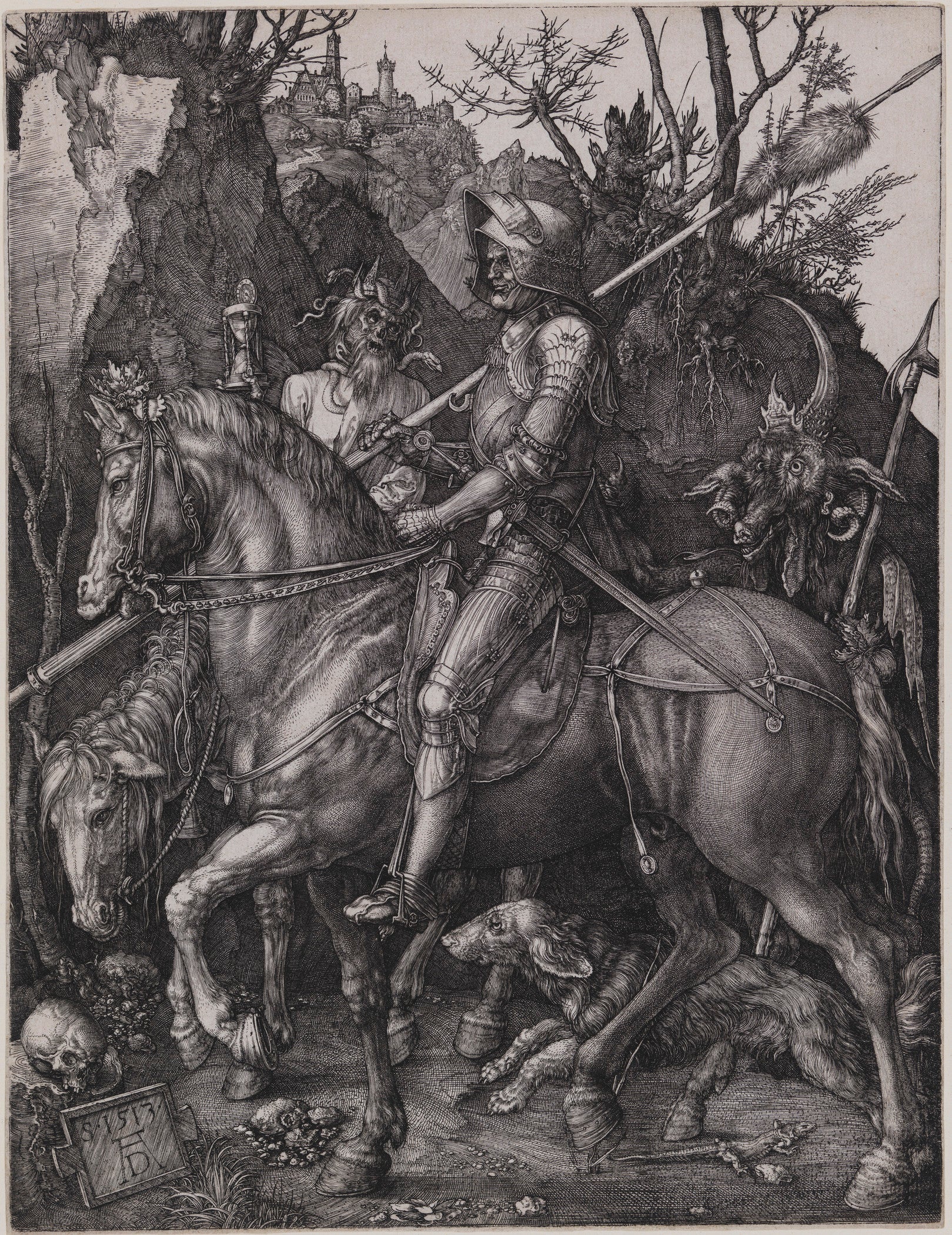
In this Meisterstiche (master engraving) by Albrecht Dürer depicting a Knight, Death, and the Devil from 1513, a steadfast and brave knight encounters a skeletal figure of death upon a pale horse. The hourglass in the knight’s hand cautions the viewer that time dances onward and death cannot be avoided.
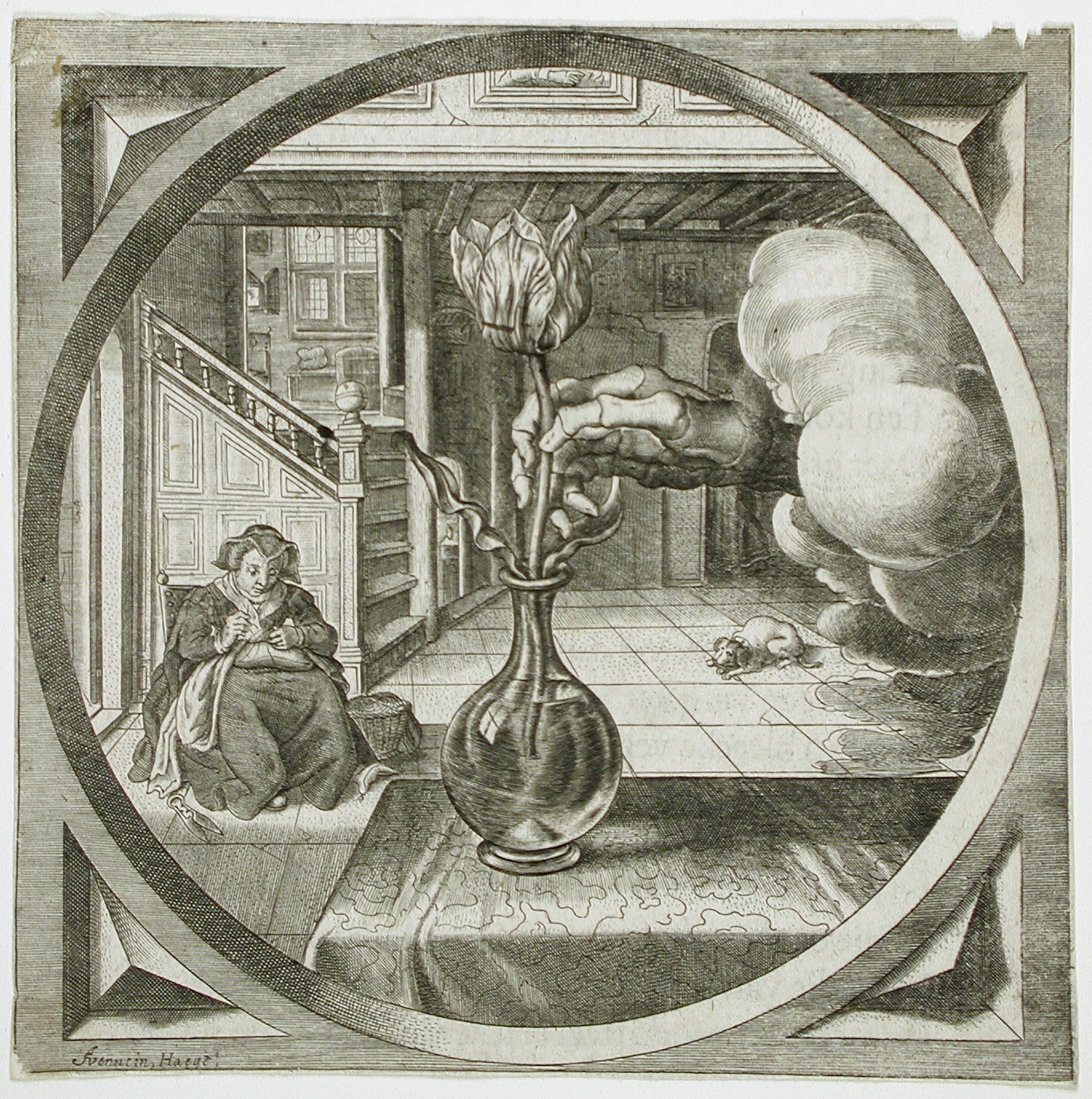
This small, emblem-like engraving appeared as an illustration to a passage in Hovwelyck…, by Jacob Cats (1625), a popular Dutch book about marriage, featuring scenes of daily life with moralizing twists. Here, the snatching of a blossoming tulip by a skeletal hand suggests the sudden withering caused by an earthly union cut short by a spouse’s ultimately death.
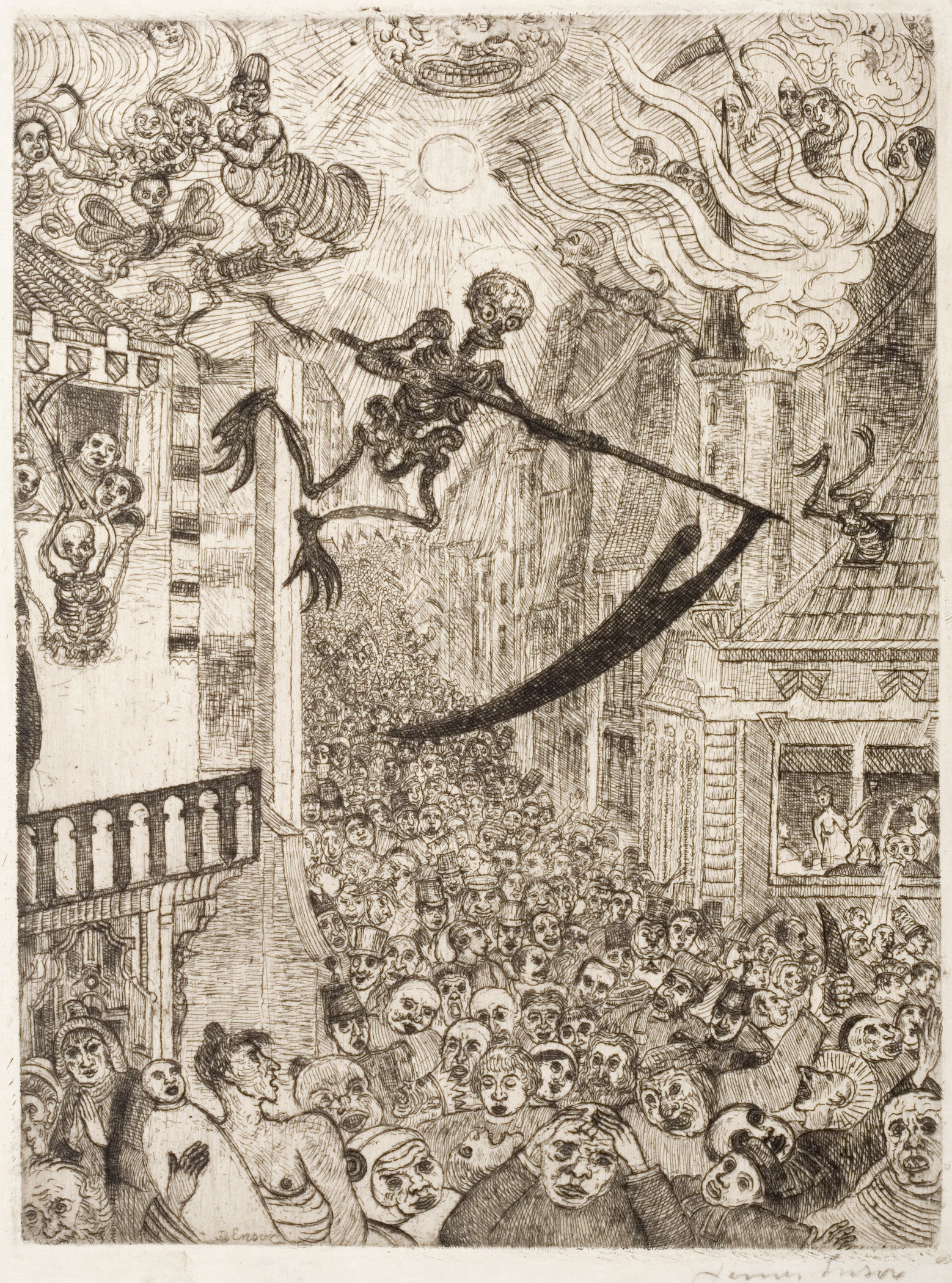
Belgian Expressionist James Ensor looked to 15th- and 16th-century Flemish artists like Hieronymous Bosch in his deployment of death imagery. Here, death appears as a threatening skeleton wielding a scythe and rising above a mass of panicked figures fleeing him on the streets below.
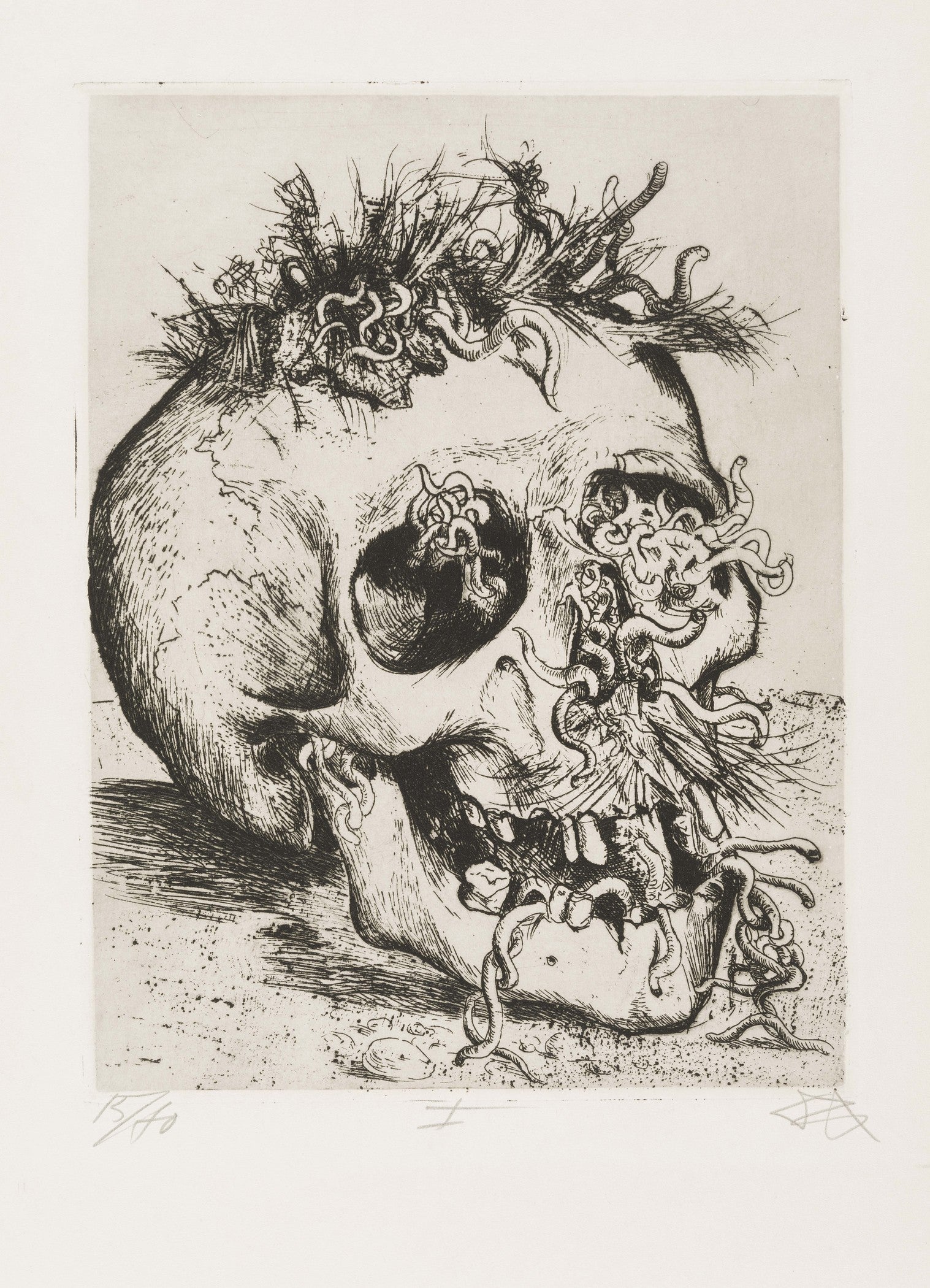
This haunting etching is one of 50 images in Dix’s monumental portfolio Der Krieg (The War). Dix’s own experiences on the Eastern Front were the primary inspiration for the works in this series, which considers the aftermath of conflict, including the dying, the destroyed landscape, and lifeless bodies. Here, the twisting vines that grow through this skull evoke at once the relentlessness of death, and the promise of hope through decay: what was alive is now mere rock, but from that sprouts new life again.
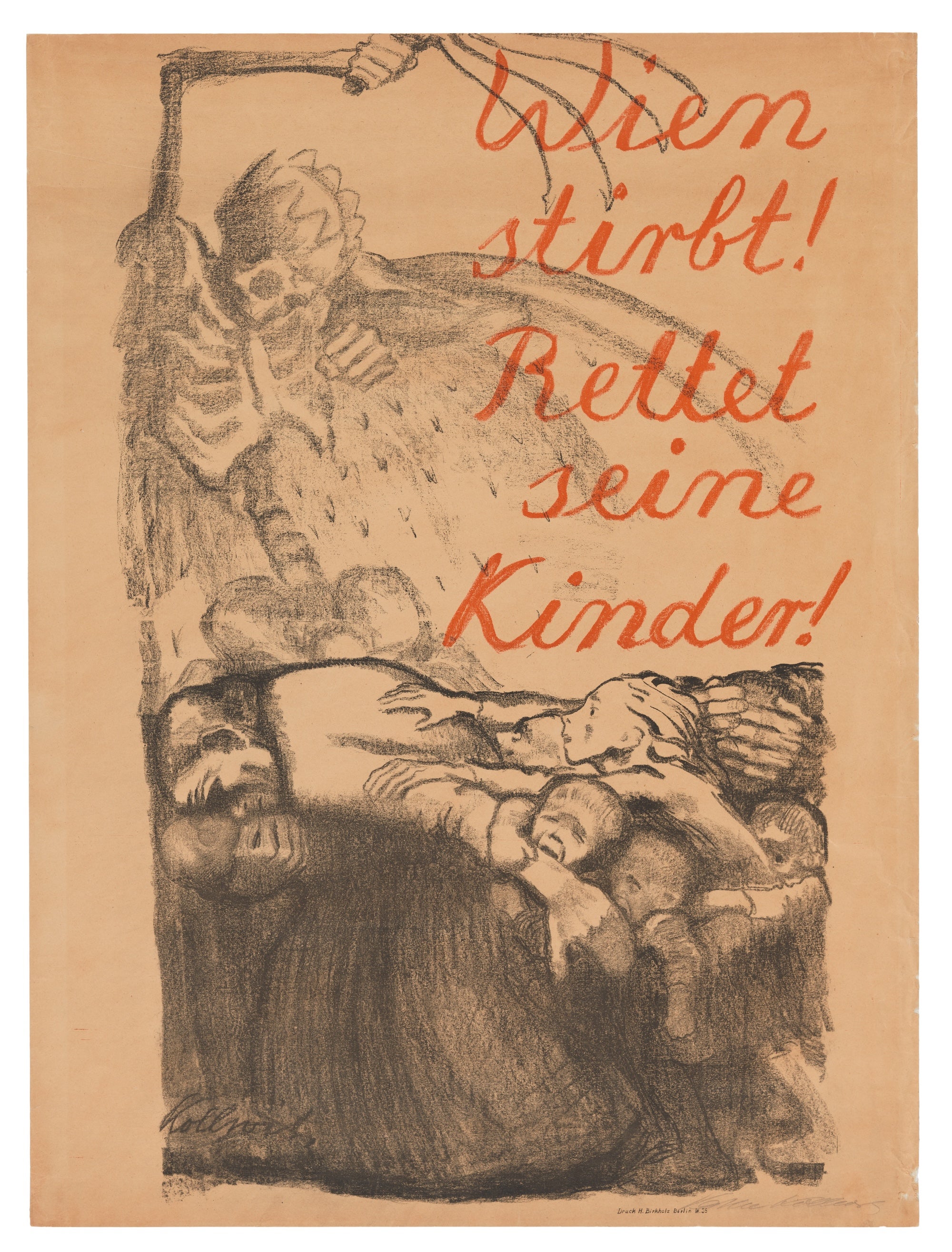
In this impassioned plea amidst food shortages following the end of the First World War, Käthe Kollwitz shows a starving mother sheltering her skeletal children from a brutal whipping by the crowned figure of death. While the poster for this appeal was never made public due to Germany’s cancellation of aid, the heartbreaking composition stands as evidence of Vienna’s postwar suffering.
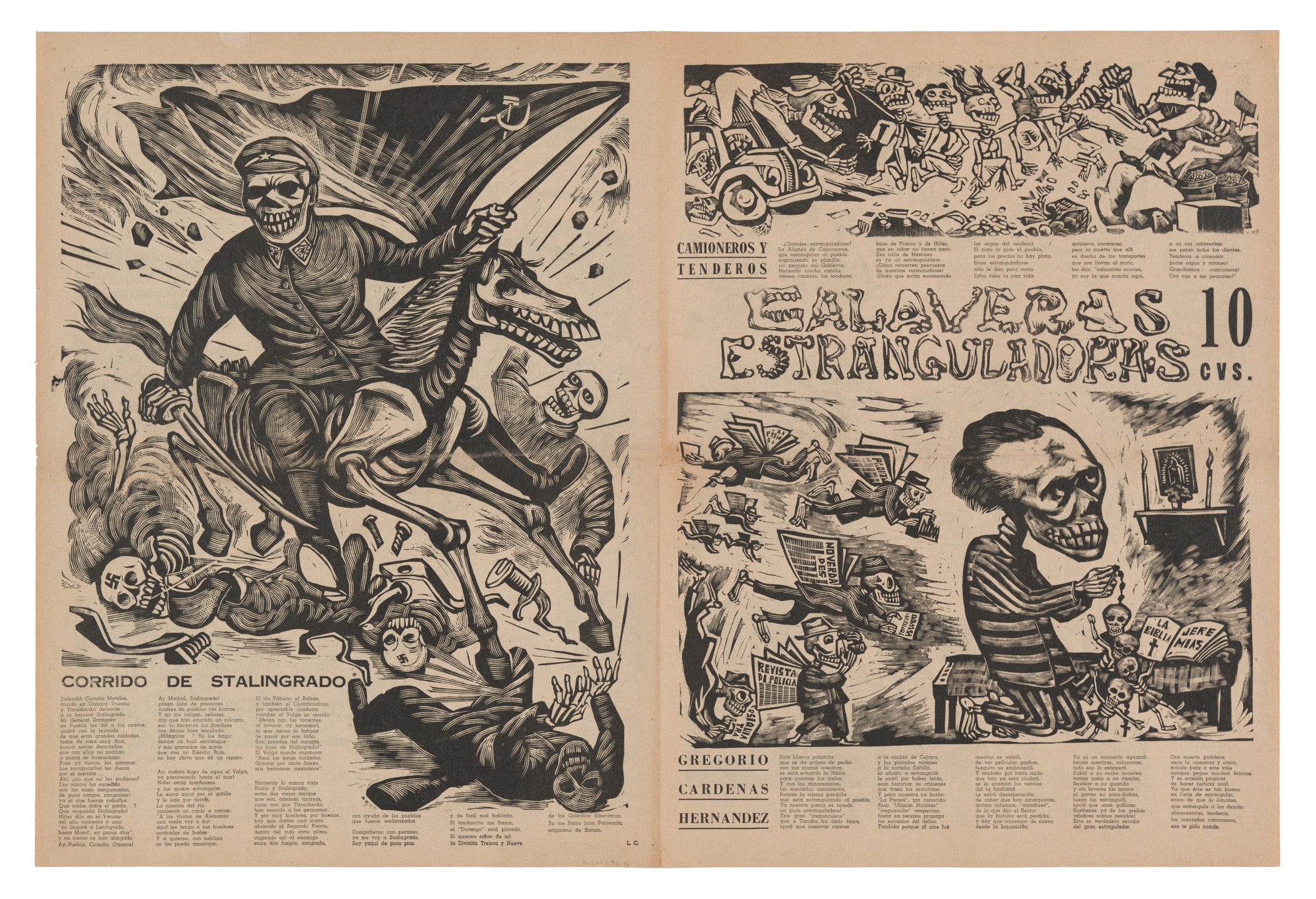
In this lively broadside, multiple artists from the Mexico City–based printmaking collective Taller de Gráfica Popular (People’s Print Workshop) deploy dark humor through skeletal figures called calaveras to illustrate current events, political scandals, and local news. The theme of this four-page handbill came out of the recent capture of serial strangler Gregorio Cárdenas Hernández, while its back page includes a caricature of the Red Army General Semyon Timoshenko.
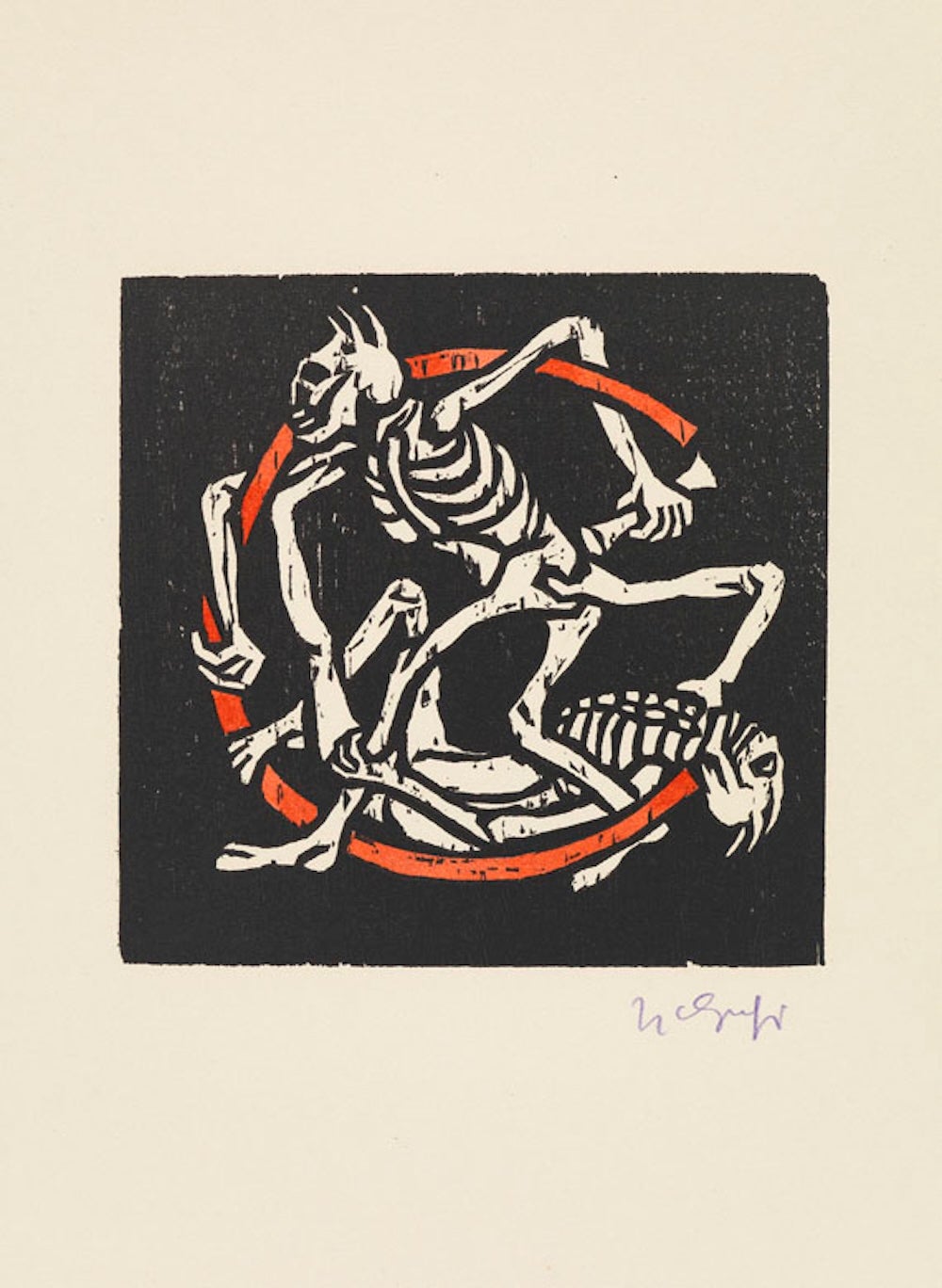
In his series of 26 color woodcuts, German Expressionist artist Hans Gross depicts simple Latin capital letters within which the skeletal figures of Death dance and play.
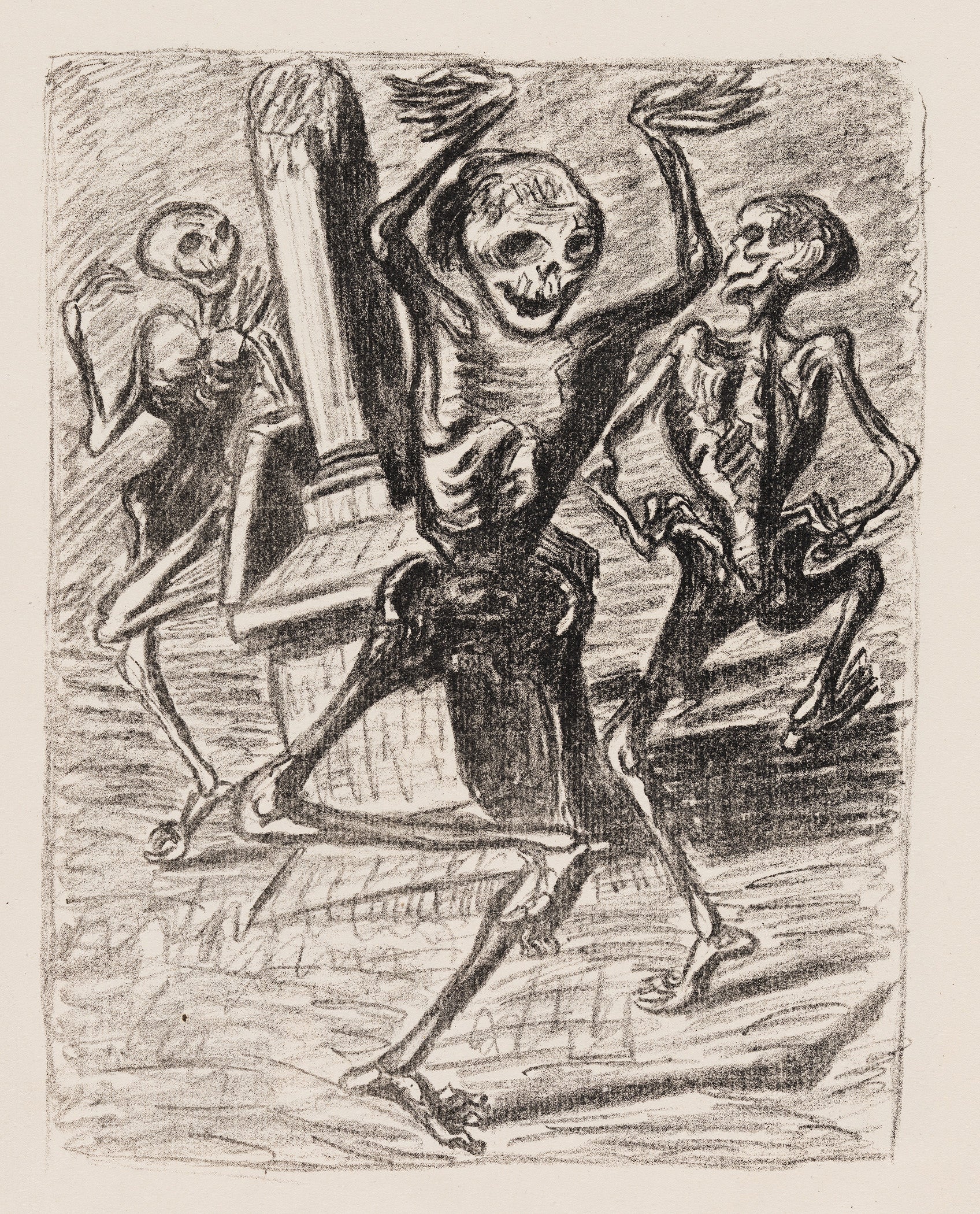
Here, three skeletal figures dance about a tomb, the wild movements of their bony limbs and upturned jawbones suggesting a sense of merriment and liveliness—echoed by the spirited gestural lines that fill the scene—all in stark contrast to their deathly forms.
Danse Macabre: Death in Print from Dürer to Dix is on view in BCAM, Level 3, through Sunday, December 6, 2026.