




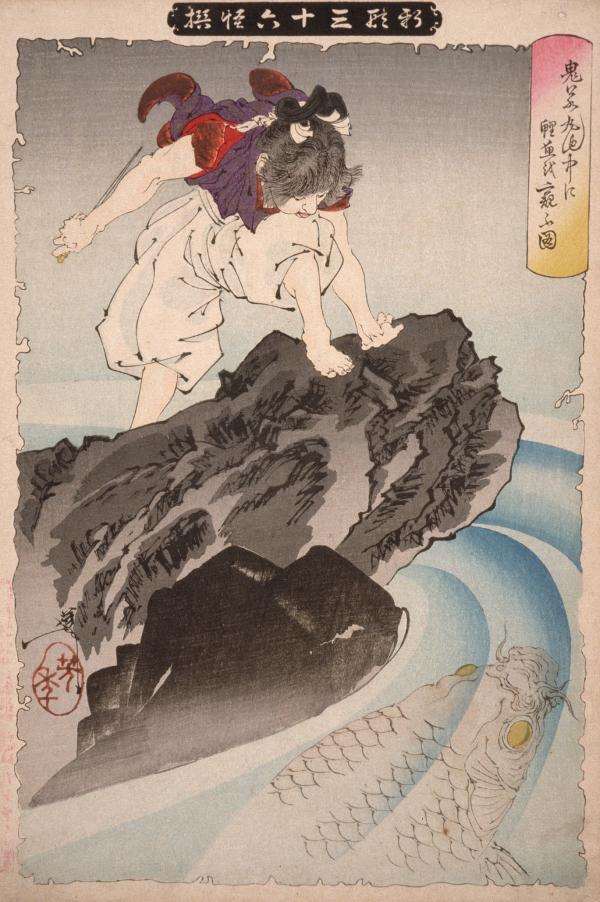
For Andell Family Sundays, LACMA visitors of all ages are invited to make art at the museum on Sunday afternoons. Alongside these in-person workshops, Unframed publishes blog posts especially for families. In April, Andell Family Sundays is inspired by the exhibition Deep Cuts: Block Printing Across Cultures, on view in the Resnick Pavilion through September 13, 2026. Upcoming workshops will take place on April 19 and 26.
As spring begins, it’s a good time to slow down and really notice what’s around us. Inspiration doesn’t always come from big moments. Sometimes it’s right outside your door: the way light hits a wall, the pattern of leaves on the ground, or the texture of a tree you’ve walked by a hundred times without taking time to look closely.
For this project, we will be making a loose-leaf book. We will be taking inspiration from the exhibition Deep Cuts as well as pieces in LACMA’s permanent collection. Deep Cuts looks at one of the oldest ways humans have shared images. Long before digital screens and computer printers, block printing made it possible to repeat images and spread ideas widely. A carved line, some ink, and a steady hand turned everyday observations into something lasting, on fabric, in books, and on paper.
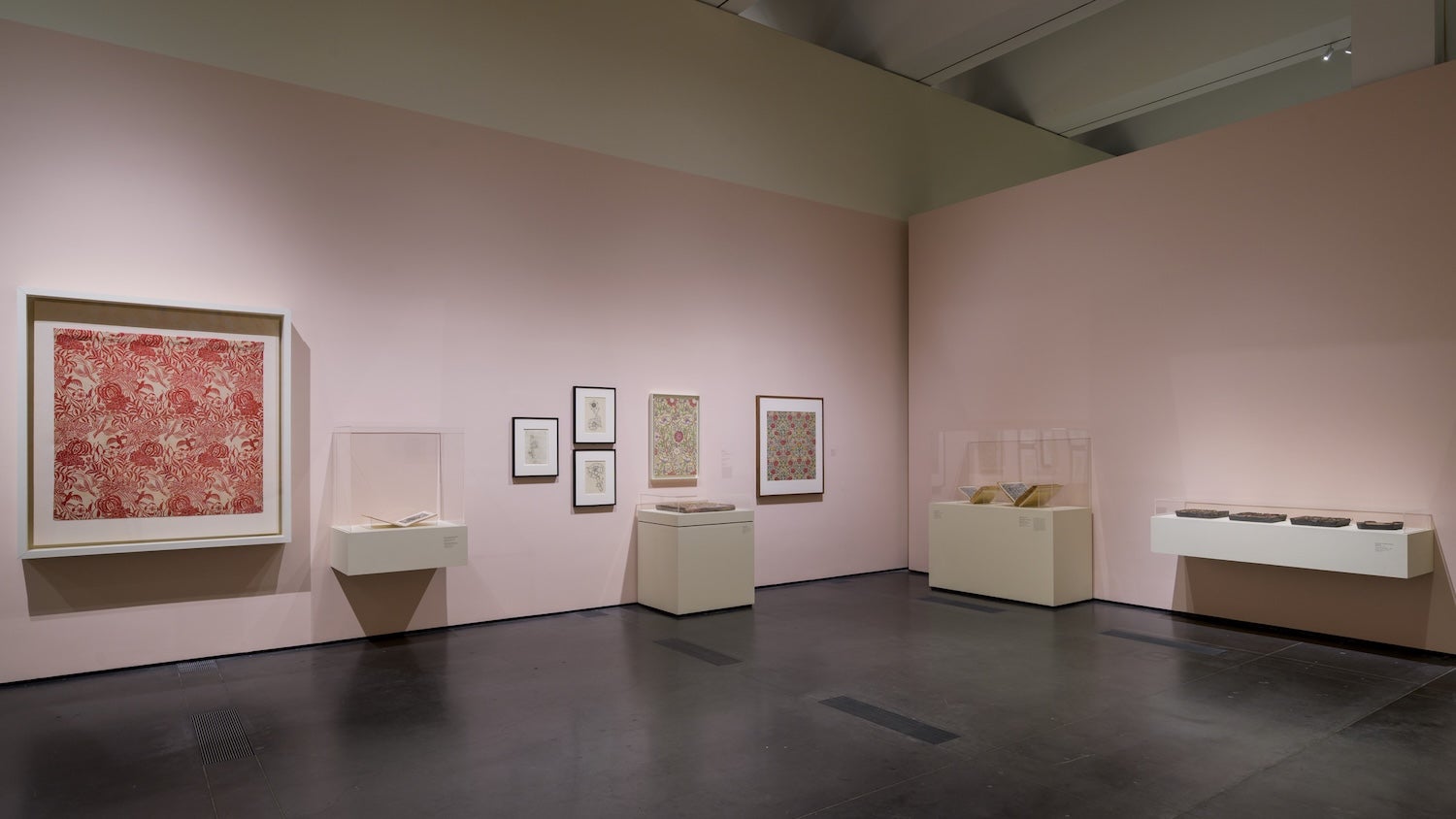
Let’s take a moment and warm up before your walk. If you are able to, stand or sit, stretch your whole self towards the sky, hands up above your head, wiggle your fingers, and bring your arms back to your side. Try stretching your hands in front of you, open and close your hands slowly, giving a moment to breathe in and out. Close your eyes for a few moments while breathing gently. Do you feel ready for a little adventure? (Always remember to have your parent or guardian nearby.)
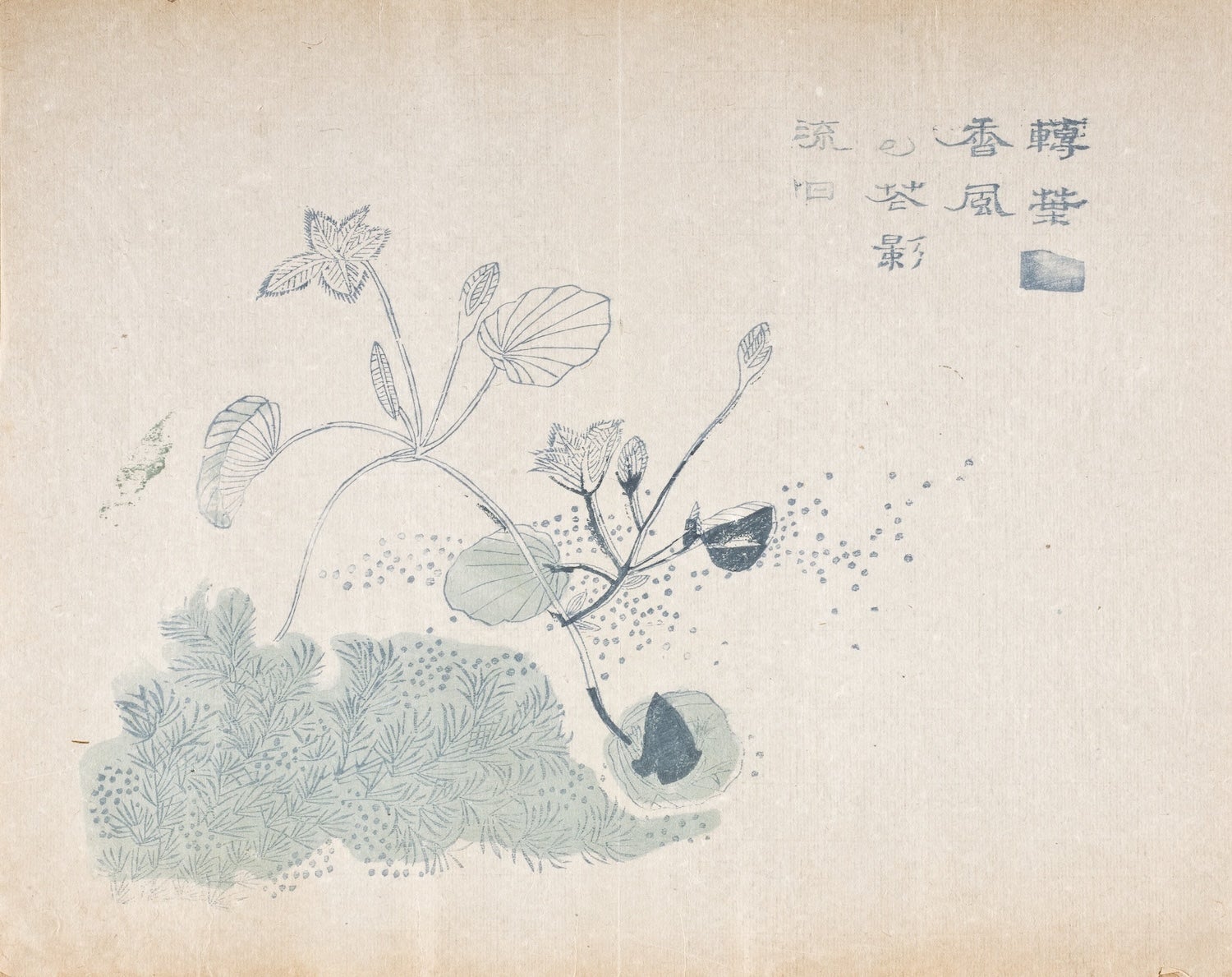
Walking outside is a little different than walking through a museum, but both experiences ask us to slow down and look more carefully. Artists do this all the time. They observe the world closely and then transform it into something new. The act of looking—really looking—is something we all share.
For this project, you’ll create a loose-leaf observation book to document one of your walks. Bring it with you and use it to collect rubbings, make a drawing, jot down thoughts, and record anything that stands out. For example, some things from the natural world: fallen leaves, sticks, twigs, or things you can find that have patterns and interesting textures. There’s no right or wrong way to do this—it’s about taking time to slow ourselves down, become aware of what is nearby and what is interesting in our environment.
Think of your observation book as a place to experiment and play—a small collection of moments you might otherwise pass by. By the end of your walk, you’ll have more than just a book; you’ll have a personal record of how you see the world, right now.
Let's create a book, take a walk, see what you notice, and make some rubbings, drawings, and notes! Here’s what we need to get started on our journey and make an observation book:
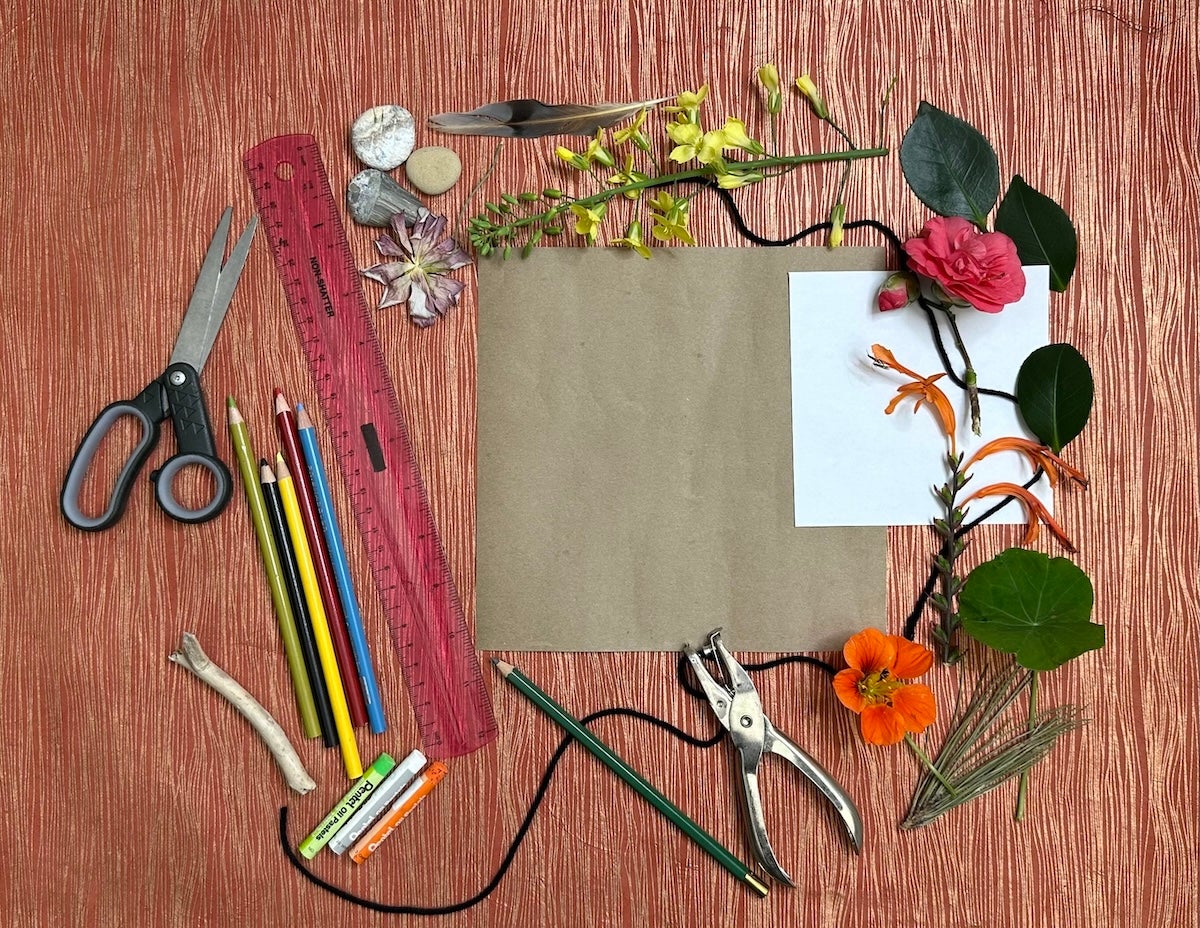
- A lead pencil, preferably sharpened (non-mechanical)
- Colored pencils
- Oil pastels or crayons, if you have them
- A sheet of cardstock or any heavy paper (even a grocery bag)
- 5–10 pieces of computer paper
- String, yarn, or embroidery thread, or whatever you might have, approximately 24” long
- A ruler
- Scissors
- A hole punch
- Materials to make rubbings: leaves, sticks, rocks, shells, tree bark, or things from nature you might find on your walk
Step 1: Cut cardstock or heavy paper into an 8” × 8” sheet.
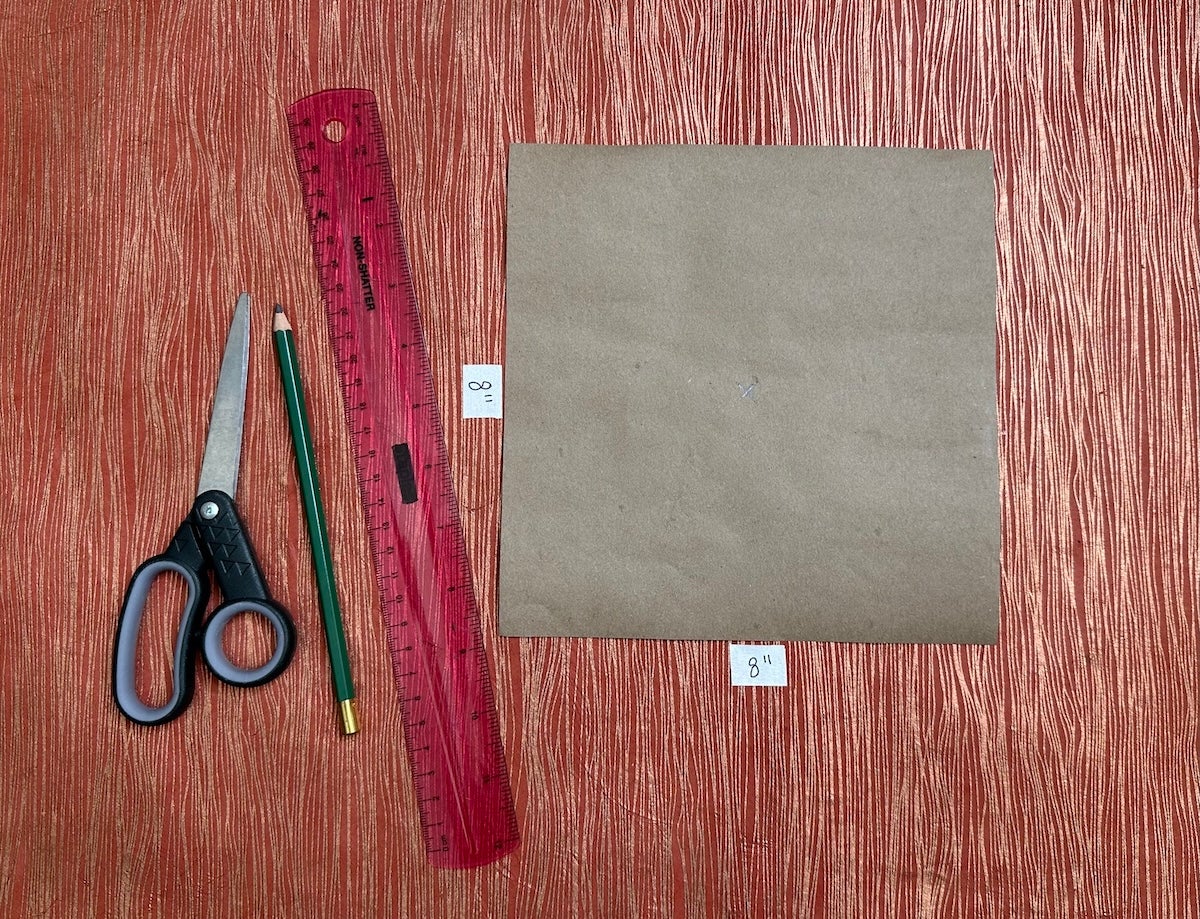
Step 2: Find the center of the paper and draw an “X”. One way to do this is to place your ruler across the paper and measure from one corner to the other and place your mark for center.
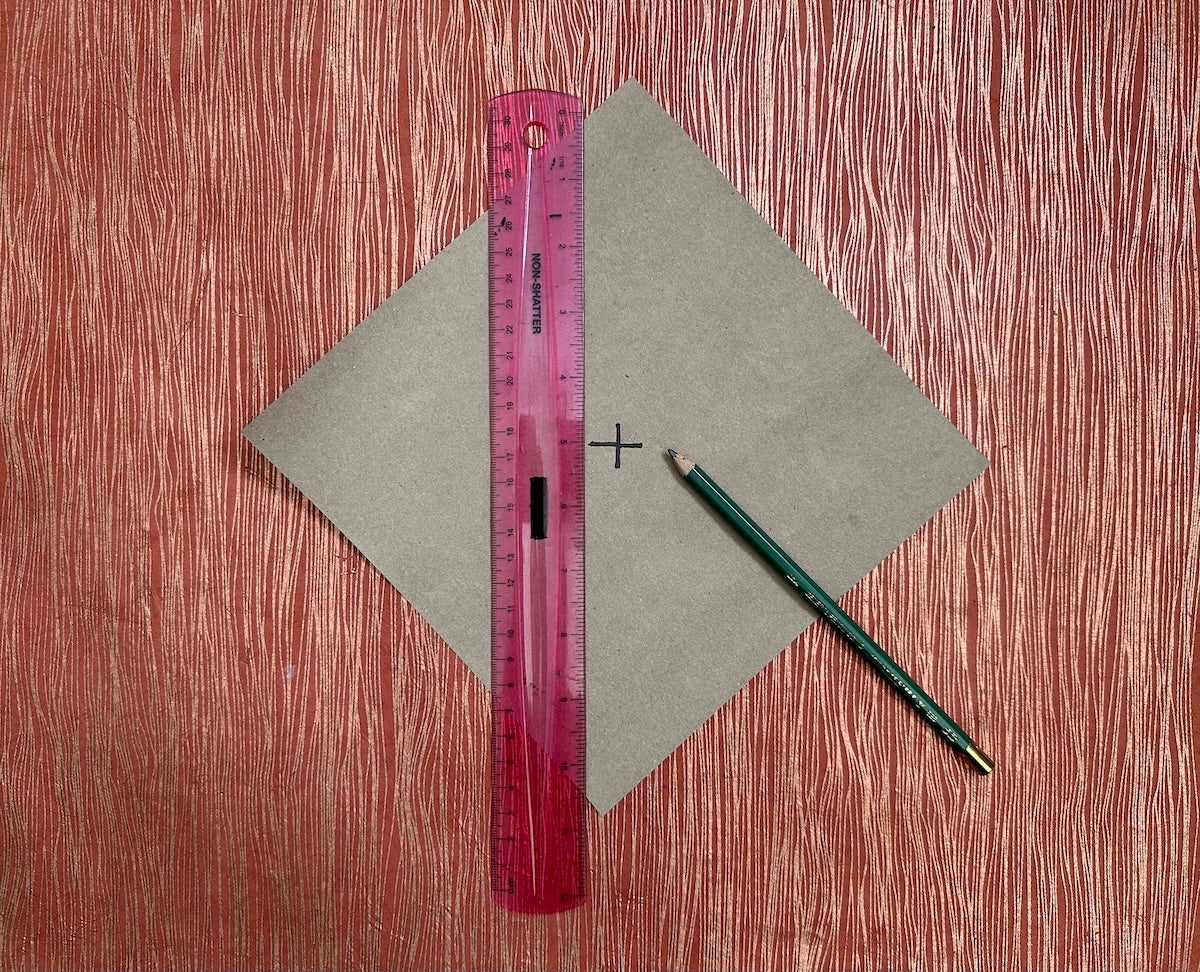
Step 3: Fold each corner of the paper one triangle at a time towards the center “X”.
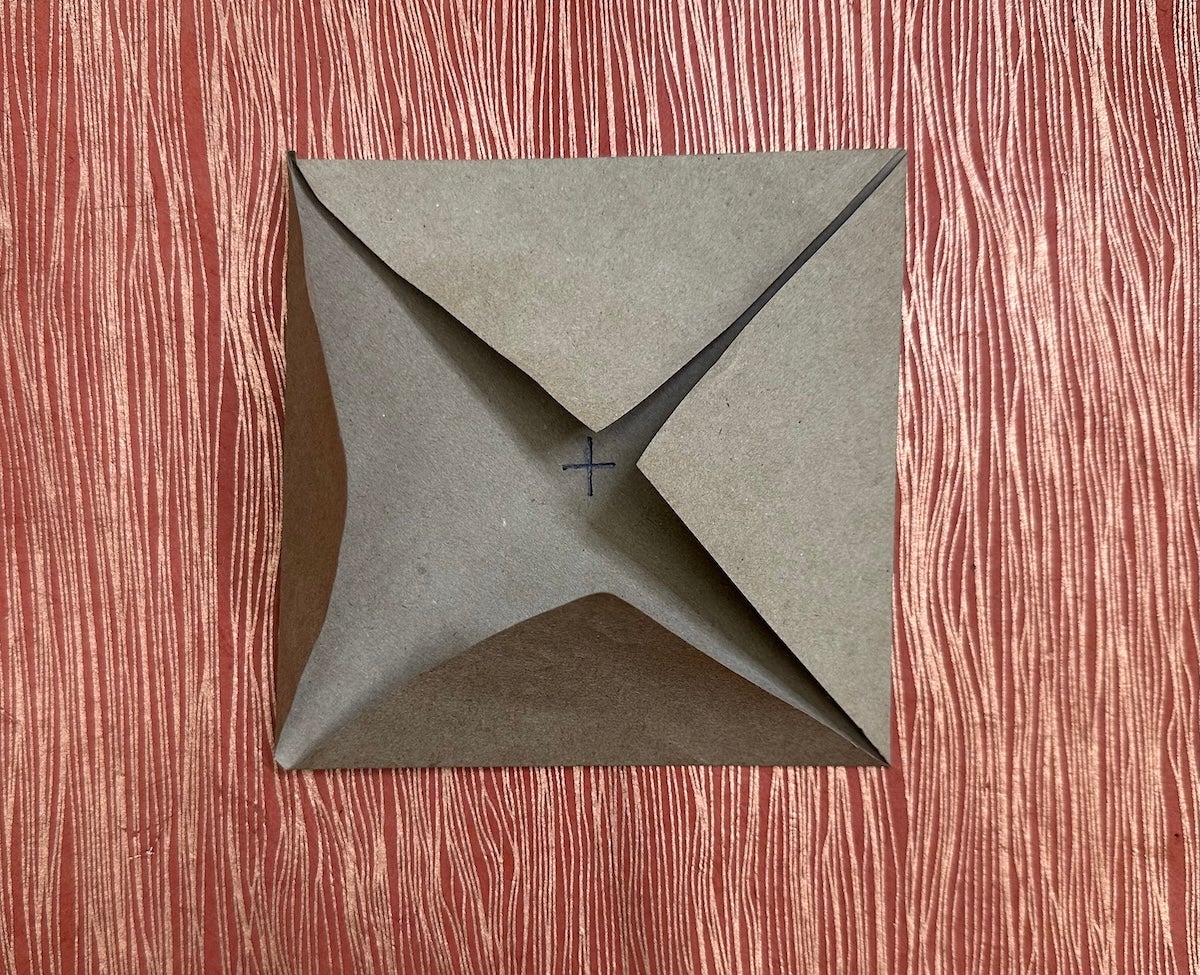
Step 4: Use your hole punch to make a hole about a ½” away from the tip of each triangle.
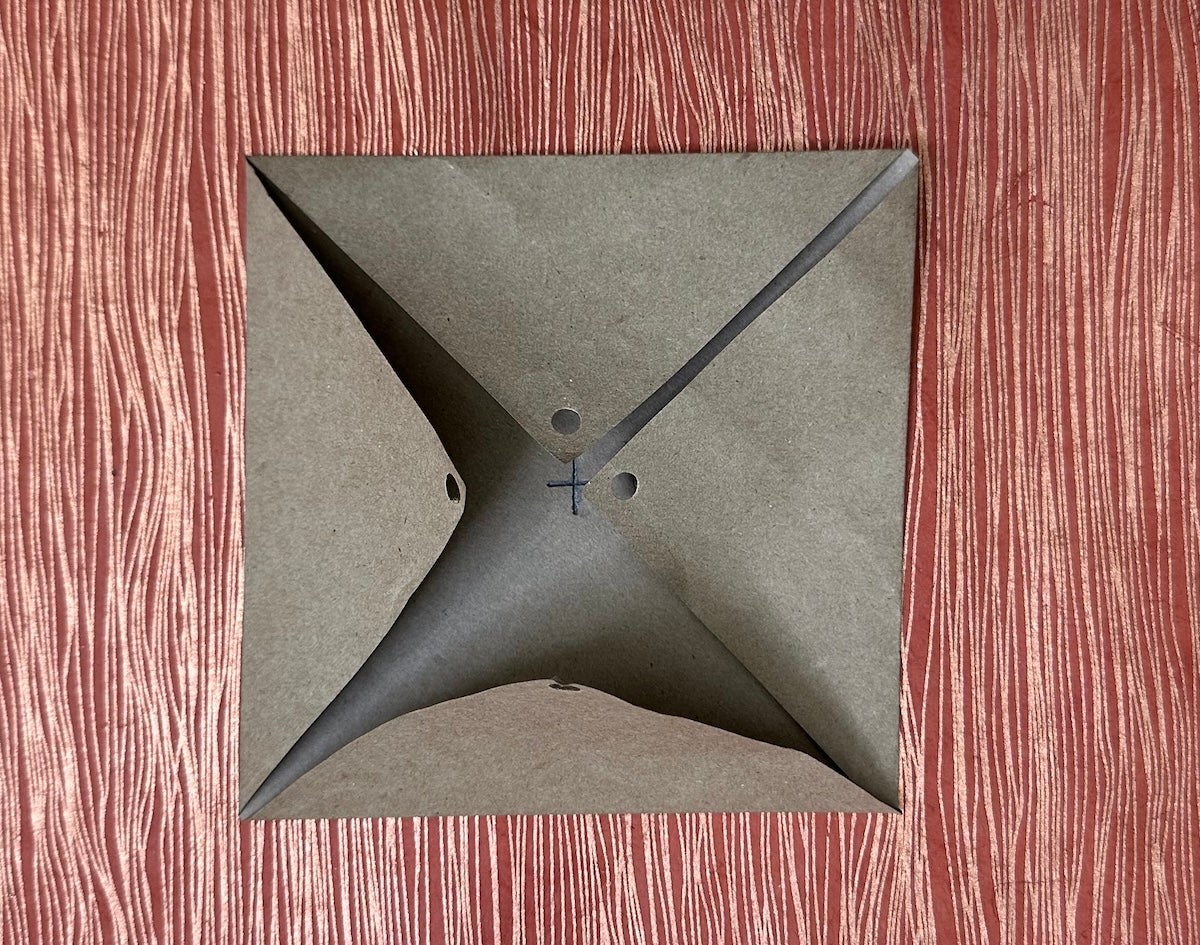
Step 5: Decorate your cover using interesting and enjoyable designs, or by writing a poem or story. Some things to think about: the weather, animal life, variety of plants, patterns in nature, or color. Or maybe you would like to decorate your cover later.
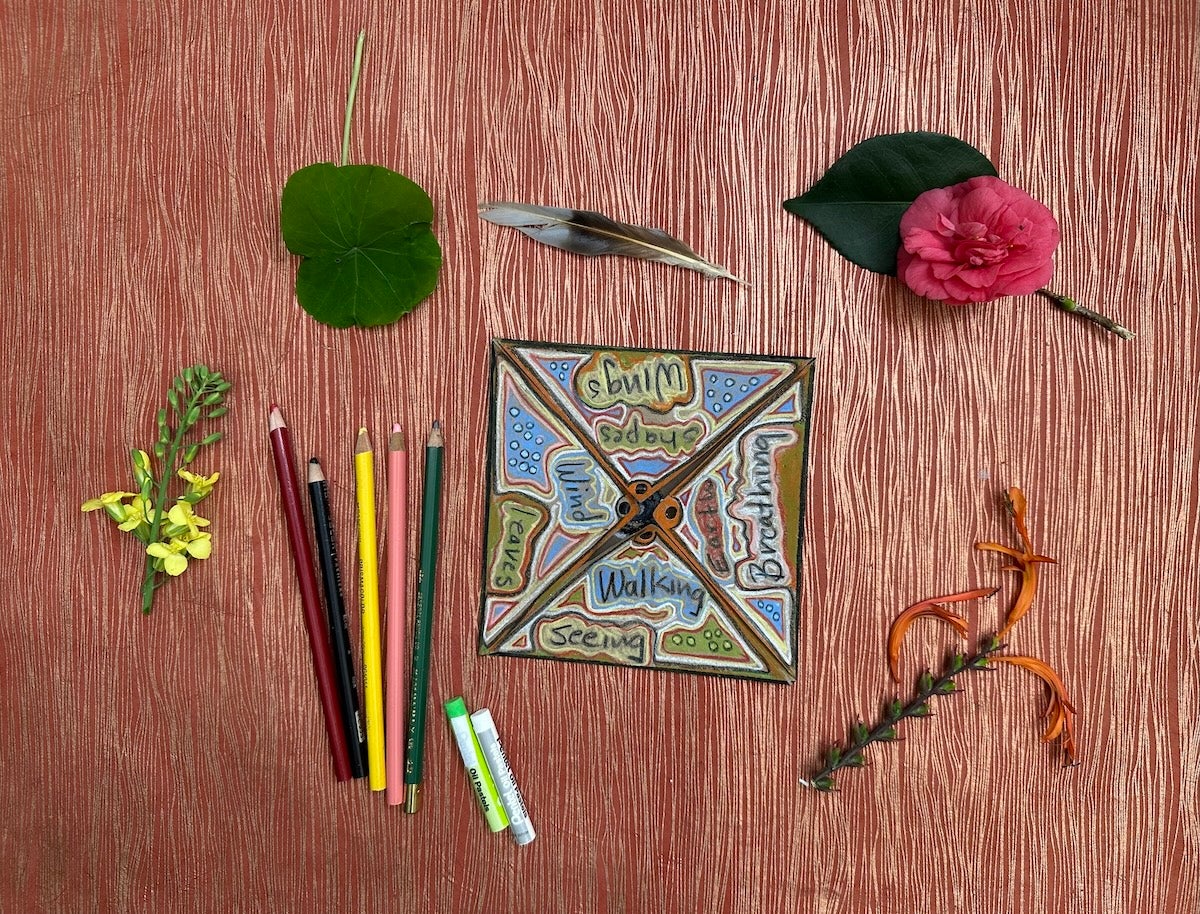
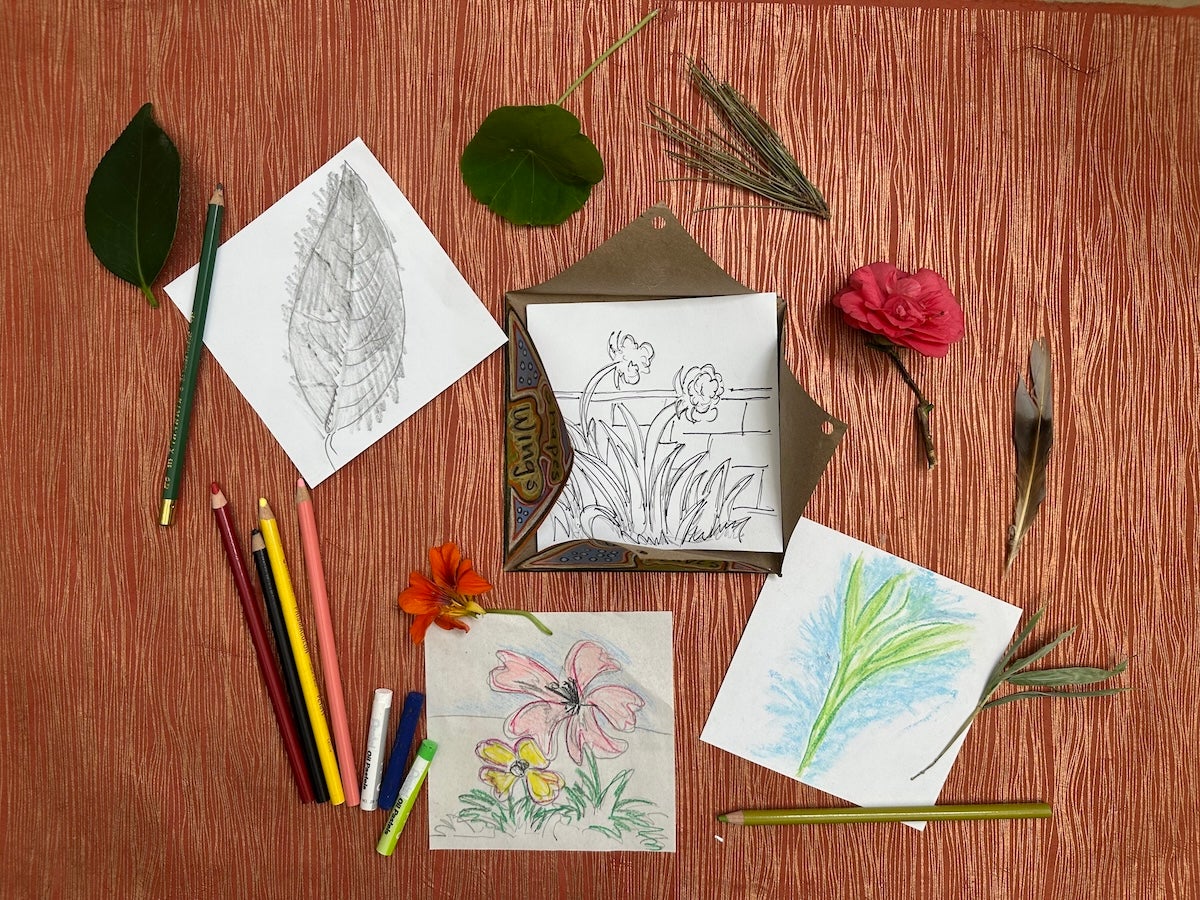
Step 6: Cut 5–10 sheets of computer paper into 5” × 5” squares for drawings, rubbings, or writing. Open the flaps to your loose-leaf book and place loose pages inside, then go on your walk and begin to look for inspiration around you. Remember, when walking, be aware of your surroundings. Consider picking up leaves or natural materials that have already fallen.
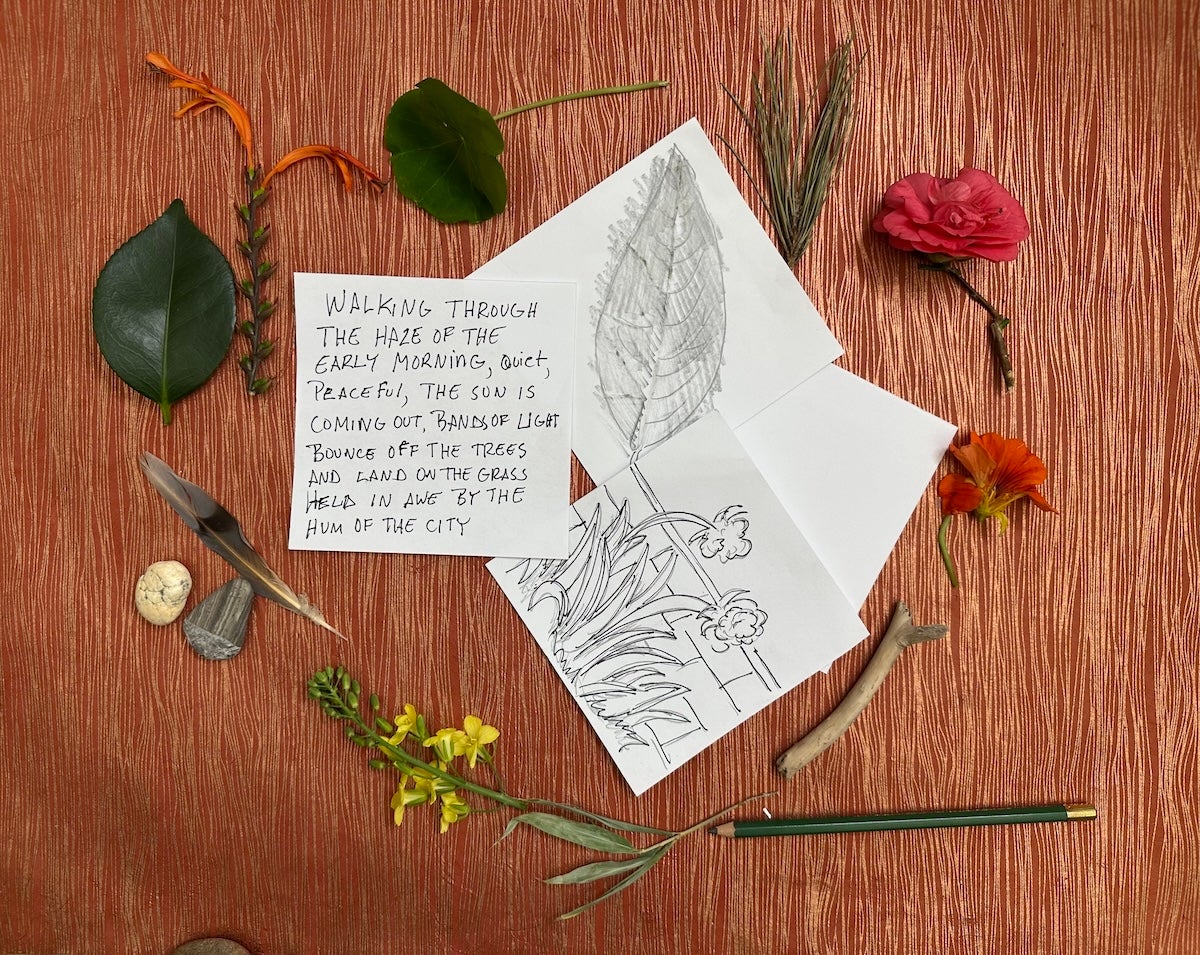
Step 7: On or after your walk, draw, write, and make rubbings! Learn how.
Step 8: Thread yarn, raffia, or string carefully through the holes you made with the hole puncher. You can thread anyway you like. Below is my finished loose leaf book with threaded raffia.
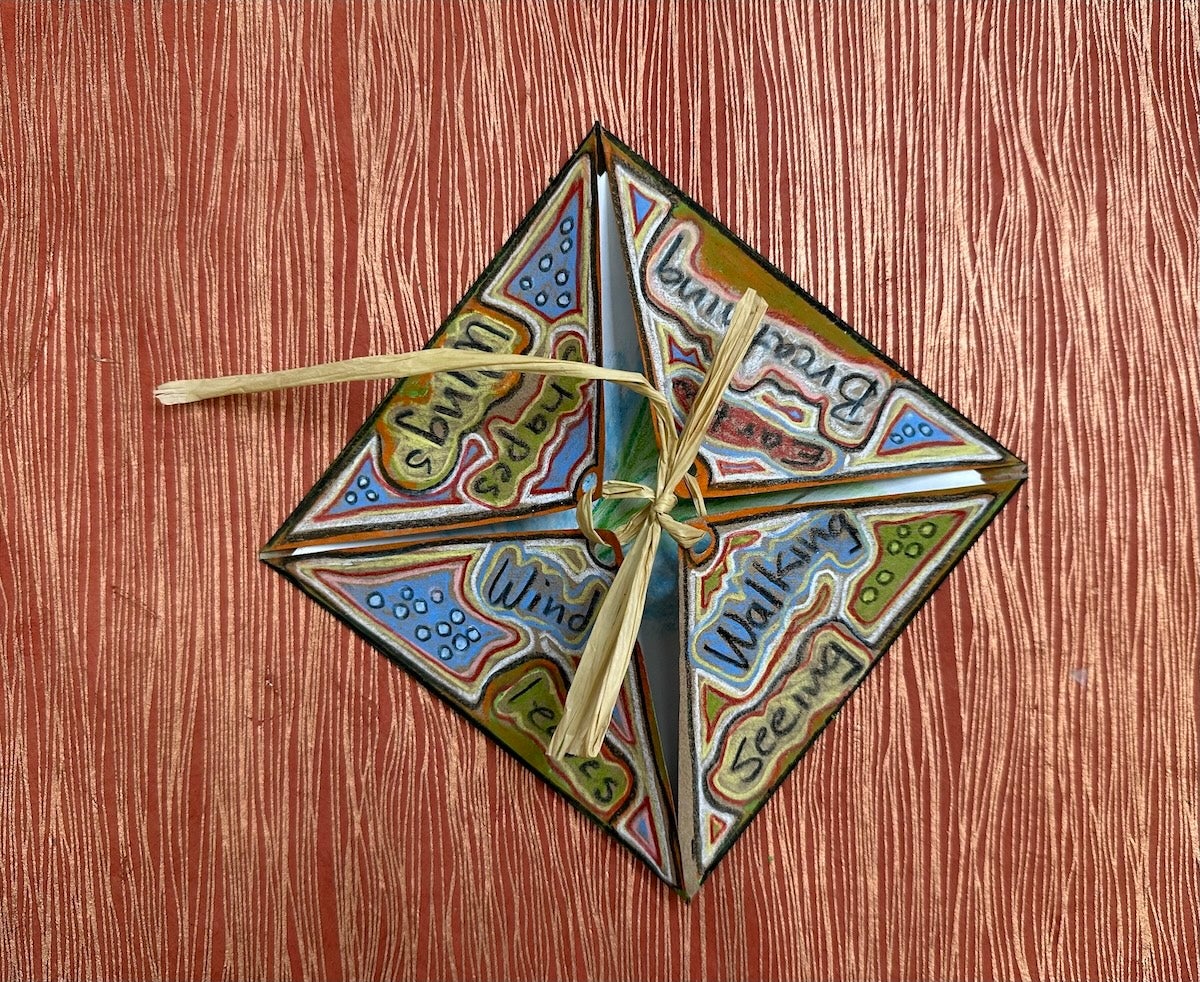
I hope you enjoyed your journey exploring nature! And hope you have a chance to go explore the exhibition and take many more slow walks. Congratulations on your finished project!