




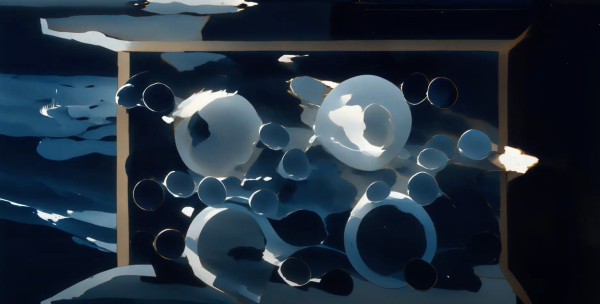
Beeple’s Diffuse Control is an image-generating sculpture that invites visitors to collaborate with artificial intelligence. A custom website allows museum visitors to interact with the AI generative system, which transforms images of select public domain artworks from LACMA’s permanent collection, organized in five iterations. The sculpture—comprising 12 large video screens—displays the resulting images, allowing the audience to remix this new creation in real time. Diffuse Control by Beeple is on view through January 4, 2026.
Here, Deliasofia Zacarias, chief of staff and curatorial assistant, reflects on artworks selected for the iteration Blurred Edges.
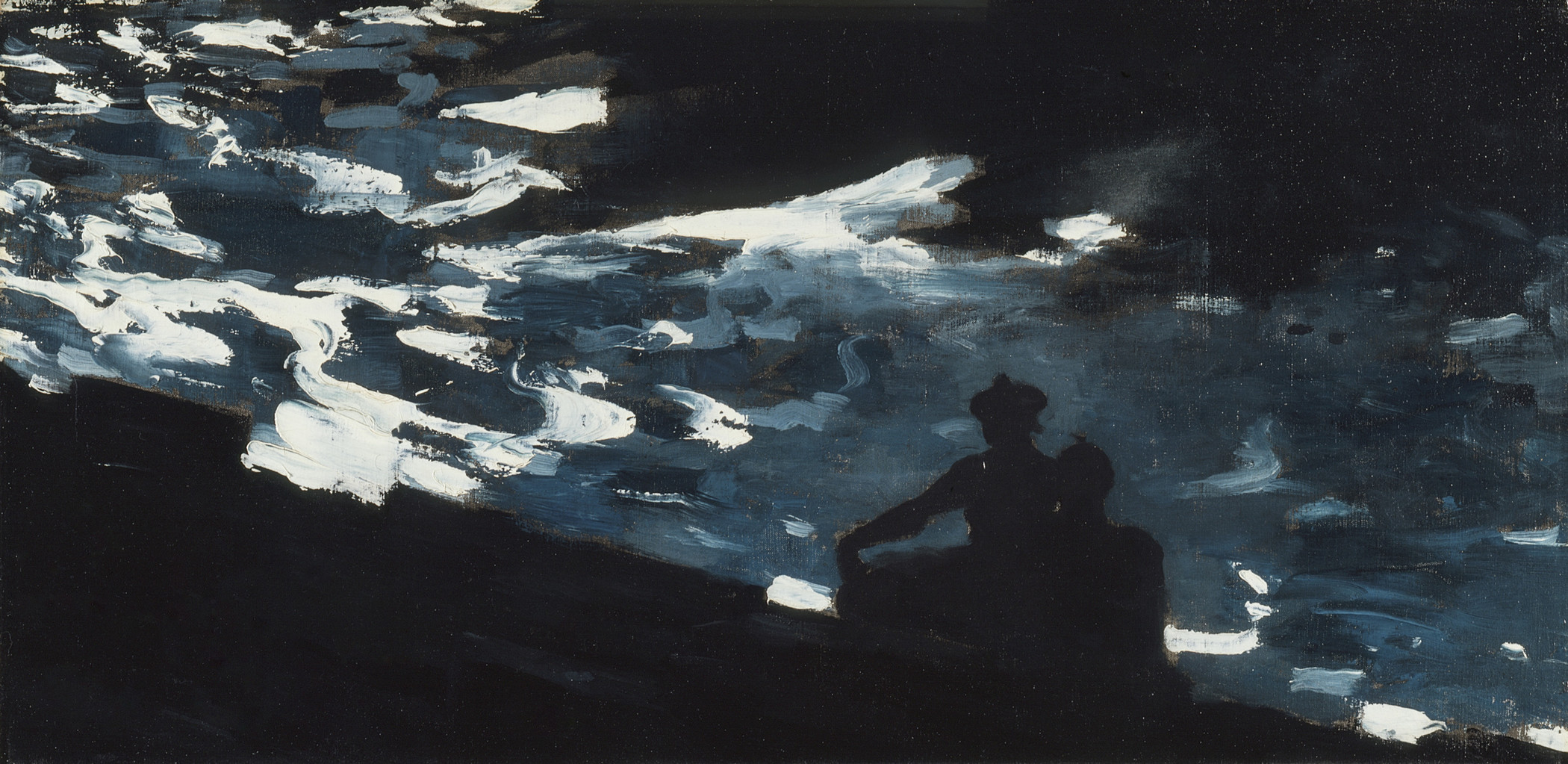
Water resists containment. Its shifting surfaces, reflective depths, and dissolving horizons have inspired artists for centuries to experiment with how to represent the ungraspable. Flowing across cultures and geographies, water appears in art as a symbol, a subject, and the force behind cultural exchange.
This iteration brings together images of oceans, harbors, and waterways drawn from across the museum’s collection, revealing how artists across time and place have turned to water to express awe, fear, spirituality, and connection. In many works, the fluid edges of waves, mists, and reflections blur boundaries between sky and sea, figure and ground, and abstraction and form. These blurred edges reveal water as a mark-making freedom that comes with a paintbrush, but also as a transformative force when using AI.
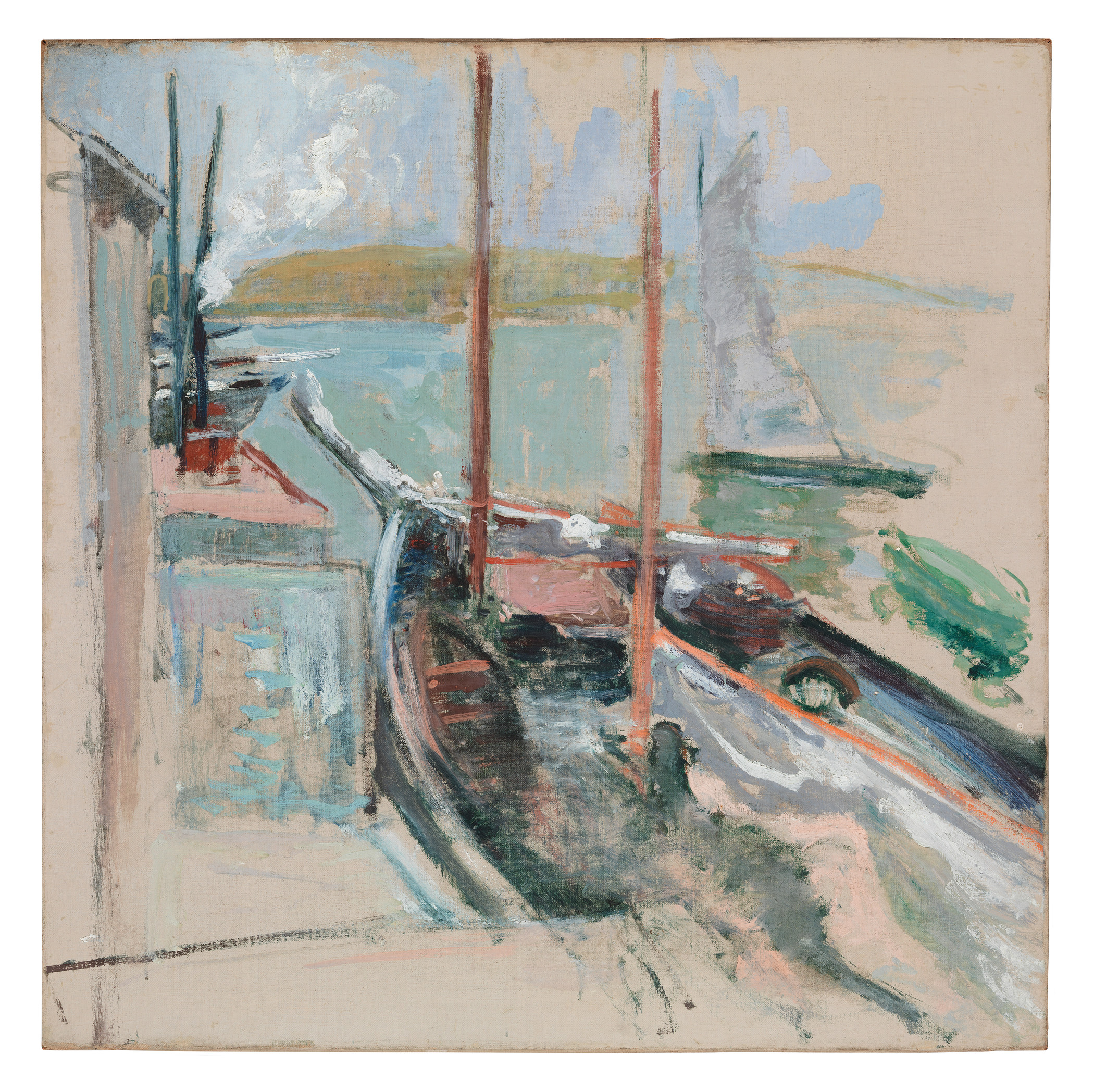
In Harbor Scene from 1900, John Henry Twachtman offered a fresh approach to pictorial geometry; his use of high horizon lines and loose, expressive brush strokes contribute to a denial of depth. Set in Gloucester, Massachusetts, the painting captures a maritime harbor and shipping area that Twachtman revisited many times during the final summers of his life. Despite the painting remaining unfinished, it invites reconsideration of the close-up scenes of the ordinary wharves and fishing fleet.
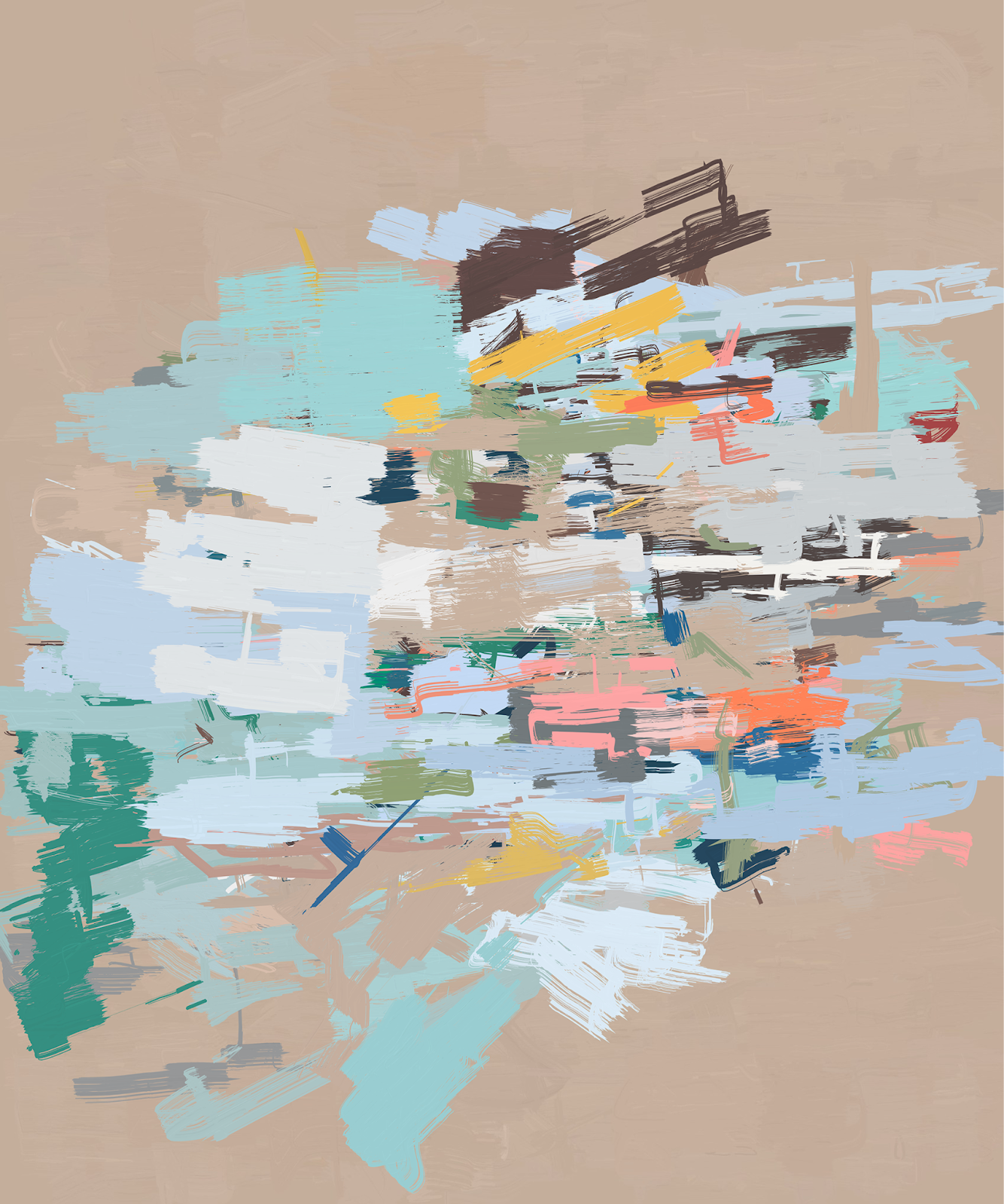
Harbor Scene has been a source of inspiration for many artists over the years. Recently, Tyler Hobbs reimagined the painting for his contribution to Remembrance of Things Future, a project curated and engineered by the experimental blockchain consultancy Cactoid Labs for LACMA. Hobbs was attracted to the “complex negative space and the loose, gestural mark-making employed in the painting.” In his conversation with Lady Cactoid, he remarked on the freedom that comes naturally from painting, and how “it’s completely the opposite of what comes naturally when working with an algorithm.” It was Hobbs’s generative interpretation that gave way to considering the painting for Diffuse Control. How do the elements Hobbs draws out through generative code compare with those Beeple derives from his AI algorithm?
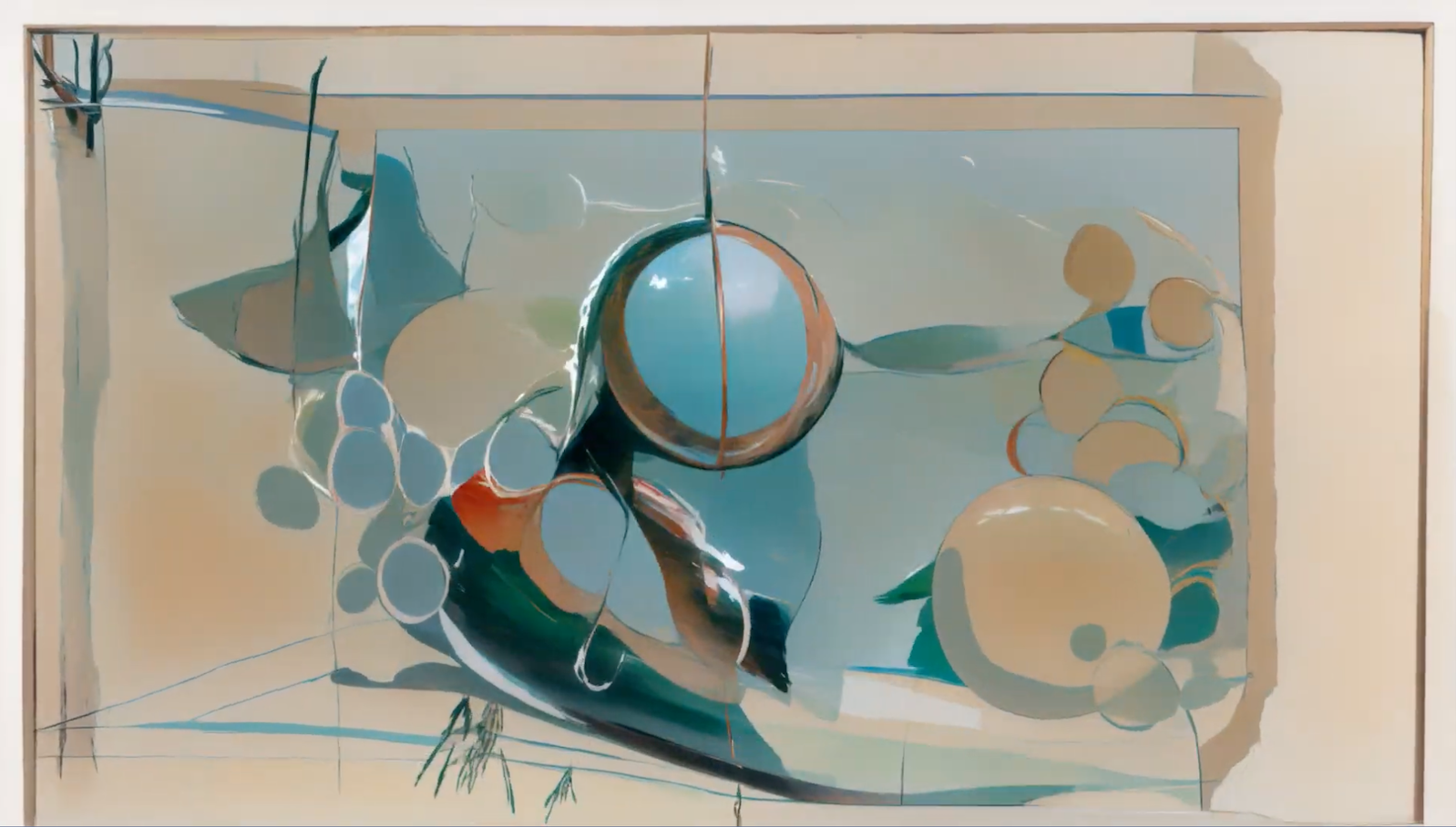
In Diffuse Control, the AI-generated images move across the 12 rotating screens through a continuous looped animation. The perpetual motion of both the screens and the rendered sequences creates an environment reminiscent of a digital aquarium, inviting sustained visual engagement. Given its dynamic presentation, it seemed fitting to adopt a similarly exploratory approach to selecting accompanying images, focusing on works from our permanent collection that incorporate water as a central formal or conceptual element.

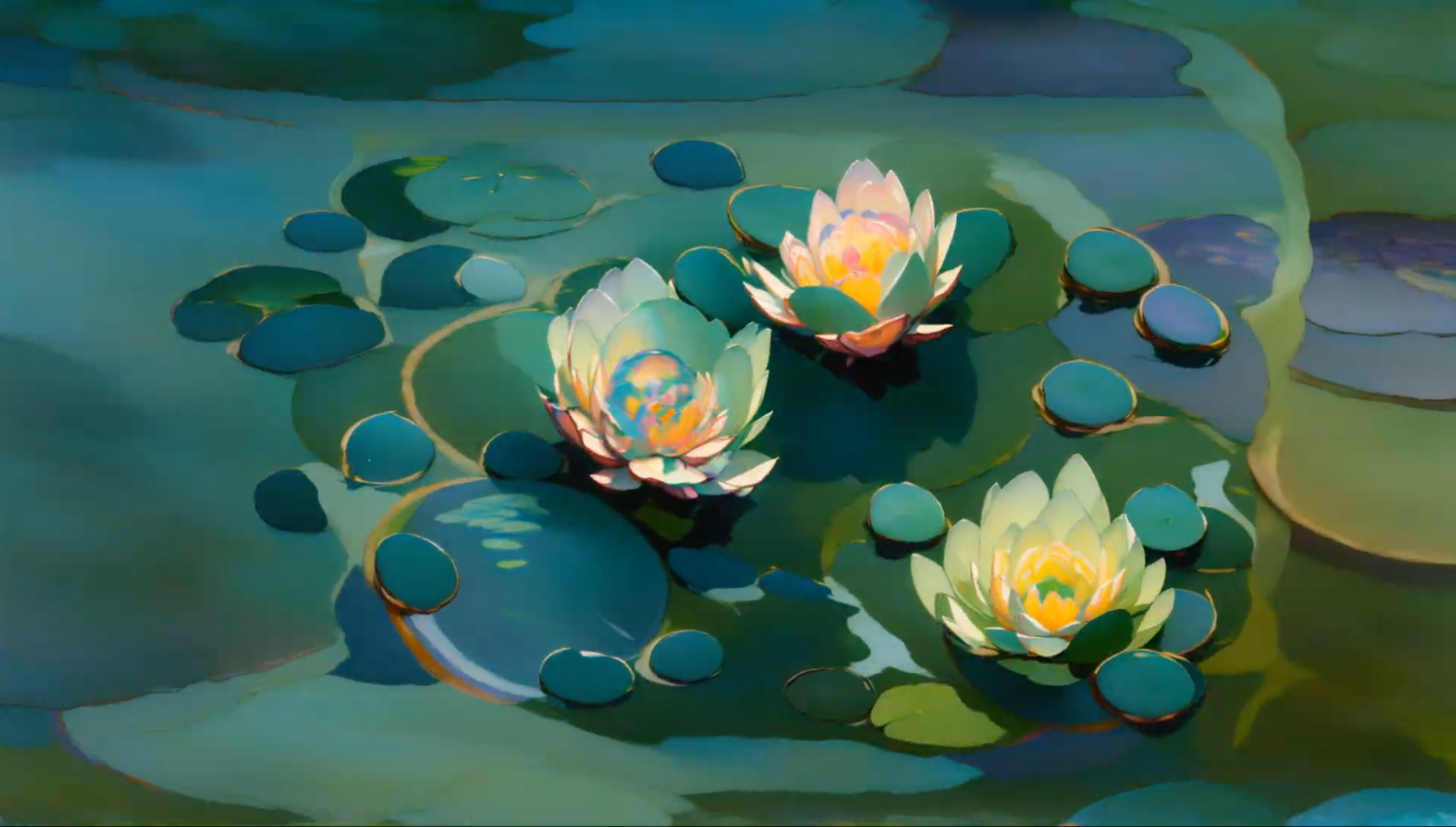
To that end, Claude Monet’s Nymphéas was included for foregrounding water as both subject and medium, offering a historical counterpoint to the fluid, algorithmically produced imagery in Diffuse Control. Rendered upon a sphere-like animation, the resulting image resembles varying hues of water droplets that disintegrate into the surface while the water lilies blossom and grow throughout the sequence. Its shifting surface and play of light echo the painting’s themes of perception, motion, and abstracted mediation. The boundaries between sky, water, and vegetation blur, creating a painting that is less about representing nature and more about capturing the experience of looking.
Diffuse Control dissolves traditional boundaries: between artist and audience, past and present, static object and living process. It’s not meant to distort traditional paintings, but to treat “artwork” as a process rather than a finished work. As Beeple once said, “instead of the artwork being the output of AI, the artwork is the actual system that produces an infinite amount of artwork.” The act of selecting and arranging those images is what produces the artwork. It becomes a metaphor for curation as a creative practice, reflecting the way we also engage with AI.