




Beeple’s Diffuse Control is an image-generating sculpture that invites visitors to collaborate with artificial intelligence. A custom website allows museum visitors to interact with the AI generative system, which transforms images of select public domain artworks from LACMA’s permanent collection, organized in five iterations. The sculpture—comprising 12 large video screens—displays the resulting images, allowing the audience to remix this new creation in real time. Diffuse Control by Beeple is on view through January 4, 2026.
Here, Koni Zhang, production coordinator, Graphic Design and LACMA Productions, and LACMA-ASU Fellow, reflects on artworks selected for the iteration Future Past.
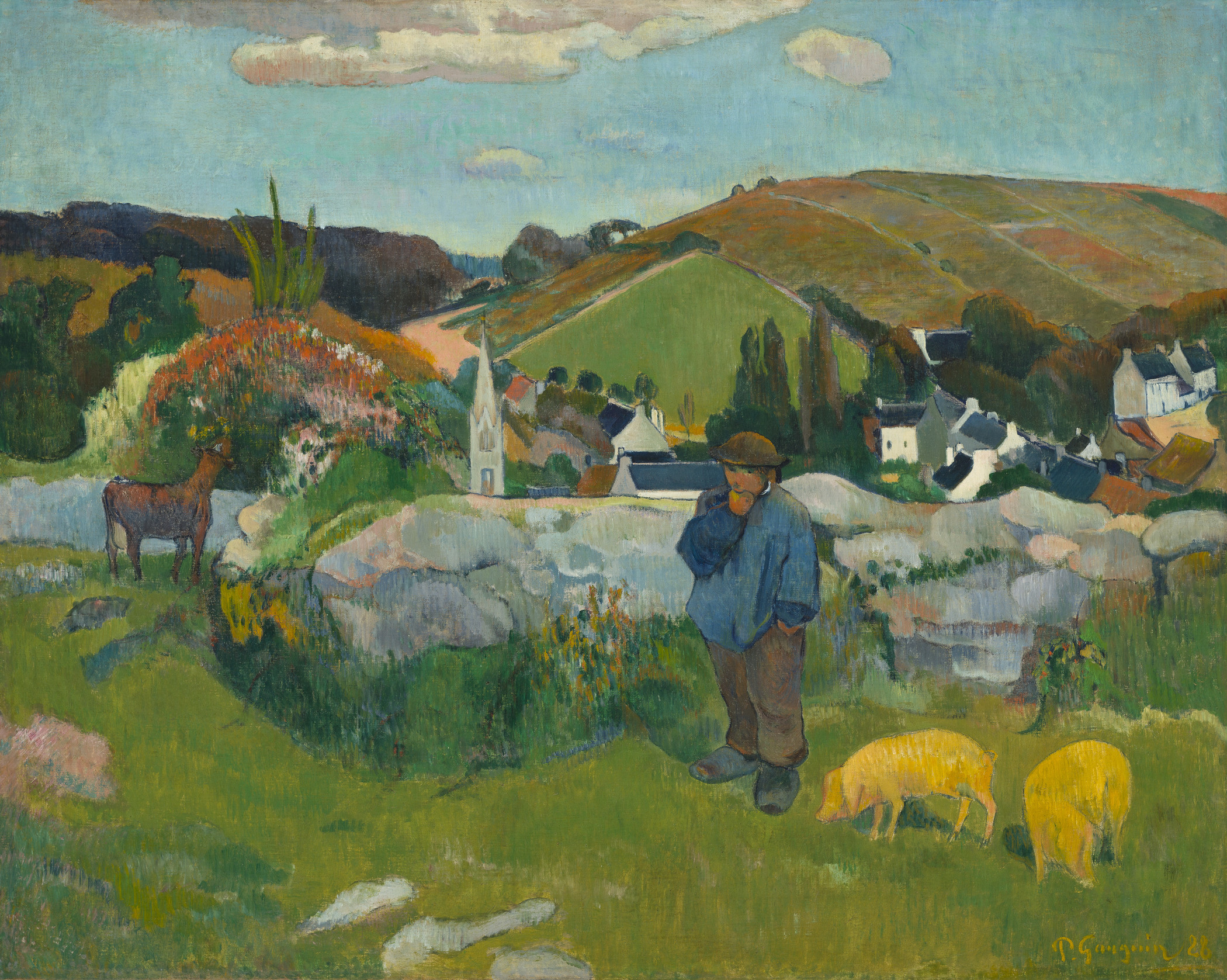
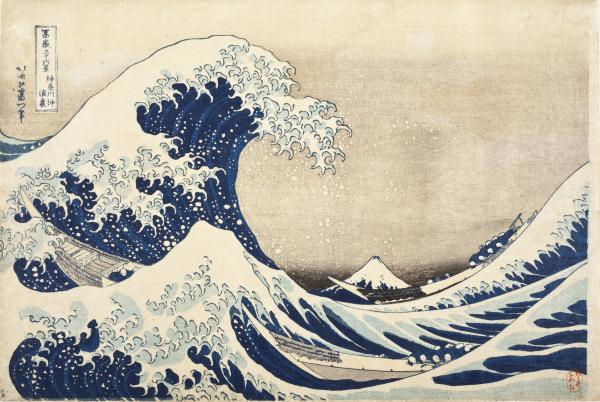
To me, Diffuse Control is fundamentally about creating connections, linking classical traditions with the possibilities of technology. My iteration, Future Past, emerges from the belief that art continually moves in cycles: it returns to old wisdoms, reinterprets them, and generates new ideas that speak to the present. Throughout history, artists have drawn on earlier masterpieces and inherited wisdom, and, in many ways, Diffuse Control extends this lineage. Rather than disrupting tradition, technological intervention becomes another chapter in a long, ongoing story of reinvention and reinterpretation.
Drawing from the motion activation feature, I selected works from LACMA’s collection from different cultures and eras that may otherwise not be able to be viewed together. They each carry a strong sense of landscape, whether literal, symbolic, or intellectual. When activated by the project, these landscapes begin to blur conventional boundaries of time and place, collapsing past and present, imagination and reality, into one another. This forges new points of contact between artworks and viewers, who are not simply looking at them but engaging with them dynamically—an effect that, I would argue, has long been a goal shared by many artists.
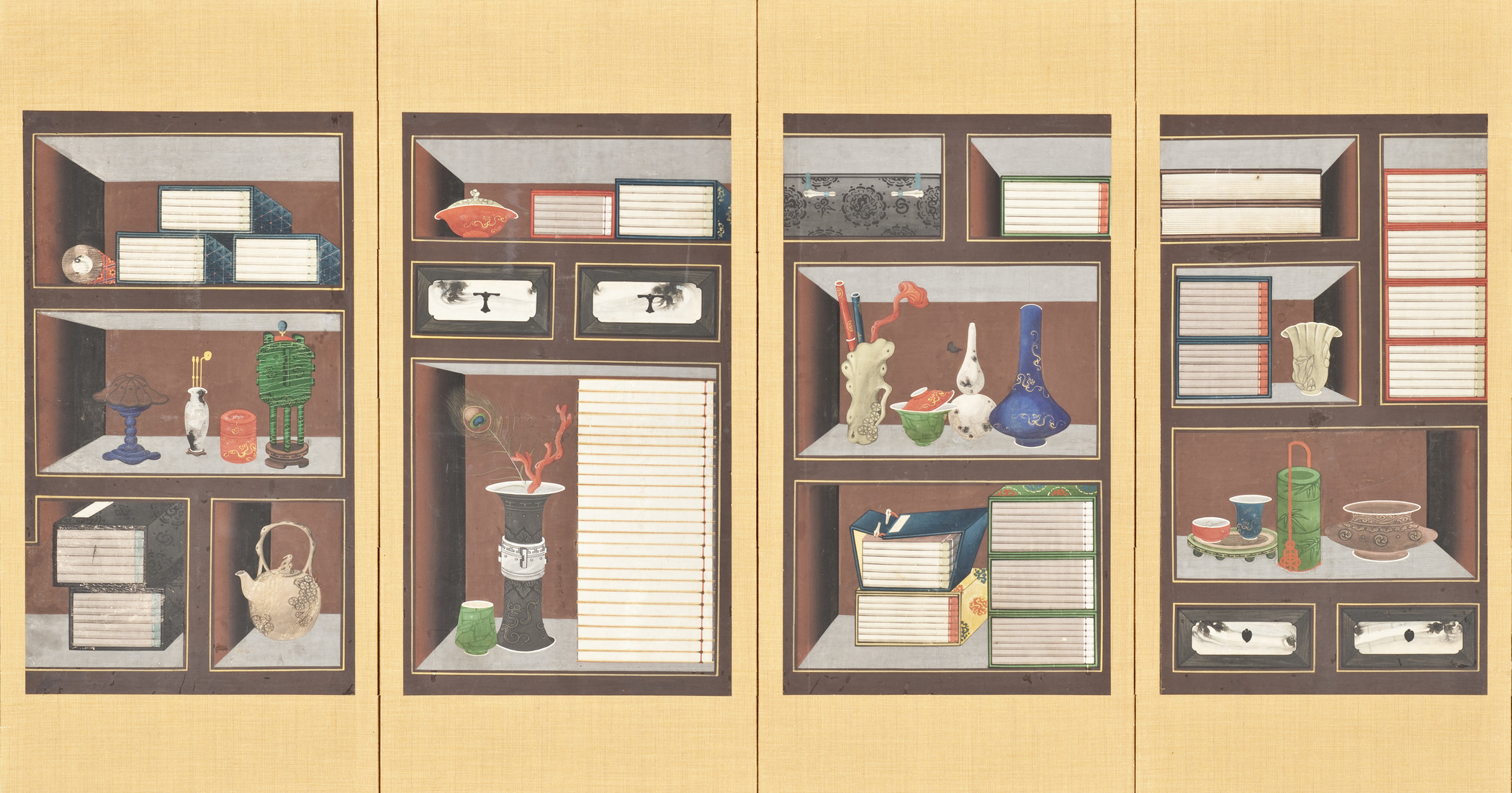
Among the works, I am especially drawn to Scholar’s Books and Objects (Chaekkeori). The screen depicts a scholar’s bookshelf—a domestic interior densely filled with books, decorative objects, and academic tools. Although it may initially seem the least connected to the theme of landscape, the gridded shelving operates almost like a topographical map, charting an intellectual landscape through the books and objects collected from different cultures and regions. These items collectively reflect the scholar’s wide-reaching curiosity and cosmopolitan imagination.
While now regarded as a quintessential expression of Korean aesthetics, the chaekkeori genre itself emerged through a transnational lineage: it traveled from European still-life traditions to Qing court imagery before taking root in Korea, where it evolved into a distinct form. Beneath its still-life surface lies an intellectual terrain, an ordered world of ideas, knowledge, and contemplation.
Within Future Past, chaekkeori enters into dialogue with the project’s other works, especially those that present literal landscapes. This juxtaposition creates an exchange between the material and the conceptual. The movement of chaekkeori in Diffuse Control, partially blending the landscape of the other works from the iteration, symbolizes how the intellectual world can be activated and how ideas can travel as far as the mind’s curiosity allows—often far beyond any physical destination.