




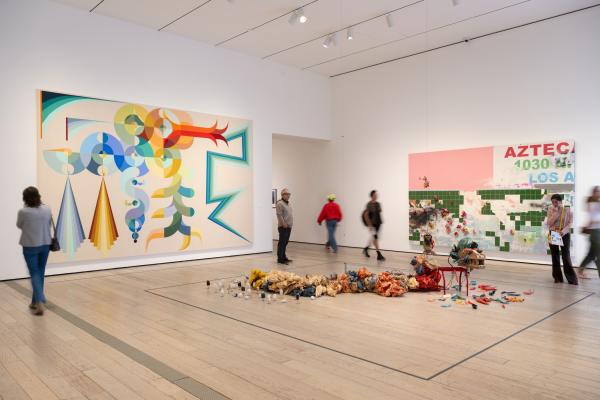
Exploring how human experience is embedded in the land, Grounded (on view through June 21) invites visitors to see land not just as terrain, but as a foundation for exploring ecology, sovereignty, memory, history, and home. The exhibition showcases 40 works by 35 artists, spanning the 1970s to today, with many works making their public debut, or their first showing at LACMA. The project highlights the museum’s deep holdings of local artists, Latine and Chicanx artists, and its burgeoning collection of Indigenous artists of the Americas and Pacific.
Grounded brings works together by artistic approach (for instance, performance or political or spiritual action), material (such as the integration of technology with ancient crafts like weaving), or theme (for example, how artists draw on their heritage to interpret their identity). One dominant method seen throughout Grounded is the upcycling of materials, as artists transform organic matter, everyday objects, and urban detritus to mark our unstoppable consumption while honing the potential for materials to take on new life.
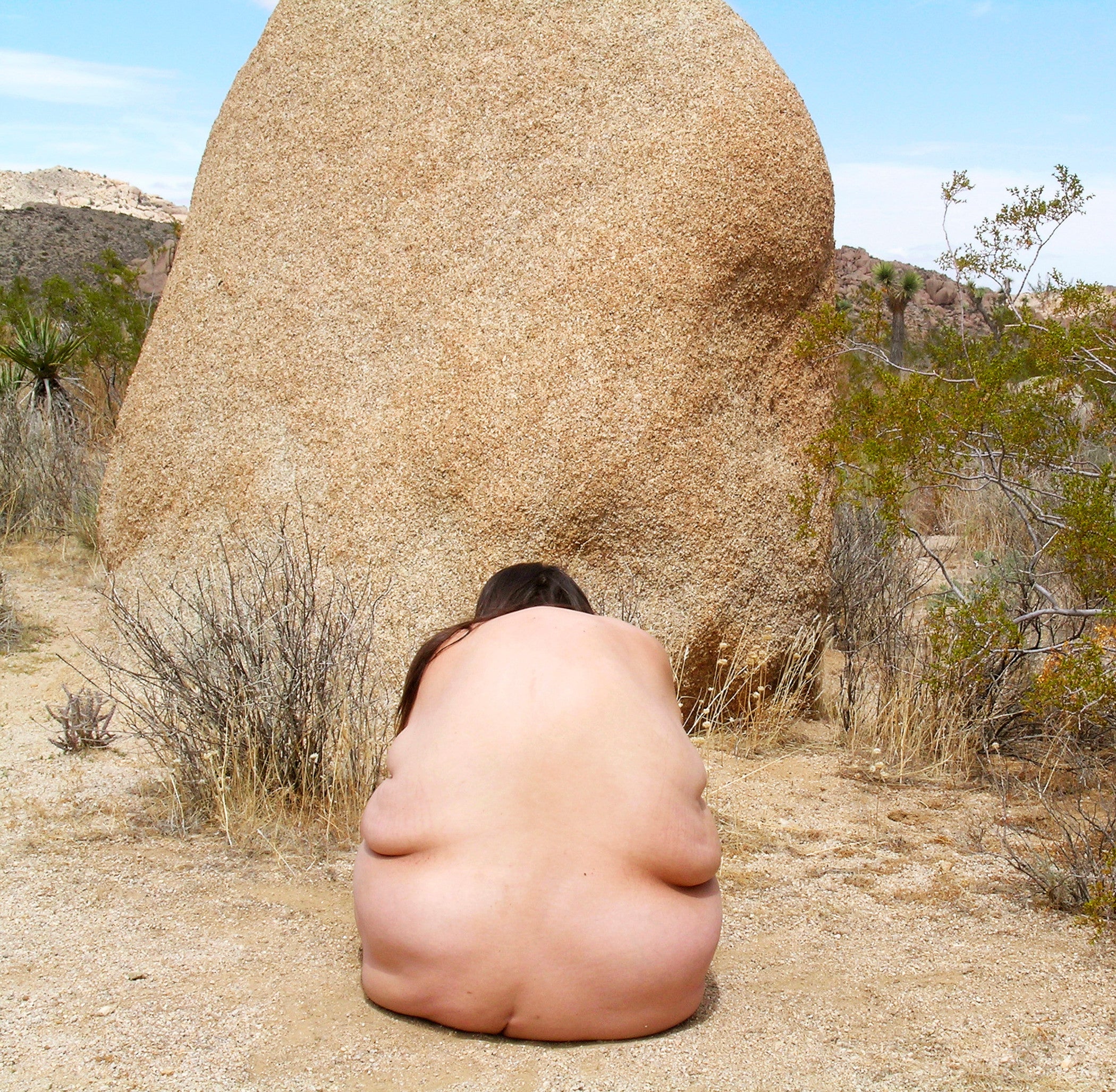
The title of the exhibition borrows from a series of photographs by the late artist Laura Aguilar, who portrayed her nude body immersed in the rocky, desert landscape of Joshua Tree. Her body echoes the landscape’s curves sculpted by eons of geological change, a fusion of self and landscape. In the series, Aguilar, who identified as a disabled Chicana woman, responds to archetypal depictions of female beauty in the canon of Western art.
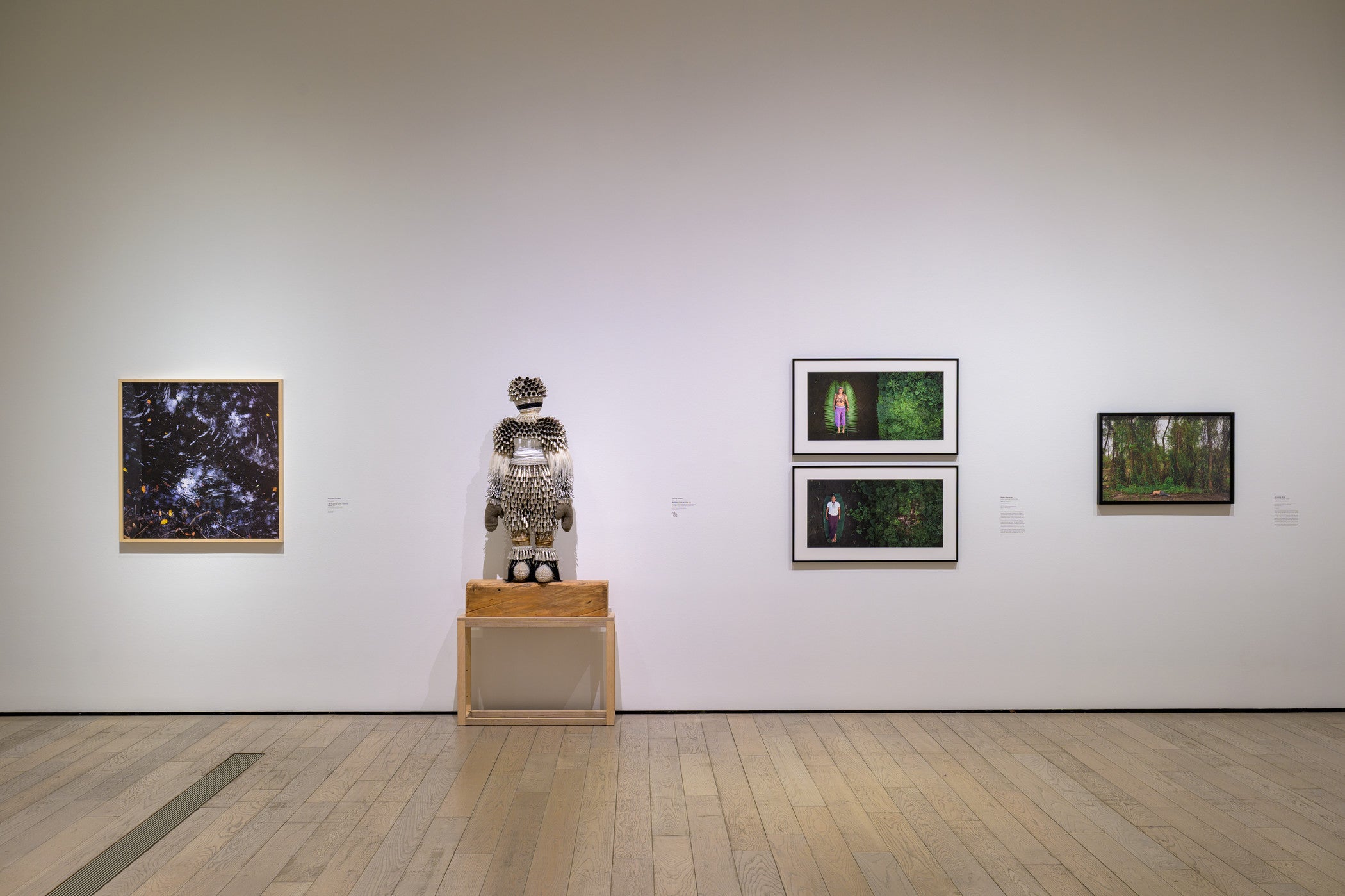
Among other powerful examples of photography in Grounded that collapse the boundary between human experience and the environment are photographs by Fernando Brito, whose images from the series Tus pasos se perdieron con el paisaje (Your Steps Were Lost in the Landscape) (2009, printed 2011) depict scenes along the U.S.–Mexico border in which bodies have been unceremoniously discarded, the serene, beautifully shot wilderness buffering and contrasting with this evidence of human brutality.
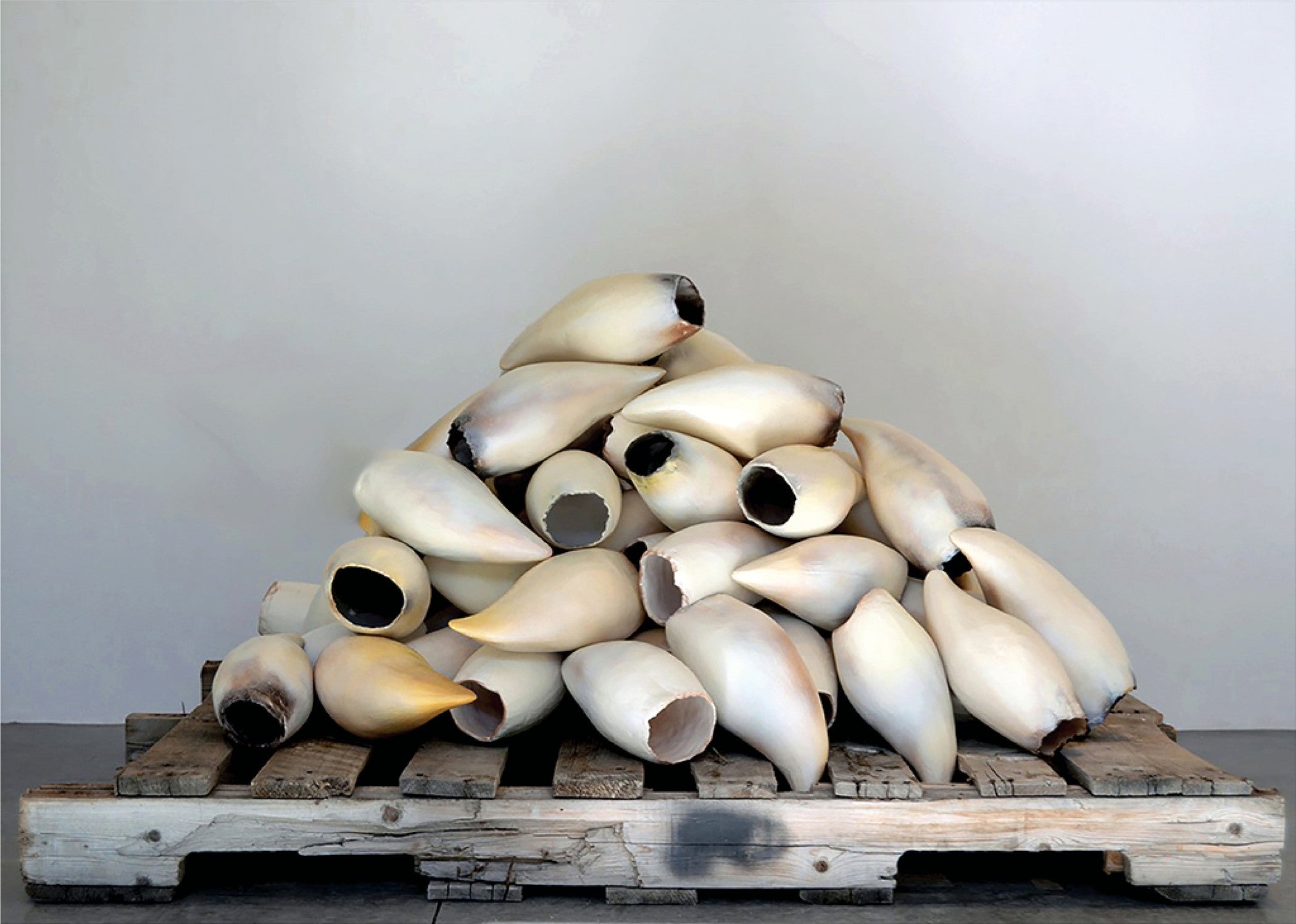
Throughout the exhibition, artists explore the lasting effects of colonialism and imperialism through works probing the links between land ownership and power. Courtney M. Leonard, a member of the Shinnecock Nation, asks what happens to a culture when it loses access to the lands and waters that have shaped it. The artwork’s title, BREACH #2, alludes to the legal definition of breaking an agreement as well as the action of whales rising and breaking the ocean surface. Consisting of 38 ceramic sperm whale teeth arranged on a pallet as if ready for shipment, the work highlights the conflict between environmental policies and sustainable Shinnecock cultural practices.
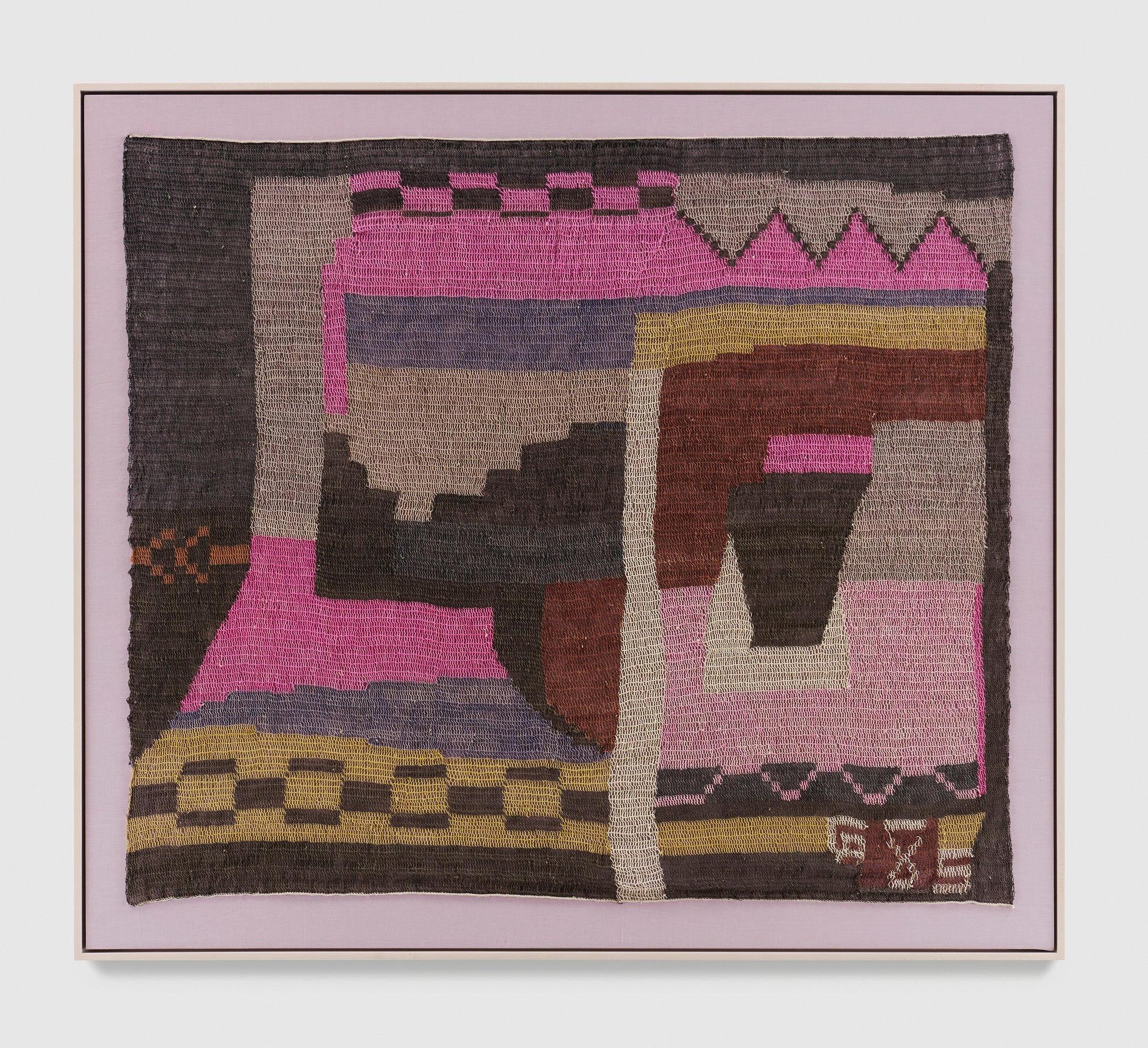
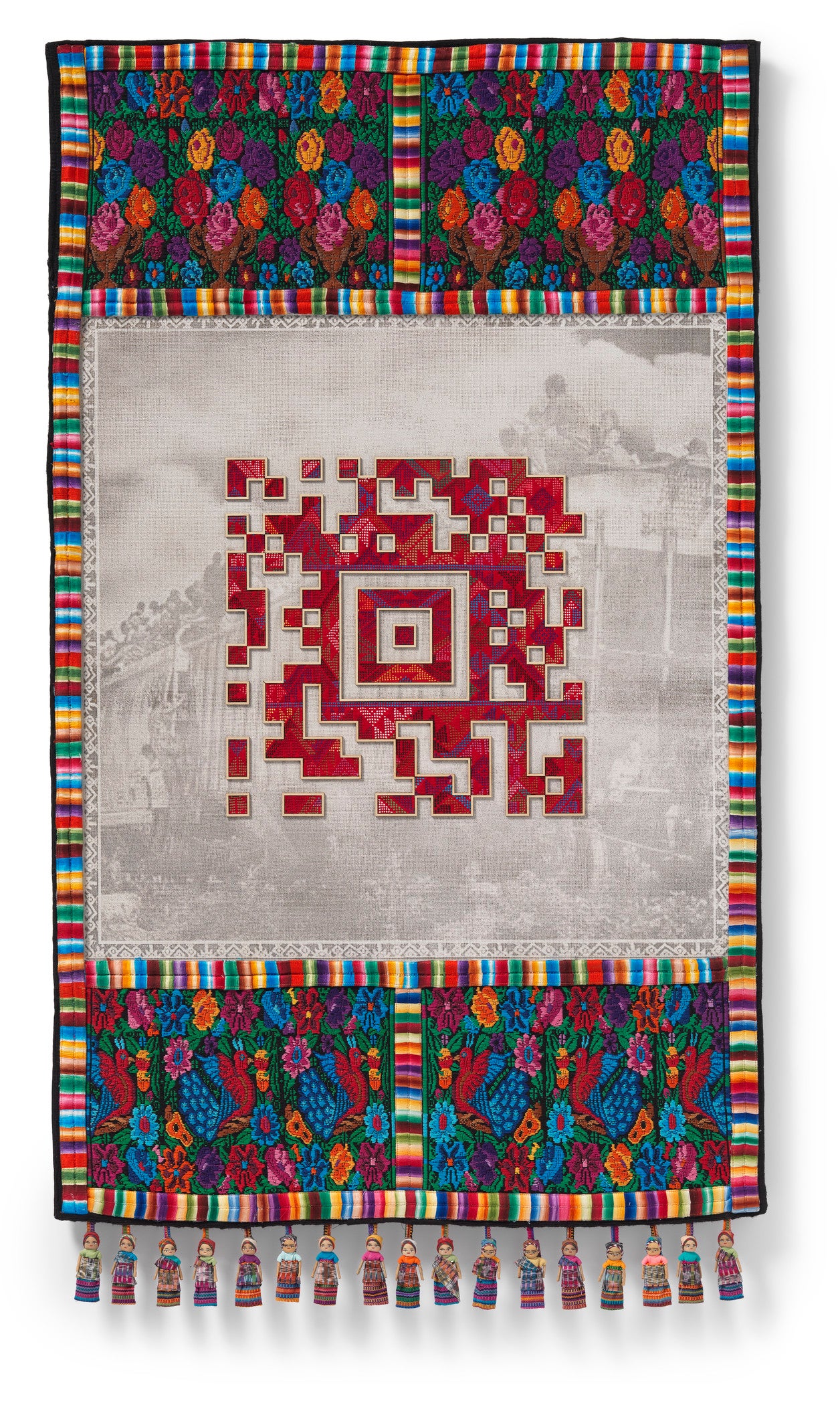
Indigenous artistic traditions, from weaving to ceramics, are foundational to a number of works on view. The Shell of Memory (El caparazón de la memoria) (2024), by Claudia Alarcón and the Silät weavers collective, is woven with hand-spun chaguar fiber using the yica stitch, which Alarcón first learned as a child in Argentina from her mother and grandmother. In the Wichí tradition, the yica stitch is both a technique and a vessel for knowledge, passed down through generations. In La Bestia (2017), Guillermo Bert centers an image of the Beast, as the network of freight trains from Mexico and Central America to the United States is known, carrying migrants atop the cars to deadly consequences. Noticing that the patterns of Mapuche weaving from his native Chile resembled QR codes, Bert began collaborating with Mapuche, Navajo, Maya, Mixtec, and Zapotec weavers to embed QR codes in traditional textiles. In this piece, scanning the code links viewers to the testimony of a Guatemalan migrant now living in Los Angeles, describing his 3,000‑mile journey from Santa Catarina Ixtahuacán to the U.S.
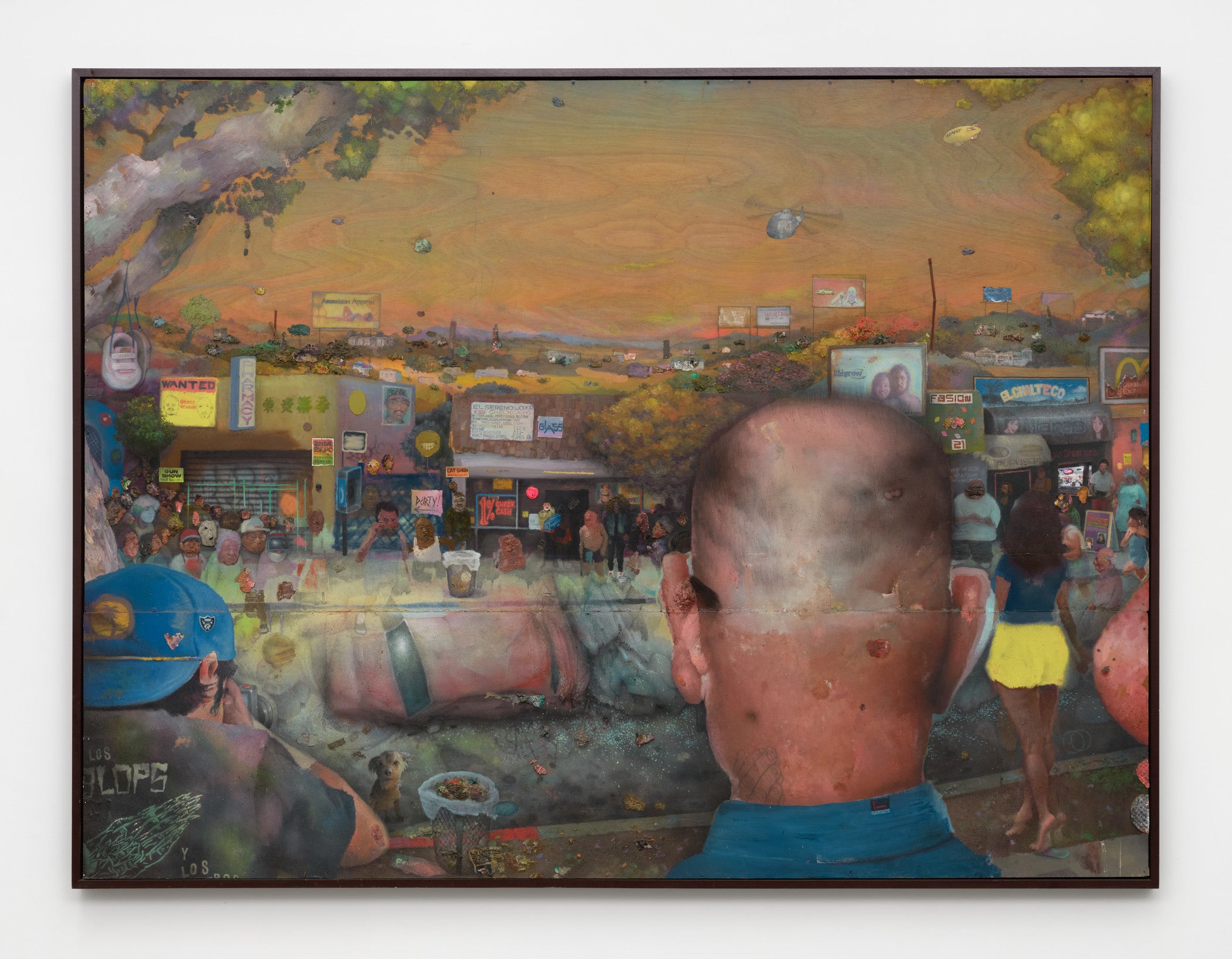
A significant portion of those featured in the exhibition are based in Los Angeles, providing an illuminating glimpse into the city as seen by local artists. In Neighborhood Watch (2012), for example, Michael Alvarez depicts a car accident in El Sereno, a predominantly Latine neighborhood, at the busy junction of Huntington Drive and Eastern Avenue. The artist collages onto canvas gunk and debris he collected from his studio floor and the street, transmuting dabs of paint layered with bits of trash into landscapes and figures.
Like all the pieces in Grounded, these works emphasize the deep interdependence of land and culture, with nature transcending geography and connecting all living beings across continents. Even as some of the artists mourn what has been destroyed—through climate change, capitalism, colonialism, and displacement—they weave elements of these losses back into their visions of the future.
Grounded is now on view in BCAM, Level 2, through June 21, 2026. A version of this article was first published in the fall 2025 issue of LACMA's Insider magazine.