




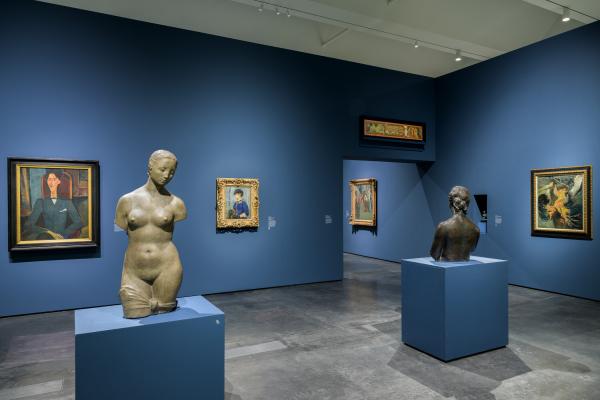
On view at LACMA through July 19, Village Square: Gifts of Modern Art from the Pearlman Collection to the Brooklyn Museum, LACMA, and MoMA brings together nearly 50 paintings, sculptures, and works on paper from the Henry and Rose Pearlman Collection in a celebration of art and community. The son of Russian Jewish immigrants, Henry Pearlman (1895–1974) grew up in Brooklyn and became a prominent businessman and art collector after 1945, when an encounter with Chaïm Soutine’s colorful and abstract landscape View of Céret (then called Village Square, Céret) changed the course of his life. Over decades, the Pearlmans would amass a collection of avant-garde visionaries lauded for its quality and breadth.
The exhibition showcases expressive landscapes and striking portraits by Cézanne, Degas, Manet, Modigliani, Sisley, Soutine, Toulouse-Lautrec, and others. Many of these bold, dynamic works grew out of close friendships among artists, and on occasion with Henry Pearlman himself. Village Square honors the Pearlmans’ belief in art’s power to create shared experiences and foster connections.
Now is the final opportunity to see the collection in Los Angeles before it travels to the Brooklyn Museum this fall (October 2, 2026–April 18, 2027) and is then gifted to museums across the country, with six important works returning to LACMA. Below, discover some highlights from Village Square before visiting to experience the full collection at LACMA for the final time.
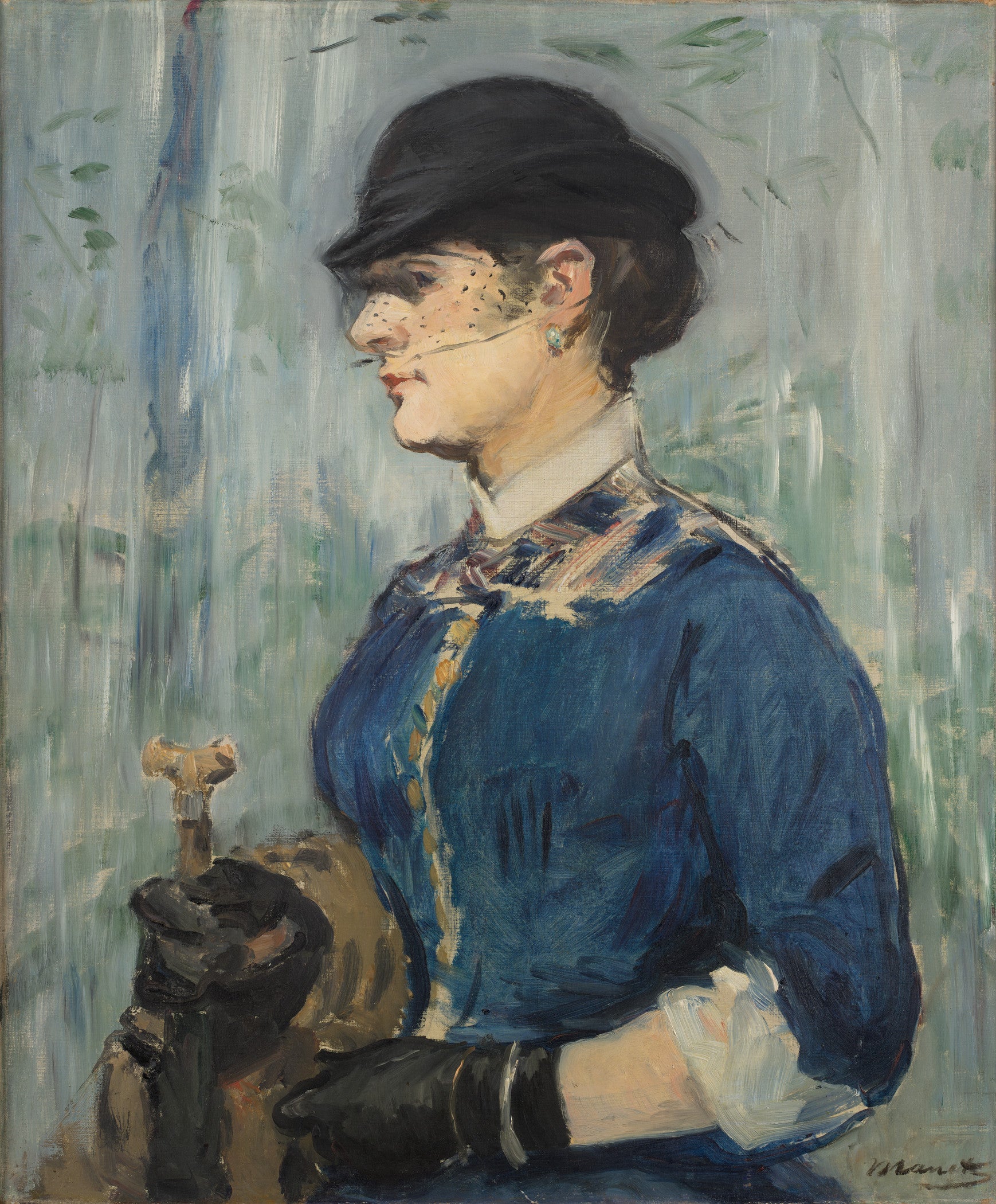
Édouard Manet
Young Woman in a Round Hat, c. 1877–79
Art historical movements are often defined by critics or scholars. “Post-Impressionism” was coined by British art historian and artist Roger Fry for the title of his landmark 1910 exhibition Manet and the Post-Impressionists. It featured the work of Vincent Van Gogh, Henri Matisse, Paul Cézanne, and others, and highlighted Édouard Manet as an early avant-garde practitioner. Although the artist never exhibited Young Woman in a Round Hat during his life, it was included in Fry’s exhibition as it exemplifies Manet’s modern approach. Ever an observer of contemporary life, Manet depicts the woman dressed in the height of bourgeois urban fashion, as if she is just stepping out for a walk.
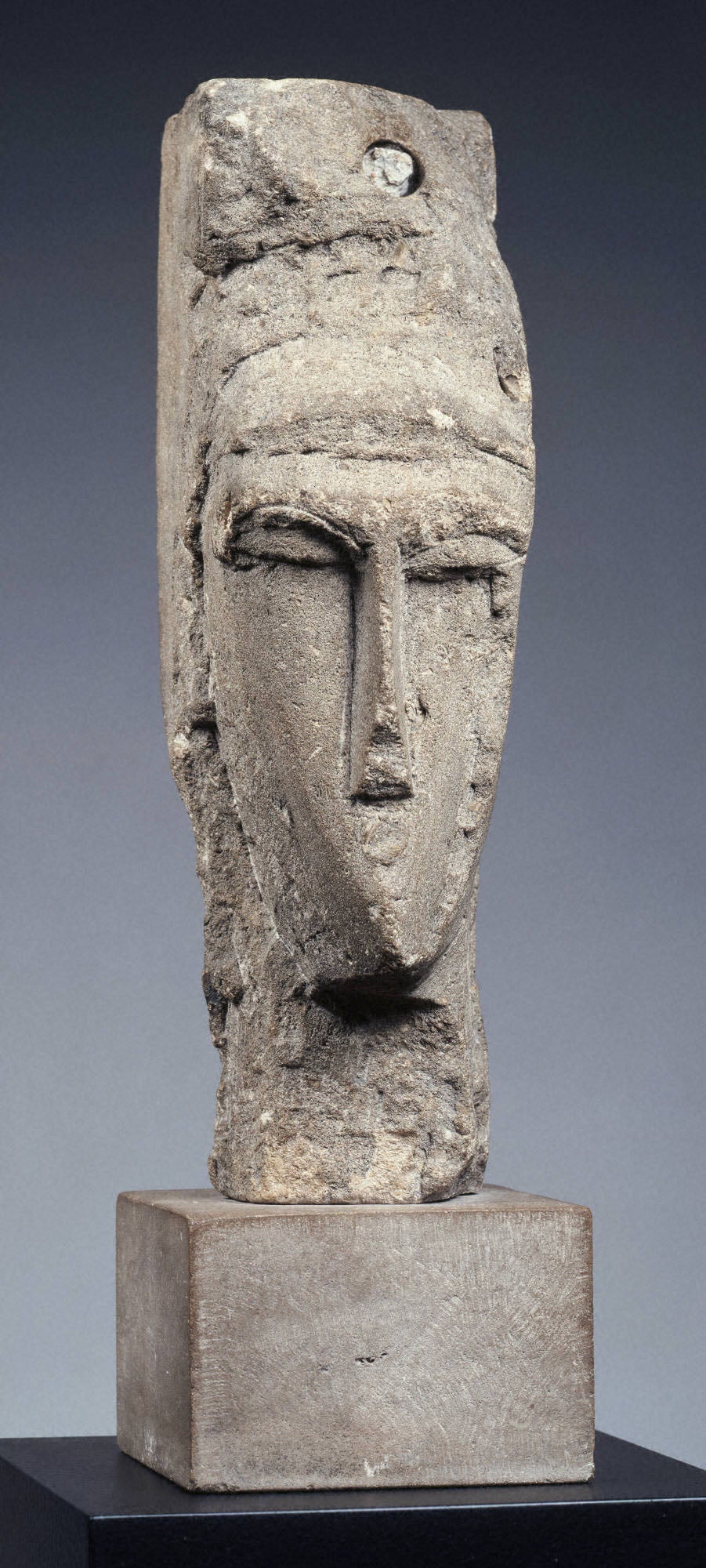
Amedeo Modigliani
Head (Sculpture V), c. 1910–11
Italian-born Modigliani moved to Paris in 1906, where he joined the international community of immigrant artists in Montmartre. In 1909, after meeting Constantin Brancusi, he began to produce sculptures by carving directly into stone, completing about 25 works over the course of a few years. The style of these abstracted, elongated heads with oval eyes, long noses, and tiny mouths reflect his awareness of ancient Cycladic, Egyptian, Greek, and Buddhist sculpture. Several of his sculptures were created from stone construction blocks, which may explain the unusual hole at the top of this figure’s head.
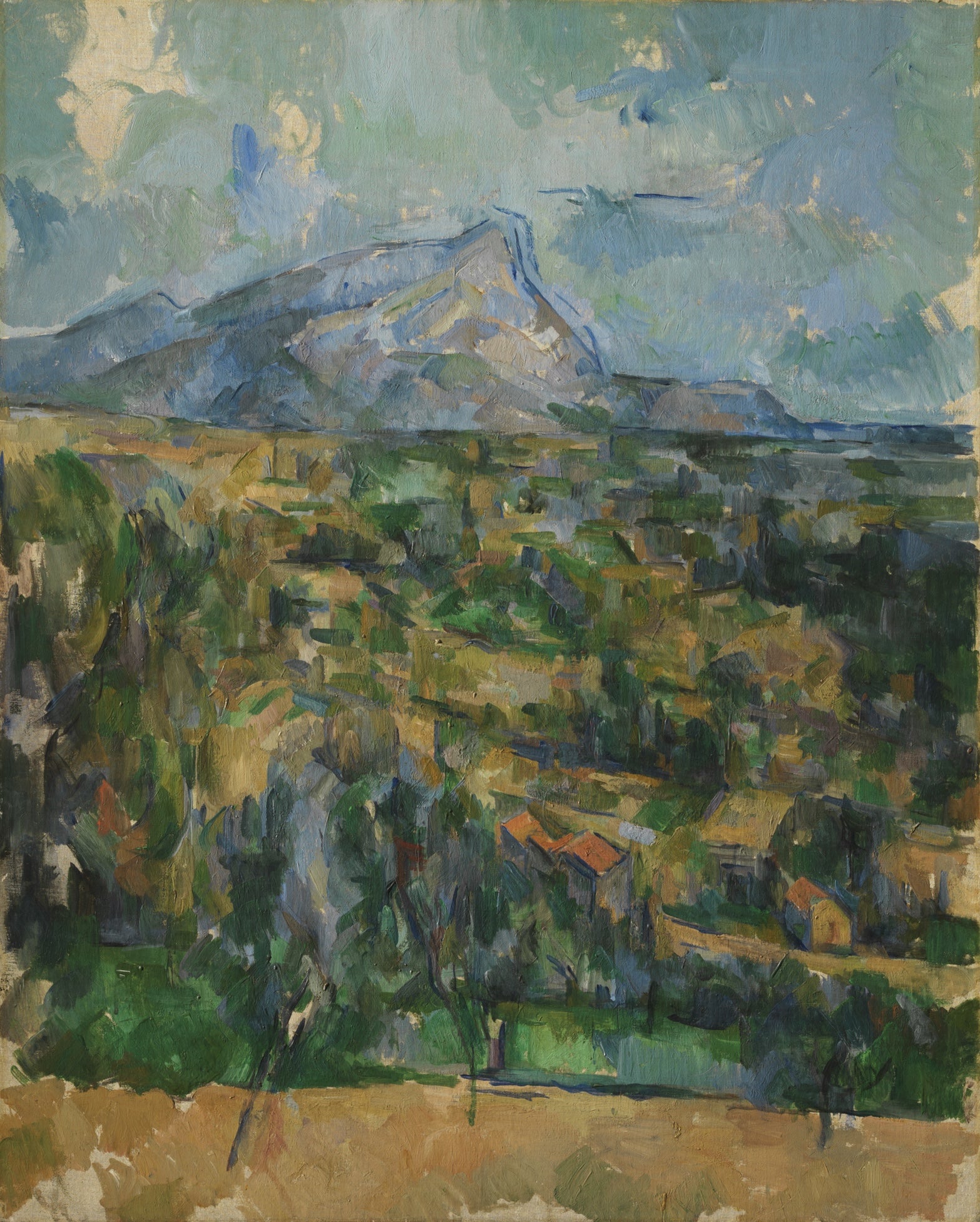
Paul Cézanne
Mont Sainte-Victoire, c. 1904–6
Mont Sainte-Victoire, with its rough peak towering above Aix-en-Provence, takes its name (Holy Victory) from a legend of an ancient Roman battle. Its presence loomed in Paul Cézanne’s imagination, and he frequently depicted the mountain from different vantage points. While most of his Mont Saint-Victoire compositions are horizontal, this rare vertical view was painted near the artist’s studio. Henry Pearlman acquired it through fortunate timing, arriving at a gallery when the sale to another had stalled. He described it as “one of the most important, if not the most important, in my collection.”
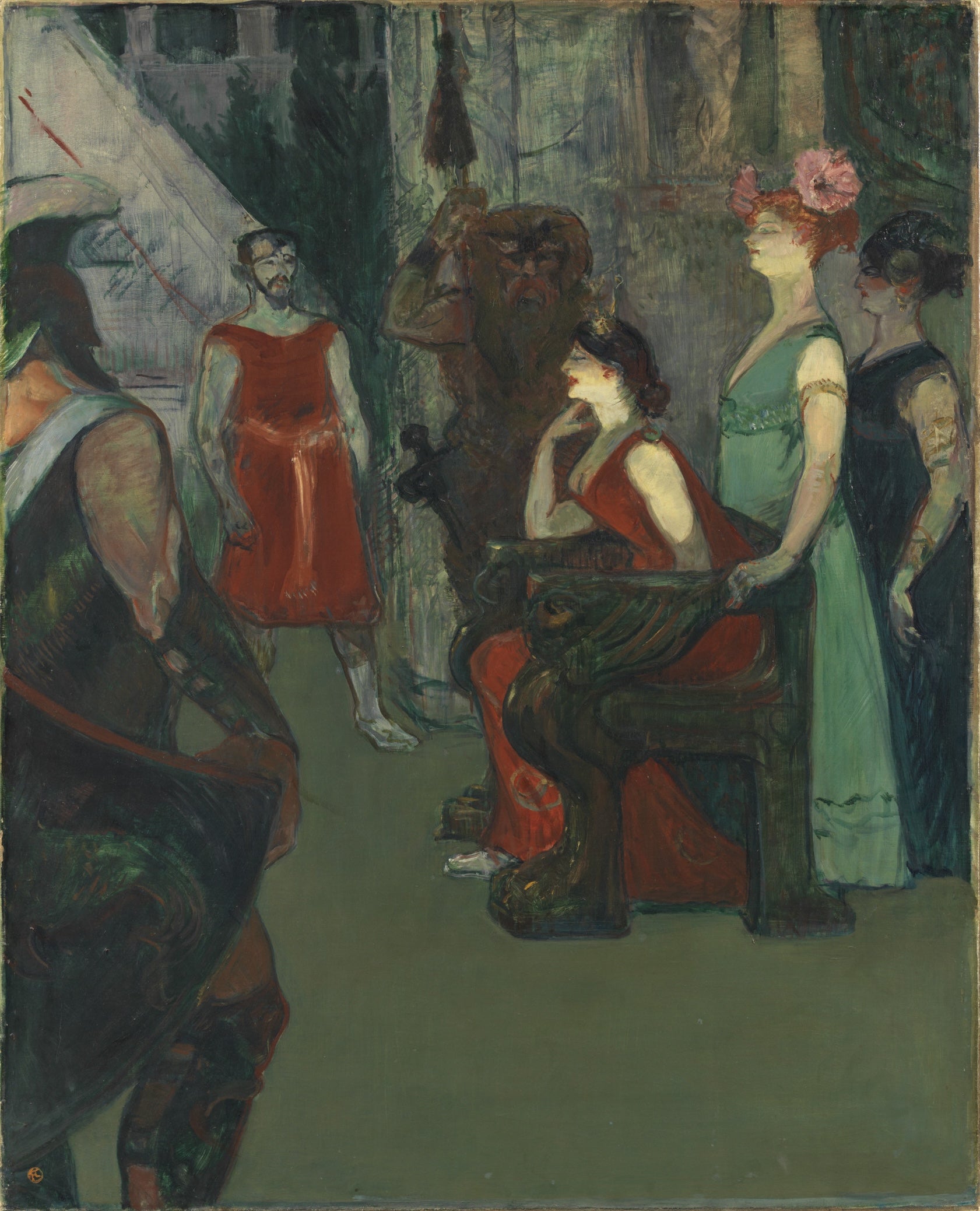
Henri de Toulouse-Lautrec
Messalina, 1900–01
Toward the end of his life, Henri de Toulouse-Lautrec experienced a period of increased creativity, in part inspired by Isidore de Lara’s popular opera Messaline (1899), a drama of sex, power, and betrayal set in ancient Rome. Toulouse-Lautrec was enraptured and produced multiple paintings of the opera, another of which is on view in the neighboring exhibition, Collecting Impressionism at LACMA. Captured here is a dramatic moment in the final act: Empress Valeria Messalina’s scorned ex-lover arrives to kill her.
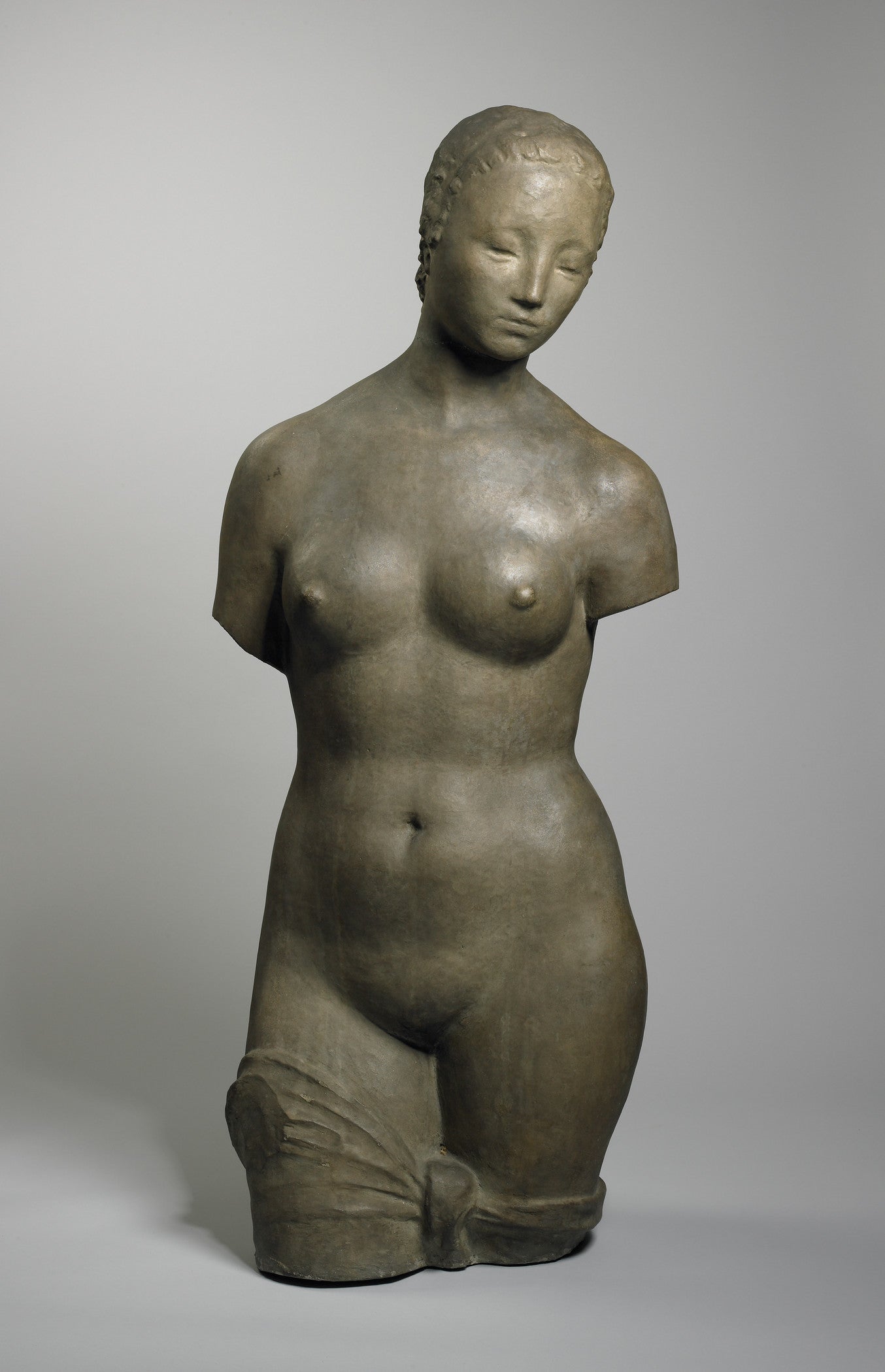
Wilhelm Lehmbruck
Torso of a Young Woman, modeled 1910; cast by 1925
Wilhelm Lehmbruck’s Torso of a Young Woman is a version of a plaster piece shown at the Salon d’Automne in 1910 and at the Armory Show in 1913. Both exhibitions, one in Paris and one that traveled to New York, Chicago, and Boston, promoted modern artists and contributed to the popularity of movements like Cubism and Fauvism. This piece uses Lehmbruck’s wife, Anita Kaufmann, as a model. It was created during a particularly formative year, when the artist moved from his native Germany to France and immersed himself in the international art scene.
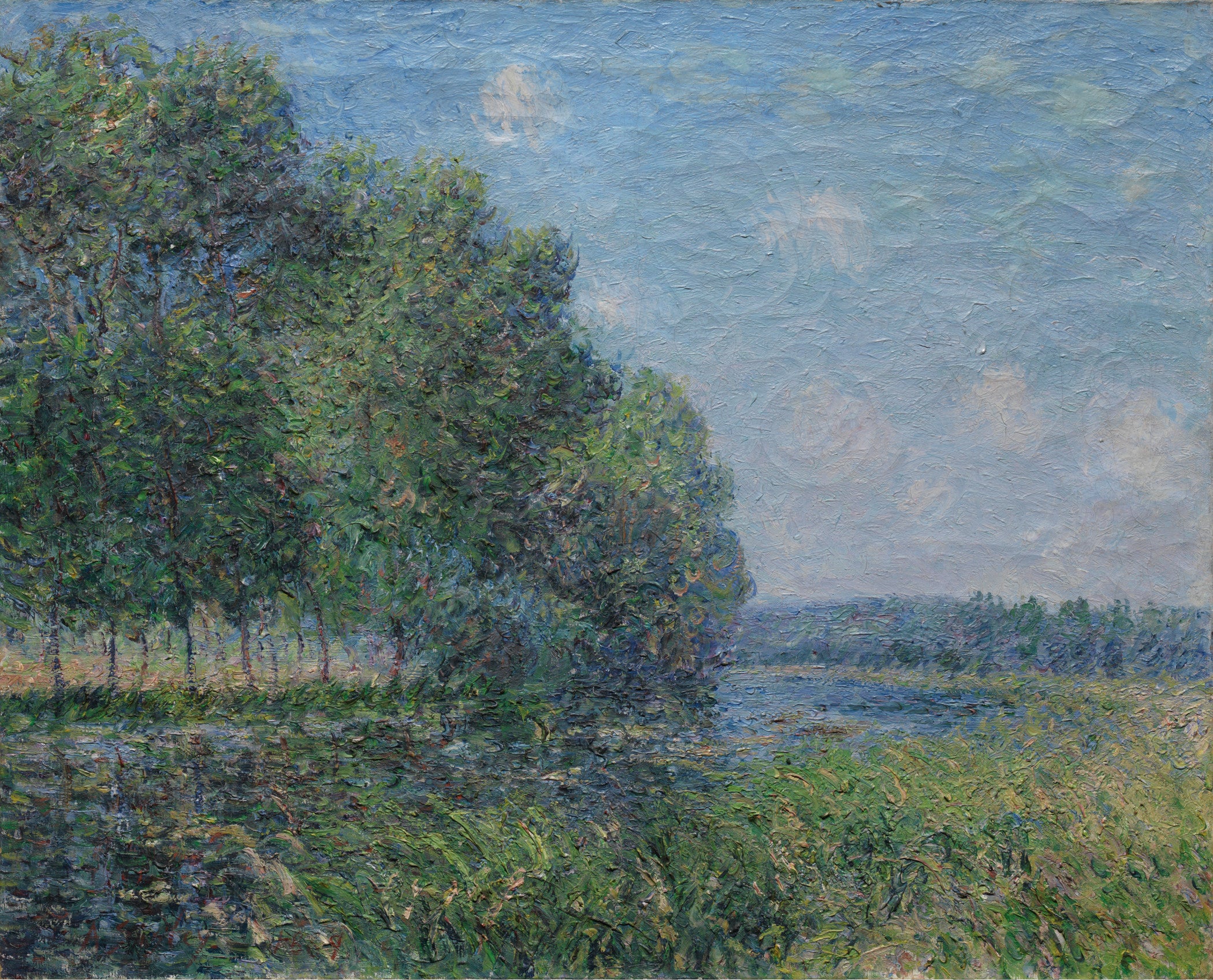
Alfred Sisley
River View, 1889
As a young man, Alfred Sisley, along with Claude Monet, Pierre-Auguste Renoir, and Frédéric Bazille, painted outdoors in the forest of Fontainebleau, helping establish the hallmarks of Impressionist landscapes. Unlike many Impressionists who also painted portraits and still lifes, Sisley remained committed to the landscape genre throughout his career. Although the exact location of this painting has not been identified, the river bend, harmoniously rendered with tall poplar trees lining its bank, is exactly how Sisley described the countryside of Moret-sur-Loing in his correspondence.
Village Square: Gifts of Modern Art from the Pearlman Collection to the Brooklyn Museum, LACMA, and MoMA is on view in the Resnick Pavilion through July 18, 2026.